Circles With Feet In A Seated Position
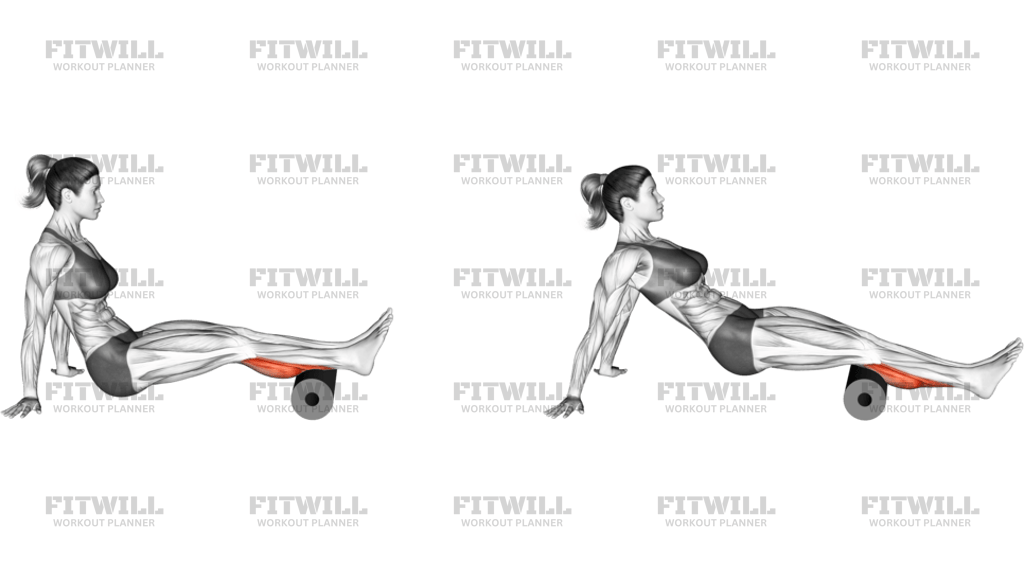
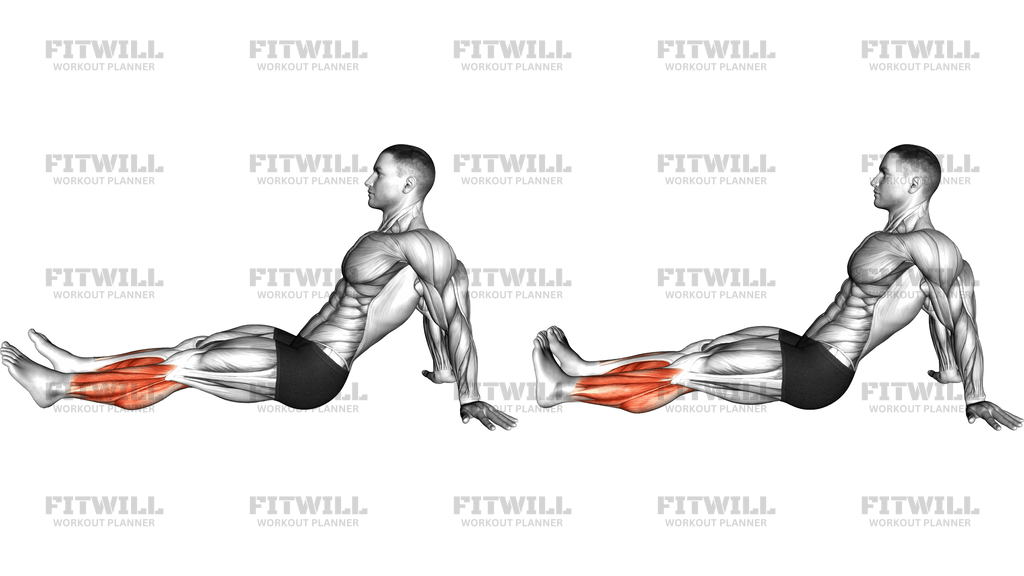
Circles with feet in a seated position is a simple mobility drill for the ankles, performed from a seated position with legs extended on the floor. You sit with legs extended straight forward, place your palms on the floor next to your hips for support, and with your feet slowly and consciously draw circles by rotating at the ankles. From the outside, the movement looks almost trivial, but it takes both ankles through their full range of motion in every direction — pointing upward, pointing downward, and rolling over the inner and outer edge of the foot.
This drill is most useful for anyone who wants healthy and mobile ankles: for runners and jumpers who repeatedly load the ankle joint, for people recovering stiffness after longer periods of immobilization or sitting at a desk, and for recreational and serious trainees who need the full range of motion of the ankle for deep squats and lunges. Because you are seated and unloaded, the joint moves freely without your body weight pressing through it, which makes it a safe way to restore mobility before harder training.
The muscles doing the work are those that control the ankle: the calves on the back of the lower leg, the muscles on the front of the shin that pull the toes upward, and the smaller stabilizers that steer the foot left and right. Continuous movement along the circle keeps all these groups turning on and off in sequence, which also gently pumps blood through the lower legs. Therefore, it is a good choice during warm-ups, between sets for the lower body, or as a light recovery drill on rest days.
The setup matters more than it seems. Upright sitting with a long spine and fully extended legs keeps the knees straight, which slightly stretches the calves while the ankle rotates — you will feel the circle differently than with bent knees. Pressing your hands into the floor behind your hips helps you maintain an upright posture instead of slouching, so the movement stays in the ankles rather than turning into general fidgeting of the entire leg.
To perform it well, keep the circle large and slow, not small and rushed. The foot should pass through its complete path — toes pulled toward the shin, out over the inner edge, pushed away into a full point, and back over the outer edge. One full circle should take several seconds, and switching direction after a set number of repetitions ensures that both directions of rotation get attention. Avoid forcing the ankle into positions that cause pinching or sharp discomfort; a feeling of work and stretching is the goal.
You will see this drill as a warm-up before running, jumping, or heavy leg training days, as part of routines for ankle rehabilitation, and as a daily maintenance movement for people whose ankles are stiff upon waking. It requires no equipment other than a spot on the floor and works well even in small spaces — which is exactly why it has remained a staple in warm-up routines for decades.
[ Dnevnik i planer treninga ]
Dodajte sljedeći trening u Fitwill
Neka plan i dnevnik treninga budu spremni kad ste i vi.


Upute
- Sit on the floor with both legs extended straight in front of you and your heels resting on the ground.
- Place your palms flat on the floor slightly outside your hips, with fingers pointing forward, and press lightly to sit upright.
- Lean back slightly until your weight is supported by your hands and sit bones, keeping your knees fully straight.
- Extend both feet forward so they are approximately hip-width apart and relaxed at the ankles.
- Lightly tighten your torso and keep your chest lifted so your back does not round during the movement.
- Leading with the toes, draw a large circle with one or both feet: pull the toes toward the shins, sweep over the inner edge of the foot, press down into a full point, and complete the loop over the outer edge.
- Perform the intended number of circles at a slow, even tempo of several seconds per circle, then reverse the direction and circle the opposite way.
- Keep your heels hovering above or lightly touching the floor and resist the urge to swing the entire leg — only the ankle joint should rotate.
- Breathe evenly throughout the exercise, smoothly inhaling and exhaling instead of holding your breath.
- When finished, let both feet lower flat to the floor, release the pressure from your hands, and sit upright before moving to the next exercise.
Savjeti i trikovi
- Make the circle as large as your ankle allows — a small, lazy loop near the middle of the range of motion misses the positions where stiffness usually hides.
- If you feel a strong pull in your calves with straight knees, that is expected; if you feel pinching on the front of the ankle when pointing the toes, reduce the circle slightly instead of pushing through the discomfort.
- A common mistake is rotating from the knee or hip, so the entire leg sways. Watch your kneecap — if it travels with the foot, re-anchor the thigh by gently pressing it toward the floor.
- Slouching and dropping the chest turns this exercise into passive wiggling of the foot. Keep pressing your palms so the calves remain under a mild stretch throughout the entire set.
- Perform an equal number of circles in both directions on each foot. Most people instinctively circle in one direction and quietly develop an imbalance.
- Slow down before speeding up. Fast circling uses momentum and skips the end ranges of motion; a circle of three to five seconds keeps the muscles actually controlling the movement.
- If sitting on the floor with straight legs is uncomfortable behind the knees or in the lower back, elevate the hips on a folded mat or firm cushion so you can sit upright with less strain.
- Perform this drill barefoot or in thin footwear. Thick, hard soles dampen the feedback and make it harder to feel the edges of the range of motion.
- Circling with both feet at the same time is fine as a warm-up, but circling with one foot at a time makes it easier to notice and correct differences in range of motion between sides.
Često postavljana pitanja
Which muscles work during circles with feet in a seated position?
The exercise primarily targets the muscles that move and stabilize the ankle, including the calves, the muscles on the front of the shin, and the smaller stabilizers that control the side-to-side movement of the foot. The effect is mainly mobility and circulation rather than building muscle mass.
Are circles with feet in a seated position a strength exercise or a stretch?
It is somewhere in between. Unloaded circles take the ankle through its full range of motion like a mobility drill, while the muscles around the joint work continuously to steer the foot, giving them a light, endurance-type challenge.
Why do I feel tightness in my calves during circles with feet in a seated position?
With fully straight knees, the calves are already under a mild stretch before the ankle begins to rotate. That is a normal part of the setup; if the pull becomes uncomfortable, slightly bend your knees or reduce the size of the circle.
How many circles should I do per session?
A practical starting point is 10 circles in each direction per foot. For warm-ups or morning stiffness, you can repeat that once or twice, keeping each circle slow and controlled.
Can beginners do circles with feet in a seated position?
Yes. Since you are seated and the joint is unloaded, the exercise is very gentle and easy to adjust to yourself. Beginners only need to keep a slow tempo and stay within a pain-free range of motion.
Why is my entire leg moving instead of just my foot?
The ankle compensates for limited control in isolation, so the knee and hip join in the movement to make circling easier. Support the thigh against the floor with a light downward pressure and think of the toes drawing the circle while the knee remains completely still.
What can I use instead of sitting on a bare floor?
An exercise mat or firm cushion under the sit bones works well. Slightly raising the hips also makes it easier to keep the back straight and the knees extended if the position on the floor seems too cramped.
Can I do circles with feet in a seated position every day?
For most people, yes — the unloaded nature of the drill makes it suitable for daily use as a warm-up or routine for managing stiffness. If the ankle is recovering from an injury, follow your doctor or physical therapist's instructions regarding frequency and range of motion.
When is the best time to use circles with feet in a seated position?
It naturally fits at the beginning of a warm-up for the lower body, before running or jumping, and as a light movement break during prolonged sitting. Many people also use it after leg training to keep the ankles moving while the muscles are fatigued.
Should I stop if I feel a click in my ankle?
Painless clicking that remains consistent is usually harmless and can be monitored. If the click is accompanied by pain, swelling, or a catching sensation, reduce the range of motion and have the joint examined before continuing.