Squat With Standing Rotation
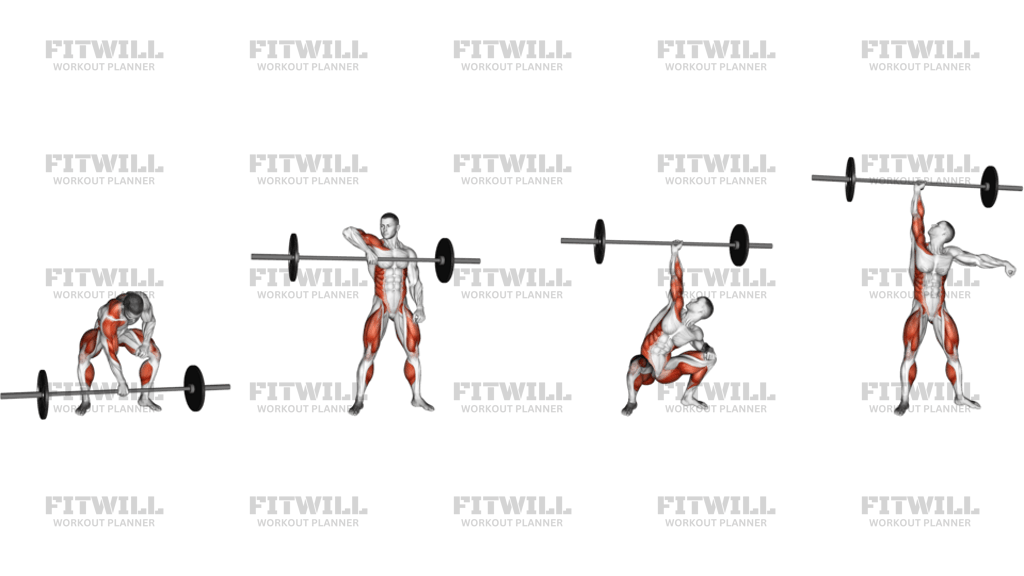
The Squat with Standing Rotation is a functional exercise that combines a classic squat with a rotational movement of the upper body. You lower into a squat with your hands together in front of your chest, then during the ascent you rotate your torso to the side and extend your arm upward toward the ceiling. The exercise simultaneously targets the lower body, core, and shoulder stability, making it an excellent full-body movement for athletic performance.
The main work is performed by the quadriceps, glutes, and hamstrings during the squat itself, while the rotational part strongly engages the obliques, the deep core stabilizers, and the shoulders. Because the torso must remain stable and controlled throughout the movement, the exercise also develops coordination and balance.
The key to correct execution is a stable, shoulder-width stance with feet slightly turned out. During the descent, keep your back straight and chest up, and keep your hands together in front of you. On the ascent, generate the rotation from the torso, not just from the arms, so that the effort is truly transferred to the core muscles.
Perform the movement in a controlled manner and without rushing. The rotation should be smooth and not jerky, and your eyes should follow your extended hand. This exercise is suitable for both beginners and advanced trainees, as the load can be gradually increased with a dumbbell, kettlebell, or medicine ball.
[ Dnevnik in načrtovalec vadb ]
Načrtuj naslednjo vadbo v Fitwillu
Načrt in dnevnik vadbe imej pri roki, ko želiš začeti.


Navodila za izvedbo
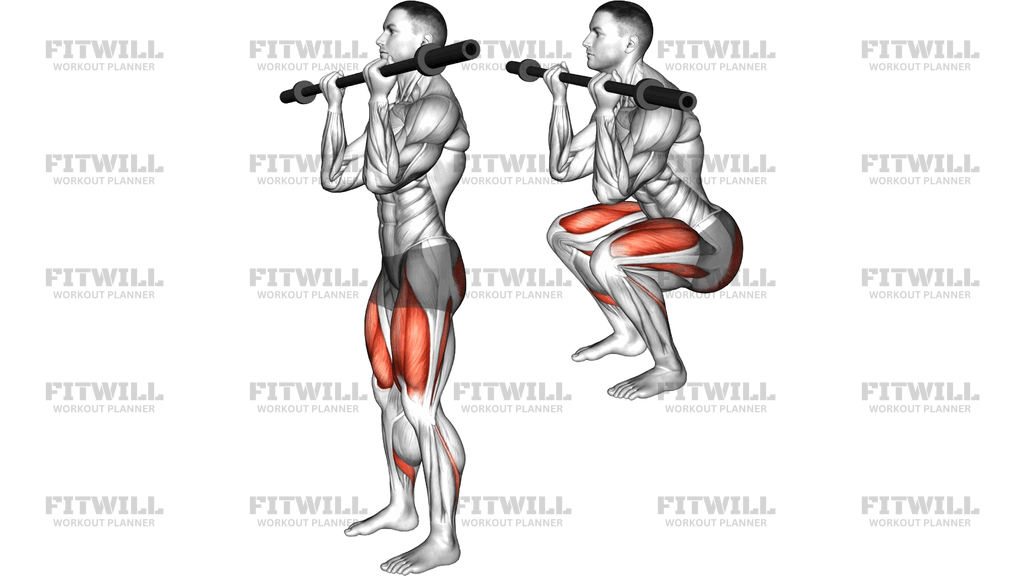
- Stand upright with your feet about hip-width apart, toes slightly turned out, and your hands clasped together in front of your chest.
- Engage your core and keep your back straight and your chest up throughout the entire exercise.
- Inhale and lower into a squat by bending at the knees and hips at the same time, sitting back and down between your feet.
- Descend until your thighs reach at least parallel to the floor, or as deep as your mobility allows, keeping your heels on the floor.
- Begin the ascent by pushing through your whole foot and engaging your glutes and quadriceps.
- As you rise, simultaneously rotate your torso to one side and extend the arm on that side straight up toward the ceiling, while your eyes follow your hand.
- Return your arm to the starting position and your torso to face forward, then lower back into a squat.
- On the next ascent, rotate to the opposite side and continue alternating throughout the set.
- Exhale during the ascent and rotation, and inhale during the descent; after completing the set, return to the upright standing position.
Nasveti za vadbo
- Keep the weight evenly distributed over the whole foot, and do not let your heels lift or your knees cave inward.
- Generate the rotation from the torso, not only from the arm, so that the effort truly engages the obliques and core.
- Keep your hips facing forward during the rotation; only the upper body turns, which increases the stability requirements of the lower body.
- Your eyes should follow your extended hand, as this improves control and helps you achieve a full rotation.
- Do not rush the movement; a slower and controlled tempo means better activation of the core and more benefits from the exercise.
- If your balance is poor, first perform the exercise without weight and only later add a light dumbbell, kettlebell, or medicine ball.
- Keep your shoulders relaxed and away from your ears during the rotation, avoiding hunching them toward your neck.
- Once you add weight, hold it with both hands at your chest and keep it stable during the squat so it does not pull you forward.
- Begin with fewer repetitions on each side and gradually increase the number as your coordination and stability improve.
Pogosta vprašanja
Which muscles does the Squat with Standing Rotation work the most?
The quadriceps, glutes, and hamstrings perform the main work during the squat, while the obliques, deep core stabilizers, and shoulders are engaged during the rotation. This is a full-body exercise with an emphasis on the trunk.
Why is a rotational movement added to the squat?
The rotation trains the torso in a functional way, as it strengthens the obliques and the deep stabilizing muscles that are important for sports movements and everyday activities. At the same time, the exercise improves coordination and stability of the whole body.
Is the Squat with Standing Rotation suitable for beginners?
Yes, it is also very suitable for beginners. It is recommended to first master the movement without weight or with just a light load, so that you learn the coordination between the squat and the rotation.
Should I perform the exercise with weight or without?
Start without weight until you master the technique and balance. Later, you can hold a light dumbbell, kettlebell, or medicine ball with both hands at your chest, which increases the demands on the core and lower body.
How deep should I squat during the exercise?
Aim for thighs at least parallel to the floor, or as deep as your mobility allows while keeping your heels on the floor and your back straight. Depth is more important than speed or load.
Why do I lose balance during the rotation?
Loss of balance is usually caused by rotating the entire body, including the hips, instead of only the upper body, or by rushing the movement. Slow down, keep your hips facing forward, and engage your core before each rotation.
How many repetitions should I perform on each side?
A good starting point is 8 to 12 repetitions on each side, depending on your fitness level and whether you are using additional weight. The important thing is that you perform the same number of repetitions on both sides to develop your body evenly.
Can I do this exercise if I have problems with my lower back?
With controlled execution and moderate range of rotation, the exercise is usually well tolerated, but in case of existing lower back problems, first consult a physiotherapist or doctor. Avoid sudden, jerky rotations and never work through pain.
How does the Squat with Standing Rotation differ from a classic squat?
The classic squat mainly targets the lower body, while this variation additionally engages the obliques, the deep core stabilizers, and the shoulders through the rotation. This makes it a more comprehensive, functional exercise for the whole body.