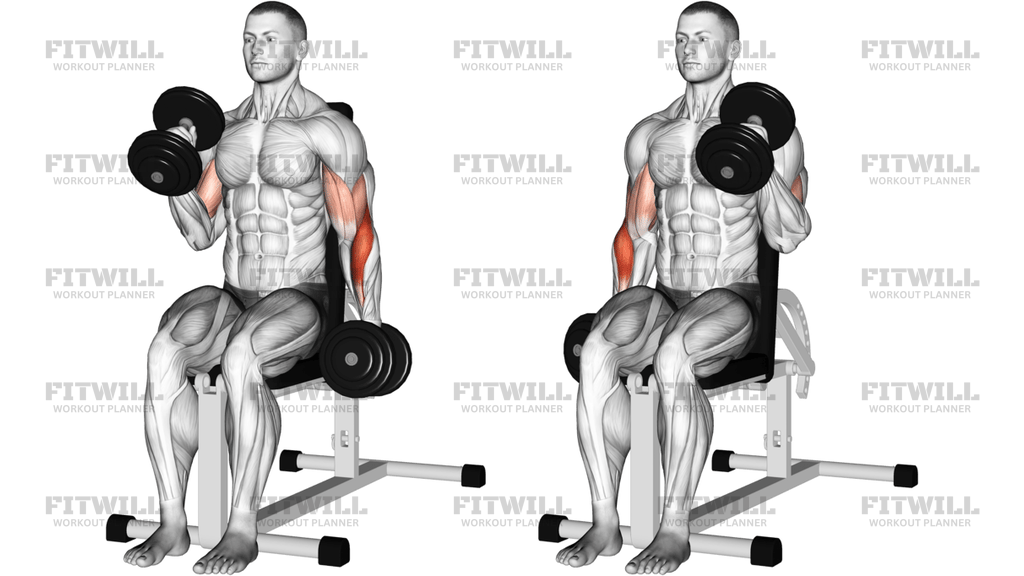
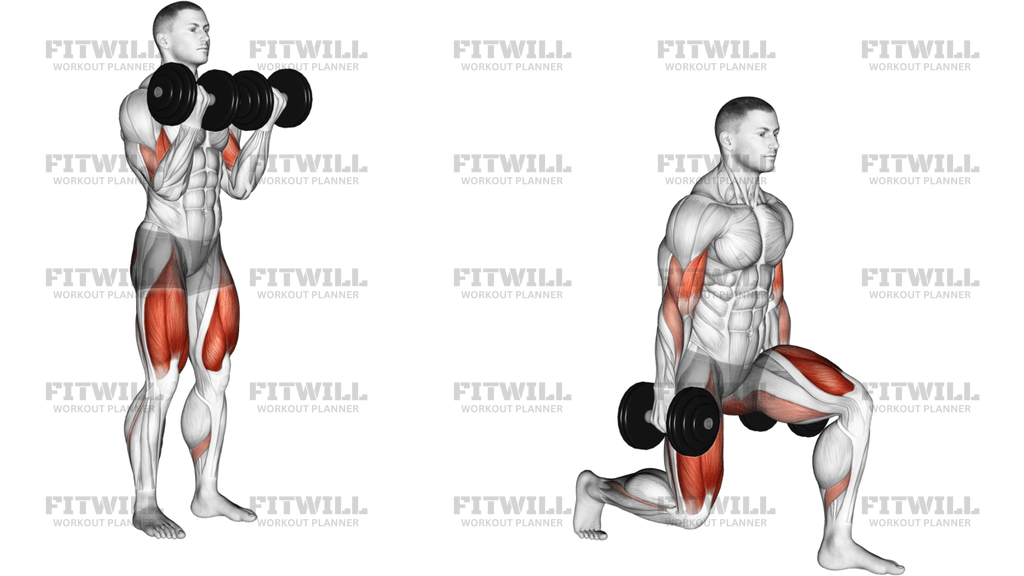
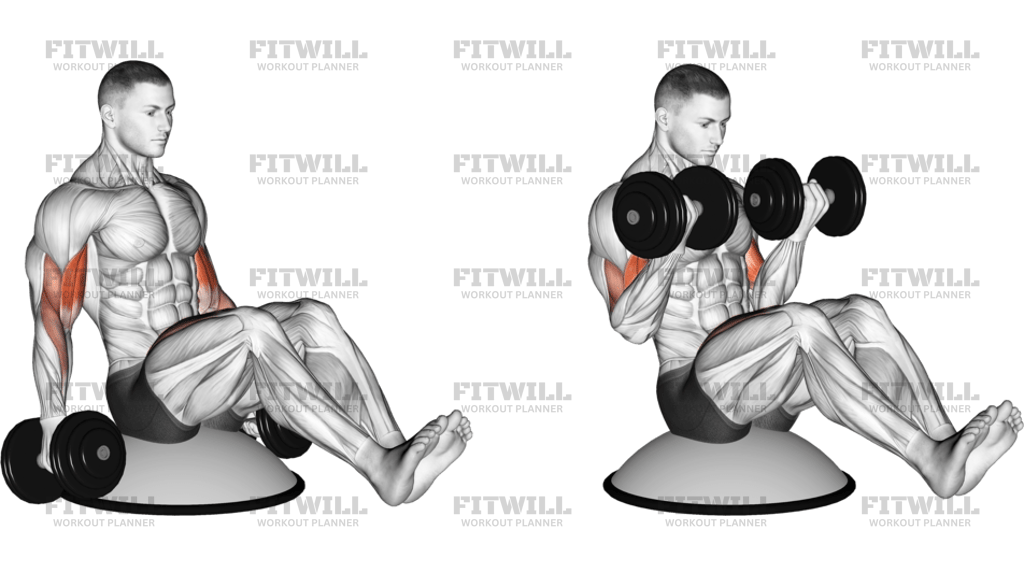
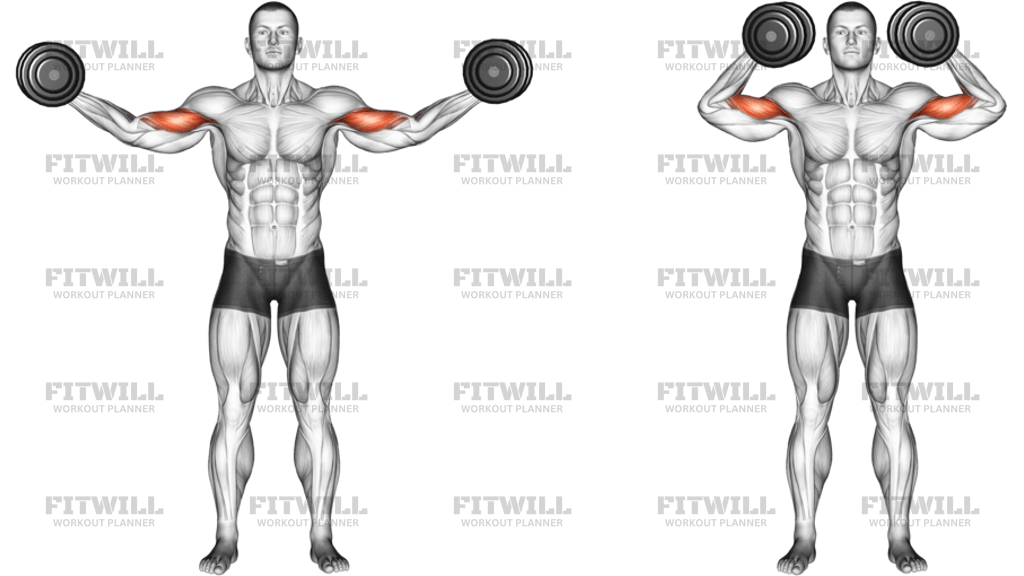
Seated Concentration Curl With Dumbbell In Reverse Grip
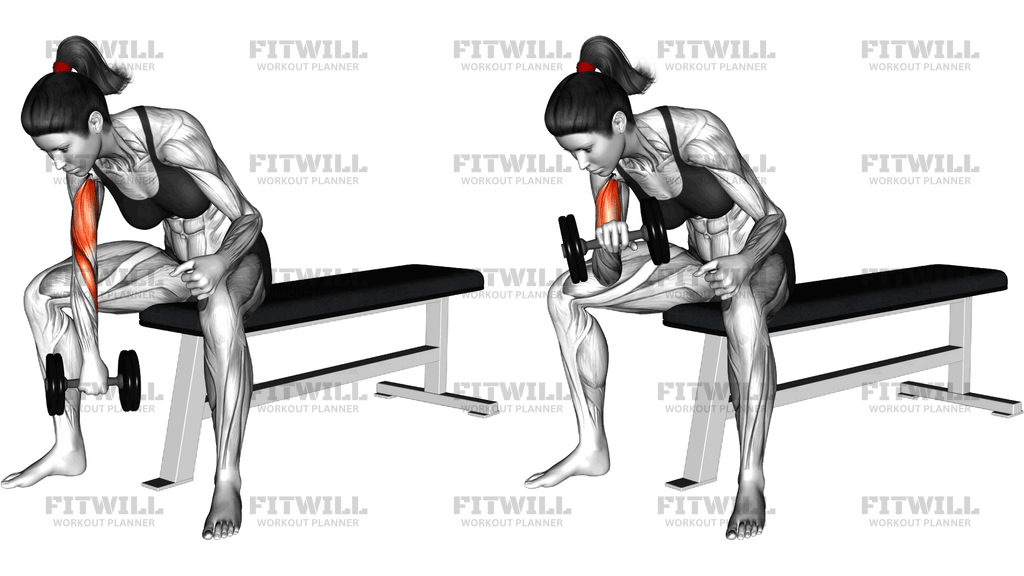
Seated concentration curl with dumbbell in reverse grip is a single-arm biceps variation performed sitting on a flat bench, with the torso leaning forward and the working elbow braced against the inside of the thigh. Instead of the usual underhand grip, you hold the dumbbell in a pronated grip with the palm facing down, which shifts the load away from the biceps brachii onto the brachialis and brachioradialis. Because the concentration setup eliminates momentum and body movement, every repetition must be performed solely with the elbow flexors.
This exercise is suitable for trainees who already perform standard curls and want to thicken the upper arm and forearm without adding more total arm volume. The brachialis lies beneath the biceps, so developing it pushes the biceps upward and can improve the appearance of arm width and definition. The reverse grip also makes it a good choice for anyone whose wrists feel uncomfortable in a fully supinated position, since the palm-down orientation is easier on the wrist joint for many trainees.
It is precisely the setup that makes this a concentration curl rather than just another reverse curl. Sitting on the bench with feet planted wide apart, you lean your torso forward until the back of your upper arm presses against the inside of the thigh near the knee. This point of contact anchors the elbow in place, so when the dumbbell gets heavy, you cannot swing your torso or push the elbow forward to cheat the weight up. Your free hand rests on the opposite thigh or knee for balance and support.
The execution is simple but demanding. With the arm hanging straight down and the palm facing the floor, curl the dumbbell toward your chest in a smooth arc, moving only the forearm while the upper arm remains glued to the thigh. Briefly squeeze at the top, then lower the weight under control all the way down to a fully extended arm. Because the reverse grip is mechanically weaker than a supinated grip, expect to use noticeably less weight here than in a standard concentration curl.
In practice, this exercise fits well at the end of an arm or upper body workout as a finishing exercise, or as the only direct work for the elbow flexors on a day when you want strict, isolated repetitions. During the forward lean, keep your lower back in a neutral position by hinging at the hips instead of rounding your spine, and end the set when you can no longer keep your elbow against your thigh. Choose a weight you can lift for at least eight controlled repetitions, and switch arms only when you have completed all repetitions on one side.
[ Dnevnik in načrtovalec vadb ]
Dodajte naslednjo vadbo v Fitwill
Naj bosta načrt in dnevnik vadbe pripravljena, ko boste pripravljeni vi.


Navodila
- Sit sideways on a flat bench with both feet flat on the floor and legs spread wider than shoulder width, so the working arm fits between them.
- Hinge forward at the hips until your chest is above your knees, then pick up a dumbbell in one hand with a reverse grip, palm facing down and knuckles facing forward.
- Press the back of your upper arm firmly against the inner side of the thigh on the same side, just above the knee, and let the dumbbell hang straight down with the arm fully extended.
- Place your free hand on the opposite thigh or knee to stabilize your torso and keep your weight evenly distributed over your feet.
- Lightly engage your core and keep your spine long; do not round your lower back as you lean in.
- Curl the dumbbell toward your chest by bending only at the elbow, keeping the back of your upper arm in constant contact with the thigh.
- At the top, bring the dumbbell as close to the line of your shoulder as the range of motion allows, and briefly squeeze your forearm and upper arm.
- Slowly lower the dumbbell along the same arc until the arm is straight again, resisting the weight on the way down instead of dropping it.
- Exhale as you curl up, inhale as you lower, and keep your breathing steady throughout the set.
- Perform all repetitions on one arm, then grip again and repeat on the other side, matching the number of repetitions with the same elbow position and tempo.
Nasveti in triki
- The most common cheat on this exercise is the elbow sliding forward off the thigh as fatigue sets in; if you feel your upper arm pulling away from the thigh, end the set instead of finishing the repetition.
- Do not turn the exercise into a wrist curl. With a reverse grip, there is a temptation to bend at the wrist to nudge the dumbbell up, so keep your wrist neutral and locked in line with the forearm.
- Start with less weight than you think you need. The palm-down grip removes the biceps' strongest position, so a weight that feels easy in a regular curl often stalls halfway here.
- Keep your torso angle fixed. If your chest rocks toward the dumbbell at the top, the brachialis is no longer doing the work; reduce the weight until the lean remains motionless.
- Lower the dumbbell all the way to a straight arm in each repetition. Partial reps at the bottom are the main reason trainees see little progress with reverse grip concentration work.
- Hinge at the hips to get into the forward lean, not at the lower back. Push your hips back on the bench and think about lengthening your spine instead of slouching.
- If your wrist aches in the pronated position, turn your palm slightly inward or use a dumbbell with a thinner handle before abandoning the exercise.
- Keep the shoulder of the working side relaxed and slightly pulled back; shrugging toward the ear shifts tension out of the arm and into the trapezius.
- Rest 30 to 60 seconds between sides so the second arm gets the same quality of work as the first.
Pogosta vprašanja
Which muscles does the seated concentration curl with dumbbell in reverse grip target?
The reverse, palm-down grip puts the brachialis and brachioradialis in the leading role, with the biceps brachii assisting and the forearm flexors gripping the dumbbell. Compared to a concentration curl with a supinated grip, the biceps contribute noticeably less.
Why is the elbow pressed against the inner thigh in this exercise?
The thigh acts as a fixed brace that prevents the elbow from moving forward or swinging, which eliminates momentum and forces the forearm to do all the work. This also creates a strict single-joint movement that makes the set easier to judge.
Can beginners do the seated concentration curl with dumbbell in reverse grip?
Yes, as long as they start with a light dumbbell and focus on keeping the elbow braced and the wrist straight. The braced position actually helps beginners, as it prevents most of the typical curl cheats.
Why should I use less weight than in a regular curl?
The pronated grip shortens the biceps' leverage and loads the smaller brachialis, so the arm is mechanically weaker in this position. Choosing a lighter weight allows you to maintain full range of motion and control instead of half reps.
What is the most common mistake with this exercise?
Letting the elbow slide forward off the thigh and rocking the chest toward the dumbbell to finish reps. Both turn the exercise into a sloppy partial curl, so if you cannot maintain contact, the set is over.
Can I do the seated concentration curl with dumbbell in reverse grip without a bench?
You can sit on a sturdy chair or box, as long as it allows the forward lean, feet flat on the floor, and the elbow-to-thigh brace. A flat bench is simply the most stable and consistent option.
How does this exercise differ from a standard concentration curl?
The setup and elbow position are the same, but the palm faces the floor instead of the ceiling. This single change shifts the emphasis from the biceps to the brachialis and brachioradialis, and typically requires a lighter load.
How many sets and reps should I perform?
Two to four sets of 8 to 15 controlled repetitions per arm work well as a finishing arm exercise. The strict setup allows for higher quality repetitions, so prioritize tempo and range of motion over load.
Is the reverse grip safe for the wrists?
Many trainees find the palm-down position more comfortable than a fully supinated curl, because the wrist is not rotated to its end range. Keep your wrist neutral, avoid bending it during reps, and stop if you feel sharp pain.