Chopping Wood With Resistance Band While Standing
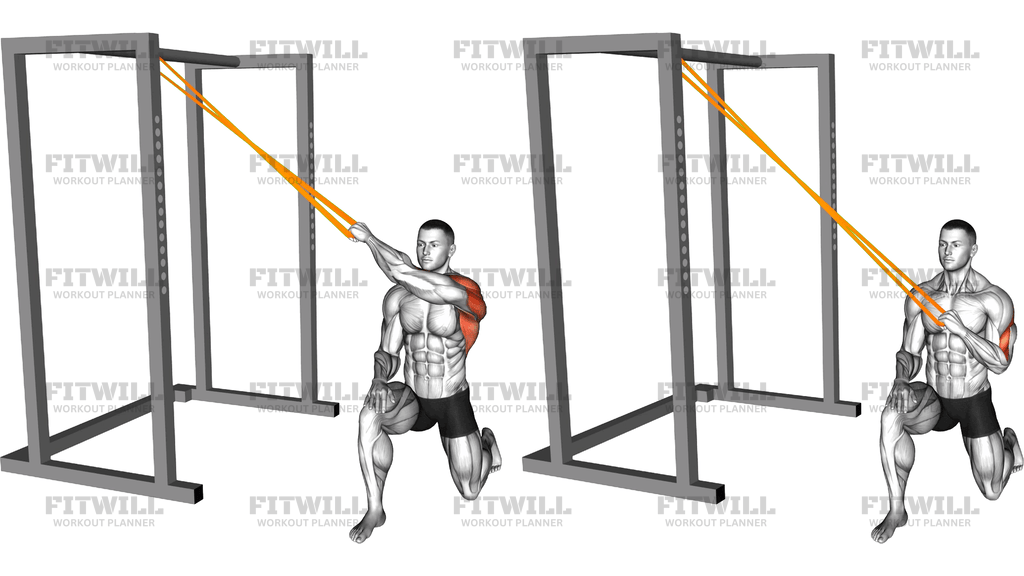
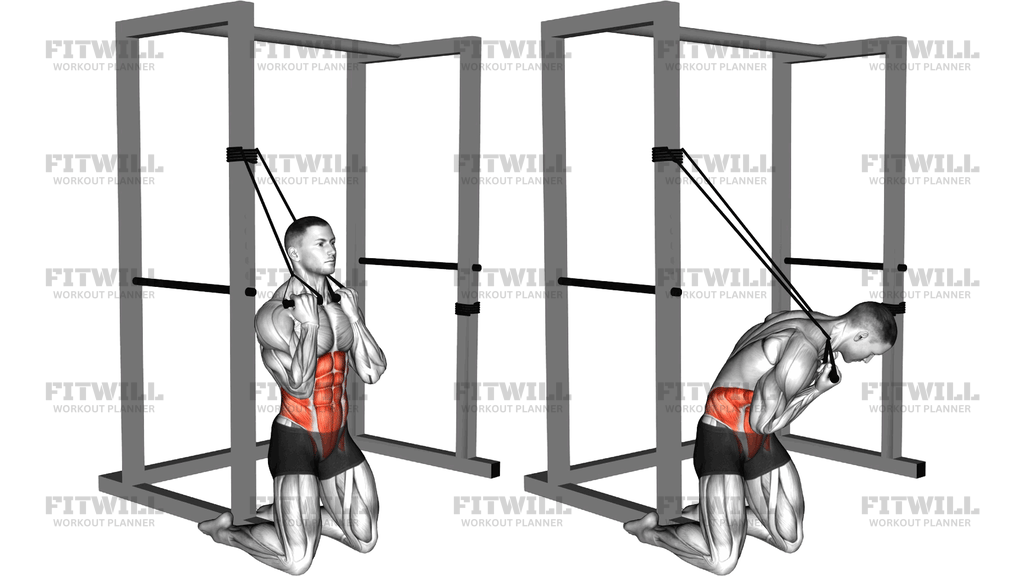
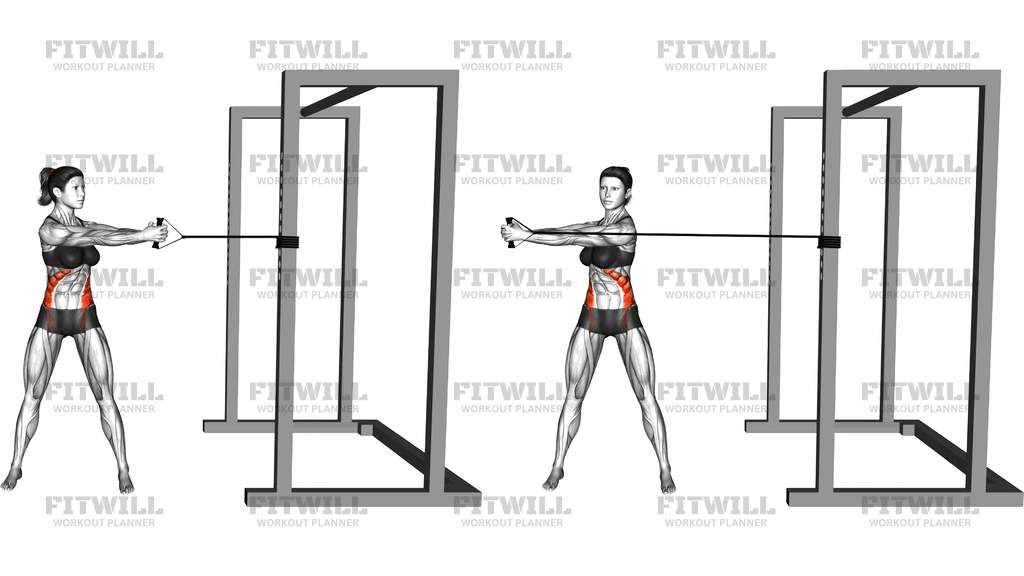
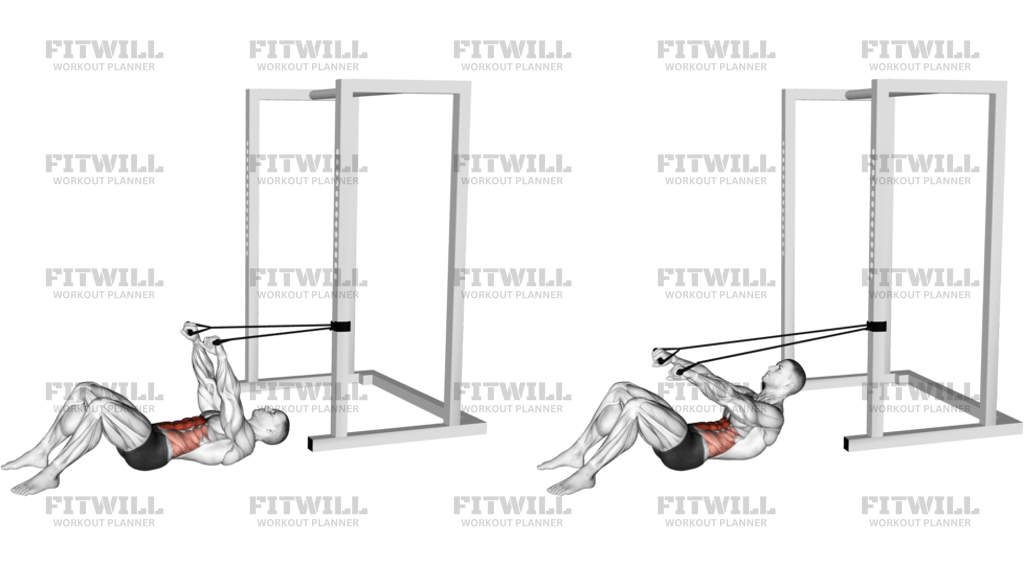
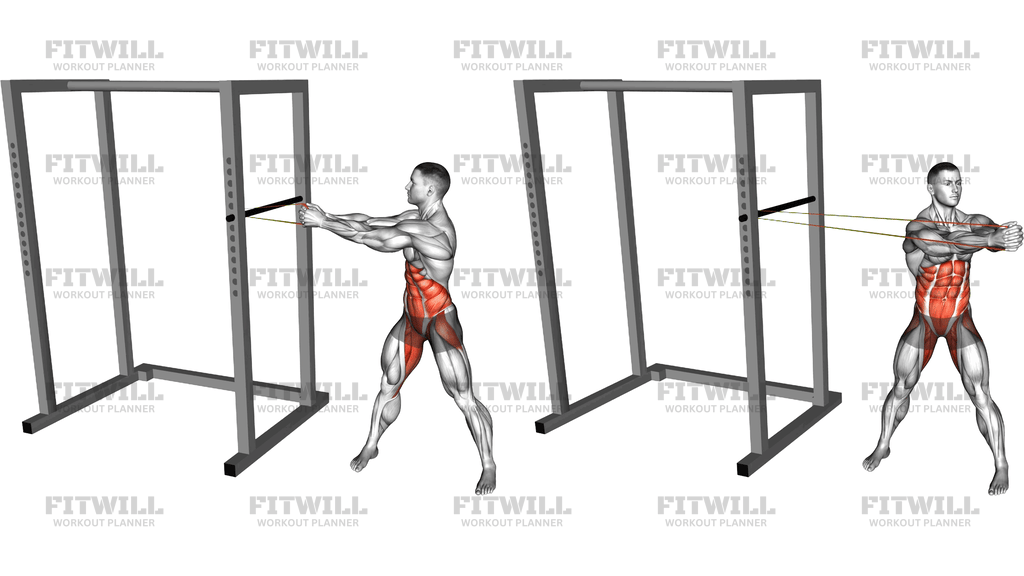
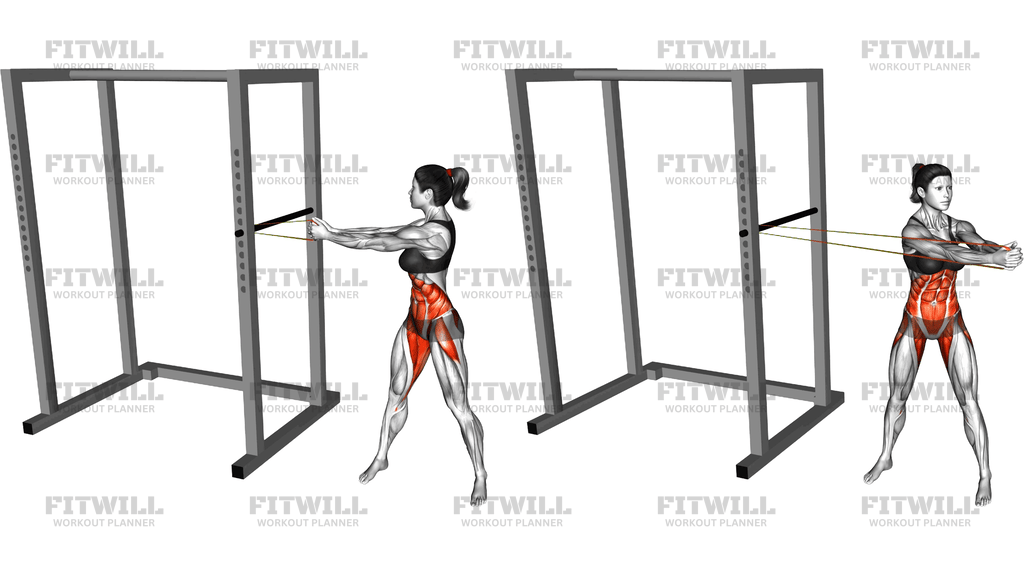
Chopping wood with resistance band while standing is a rotational exercise for the torso that imitates the diagonal pulling or swinging motion when chopping wood. The resistance band is attached to a rack or a stable vertical support at approximately shoulder height, you stand sideways to the anchor point and grip the band with both hands. From this position you pull the band diagonally across the front of your body, rotating your torso and hips, and finish with your hands extended to the opposite side before slowly and controlled returning the band to the starting position. Since you remain on your feet the entire time, the movement trains rotation the way you actually use it in sports and everyday life.
The main work is done by the obliques — the muscles along the sides of your waist that drive the rotation of the torso and resist unwanted twisting. The rectus abdominis helps bring the ribs toward the opposite hip, the glutes and hips generate power and stabilize the rotation of the lower body, and the shoulders and upper back guide the band along its diagonal path. The standing position also means your legs and lower back are quietly working to keep your balance while the band tries to pull you toward the anchor point.
This exercise is suitable for a wide range of people. Athletes in rotational sports such as golf, tennis, baseball and hockey use it to build rotational power that transfers to their discipline. Regular trainees use it to add variety to their core training beyond planks and crunches, and people with sedentary work appreciate the mobility in the hips and torso it develops. Since the band's resistance is smooth and gentle on the joints, it is also an accessible choice for beginners once the anchor point is secure.
The setup here matters more than in most core exercises. Attach the band at the correct height, stand far enough away so there is tension before starting, and position your feet so you can rotate through the hips instead of forcing the turn through the spine. Grip the band with both hands together, arms relatively straight, and keep your eyes on your hands throughout the movement. A poorly secured anchor or too narrow a stance turns a precise rotational exercise into jerky, lower back straining pulling.
To perform it well, start the movement from the ground up: shift your weight and pivot the foot closer to the anchor point while your torso turns, letting the arms mostly accompany the movement. Pull explosively and return slowly, resisting the band the entire way back instead of letting it snap you into the starting position. If your lower back arches or your shoulders rise, the resistance is too high or the range of motion is too long.
Train both sides evenly. Most people have a dominant direction of rotation, and training only the stronger side reinforces imbalances that show up in sports and posture. A set or two per side at the end of a workout or as part of a core circuit is completely sufficient to start.
[ Дневник и планиране на тренировки ]
Добавете следващата си тренировка във Fitwill
Вашата програма и тренировъчен дневник винаги подръка.


Как се изпълнява
- Attach a resistance band to a rack or stable vertical support at approximately shoulder height and make sure the attachment is secure before pulling.
- Stand sideways to the anchor point with your right side toward it if chopping to the left, feet approximately shoulder-width apart or slightly wider, knees slightly bent.
- Reach across your body and grip the band with both hands, fingers interlaced or one hand over the other, arms extended with slight elbow bend.
- Step away until there is steady tension in the band even in the starting position, and tighten your torso as if bracing for a light push to the stomach.
- Pull the band diagonally across the front of your body toward the opposite hip or side, rotating your torso and pivoting the foot closer to the anchor point so your hips turn with you.
- Finish with both hands extended to your far side, arms mostly straight, shoulders lowered and eyes following your hands.
- Pause briefly in the end position, then slowly resist the band back to the starting position over two to three seconds, letting your torso rotate and the near foot pivot back.
- Exhale as you pull across, inhale as you return with control.
- Complete all repetitions on one side, then switch sides so you face the opposite direction and chop to the other side.
- Between sets, step toward the anchor point or release the band completely before resting so there is no residual tension in your grip.
Практически съвети
- Lead the pull with your hips, not your hands. If your arms do all the work, your obliques miss the whole point of the exercise.
- Let the foot closest to the anchor point pivot naturally. If you force your hips to rotate with that foot glued to the floor, you twist the knee and slow the movement.
- If the band goes slack at the beginning of each repetition, you are standing too close to the anchor point. Step back until there is tension before your torso begins to turn.
- Do not lock your knees. Slightly bent knees allow the hips to participate and protect your lower back from absorbing the rotation.
- Do not let the band pull your shoulders forward and up as you return. Keep the shoulder blades settled so the rotation comes from your torso, not your neck.
- Match your range of motion on both sides. If one side rotates further, work within the shorter side's range until both feel equal.
- Choose a band tension that lets you pause at the end position without being pulled backward. If the return is fast and uncontrolled, switch to a lighter band.
- Keep your head and eyes moving with your hands. Following the band keeps your spine aligned and makes the rotation feel smoother.
Често задавани въпроси
Which muscles does chopping wood with resistance band while standing work?
The obliques along the sides of the waist are the primary movers, with support from the rectus abdominis, glutes, hips and the muscles of the shoulders and upper back that guide the band.
How high should I attach the band for chopping wood with resistance band while standing?
Shoulder height is the standard setup and corresponds to the diagonal path shown in this version. A lower attachment shifts the emphasis toward a low-to-high lifting pattern, which changes the feel but still trains rotation.
Is chopping wood with resistance band while standing suitable for beginners?
Yes, as long as you start with a light band and master the foot pivot before adding speed. The smooth band resistance is gentler on the joints than heavy weighted rotations.
Why does my lower back hurt when doing chopping wood with resistance band while standing?
This usually means the rotation is coming from your lumbar spine instead of your hips and mid-back, or the band is too heavy and snapping you through the return. Tighten your torso, pivot the near foot and slow down the eccentric portion.
Should I do both sides when chopping wood with resistance band while standing?
Always. Training only your stronger direction of rotation reinforces side-to-side imbalances, so match the repetitions on each side, even if one feels weaker or less coordinated.
Can I do chopping wood with resistance band while standing without a rack to attach to?
You can loop the band around any stable vertical support, such as heavy furniture, a squat stand or a door anchor set at shoulder height. Just make sure it cannot slide or release under steady tension.
How does chopping wood with resistance band while standing differ from the cable wood chop?
The movement path is the same, but the band's resistance increases as you pull away from the anchor point, while the cable maintains constant tension. Bands are more portable and easier to reset, while cables allow smaller load increments.
How many repetitions and sets should I do of chopping wood with resistance band while standing?
For control and core endurance, 10 to 15 reps per side for 2 to 3 sets work well. For more power-focused training, use fewer reps, around 6 to 8 per side, with a crisp pull and slow return.
Can I use chopping wood with resistance band while standing as a warm-up?
Yes, with a light band and slower reps it is an effective way to wake up torso rotation and hip mobility before lifting or a rotational sport.