Bent-over Row With Resistance Band (Version 2)
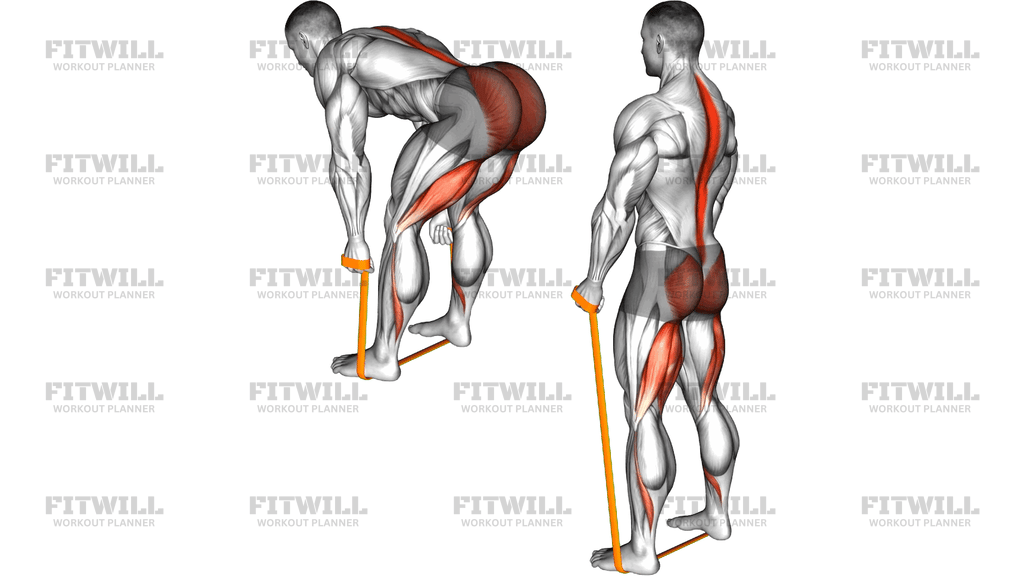
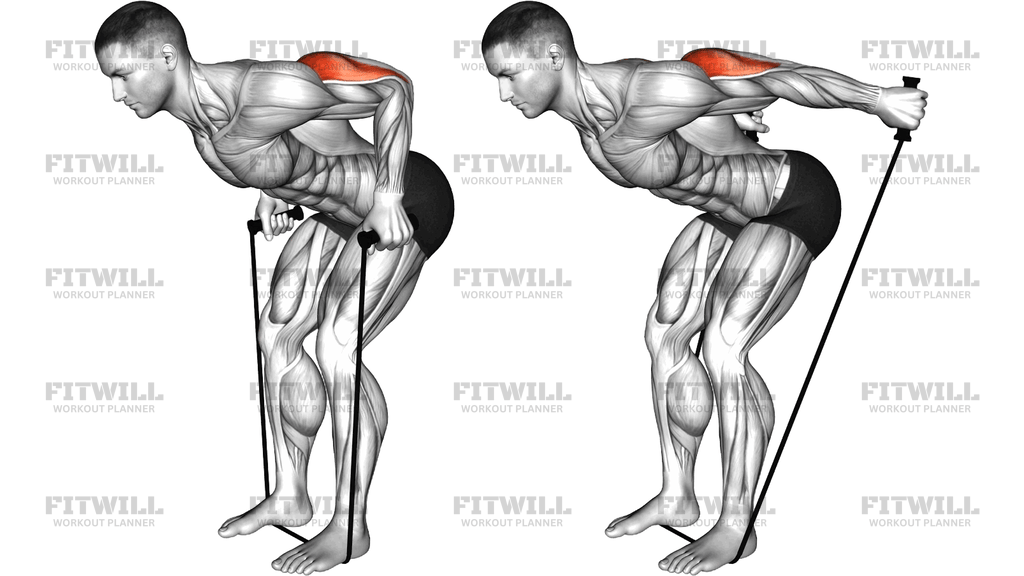
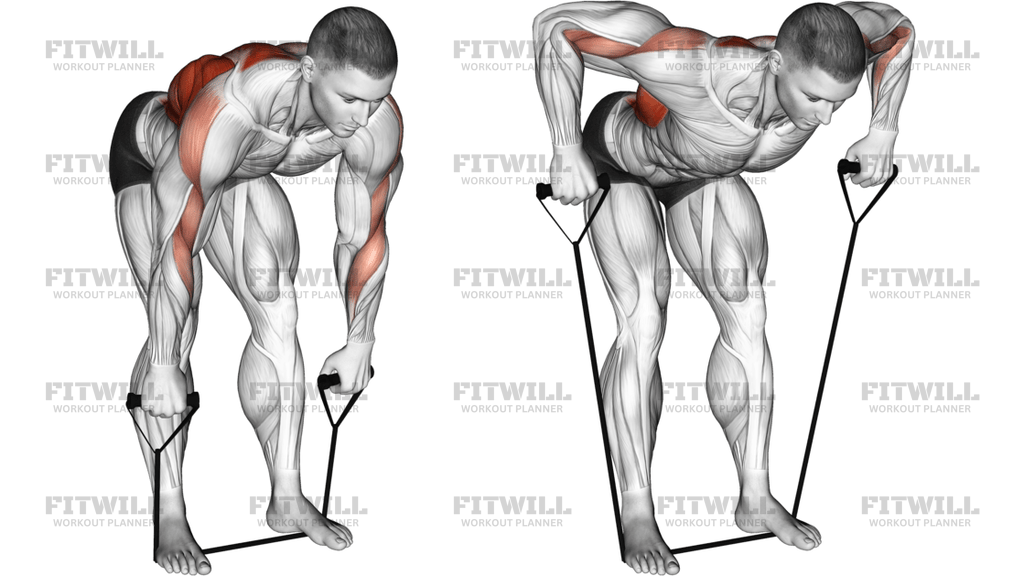
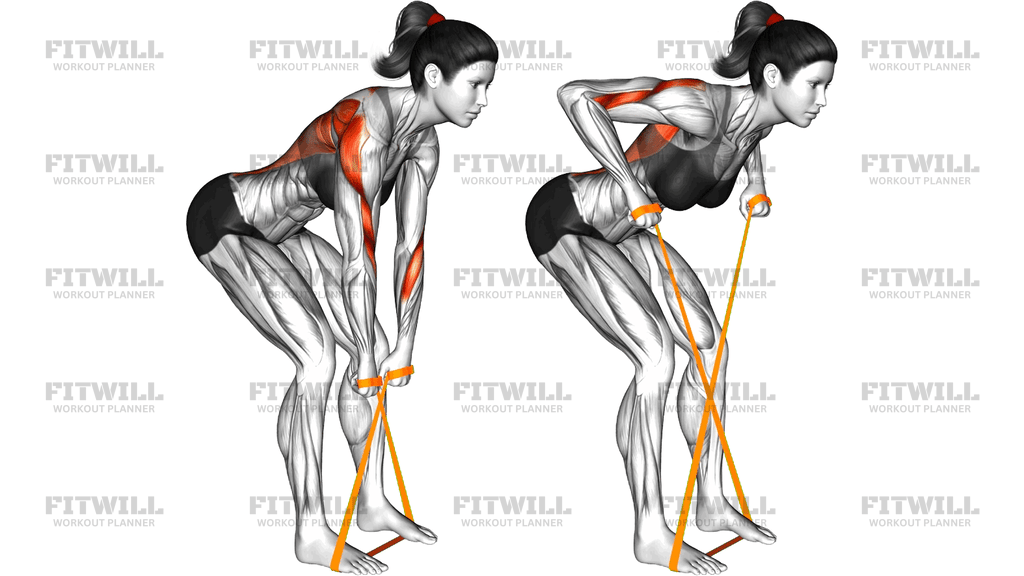
Bent-over row with resistance band (Version 2) is a row performed in a torso bend, while standing on the band, which is crossed under your feet so the ends swap sides before you grasp them in your hands. This crossed setup changes the direction of pull slightly compared to a classic row with a band and creates a small inward angle, thanks to which the lats and upper back are worked along a slightly different path. Bend at the hips with slightly bent knees, keep your back flat and pull the ends of the band toward your lower ribs.
This movement will be appreciated by anyone who trains at home, travels, or wants a joint-friendly row without a heavy load. Since the resistance of the band increases as it stretches, the hardest part of each repetition is at the top, where your shoulder blades squeeze together. Beginners can start with a light band and a shortened range of motion, while more experienced trainees can reach for a stronger band or shorten the slack for more tension at the bottom.
The main muscles are the lats and the muscles between the shoulder blades, with the rear delts and biceps assisting with every pull. Your hamstrings, glutes, and lower back hold the bend position the whole time, so this is as much an exercise for posture and stability as it is a pulling exercise. If you spend long hours sitting, this combination of back pulling and hip bend is exactly what most routines of sedentary people are missing.
The setup is more important here than in most exercises with a band. Your feet must firmly press the band to the floor, the bend should come from the hips rather than rounding of the spine, and the torso angle should remain approximately the same from the first repetition to the last. If you straighten up while pulling, the band is taking work from your back and transferring it to your upper arms.
For good performance, pull your elbows back and slightly out toward your hips, lead with the shoulder blades, and briefly pause when your hands reach your ribs. Lower your hands in a controlled manner so that the pull of the band never yanks your arms or shoulders forward. Exhale as you pull, inhale as you return, and if you feel your lower back taking over, correct the bend position.
Typical uses include home upper body sessions, pre-activation before rows with a barbell or dumbbells, and back training with a higher number of repetitions when equipment is limited. Perform the repetitions smoothly, do not jerk the band, and choose a resistance you can handle in every repetition without the torso rocking.
[ Tréninkový deník a plánovač ]
Připravte další trénink ve Fitwill
Mějte plán a tréninkový deník připravené, až budete připraveni vy.


Pokyny
- Lay a resistance band flat on the floor and stand with both feet in the middle of it, approximately hip-width apart.
- Cross the band between your feet so that the left end lies on the right side and the right end on the left, then grasp one end in each hand.
- Bend at the hips until your torso is angled toward the floor, slightly bend your knees, and let your arms hang freely downward with light tension in the band.
- Straighten your back, tighten your core and pull your shoulder blades down and together before you start pulling.
- Row the ends of the band toward your lower ribs, pulling your elbows behind the sides of your body, while keeping the torso angle unchanged.
- At the top, squeeze your shoulder blades together and hold for a short moment.
- Slowly and in a controlled manner lower your hands until your arms are extended, while maintaining tension in the band.
- Exhale as you pull, inhale as you lower.
- Complete the set, then stand up carefully and step off the band one foot at a time so that it cannot snap back toward you.
Tipy a triky
- If the band slips off your heels during the row, widen your stance slightly or use a band with a grippier, flatter section under your feet.
- A rounded lower back is the most common mistake in this bend. Push your hips back and lift your chest until your spine feels long, before you touch the band.
- Maintain a slight knee bend the whole time. Locked straight knees shift the load to the hamstrings and make the bend position harder to hold.
- If your biceps get tired before your back, slow down and focus on pulling with your elbows instead of your hands.
- Do not let your shoulders creep up toward your ears at the top; keep them pulled down, away from your neck, while the shoulder blades squeeze.
- Adjust the tension at the bottom, not during the repetition. Step a little wider for less slack or grip the band lower for more, instead of performing half repetitions to avoid a strong stretch.
- If your torso rises while pulling, the set is too heavy or you are tired. Reduce the tension of the band so that your back does the work, not momentum.
- Crossed bands can rub against your shins at the bottom. Keep your arms slightly wider than your legs so that the band runs outside them.
Často kladené otázky
Which muscles does the bent-over row with resistance band (Version 2) work the most?
The lats and the muscles between the shoulder blades do most of the pulling work, with the rear delts and biceps assisting. The glutes, hamstrings, and lower back hold the bend position the whole time.
Why is the band crossed under the feet in this version?
Crossing the band changes the angle of pull, so each hand is drawn slightly toward the opposite side, which partially shifts the emphasis to the middle of the back. It also keeps the band away from your shins at the bottom of the repetition.
Is the bent-over row with resistance band (Version 2) suitable for beginners?
Yes, as long as you start with a light band and first master the bend at the hips. If holding the bent position is difficult for you, practice the bend without a band until your lower back can stay flat for the whole set.
How far should I bend during this row?
Bend until your torso is significantly angled forward, approximately 45 degrees or lower, while keeping a flat back and slightly bent knees. The exact angle is less important than keeping it the same in every repetition.
What is the most common mistake with this exercise?
Straightening up while pulling, which turns the movement into an upright pull and takes work away from the back. Tighten your core and consciously keep your hips pushed back during the entire set.
How can I make the bent-over row with resistance band (Version 2) harder?
Use a stronger band, reduce the slack by gripping lower on the ends, or slow the lowering phase to two or three seconds. Add repetitions before increasing the tension so the bend position remains clean.
Can I substitute this exercise if I do not have a band?
The bent-over row with dumbbells or a barbell trains a similar movement pattern, and rowing under a sturdy table works at home even without weights. The band version is simply the most portable option.
Is it safe for my lower back?
In general, yes, if you bend at the hips with a flat, braced spine and with resistance you can handle. If you feel your lower back rounding or straining, reduce the load or place your hands on a bench, which will shorten the bend.
How many repetitions and sets should I do?
Two to four sets of 10 to 15 repetitions will suit most goals with a band. Since the resistance peaks at the top of each repetition, end the set when your torso starts to rock or the range of motion shortens.