Bent-Over Barbell Row For Rear Delts
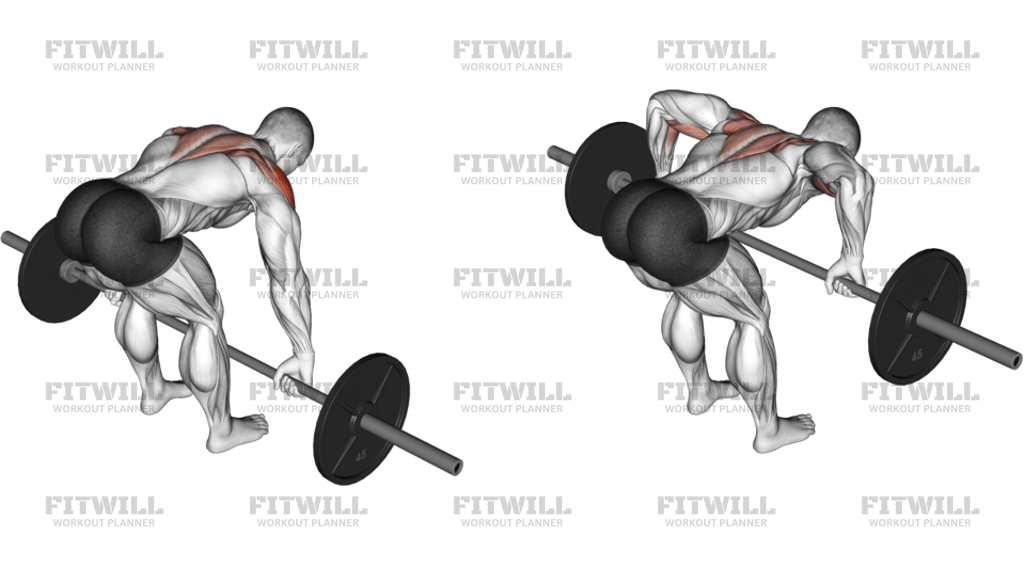
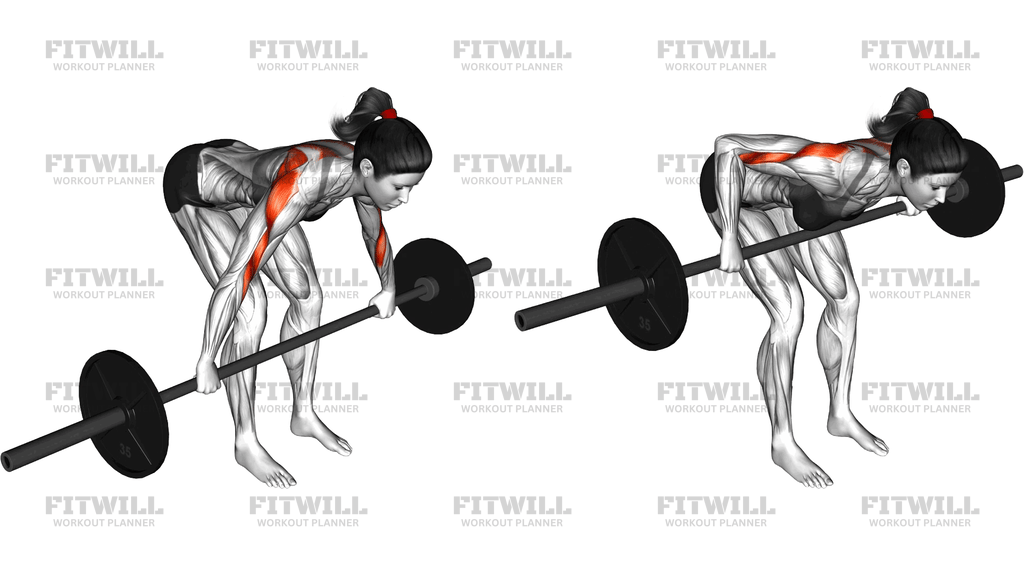
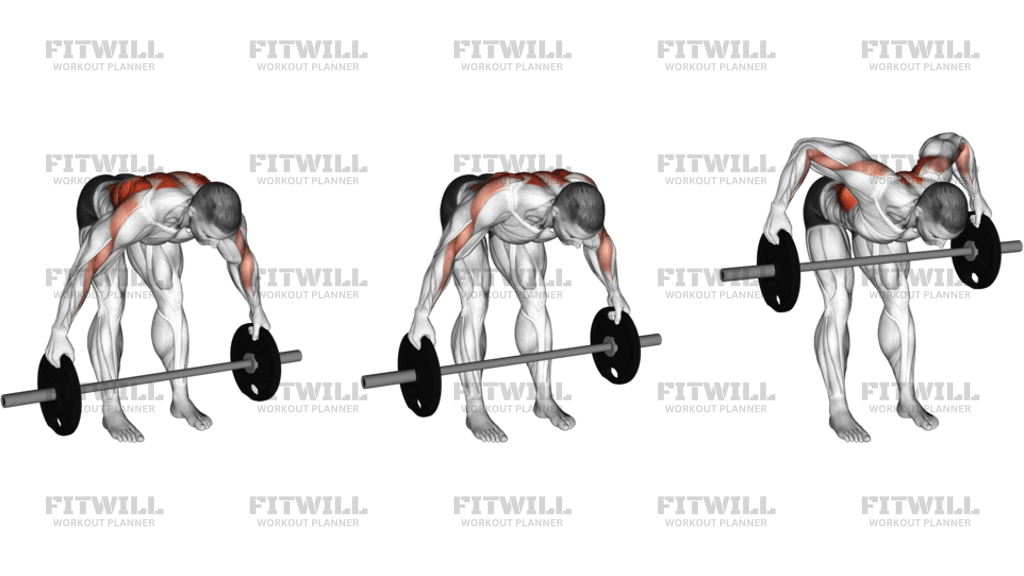
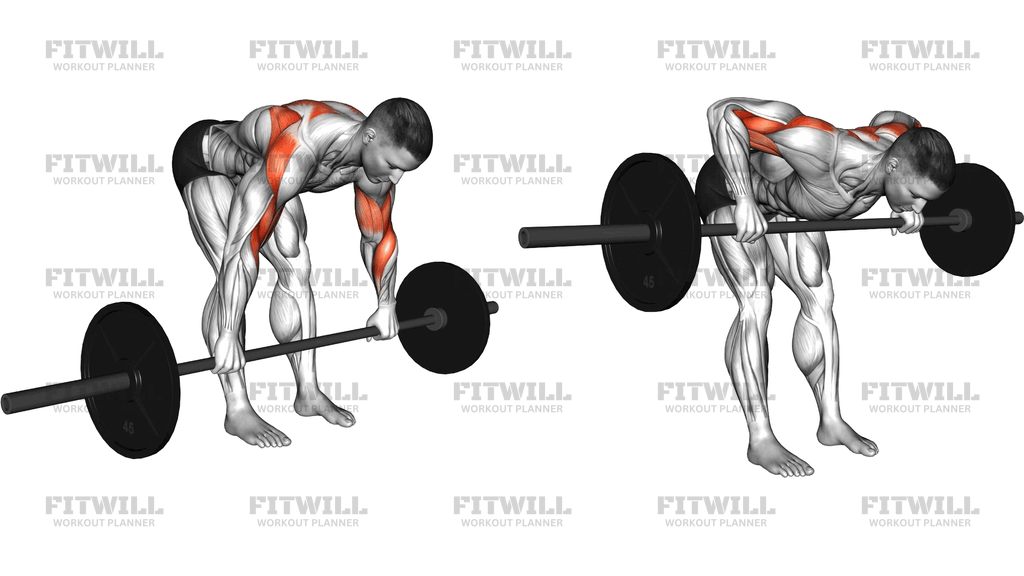
The bent-over barbell row for rear delts is a horizontal row performed with a barbell, in which the torso is leaned forward to nearly parallel with the ground. Unlike the classic barbell row, in which the bar travels toward the lower ribs and the elbows stay close to the body, in this variant you deliberately spread the elbows out to the sides and pull the bar toward your upper chest. This wider elbow path shifts the load away from the lats and to the rear delts, rhomboids, and middle trapezius — the muscles that bring the shoulder blades together and keep the shoulders healthy.
This is one of the few barbell exercises that directly targets the back of the shoulders, an area that most gym-goers neglect. If you bench press, overhead press, or sit at a computer a lot, your rear delts are probably lagging behind your front and side delts. Strengthening them helps balance the development of the shoulders, promotes better posture, and gives the shoulders a full, three-dimensional look from the side and back.
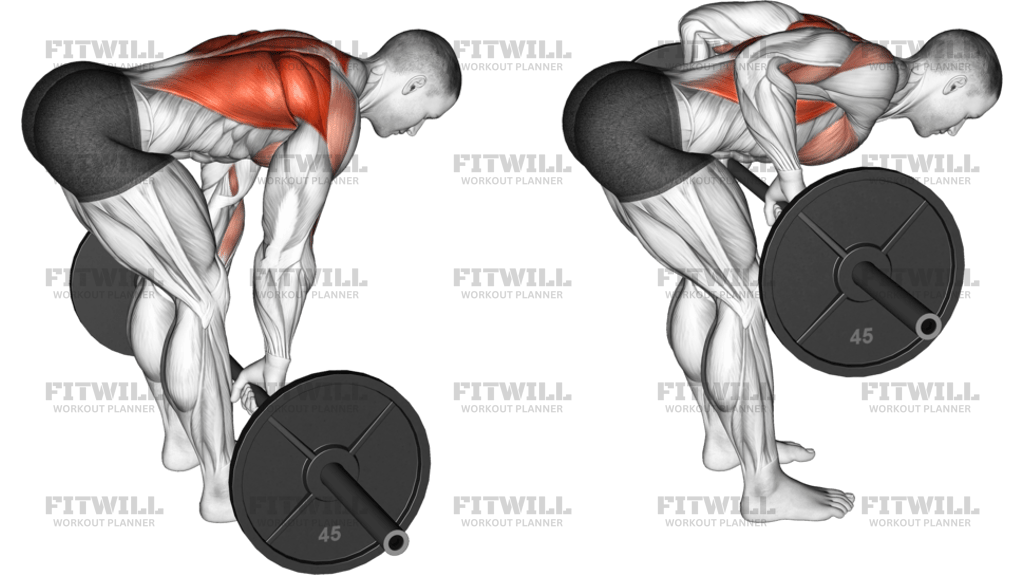
Setup matters here more than in most rows. Since you are bent over at nearly horizontal with a barbell in front of you, your lower back and hamstrings work isometrically the entire time. The angle of your torso determines the path of the pull: the closer to parallel, the better the rear delts are aligned to do the work. If you stand up too high, the movement slides into a classic row and the emphasis on the rear delts fades.
Good execution looks like this: hinge at the hips with slightly bent knees, keep your spine in a neutral position, and let the bar hang directly below your shoulders. Pull by driving the elbows up and out to the sides, not by bending your wrists toward yourself. The bar should end near the upper chest or lower neck, and then lower in a controlled manner all the way to full arm extension before the next repetition. Keep the torso locked in place — once your body starts rocking to move the weight, end the set.
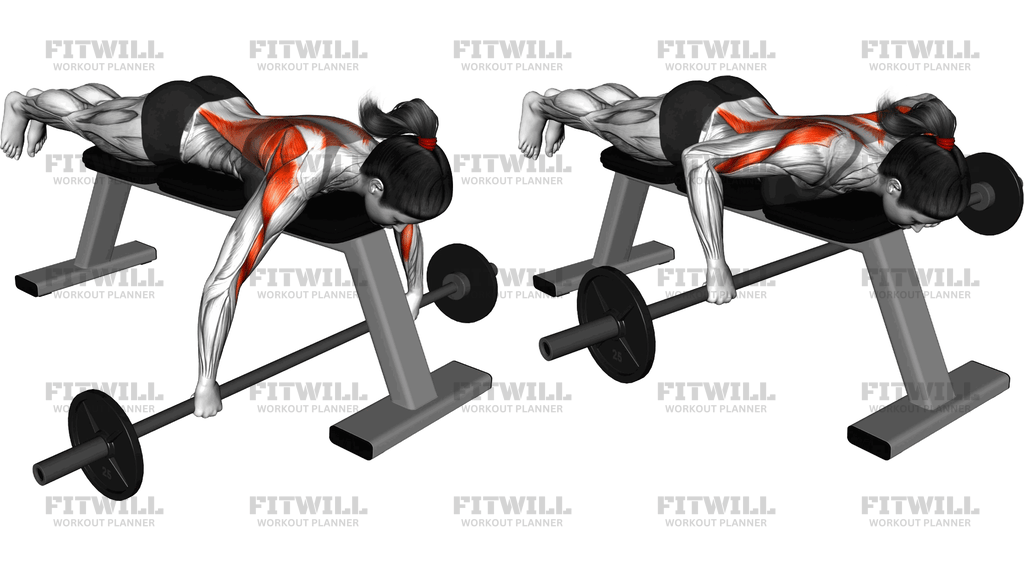
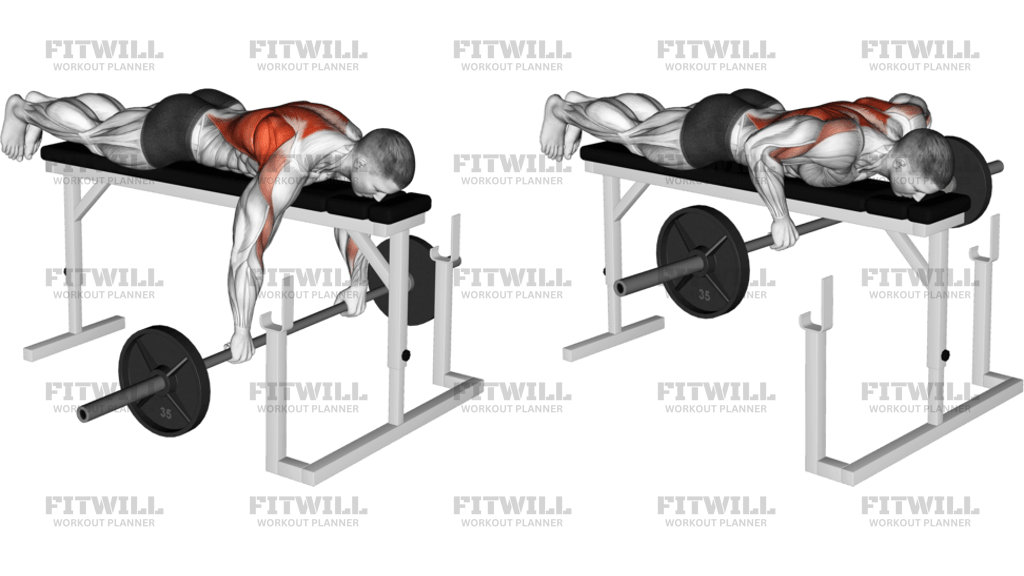
The exercise fits well on back or shoulder days, typically with a moderate weight in the range of 8 to 15 reps. It is especially useful for advanced trainees who have already outgrown light isolation for the rear delts, but heavy rows feel too lat-dominant to them. Since the bent-over position loads the lower back, treat the exercise as a demanding multi-joint movement: warm up thoroughly, choose weights you can control in every rep, and on days when your lower back is already tired, opt for a variation with chest support on a bench.
[ Tréninkový deník a plánovač ]
Připrav si další trénink ve Fitwill
Tvůj plán i tréninkový deník vždy po ruce.


Jak na cvik
- Load a barbell with an appropriate weight, stand with your feet approximately hip-width apart and position yourself so the bar is over the middle of your feet.
- Grip the bar with a pronated grip slightly wider than shoulder-width apart, then hinge forward at the hips until your torso is almost horizontal, with knees slightly bent.
- Let the bar hang straight down below your shoulders with your arms fully extended, and engage your shoulder blades by gently pulling them back without shrugging up.
- Firmly engage your core as if bracing for a light punch, and lock your spine in a neutral position before you start pulling.
- Pull the bar up by leading with your elbows, driving them up and out to the sides until the bar reaches the height of your upper chest or lower neck.
- At the top, briefly squeeze your shoulder blades together and hold the position without shrugging the weight up with your trapezius.
- Lower the bar in a controlled manner back to full arm extension, keeping the elbows pointing out to the sides rather than sliding down to the body.
- Exhale as you pull the bar up, inhale as you lower it, and keep your breathing even throughout the set.
- Perform all reps while holding the bent-over position, then stand fully upright, safely rack or set down the bar, and rest before the next set.
Tipy a triky
- Keep the angle of your torso fixed for the entire set. If your chest rises as you pull, the weight is too heavy and your hips and lower back are turning the row into a sloppy pendulum.
- Think of your hands as hooks. If you feel the front of your arms burning before your rear delts, you are curling the barbell instead of driving your elbows back and out.
- Pull to the upper chest, not to the belly. The path of the bar is what distinguishes this exercise from a classic row — a lower path engages the lats and steals work from the rear delts.
- Do not round your upper back forward as the set gets harder. Dropping your chest allows your shoulders to roll forward and reduces the range of motion through which you can load your rear delts.
- Use a lighter weight than for a regular barbell row. The rear delts are a small muscle and the wide elbow path is a weaker position — expect noticeably lower weight.
- A slight tuck of your chin will keep you from pulling your head up and looking forward, which strains your neck in this bent-over position.
- Chalk or lifting straps come in handy here. Once your grip fails, your sets end long before your rear delts are properly fatigued.
- Warm up your hips and hamstrings first. Holding a nearly parallel hinge for the entire set puts more demands on the backside of your body than most gym-goers expect.
- If your lower back fatigues before your shoulders, switch to a variation with chest support for heavier sets and use this exercise only for lighter work.
Často kladené otázky
Which muscles does the bent-over barbell row for rear delts work?
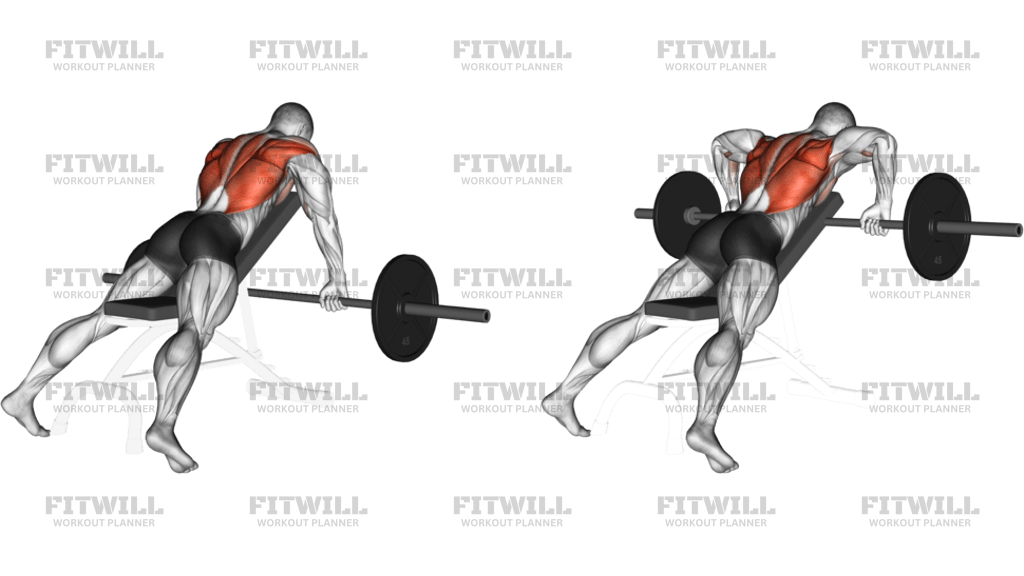
The main work is done by the rear delts, with a significant contribution from the rhomboids and middle trapezius, which pull the shoulder blades together. The biceps assist in the pull, while the lower back, glutes, and hamstrings work statically to hold the bent-over position.
How does the bent-over barbell row for rear delts differ from a regular barbell row?
A regular row uses a narrower grip with elbows close to the body and pulls the bar toward the lower ribs, emphasizing the lats and the thickness of the middle of the back. The row for rear delts uses a wider grip with elbows out to the sides and pulls the bar to the upper chest, which shifts the emphasis to the rear delts.
Can beginners do the bent-over barbell row for rear delts?
Yes, but beginners should start with a very light bar and practice the hip hinge first, because safely holding a nearly horizontal torso position is the main skill. Beginners often learn the movement pattern more easily with rows for rear delts on a machine with chest support or on a cable machine before moving on to the barbell version without support.
Why does my lower back fatigue before my rear delts feel fatigued?
Holding a horizontal hinge loads the erector spinae the entire time, so if your lower back is weak or untrained, it will fail first. Reduce the weight, shorten your sets, or switch to a rear delt row with chest support until your hinge endurance improves.
Should I do this row with a pronated or supinated grip?
Use a pronated grip slightly wider than shoulder-width apart. A supinated grip pulls the elbows closer to the body and turns the exercise into a row for the lats and biceps, which negates the purpose of the rear delts.
How heavy should I lift in the bent-over barbell row for rear delts?
Use significantly less weight than for your standard barbell row — the position with elbows out to the sides is much weaker and the rear delts are a small muscle. The right range is usually a weight you can control for 8 to 15 strict reps with a fixed torso angle.
What is the most common mistake in this exercise?
Turning it into a row with cheating, when you rock your torso with each rep and shrug the bar with your upper trapezius. If your body has to swing, the rear delts are no longer doing the work — so reduce the weight until the execution is strict.
What can I substitute for the exercise if I don't have a barbell?
Bent-over rear delt rows with dumbbells, cable rear delt rows with a rope or straight bar, and rows on a machine with chest support with elbows out to the sides train the same pattern. Each of these alternatives also reduces the load on the lower back, which many gym-goers appreciate.
Is it safe to do this row with a rounded back?
No. Rounding your lower back under load in a deep hinge puts unnecessary stress on the tissues of the spine and takes away the stable base your shoulders need to pull from. Keep your spine neutral, and if you can't hold it, the weight or the length of your sets is too much.
Where should the bar end at the top of each rep?
The bar should end around your upper chest or lower neck, just below the height of your collarbones, with elbows pointing up and out to the sides. If the bar is drifting toward your stomach, your elbows are sliding down to your body and the lats have taken over the movement.