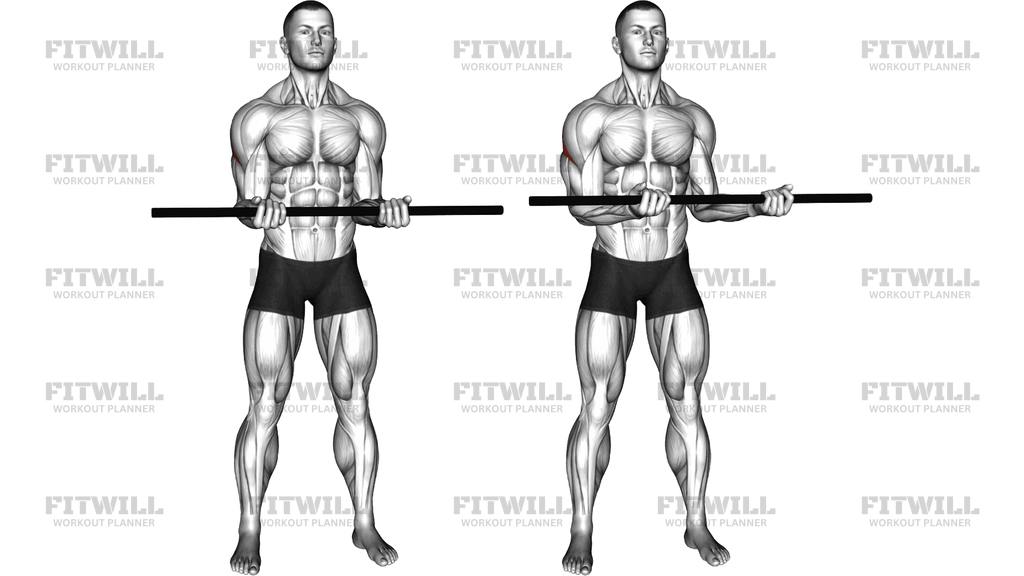
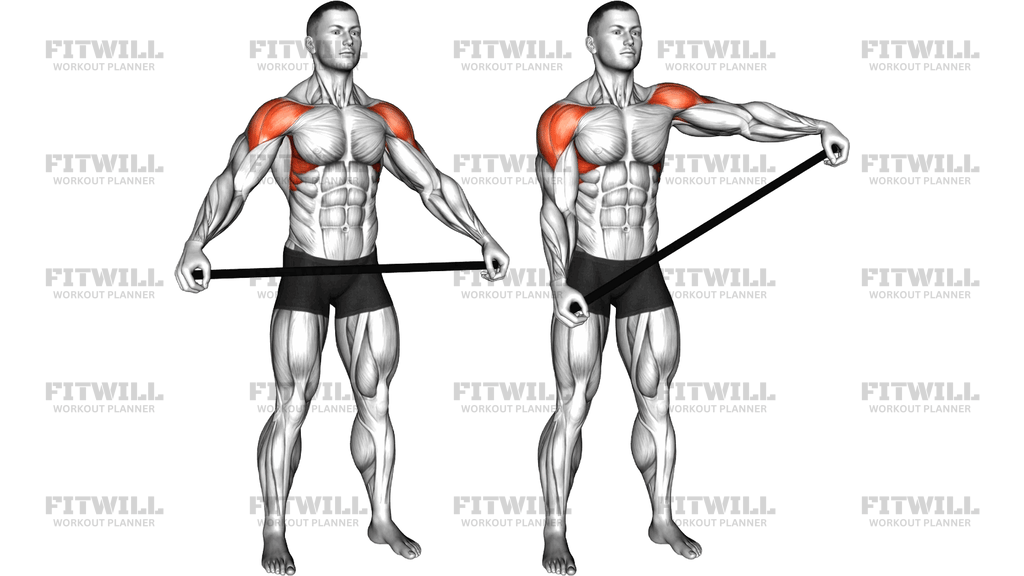
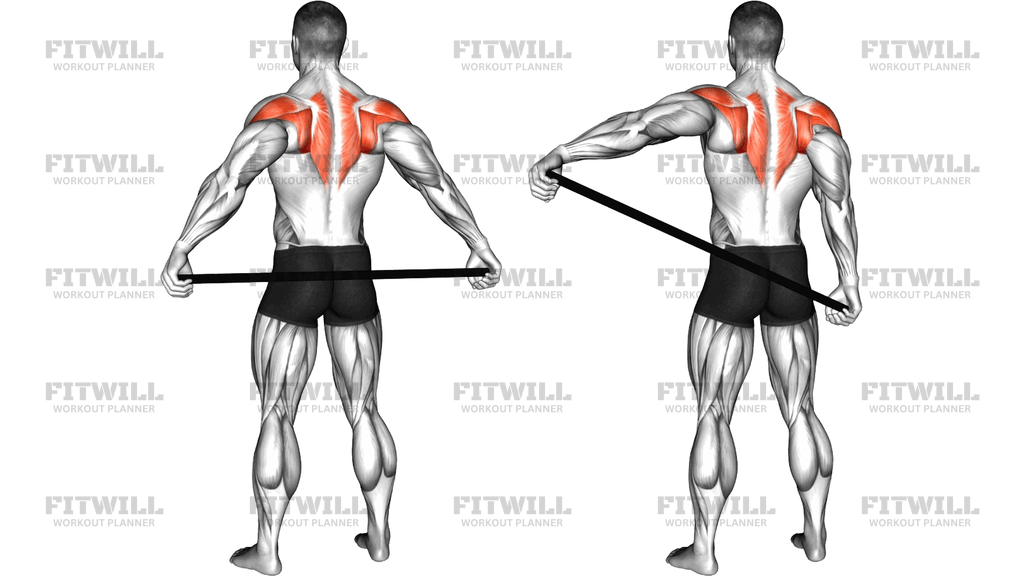
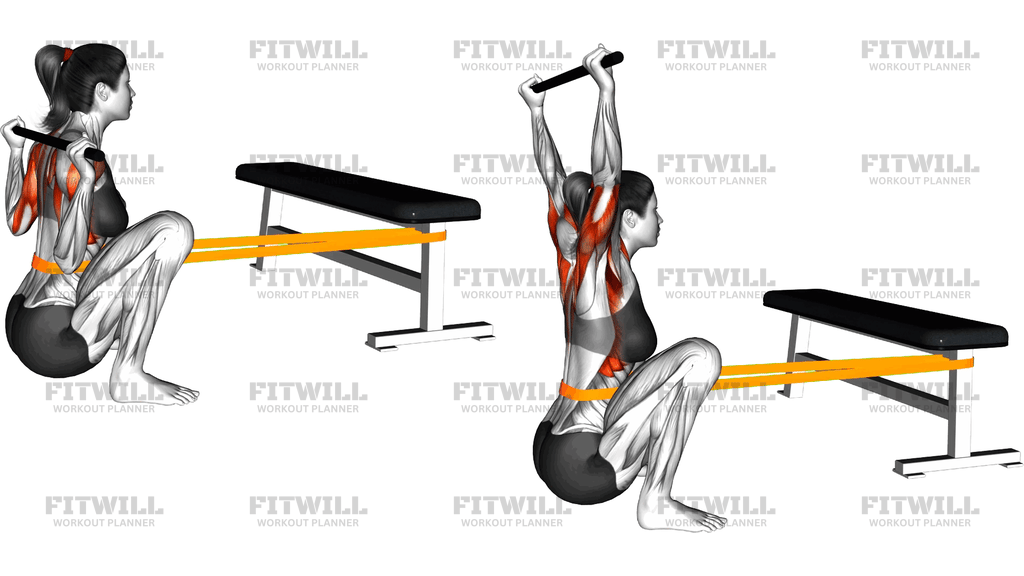
Assisted Internal Rotation Of The Shoulder In Standing With A Stick
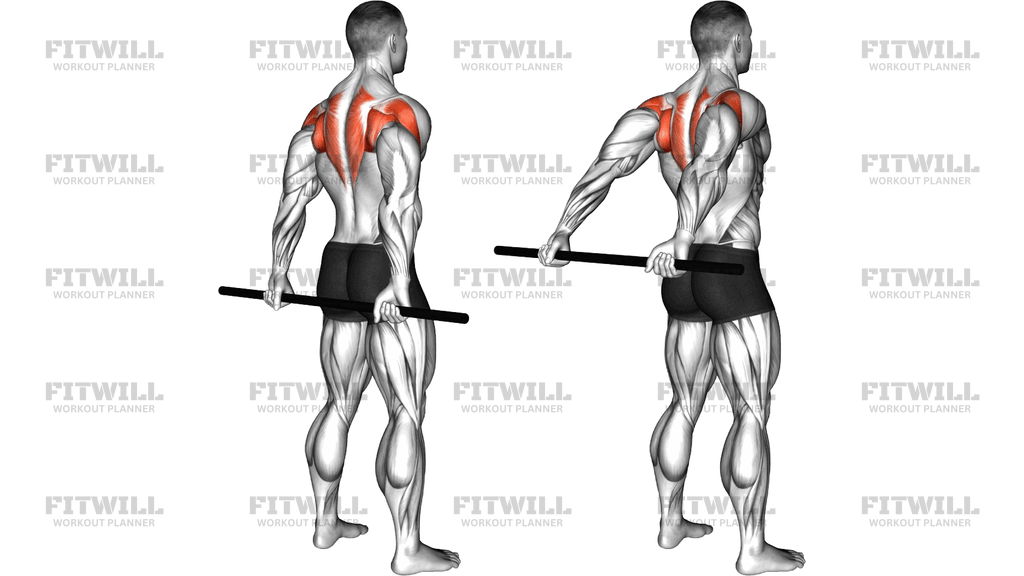
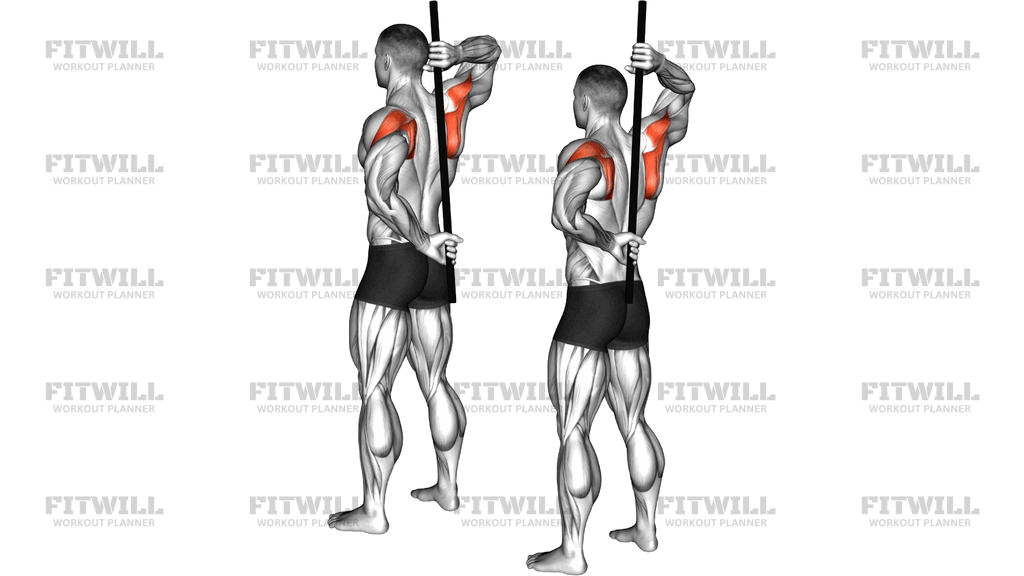
Assisted internal rotation of the shoulder in standing with a stick is a mobility exercise that uses a long stick or dowel as a lever to guide the shoulder into internal rotation behind the back. The lower hand grips the stick behind the lower back, while the upper hand reaches over the same shoulder and grips the stick from above, allowing the arm above the head to gently pull the lower hand higher along the back. It is one of the most practical ways to assess and improve internal rotation, because the stick provides a fixed reference point and lets the free arm control the intensity.
This exercise is especially useful for people whose internal rotation has become limited by pressing, bench press, throwing, or long hours of sitting with rounded shoulders. Lifters who struggle to get their elbows into position for back squats, front racks, or behind-the-neck movements will often find that this exercise reveals exactly how much range of motion they are missing. Swimmers, baseball players, and anyone returning from a period of shoulder immobility can also benefit; however, anyone with an active shoulder injury should first consult a professional.
The stretch primarily targets the internal rotators of the shoulder, led by the subscapularis on the front of the shoulder blade, along with the pectoralis major and teres major, which assist in pulling the upper arm behind the body. The rear shoulder and rotator cuff tissues on the stretched side are taken through a long range of motion under low load, while the upper arm and upper back stabilize and control the stick. Because the movement is active and guided rather than passive, you have full control over the depth of the stretch at every moment.
Proper preparation matters more here than force. Stand upright with feet about hip-width apart and ribs stacked over the pelvis, so you are not arching your lower back to fake extra shoulder range of motion. The lower hand should grip the stick with the back of the hand resting against the sacrum or lower back, and the upper hand should grip above the head with a comfortable thumb-down position behind the head. If your grip width is too narrow, the stick will get stuck and the strain will transfer to the wrist; if it is too wide, the leverage will disappear.
For good execution, slowly pull the stick upward with the upper hand and let the lower hand slide up the stick a little at a time. You should feel a stretch across the back of the lower shoulder and along the side of the upper back, not a sharp pinching at the front of the shoulder. Move in small increments, pause where the tension feels strong but tolerable, and breathe steadily. The temptation is to shrug the upper shoulder, lean to the side, or flare the ribs to gain depth; keep your torso quiet and let your arm do the work.
A common use is a short pre-training sequence of two to three gentle passes per side before upper body sessions, or a longer 30 to 45 second hold per side in a dedicated mobility block. Expect both sides to feel different; most people have a noticeable asymmetry, and it is a reasonable approach to work the tighter side slightly more often. Stop any set that causes pinching, numbness, or tingling, and re-grip wider before continuing.
[ Tréninkový deník a plánovač ]
Připrav si další trénink ve Fitwill
Tvůj plán i tréninkový deník vždy po ruce.


Jak na cvik
- Stand upright with feet about hip-width apart and hold a long stick or dowel vertically in your right hand at your side to start.
- Reach your right hand behind your lower back and grip the stick with your palm facing away from you, letting the back of your hand rest against your sacrum, with the stick running up along your spine.
- Bend your left elbow and reach it up and over your head, then grip the top of the stick behind your head with a firm overhand grip so that the stick sits against the back of your head and shoulder line.
- Lightly brace your core and keep your ribs down so that your lower back stays neutral; avoid leaning to the side or arching to gain range of motion.
- Slowly pull the stick upward with your left hand, letting your right hand ride up the stick behind your back until you feel a firm stretch across the back of the right shoulder.
- Pause in the stretched position for one to two seconds on each repetition, or hold for 20 to 45 seconds if using it as a static stretch, and breathe slowly throughout.
- Under control, lower the stick back down by slightly resisting with the upper hand, so that the lower arm returns behind the lower back without dropping.
- Complete the desired number of repetitions or hold time, then switch hands so that the left shoulder performs the internal rotation and the right hand controls the stick from above the head.
- Between sides, re-grip and fix your posture, making sure each set starts from the same upright standing position with feet planted.
Tipy a triky
- If the lower wrist bends sharply or aches, widen the grip of the lower hand on the stick; the wrist should remain relatively straight while the shoulder provides the rotation.
- Do not force the lower elbow further back by flaring your ribs; if you feel your lower back arching, you have exceeded your available shoulder range of motion.
- Keep the upper shoulder from shrugging toward the ear; a lifted shoulder shortens the lever and makes the pull feel jerky instead of smooth.
- A sharp pinching at the front of the stretched shoulder is a signal to back off slightly and re-grip wider, not to push through the pain.
- Start with your hands closer together only when you can comfortably manage a wide grip; narrowing the grip quickly increases the stretch.
- Move the stick in small upward steps rather than one long pull, and pause briefly at each step to let the shoulder settle.
- Exhale slowly as the upper hand pulls upward; many people unconsciously hold their breath at the deepest point of the stretch.
- Keep both feet flat and your weight evenly distributed; shifting your hips to the side changes the shoulder angle and makes it hard to compare your sides.
- Expect the non-dominant arm on top to feel clumsy at first; practicing the grip on both sides keeps the setup consistent when you switch sides.
Často kladené otázky
Which muscles does the assisted internal rotation of the shoulder in standing with a stick stretch?
It primarily lengthens the internal rotators of the shoulder, especially the subscapularis, along with the pectoralis major and teres major. The rear shoulder and rotator cuff tissues of the lower arm are taken through a long range of internal rotation under gentle tension.
Why use a stick instead of just reaching behind my back with a free hand?
The stick acts as a lever, allowing the arm above the head to guide the lower hand higher than it could reach on its own, while you control the exact force. It also provides a consistent reference point for measuring progress between sessions.
How close together on the stick should my hands be?
Start with a comfortable width, often about shoulder-width or slightly wider, and narrow the grip only when the current position feels easy. A narrower grip significantly increases the stretch on the lower shoulder.
Is the assisted internal rotation of the shoulder in standing with a stick suitable for beginners?
Yes, as long as you start with a wide grip and small movements. Beginners should focus on keeping the torso still and letting the upper hand do the pulling, rather than forcing the lower arm backward.
I feel pinching at the front of my shoulder during the pull. What should I do?
Stop pulling higher, widen the grip, and check that you are not arching your lower back or shrugging your upper shoulder. If the pinching persists even at an easier angle, skip the exercise and have your shoulder assessed before continuing.
How long should I hold the stretched position?
For a warm-up, use short pauses of one to two seconds for five to eight easy repetitions per side. For a dedicated mobility session, hold the deepest comfortable position for 20 to 45 seconds per side.
What can I use if I don't have a stick?
A broom handle, a PVC pipe, or even a bath towel stretched taut between both hands works in a similar way. The towel is gentler but offers less leverage, so progress carefully.
Why does one side feel much tighter than the other?
Side-to-side differences in internal rotation are common, especially in people who throw, swim, or favor one arm in training. Note the difference, work both sides, and give the tighter side an extra set rather than stretching it aggressively.
Should I do this exercise before or after lifting?
Short, easy repetitions work well as part of a warm-up before pressing or overhead movements. Longer holds are better saved for after training or a separate mobility session, when the tissues are warm and you are not about to heavily load the shoulder.
Can the assisted internal rotation of the shoulder in standing with a stick replace strength work for my rotator cuff?
No, this is a mobility exercise, not a strengthening exercise. It improves the range of motion in which your rotator cuff works, but you still need loaded rotation and stability work to build strength in that range.