

Day 3 of Week 13 - Full Body 2
Abgeschlossen von Sergey · 5. November 2026
This high-volume, bodybuilding-style workout emphasizes the legs and posterior chain, with additional vertical pulling and rear-shoulder work. The main targets are the quadriceps, hamstrings, calves, glutes, spinal erectors, lats, and upper back. The machine, cable, pull-up bar, dumbbell, and Roman chair exercises make this a gym workout. The total volume is best suited to intermediate or advanced lifters; beginners can reduce the sets and use lighter loads or assisted variations. All exercises are performed as straight sets, not supersets.
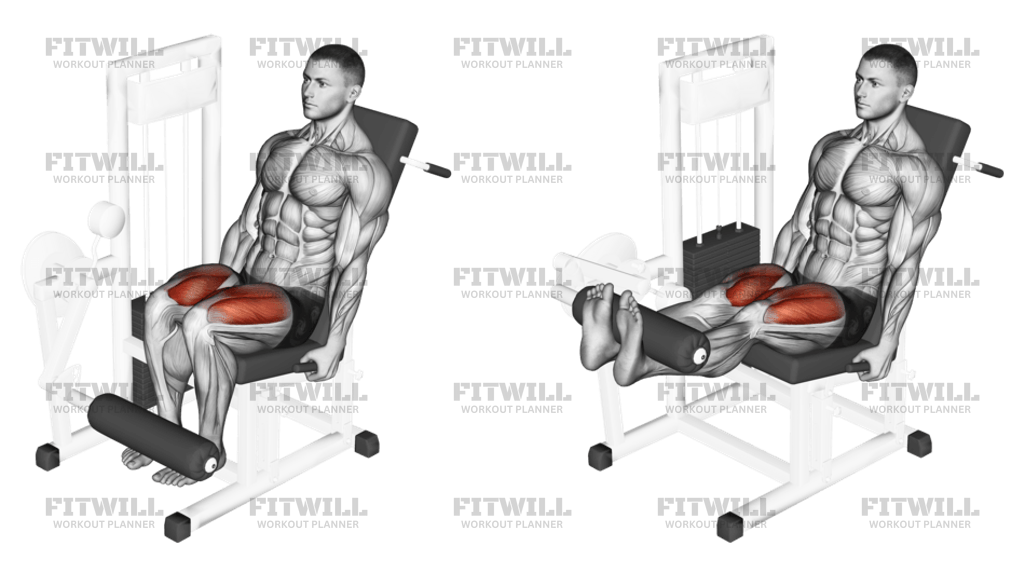
"Lever Leg Extension" — 5 sets of 20, 15, 15, 15, and 15 reps. This knee-extension machine primarily trains the quadriceps, with little demand on the hips or trunk. Adjust the seat so your knees line up with the machine’s pivot and position the pad on your lower shins, just above the ankles. Keep your back against the support, extend smoothly without snapping your knees straight, and lower the weight under control. Its focused quad work complements the hamstring curls that follow and provides leg volume without requiring a squat or hinge.
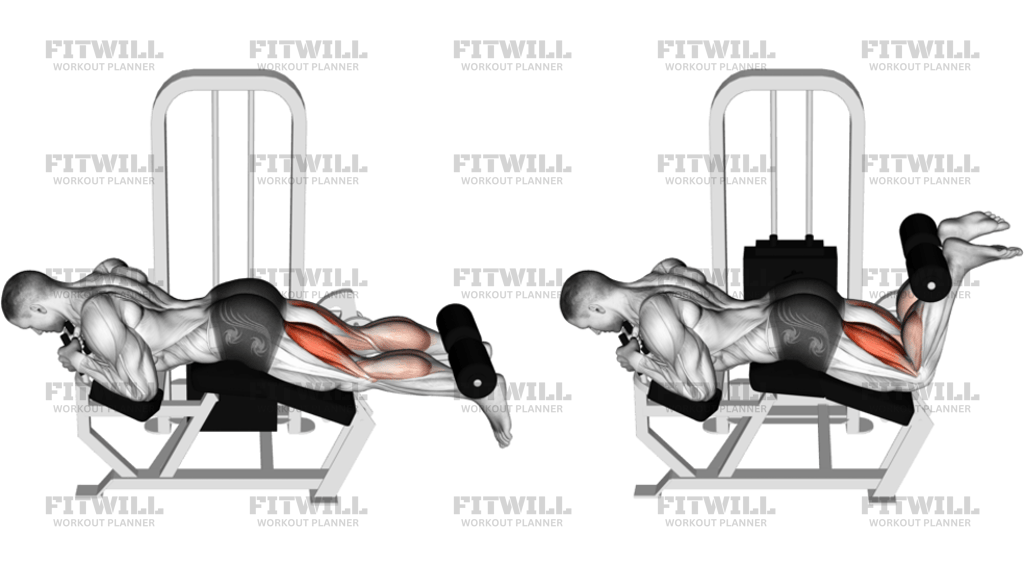
"Lever Lying Leg Curl" — 5 sets of 20, 15, 15, 6, and 6 reps. This machine exercise targets the hamstrings through knee flexion, while the calves assist. Align your knees with the machine pivot, keep your hips pressed into the bench, and curl the pad toward your glutes without lifting your hips or arching your back. Pause briefly at the curl, then lower steadily rather than letting the weight drop. Paired in the workout’s sequence with leg extensions, it gives the front and back of the thighs dedicated work. Use a load that allows controlled repetitions, particularly on the lower-rep sets.
"Dumbbell Single Leg Calf Raise" — 5 sets of 20, 15, 10, 10, and 10 reps. The gastrocnemius and soleus are the primary targets, while the foot and ankle stabilizers help maintain balance. Hold the dumbbells at your sides, stand on one foot, and keep your knee softly bent and stable. Lower the heel until you feel a comfortable calf stretch, then rise through the ball of the foot without bouncing or letting the ankle roll. A wall or rack can provide light balance support. The single-leg format adds unilateral calf work after the larger thigh exercises.
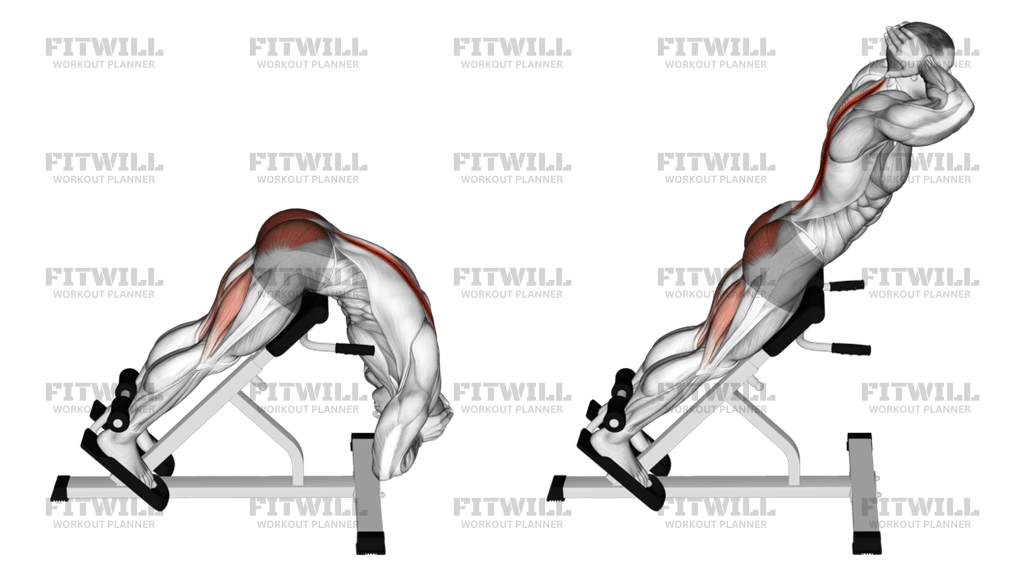
"Hyperextension" — 1 set of 20 reps. This bodyweight hip-extension movement works the glutes, hamstrings, and spinal erectors. Set the pad across the front of your hips so you can hinge freely, keep your neck neutral, and lower with your body moving as one controlled line. Raise your torso by driving through the hips, stopping at a straight, neutral position rather than cranking your lower back. This set introduces posterior-chain work before the loaded hyperextensions; keep the movement strict and treat it as preparation, not a fast or forceful effort.
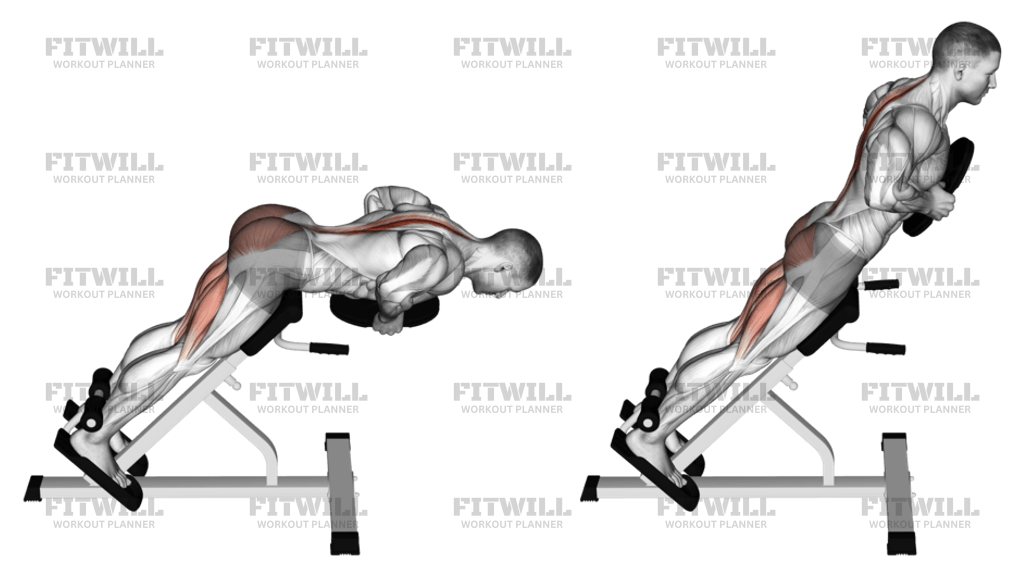
"Plate Hyperextension" — 4 sets of 20, 15, 15, and 15 reps. Holding a plate close to your chest increases resistance for the glutes, hamstrings, and spinal erectors. Secure your feet, position the pad below your hip crease, brace, and hinge under control. Drive your hips into the pad to return to neutral, keeping the plate close and your neck long. Avoid swinging, pulling with your neck, or overextending at the top. Because this follows bodyweight hyperextensions, select a conservative load and maintain clean form across all four sets.
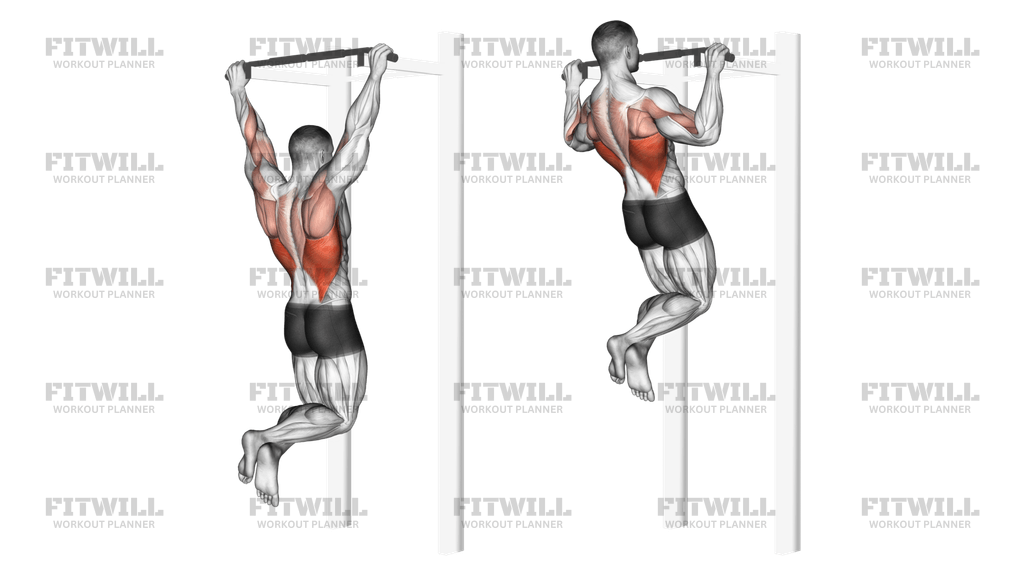
"Pull-Up" — 5 sets of 10 reps. Pull-ups primarily train the lats, with the biceps, upper-back muscles, forearms, and trunk assisting. Begin from a controlled hang with your shoulders engaged, keep your torso steady, and drive your elbows down as you pull your chest toward the bar. Lower until your arms are extended while maintaining control. Avoid kicking, shrugging, or reaching your chin forward to complete a rep. Five sets of ten is demanding; use a resistance band or assisted pull-up machine if needed to maintain full, consistent repetitions. This vertical pull adds upper-body work to an otherwise lower-body and posterior-chain-focused session.
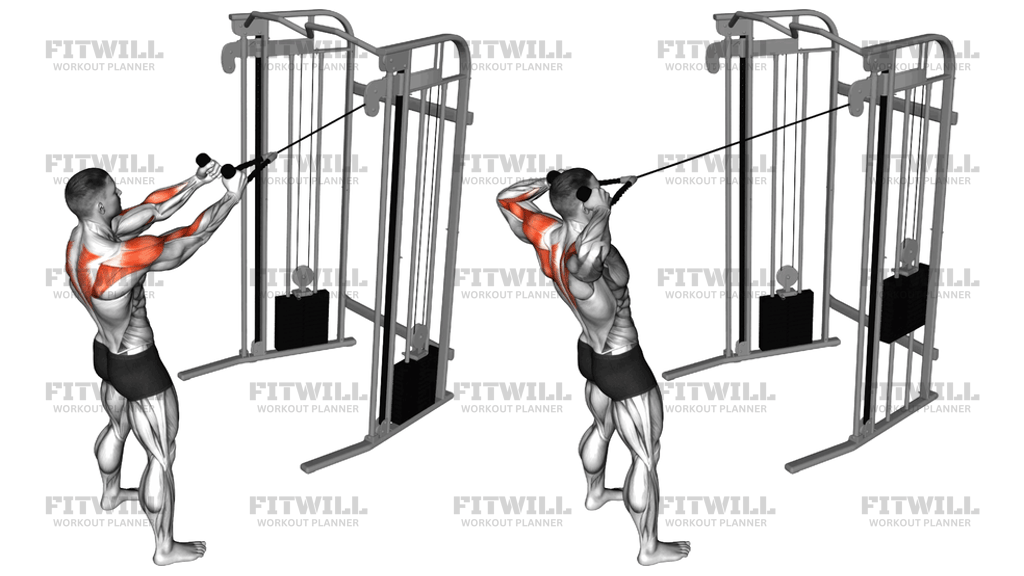
"Cable Standing Supinated Face Pull (With Rope)" — 5 sets of 20 reps. This cable exercise emphasizes the rear deltoids, rhomboids, and middle and lower trapezius, with the rotator cuff and biceps assisting. Set the pulley around head height, take an underhand grip, and stand far enough back to maintain tension. Pull the rope toward your face with your elbows out, squeeze your shoulder blades together, and return slowly. Keep your ribs down and torso still; rocking or arching usually means the load is too heavy. Its controlled, higher-rep work complements the pull-ups by adding direct rear-shoulder and upper-back training.
Rest about 60–90 seconds between most machine and cable sets, and take 2–3 minutes for challenging pull-up sets or when needed to preserve good form. Before training, warm up with 5–10 minutes of easy movement and a few light practice sets for the first exercises. Perform this workout once per week to start, allowing adequate recovery before repeating it; higher-frequency training should account for your overall weekly volume. Progress gradually by adding repetitions or a small amount of weight when you can complete every set with controlled technique. If performance or form deteriorates, reduce the load or volume rather than forcing the prescribed repetitions. Overall, this session offers substantial leg and posterior-chain volume alongside useful back and rear-shoulder work, but it is not a balanced full-body plan because it includes no pressing exercise.

Das vollständige Workout findest du in der Fitwill-App.
[ Fitwill — Trainingstagebuch & Trainingsplaner ]
Plane dein nächstes Training. Sieh, was du schon erreicht hast.
Plane dein Training fürs Fitnessstudio oder zu Hause, halte jeden Satz fest und verfolge deine Fortschritte – alles in einer App.
