Rowing Hold On The Floor, Bent Knees (Lying Iso Hold)
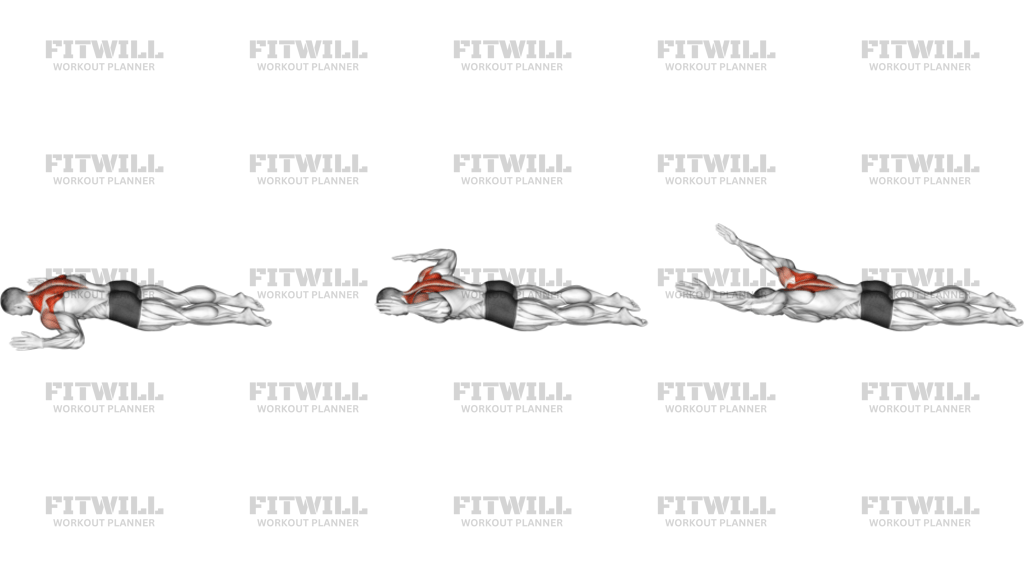
The bent-knee floor row hold (lying iso hold) is a bodyweight isometric exercise performed on your back, on the floor. You set up with your knees bent and feet flat, bend your arms to about ninety degrees in a goalpost position, then press your elbows into the floor to squeeze your shoulder blades together and lift your chest slightly. Instead of doing reps, you hold this retracted position for time, maintaining constant tension across the upper back.
This movement targets the muscles that pull the shoulder blades back and down — mainly the rhomboids and middle traps, with strong support from the rear delts. Since your elbows press into an immovable surface, the hold also lightly engages the biceps and forearms, while the bent-knee position forces your torso to stay organized without help from your legs. It sits somewhere between an activation drill and a strength hold, making it a great transition before loading rowing patterns with weights.
The bent-knee setup matters more than it seems. With knees bent and feet planted, your lower back stays closer to neutral, your ribs stay down, and you cannot arch or swing to fake the squeeze. This makes this version easier to control than a straight-leg hold and lets you focus entirely on what is happening between your shoulder blades.
To execute it well, think of pulling your elbows toward the floor behind you, not just pushing them down. Your fists stay relaxed, your neck stays long, and the lift should come from your upper back, not from jutting your chin or driving your hips into the ground. Hold for five to twenty seconds per rep, breathing steadily throughout, and release slowly rather than dropping out of the position.
This hold works well as a warm-up before rows, pull-ups, or pressing work, as a corrective exercise for people whose shoulders roll forward, or as a low-equipment back drill at home. Since it requires no gear other than a bit of floor space and, optionally, a mat, it is also a practical way to accumulate quality upper-back volume on days when you cannot train with weights.
[ Carnet et planificateur d’entraînement ]
Préparez votre prochaine séance dans Fitwill
Votre programme et votre carnet d’entraînement à portée de main.


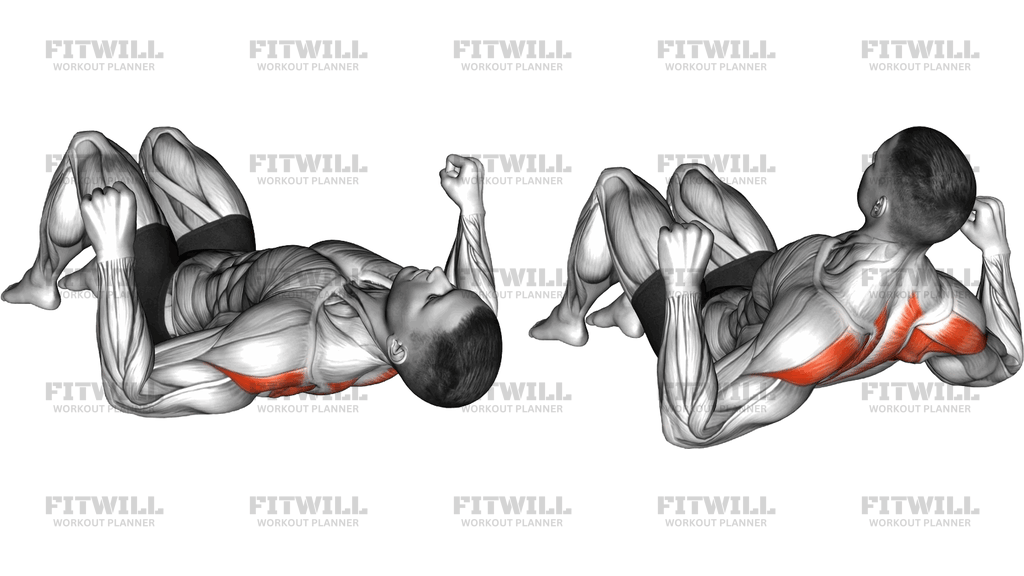
Instructions
- Lie on your back on the floor or on an exercise mat with your knees bent and feet flat on the floor, hip-width apart.
- Bend your arms to about ninety degrees and open them out to your sides so your upper arms form a rough T with your torso and your fists point toward the ceiling.
- Rest your head on the floor, lengthen the back of your neck, and let your ribs sink toward your hips.
- Lightly brace your abdominals so your lower back stays close to neutral and does not arch away from the floor.
- Press both elbows firmly into the floor and think of dragging them toward your hips, squeezing your shoulder blades together and down.
- As the squeeze builds, let your chest and upper back lift slightly off the floor while your head, hips, and feet stay in place.
- Hold the retracted position for five to twenty seconds, maintaining steady tension and breathing continuously rather than holding your breath.
- Release the hold slowly, letting your upper back settle and your arms open back to the starting position.
- Rest briefly, adjust your knee and foot position if needed, then repeat for your planned number of holds.
Conseils et astuces
- If you feel the work only in your neck, your chin is probably poking forward — keep the back of your head heavy on the floor and let the lift come from behind your shoulder blades.
- Avoid pushing your hips into the floor to fake a bigger chest lift; the movement should stay in the upper back while your pelvis remains quiet.
- Squeezing your fists too hard is a common waste of effort here — keep a loose grip so the tension stays on the rhomboids and rear delts.
- If your shoulders feel pinched when the elbows press down, lower your arms a few degrees so your upper arms sit slightly below shoulder level and try again.
- Quality beats duration: a crisp ten-second hold with a real squeeze is worth more than a thirty-second hold where the tension has faded.
- Exhale as you set the squeeze and keep breathing shallow and steady through the hold; breath-holding usually means you are over-bracing your trunk.
- Your feet can stay flat and relaxed — do not use your legs to drive the chest up, or the drill turns into a back extension.
- For a harder version, add a two-second extra squeeze at the top of each hold rather than extending the hold far past twenty seconds.
Questions fréquemment posées
What muscles does the bent-knee floor row hold (lying iso hold) work?
The main work comes from the rhomboids and middle traps between your shoulder blades, with the rear delts assisting the squeeze. The biceps and forearms contribute because your bent elbows press isometrically into the floor, and your core stabilizes your trunk.
Is the bent-knee floor row hold (lying iso hold) suitable for beginners?
Yes. It uses only bodyweight, is performed close to the floor, and is easy to regulate through hold time. Beginners can start with five-second holds and focus purely on feeling the shoulder blades pull together.
Why are the knees bent in this exercise?
Bent knees and flat feet settle your pelvis and keep your lower back near neutral, so you cannot arch or borrow momentum from your legs. This keeps the effort isolated in the upper back.
Should my chest actually leave the floor during the hold?
A slight lift of the upper back is normal when you drive the elbows down and retract hard, but it should be a consequence of the squeeze, not a separate crunch or arch. Keep your head and hips down.
How long should I hold each rep of the bent-knee floor row hold (lying iso hold)?
Five to twenty seconds works well for most people. If you can hold comfortably much longer than twenty seconds, increase the intensity of the squeeze rather than the duration.
What is the most common mistake in this movement?
Craning the neck forward and shrugging the shoulders up toward the ears. Both shift work away from the upper back — keep the head heavy on the floor and actively pull the shoulder blades down as they come together.
Can I do the bent-knee floor row hold (lying iso hold) instead of rowing with weights?
Not fully, since an isometric hold does not replace the strength you build moving load through a full rowing range. It is an excellent complement and warm-up, though, especially for teaching the retraction that rows depend on.
Where should I feel the bent-knee floor row hold (lying iso hold)?
Between and just below your shoulder blades, with some fatigue at the backs of your shoulders. If you feel only the front of the shoulders or your neck, reset your arm angle and reduce how hard you press.
Is this exercise safe if my shoulders are sensitive?
The floor supports your arms throughout, making it gentler than many pulling drills, but stop if you feel sharp pain or pinching. Lowering the elbows slightly below shoulder height often removes discomfort.