

Day 1 of Week 8 - Full Body 2
완료한 사람 Sergey · 2026년 9월 11일
This is a high-volume, gym-based hypertrophy workout with a strong emphasis on back development, shoulder size, quad isolation, and posterior-chain strength. The session uses cable stations, selectorized lever machines, a Smith machine, dumbbells, a pull-up bar, and a Roman chair or 45-degree hyperextension bench, so it is best suited to a well-equipped gym rather than a typical home setup. With multiple 5-set exercises and rep ranges that move from high-rep warm-up or pump work into moderate and heavier hypertrophy sets, it is most appropriate for intermediate to advanced lifters. Beginners can use the exercise selection, but should substantially reduce total sets and prioritize technique before matching this volume.
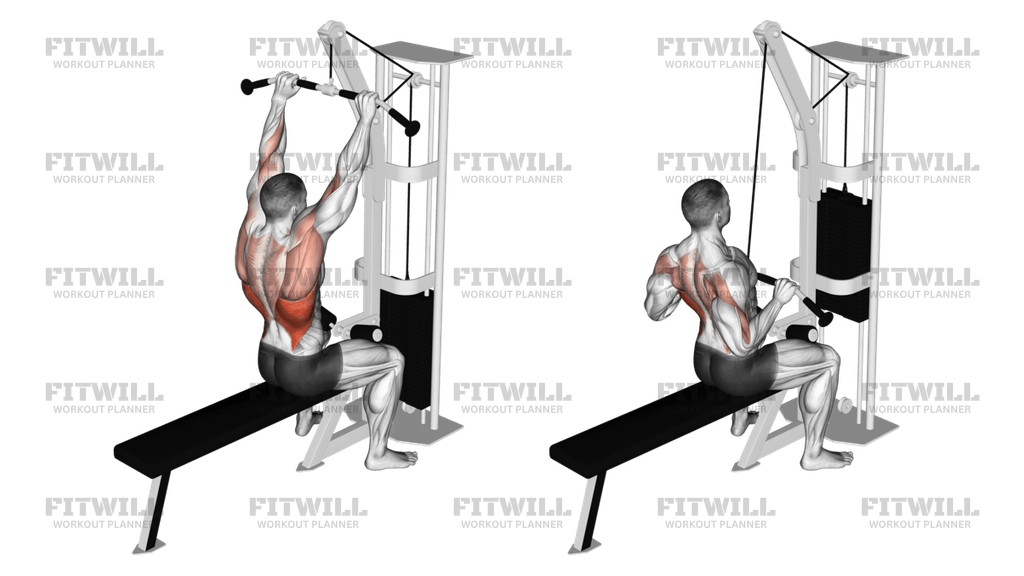
"Cable Bar Lateral Pulldown" is the primary vertical-pulling movement for the lats, with the biceps, teres major, rear delts, rhomboids, and mid-to-lower traps assisting. Start with the chest lifted, ribs controlled, and shoulders pulled down away from the ears. Drive the elbows down toward the floor as you bring the bar to the upper chest, then allow the arms to lengthen slowly into a comfortable overhead stretch. Avoid leaning excessively backward, pulling the bar behind the neck, or turning the movement into a biceps curl. The very high first set helps establish a strong mind-muscle connection and warm the upper back, while the following sets provide substantial lat-building volume. This pulldown complements the later pull-up by allowing controlled, scalable vertical-pull volume before the bodyweight challenge.
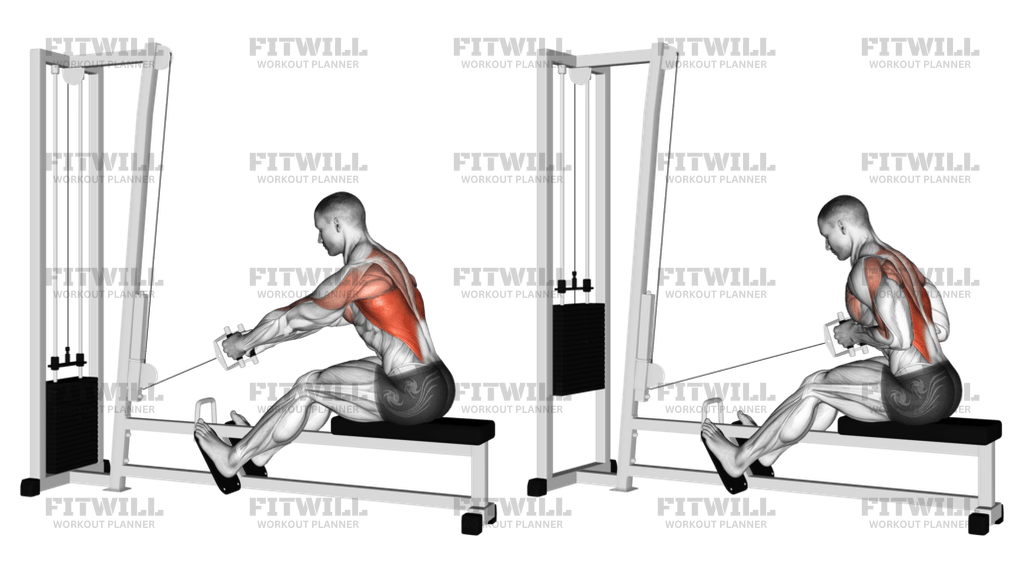
"Cable Elevated Row" trains the lats, rhomboids, middle traps, rear delts, and other upper-back muscles, while the biceps, forearms, and grip assist. Set the cable around shoulder height and stand in a stable, staggered or square stance. Keep the torso quiet, chest tall without flaring the ribs, and pull the handle toward the lower ribs by bringing the elbows back. Let the shoulder blades move together and slightly down, then reach forward under control without losing posture. Do not shrug the shoulders, lean back to heave the stack, or jerk the handle at the start of each rep. Pairing a horizontal row with the vertical pulldown creates more complete back development: the pulldown emphasizes shoulder adduction and lat width, while the row adds mid-back thickness, scapular retraction, and postural strength.
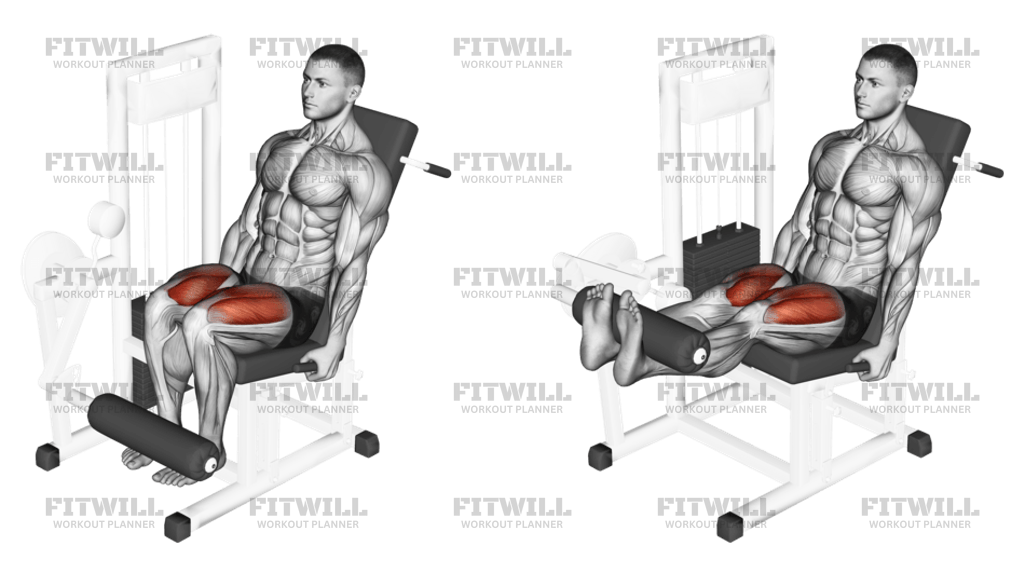
"Lever Leg Extension" isolates the quadriceps, particularly the rectus femoris and vasti muscles on the front of the thigh. Align the knees with the machine's pivot point, position the pad just above the ankles, and keep the back firmly against the seat. Extend the knees smoothly until they are nearly straight, squeeze the quads briefly, and lower with control rather than allowing the lever to drop. Avoid kicking the weight up, forcefully snapping into lockout, or allowing the hips to shift on the seat. This movement adds direct quad volume with very little lower-back demand, making it useful in a session that already includes substantial pulling and posterior-chain work. Use a pain-free range of motion and adjust the machine carefully if the knees do not feel comfortable.
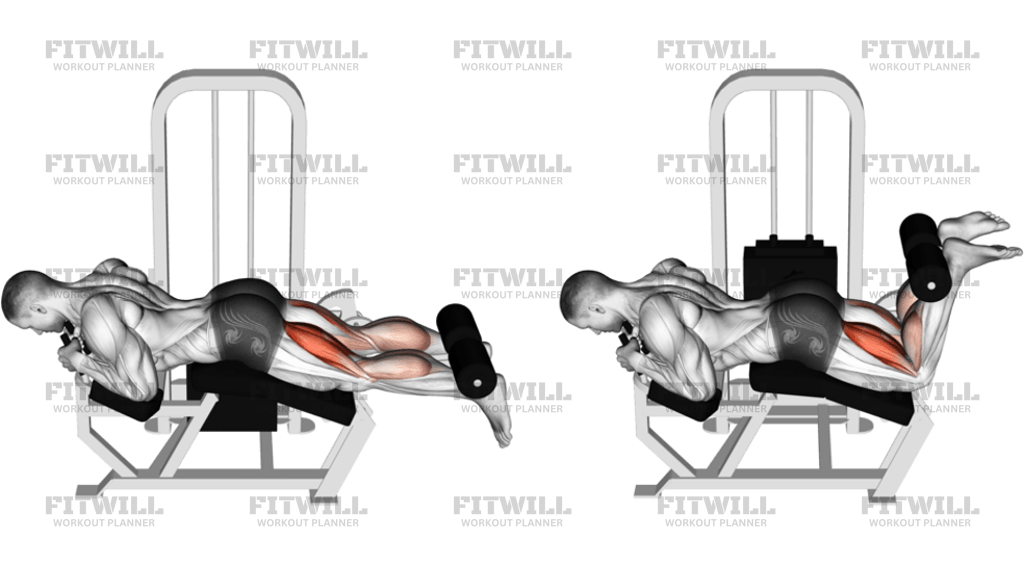
"Lever Lying Leg Curl" directly targets the hamstrings through knee flexion, with the gastrocnemius muscles of the calves contributing slightly. Position the knees close to the machine's pivot, keep the hips pressed into the pad, and place the roller low on the lower legs, just above the heels or Achilles area according to the machine design. Curl the roller toward the glutes without lifting the hips, pause briefly in the shortened position, and lower slowly until the knees are nearly straight. Common mistakes include arching the lower back, raising the hips off the pad, rushing the eccentric, and using momentum to start the curl. The leg curl balances the leg extension by giving the back of the thighs dedicated work, helping support knee function and more balanced lower-body muscular development.
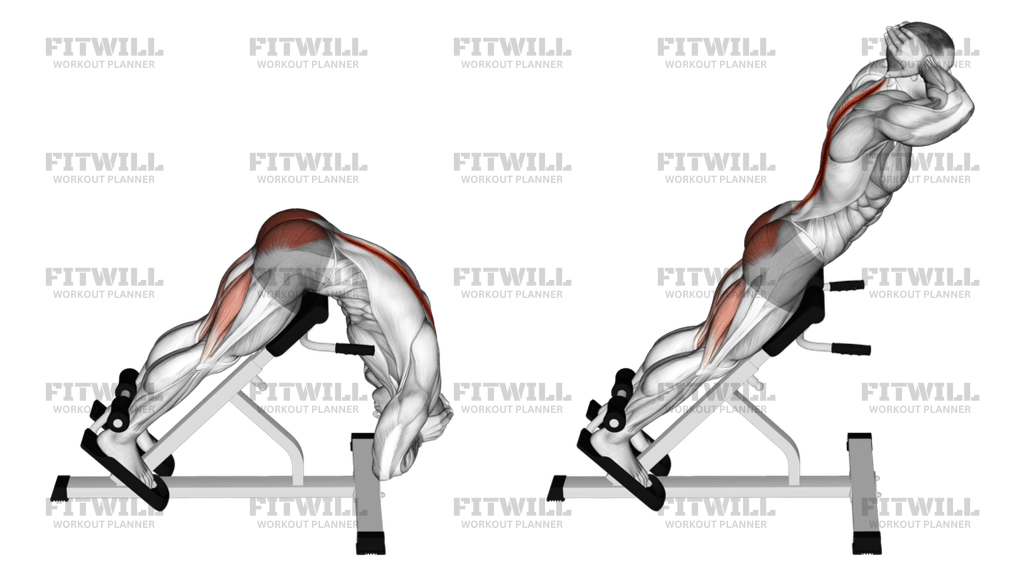
"Hyperextension" is a bodyweight posterior-chain exercise that works the glutes, hamstrings, spinal erectors, and deep trunk stabilizers. Set the pad across the upper thighs and hip crease rather than the abdomen, lock the ankles securely in place, and maintain a long neutral neck. Lower by hinging at the hips, then drive the hips into the pad to raise the torso until the body forms a straight line. Avoid rounding sharply at the bottom, bouncing out of the stretched position, or hyperextending the low back at the top. The 20-rep set serves as a controlled endurance and activation-focused bridge into the heavier "Plate Hyperextension," reinforcing hip extension mechanics before external load is added.
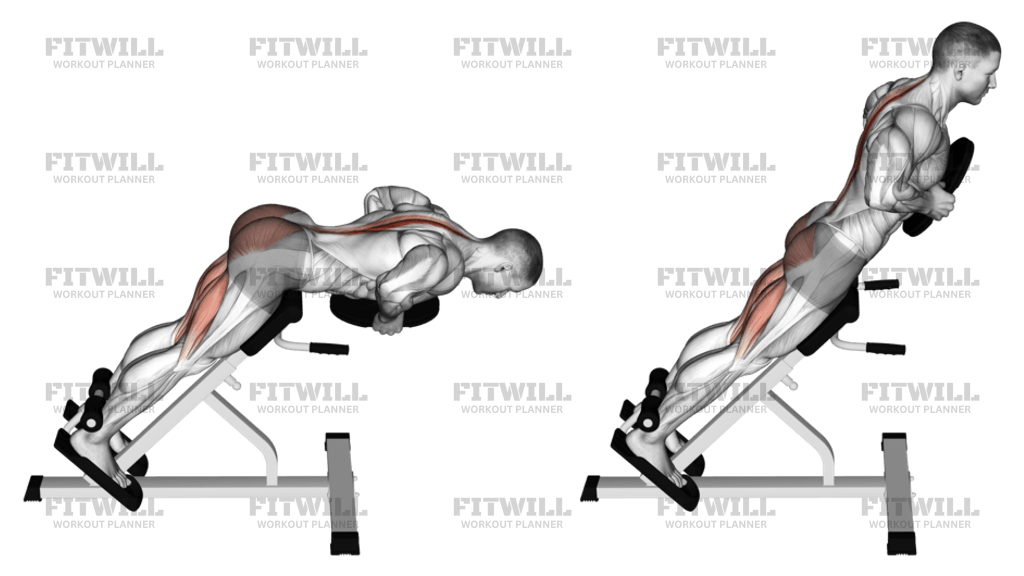
"Plate Hyperextension" builds on the bodyweight version by increasing loading for the glutes, hamstrings, and spinal erectors. Hold the plate securely against the chest, keep the ribs braced, and hinge from the hips as you lower the torso. Rise by squeezing the glutes and extending the hips until the torso reaches neutral, not by aggressively arching the lumbar spine. Keeping the plate close to the chest reduces unnecessary leverage and helps maintain control. Do not swing the plate, crane the neck, or chase excessive range at the top. Five sets of 15 provide a major hypertrophy stimulus for the posterior chain without the same spinal loading and technical demand as high-volume barbell deadlifts. Together, the lying leg curl and both hyperextension variations train the hamstrings in both knee-flexion and hip-extension roles.
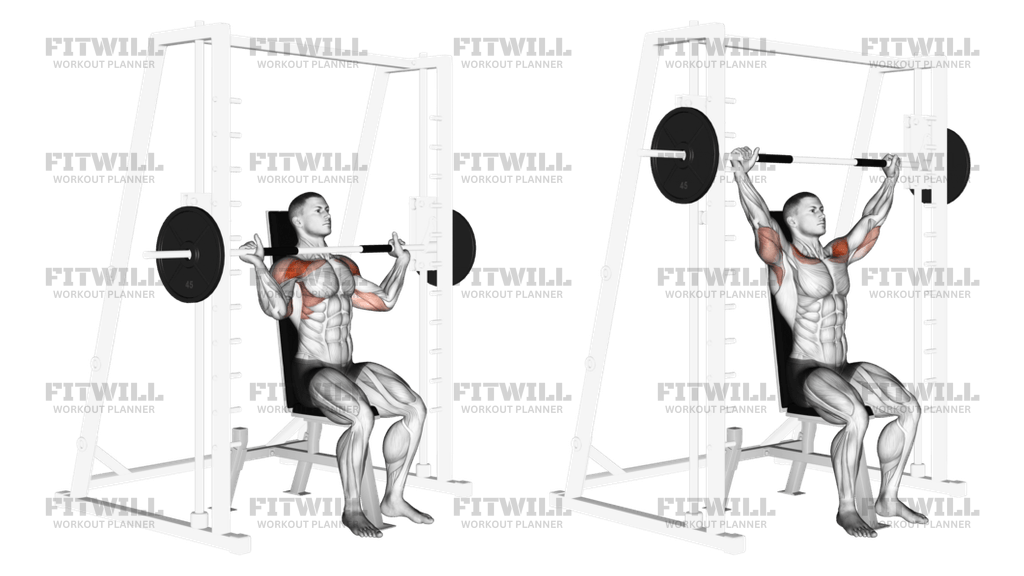
"Smith Shoulder Press" is the main pressing exercise, targeting the anterior and lateral deltoids, with the triceps assisting at lockout and the upper back helping stabilize the torso. Use a bench position that allows the bar to start around upper-chest height with the wrists stacked over the elbows. Keep the feet planted, upper back supported, and ribs down as you press upward along the rails. Lower the bar slowly to a comfortable depth without bouncing it off the bottom. Avoid flaring the ribs, peeling the lower back away from the pad, pressing from an overly wide grip, or shrugging forcefully toward the ears. The Smith machine's guided bar path makes this an efficient hypertrophy movement because it allows the lifter to focus on stable shoulder tension and controlled overload as fatigue rises.
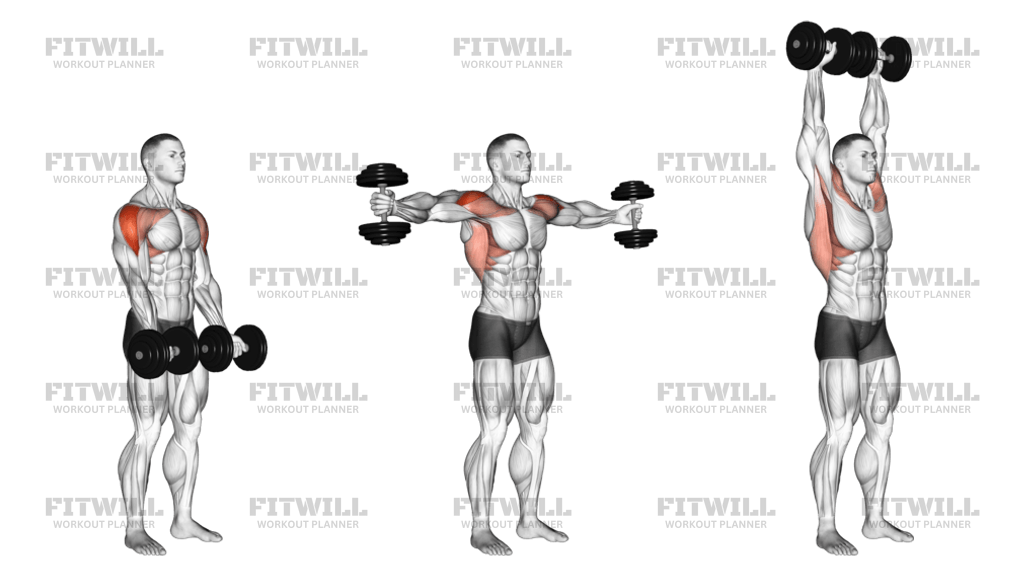
"Dumbbell Standing Around World" is a light-load shoulder-control and deltoid endurance exercise. The front and side delts are highly involved, while the rotator cuff, upper traps, serratus anterior, rhomboids, triceps, and trunk stabilizers guide the arms through the large circular path. Begin tall with dumbbells by the thighs, soft elbows, a braced midsection, and a relaxed neck. Sweep the dumbbells outward to shoulder height and continue the arc overhead, then reverse the path slowly. Use very light weights, especially at first. Avoid swinging, locking the elbows aggressively, leaning backward, flaring the ribs, or forcing an overhead range that causes pinching. This exercise complements the heavier Smith press by adding controlled shoulder movement, time under tension, and scapular coordination rather than simply adding more heavy pressing.
"Wide-Grip Pull-Up" is a challenging bodyweight vertical pull that emphasizes the lats, upper back, teres major, rear delts, biceps, forearms, and scapular stabilizers. Hang with an overhand grip that is only moderately wider than shoulder width; an excessively wide grip can reduce range of motion and irritate the shoulders. Initiate by depressing the shoulder blades, then drive the elbows down as you pull the chest toward the bar. Keep the legs quiet, ribs stacked, and neck neutral. Lower under control to a full comfortable hang. Avoid kipping, kicking the legs, shrugging into the ears, craning the chin over the bar, or using a grip width that creates shoulder pain. Placing this single 10-rep set after cable back work makes it a demanding finisher and a useful test of strict bodyweight pulling capacity.
Overall, this workout provides extensive hypertrophy-focused volume for the lats, upper back, delts, quadriceps, hamstrings, glutes, and spinal erectors. Because it is not organized with lettered exercise labels, perform it as straight sets rather than supersets. Rest about 60 to 90 seconds on the higher-rep isolation movements and 90 to 120 seconds for the Smith Shoulder Press, pulldowns, rows, weighted hyperextensions, and pull-ups when needed to preserve form. Before training, spend 5 to 10 minutes raising body temperature, then perform shoulder circles, band pull-aparts or light cable pulls, bodyweight hinges, leg curls or extensions with a light load, and a few ramp-up sets for the first back and pressing exercises. Due to its high total volume, perform this exact session once weekly, or up to twice weekly only if recovery, sleep, nutrition, and overall training volume are well managed. Progress by adding reps within the prescribed ranges, using slower eccentrics or brief peak-contraction pauses, and adding small load increases only when every rep remains controlled and pain-free.

전체 운동 루틴은 Fitwill 앱에서 확인하세요.
[ Fitwill — 운동 기록과 계획 ]
다음 운동을 정하고, 얼마나 발전했는지 확인하세요.
헬스장이나 집에서 할 루틴을 만들고 세트마다 기록하세요. 운동하며 쌓은 성과를 한곳에서 확인할 수 있어요.
