

Day 1 of Week 7 - Full Body 2
Vadbo je opravil uporabnik Sergey · 30. avgust 2026
This high-volume gym workout is designed to develop back width, upper-back thickness, shoulder size, and posterior-chain strength. It uses straight sets rather than supersets, allowing you to give each movement focused effort and maintain precise technique as fatigue builds. The rep structure begins with very high-repetition sets and progresses toward moderate reps, creating a hypertrophy-focused session with a muscular-endurance component. Primary targets include the lats, rhomboids, trapezius, deltoids, glutes, hamstrings, and spinal erectors; the biceps, forearms, triceps, and shoulder stabilizers provide important secondary support. Because this workout requires a cable station, 45-degree hyperextension bench, Smith machine, plates, and dumbbells, it is best suited to a commercial or well-equipped home gym. It is most appropriate for intermediate lifters, although beginners can use lighter loads and reduce total sets while learning the movements.
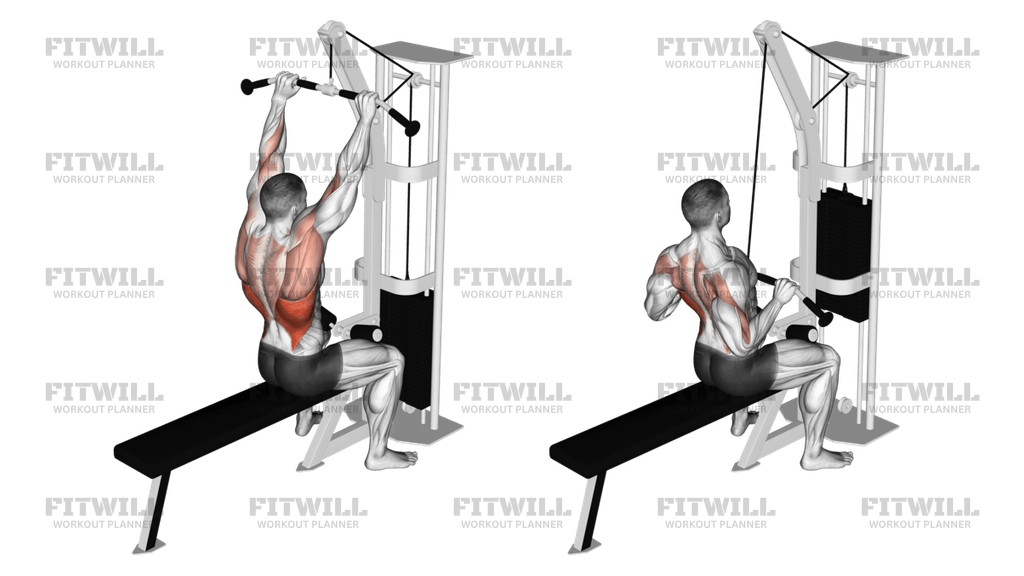
"Cable Bar Lateral Pulldown" is the primary vertical-pulling movement and emphasizes the latissimus dorsi to help build back width. The biceps, rear delts, rhomboids, and lower-to-mid traps assist as you bring the bar down. Set the shoulders down away from the ears, lift the chest without excessively arching the lower back, and pull by driving the elbows down and slightly back. Bring the bar toward the upper chest, pause briefly, then allow the arms to extend overhead in a controlled lat stretch. Avoid pulling the bar behind the neck, leaning far back, jerking the cable stack, or turning the exercise into a biceps curl. The high-rep opening set builds a strong mind-muscle connection, while the lower-rep work sets allow you to challenge the lats with progressively heavier loading.
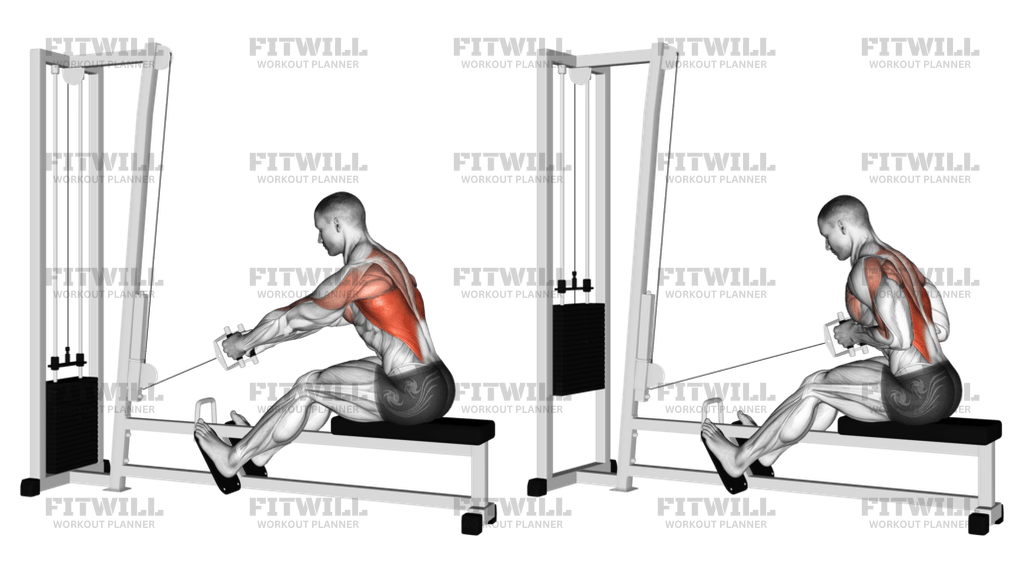
"Cable Elevated Row" follows with a horizontal pulling pattern that adds upper-back density and complements the vertical emphasis of the pulldown. The lats, rhomboids, and middle traps are the main movers, while the biceps, forearms, rear delts, and lower traps assist with the pull and scapular control. Set the pulley around shoulder height, stand in a stable stance, and keep your ribs stacked over a neutral pelvis. Pull the handle toward the lower ribs by moving the elbows back and allowing the shoulder blades to come together and down. Return until the arms are long while keeping tension on the cable. Do not shrug, flare the ribs, rock backward, or use a full-body swing to move the weight. Paired in the same workout as pulldowns, elevated rows train the back from a different angle, helping create balanced lat development, stronger posture, and more complete scapular mechanics.
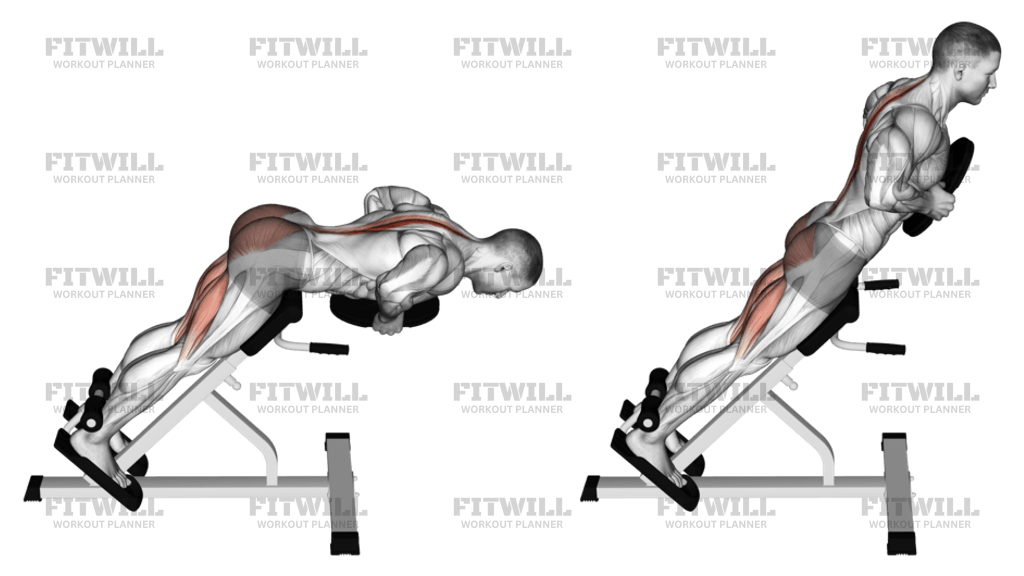
"Plate Hyperextension" shifts the focus to the posterior chain, targeting the glutes, hamstrings, and spinal erectors. It also trains the trunk to remain stable during a hip-extension pattern, making it a valuable accessory for squats, deadlifts, running, and athletic work. Position the upper thighs securely against the pad so the hips can hinge freely, lock the feet in place, and hold the plate close to the chest. Lower under control by hinging at the hips, then drive the hips forward to raise your torso until the body reaches a straight, neutral line. Keep the neck long and brace the abdomen throughout each repetition. Common mistakes include rounding aggressively at the bottom, hyperextending the lumbar spine at the top, holding the plate away from the chest, and bouncing through the range. This movement balances the upper-body pulling and pressing volume by building durable hips and low-back endurance without the systemic fatigue of another heavy barbell hinge.
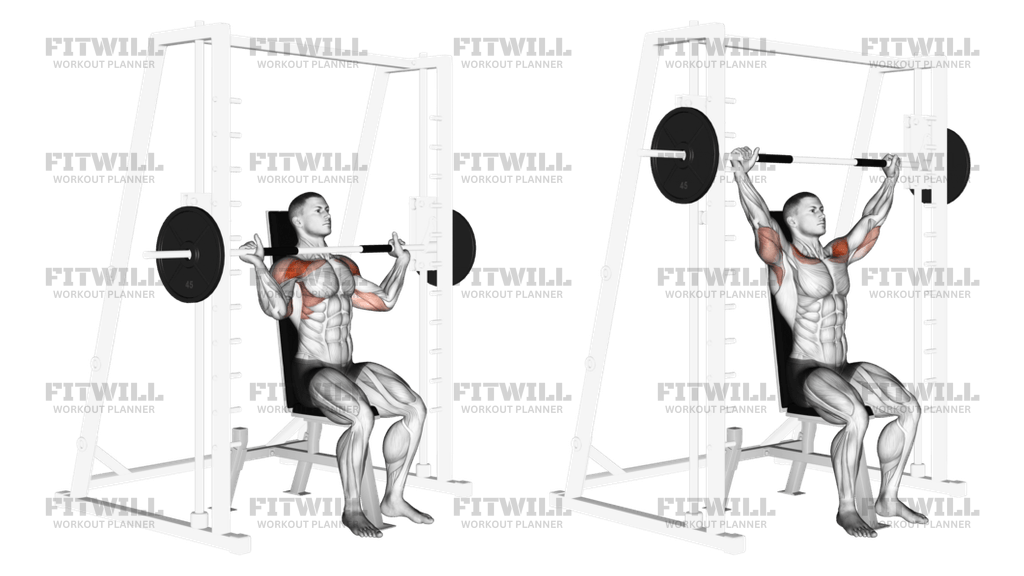
"Smith Shoulder Press" is the main pressing exercise, targeting the front and middle deltoids with substantial assistance from the triceps. The upper back and core work isometrically to keep the torso stable against the bench. Adjust the bench so the bar begins around upper-chest height, use a grip that keeps the wrists stacked over the elbows, plant the feet firmly, and maintain contact with the back pad. Press smoothly overhead while keeping the ribs controlled, then lower the bar slowly to the same starting position. Avoid excessive lower-back arching, bouncing at the bottom, flaring the elbows too far behind the bar, or shrugging forcefully at lockout. The Smith machine's fixed path reduces balance demands, allowing you to focus on consistent shoulder tension and progressive overload. After the back work, this press adds a major anterior and lateral shoulder stimulus for a more complete upper-body session.
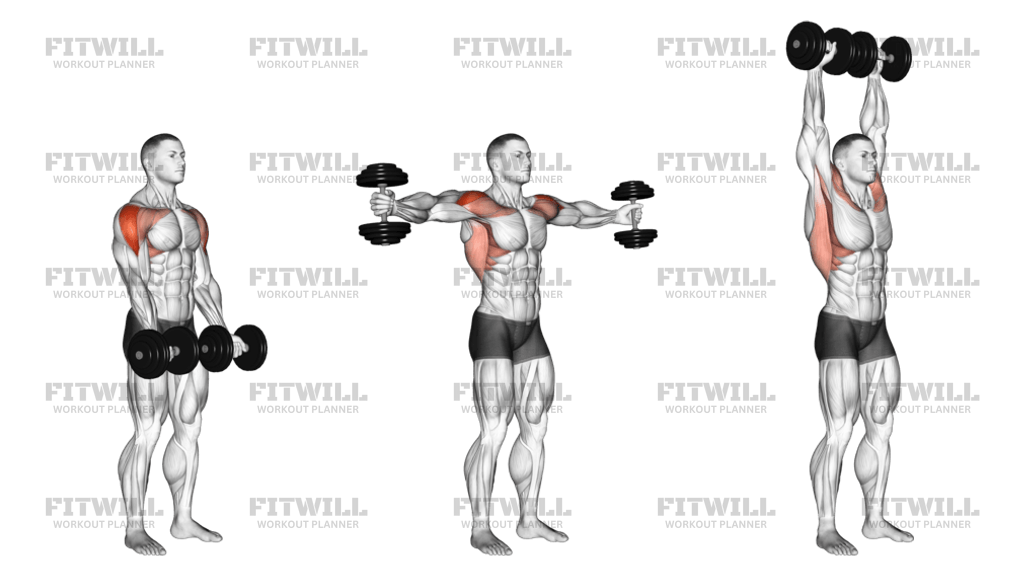
"Dumbbell Standing Around World" finishes the workout with a lighter, high-control shoulder exercise. It primarily challenges the front and side delts, while the upper traps, rhomboids, triceps, rotator cuff, and other deep shoulder stabilizers help guide the dumbbells through the arc. Stand tall with feet about hip width, brace the trunk, keep a soft bend in the elbows, and begin with the dumbbells still at your sides. Sweep them outward to shoulder height and continue overhead in a smooth arc, then lower through the same path without rushing. Use very light dumbbells; this is a control and shoulder-tolerance movement, not a max-load lift. Avoid swinging from the hips, leaning back, flaring the ribs, bending the elbows into a press, or forcing a painful overhead range. As the final exercise, it reinforces controlled scapular movement and adds time under tension for the delts after the heavier Smith pressing.
Overall, this session is a high-volume upper-body hypertrophy workout with posterior-chain accessory work. Warm up with 5 to 10 minutes of easy cardio, then perform shoulder circles, band pull-aparts, light cable rows, bodyweight hyperextensions, and a few ramp-up sets for the first pulldown and shoulder press. Rest about 60 to 90 seconds on the higher-rep cable, hyperextension, and dumbbell sets; use 90 to 120 seconds before challenging Smith Shoulder Press sets. Perform this workout once weekly as part of a broader training split, or up to twice weekly only if total back, shoulder, and lower-back volume elsewhere is appropriately managed. Progress by first improving rep quality and range of motion, then adding small load increases when all prescribed reps are completed with control. You can also progress with slower eccentrics, brief peak-contraction pauses, or modest additional load, but maintain strict form and avoid taking every set to failure.
Celotno vadbo si oglej v aplikaciji Fitwill.
[ Fitwill — Dnevnik in načrtovalec vadb ]
Načrtuj naslednjo vadbo. Poglej, koliko si napredoval.
Sestavi načrt za vadbo v fitnesu ali doma, zabeleži vsako serijo in spremljaj napredek na enem mestu.
