

Day 1 of Week 5 - Full Body 2
Genomfört av Sergey · 16 augusti 2026
This high-volume full-body gym workout is designed primarily for hypertrophy, combining stable machine and cable isolation work with compound upper-body pressing and bodyweight pulling. It emphasizes the upper chest, biceps, triceps, quadriceps, hamstrings, lats, and upper back, making it a well-rounded muscle-building session with a particularly strong arm and upper-chest focus. The 20-, 15-, and 12-rep work alongside heavier 8- to 10-rep sets creates substantial training volume, mechanical tension, and controlled fatigue. Because it requires a Smith machine, incline bench, dumbbells, cable station, leg-extension machine, lying leg-curl machine, and pull-up bar, this workout is best suited to a commercial gym or a very well-equipped home gym. Intermediate lifters will likely get the most from the programmed volume, while beginners can use lighter loads, assisted pull-ups, and fewer total sets until their technique and recovery capacity improve.
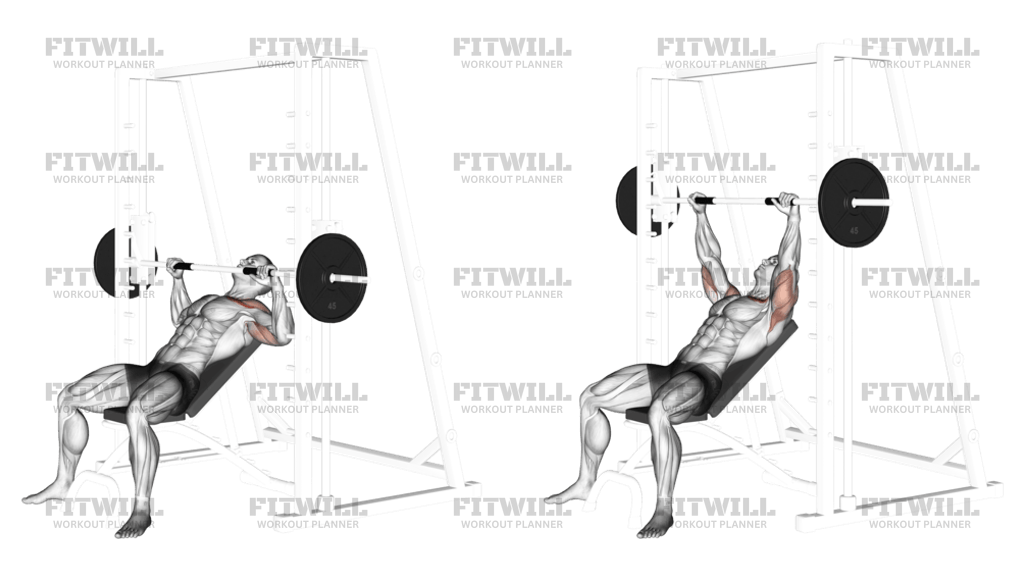
"Smith Incline Bench Press" is the main upper-chest pressing movement. Its primary target is the clavicular, or upper, portion of the pectoralis major, while the anterior deltoids and triceps provide important assistance. The Smith machine’s guided bar path reduces balance demands, allowing you to focus on consistent pressing mechanics and progressive overload. Position a moderate incline bench, generally around 30 to 45 degrees, so the bar lowers toward the upper chest rather than the neck or mid-chest. Keep your feet planted, shoulder blades retracted and depressed against the pad, wrists stacked over the elbows, and elbows angled slightly below shoulder height. Lower the bar under control and press without letting the shoulders roll forward at lockout. Avoid using an excessively steep bench angle, bouncing the bar off the chest, or loading the machine so heavily that the range of motion becomes uneven. The high-rep opening set prepares the pressing muscles and joints, while the following sets build upper-chest size and pressing strength.
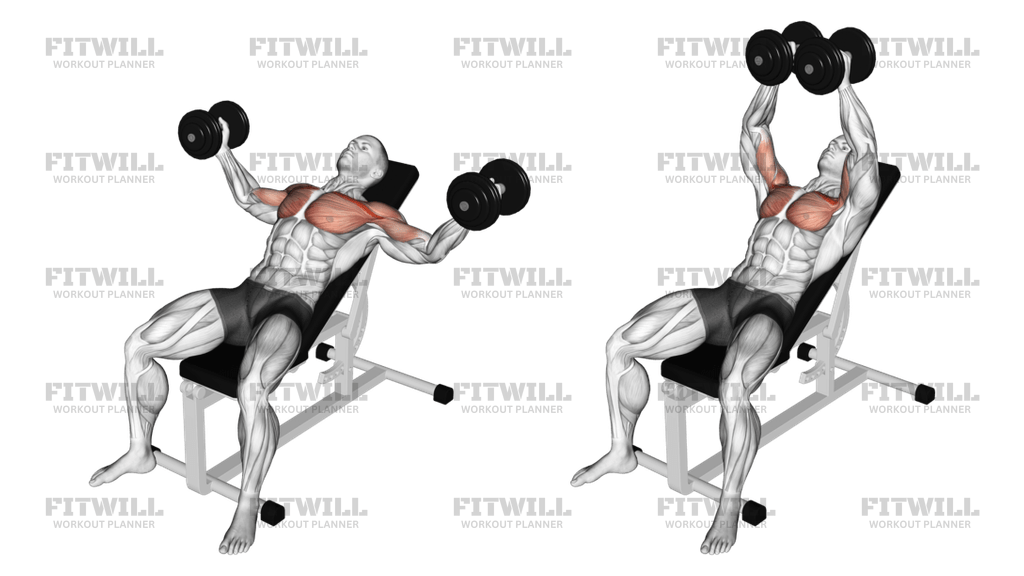
"Dumbbell Incline Fly" follows the press with a chest-focused isolation pattern. It primarily trains the upper chest through horizontal adduction, with the front deltoids, biceps, and shoulder stabilizers supporting the movement. This exercise complements the Smith press because it adds a controlled lengthened-position challenge and contraction-focused volume without requiring more heavy pressing. Set the bench to a moderate incline, maintain a proud chest and stable upper back, and begin with the dumbbells above the upper chest. Use a soft, fixed bend in the elbows as you lower the weights in a wide arc, stopping when you feel a strong chest stretch without losing shoulder control. Bring the dumbbells back together as if hugging a large object, rather than turning the fly into a dumbbell press. Do not drop the upper arms excessively below the torso, straighten and bend the elbows during each rep, or let the weights collide overhead. Keep the load moderate and use a slow eccentric; flies are most effective when the chest, not momentum or shoulder strain, drives the set.
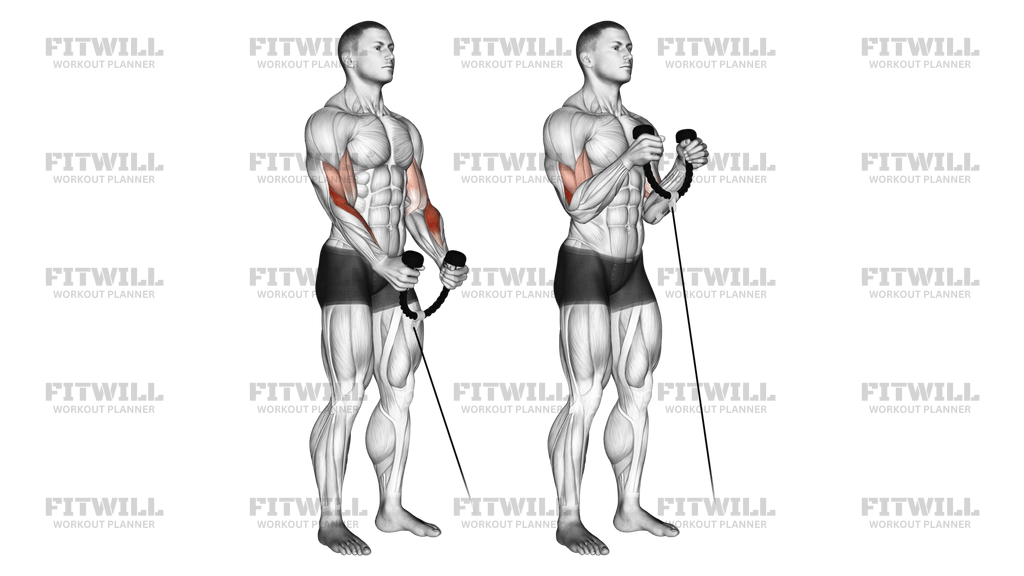
"Cable Rope Hammer Curl" develops the biceps, brachialis, and brachioradialis, with the forearm and grip muscles contributing throughout. The neutral grip shifts meaningful emphasis toward the brachialis and brachioradialis, helping create upper-arm and forearm thickness while often feeling more comfortable on the wrists and elbows than a straight-bar curl. Set the rope at a low pulley and stand tall with a lightly braced torso and knees. Keep the elbows close to the ribs, curl the rope toward the upper chest, and lower slowly until the arms are nearly straight and the cable maintains tension. The goal is clean elbow flexion, not body English. Avoid leaning backward, swinging the hips, allowing the elbows to travel far forward, or rushing the lowering phase. After the chest work, this curl provides direct arm volume without interfering heavily with the pressing mechanics, while the later pull-ups also contribute additional biceps stimulus through compound vertical pulling.
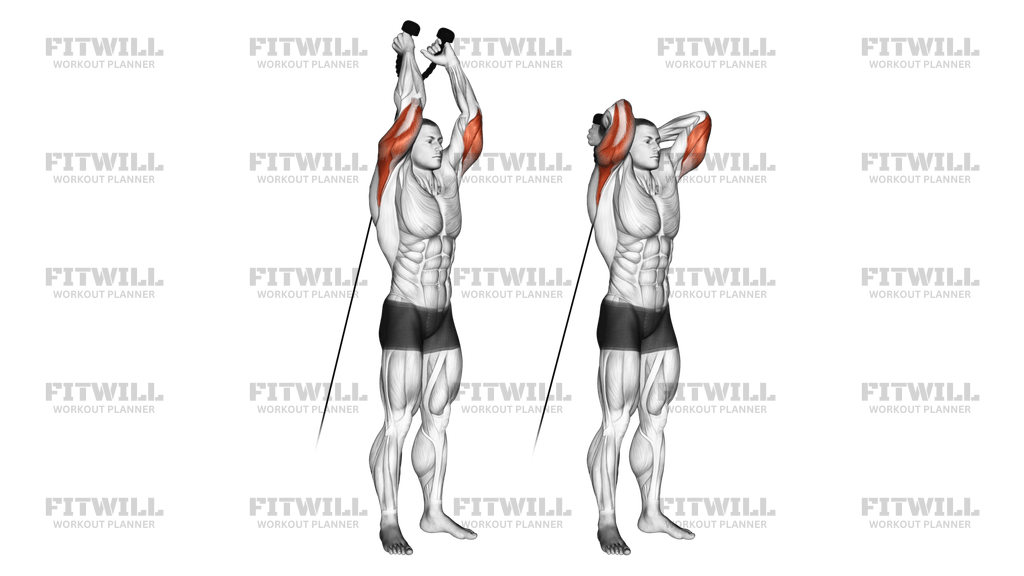
"Cable Rope Overhead Triceps Extension" is a direct triceps exercise with a strong long-head emphasis. The triceps long head crosses the shoulder joint, so placing the arms overhead trains it in a lengthened position that differs from the shorter shoulder position used in presses and pushdowns. Face away from a high cable pulley, bring the rope behind and above the head, and keep the elbows pointed forward and relatively close to the head. Brace the abdominals, keep the ribs down, extend the elbows smoothly, and return under control to a comfortable stretch. Separating the rope slightly at lockout is acceptable if it feels natural and does not change elbow position. Avoid turning the movement into a lower-back arch, allowing the elbows to flare widely, or using a load that forces the shoulders and torso to compensate. Paired within the same workout with hammer curls, this movement balances direct elbow-flexor and elbow-extensor training for more complete arm development.
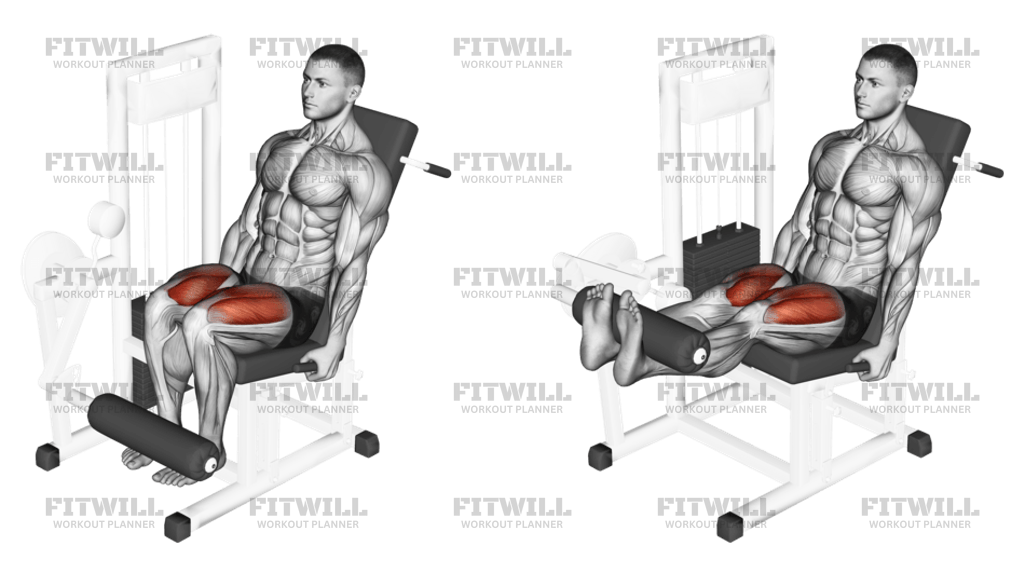
"Lever Leg Extension" isolates knee extension and directly targets the quadriceps: the rectus femoris, vastus lateralis, vastus medialis, and vastus intermedius. It adds focused anterior-thigh volume with minimal balance or spinal loading, which is useful in a full-body session that does not include a barbell squat or leg press. Adjust the seat so the knee joint aligns closely with the machine pivot and the lower-leg pad rests just above the ankles. Keep the hips and back anchored to the seat, extend the knees smoothly to near full extension, briefly squeeze the quads, and lower with control. Do not kick the weight upward, forcefully snap the knees into lockout, or allow the hips to rise from the seat. The higher rep prescription is well suited to this machine exercise, where controlled tension and a strong quad contraction are more valuable than chasing maximal load.
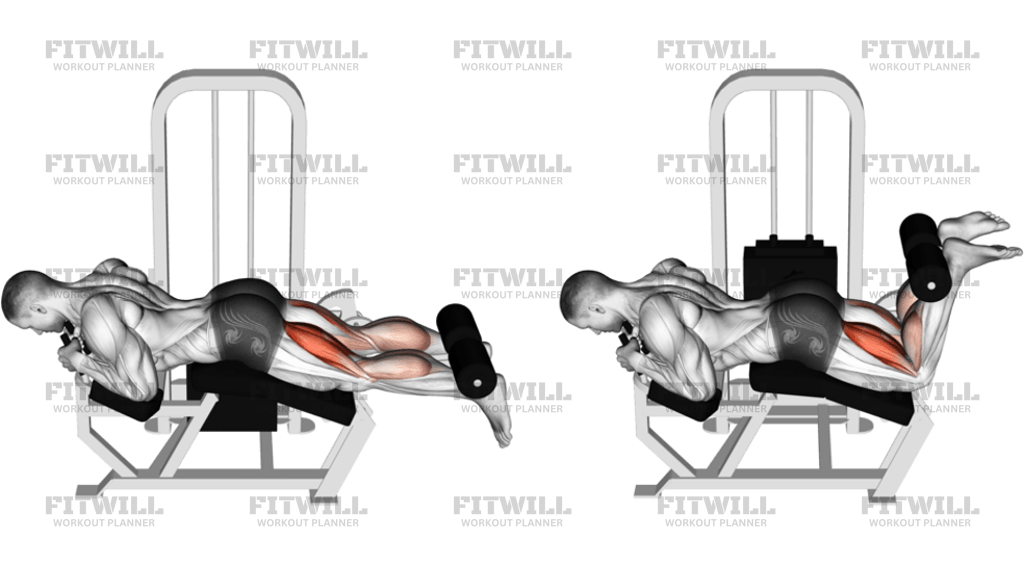
"Lever Lying Leg Curl" trains knee flexion, primarily targeting the hamstrings—biceps femoris, semitendinosus, and semimembranosus—with assistance from the gastrocnemius. It provides essential posterior-thigh work to balance the quad-dominant leg-extension pattern and support healthier knee mechanics. Lie prone with the knees aligned to the machine’s pivot and just beyond the edge of the pad. Secure the hips firmly into the bench, curl the roller toward the glutes by bending the knees, pause briefly at peak contraction, and lower until the legs are nearly straight without allowing the weight stack to slam. Common errors include lifting the hips, arching the lower back, using momentum, or choosing a load that prevents a controlled eccentric. The leg curl’s low-back-friendly isolation makes it a practical hamstring hypertrophy choice, especially when the session already contains substantial upper-body volume.
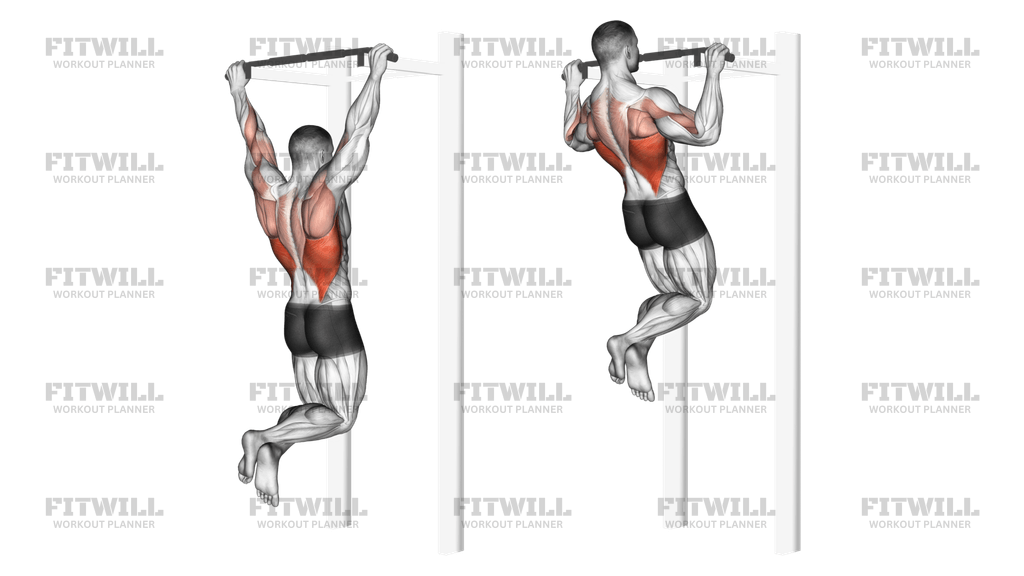
"Pull-Up" finishes the workout with a demanding bodyweight vertical pull. The latissimus dorsi is the primary mover, while the teres major, rhomboids, middle and lower trapezius, rear deltoids, biceps, brachialis, and forearm flexors assist. Pull-ups provide the key compound back movement in this program and help balance the large amount of chest, shoulder, and triceps pressing work. Start from a controlled hang with an overhand grip, brace the trunk, set the shoulders away from the ears, and pull the elbows down toward the ribs as the chest rises toward the bar. Lower with control to a full or near-full hang while maintaining shoulder organization. Avoid kicking the legs, shrugging through the first part of the pull, craning the chin toward the bar, or shortening the eccentric. If three sets of 10 strict reps are not yet achievable, use an assisted pull-up machine, resistance band, or controlled eccentric-only reps.
Overall, this is a high-volume gym hypertrophy workout that builds the upper chest and arms while maintaining direct work for the quads, hamstrings, and upper back. Since the exercises are listed as straight sets rather than supersets, complete all prescribed sets for one exercise before moving to the next. Rest about 90 to 150 seconds after Smith Incline Bench Press and Pull-Up sets, 60 to 90 seconds for dumbbell, cable, and machine isolation work, and up to two minutes if performance declines significantly. Begin with 5 to 10 minutes of light cardio, then perform shoulder, elbow, hip, and knee mobility drills plus a few progressively heavier warm-up sets for the incline press. Perform this session one to two times weekly depending on your overall program and recovery, ideally allowing at least 48 hours before repeating similar muscle groups. Progress by adding small amounts of load, completing cleaner reps, increasing repetitions within the prescribed targets, or slowing the eccentric phase before adding more total volume.
Se hela passet i Fitwill-appen.
[ Fitwill — Träningslogg och planerare ]
Planera nästa träningspass. Se hur långt du har kommit.
Planera dina pass för gymmet eller hemmet, logga varje set och följ din utveckling i en och samma app.
