

Day 2 of Week 4 - Full Body 2
Завършено от Sergey · 9 август 2026 г.
This is a high-volume gym-based hypertrophy workout built to develop the lower body from multiple angles while adding demanding vertical pulling for the upper body. The session prioritizes quad isolation, hamstring knee-flexion work, glute and spinal-erector strength, calf volume, and lat-focused pulling. With most exercises performed for 12–20 repetitions, it is primarily a muscle-building and local muscular-endurance session rather than a maximal-strength workout. It is best suited to intermediate lifters who can control moderate-to-high-rep sets with consistent form, although beginners can use reduced volume, lighter loads, and assisted Pull-Up variations. The required equipment—a leg-extension machine, lying leg-curl machine, hyperextension bench, leg press, weight plate, and pull-up bar—makes this a gym workout. All exercises are straight sets, not supersets, so complete the prescribed sets for one movement before progressing to the next.
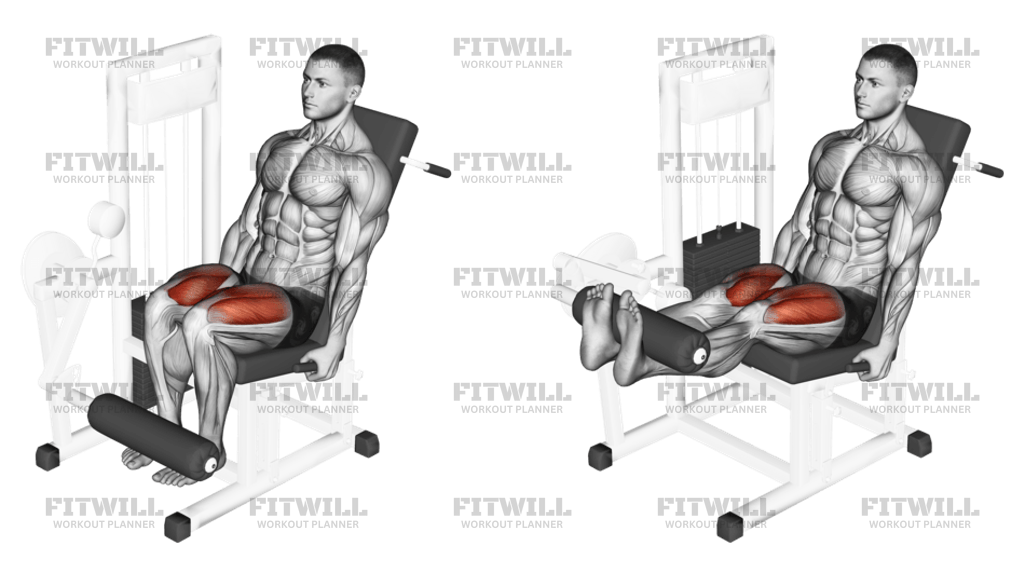
"Lever Leg Extension" directly targets the quadriceps, especially the rectus femoris and vasti muscles on the front of the thigh. The hip flexors assist mainly by holding the seated position, while the torso support minimizes contribution from the glutes and lower back. Set the machine so your knees align with the pivot point, your back stays firmly against the pad, and the shin roller sits just above the ankles. Extend the knees smoothly, squeeze the quads near the top without aggressively snapping into lockout, then lower under control. Avoid lifting your hips from the seat, swinging the weight, or using a load that forces a rushed descent. The high-repetition structure creates substantial quad tension and serves as focused anterior-thigh volume before the posterior-chain work that follows.
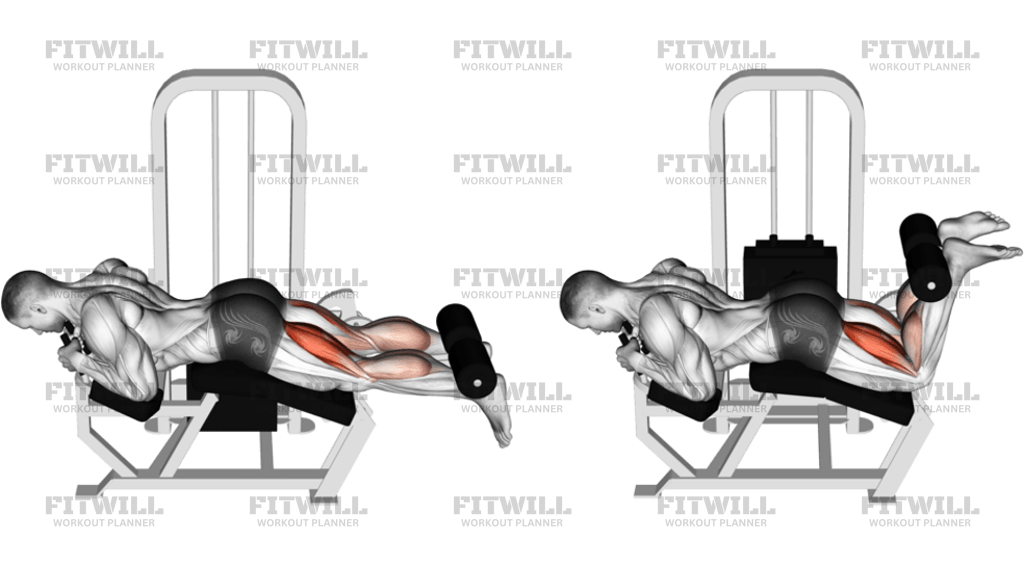
"Lever Lying Leg Curl" is the primary hamstring isolation exercise, training knee flexion through the biceps femoris, semitendinosus, and semimembranosus. The gastrocnemius also assists because it crosses the knee, while the glutes and trunk work isometrically to keep the pelvis stable. Position the knees in line with the machine pivot and keep the hips pressed into the bench as you curl the roller toward the glutes. Pause briefly in the shortened position, then use a controlled eccentric to return to nearly straight knees. Do not let the hips rise, arch the lower back, or kick the weight upward. Pairing dedicated hamstring curls with leg extensions gives the thighs balanced front-and-back training, supporting more complete leg development and knee stability.
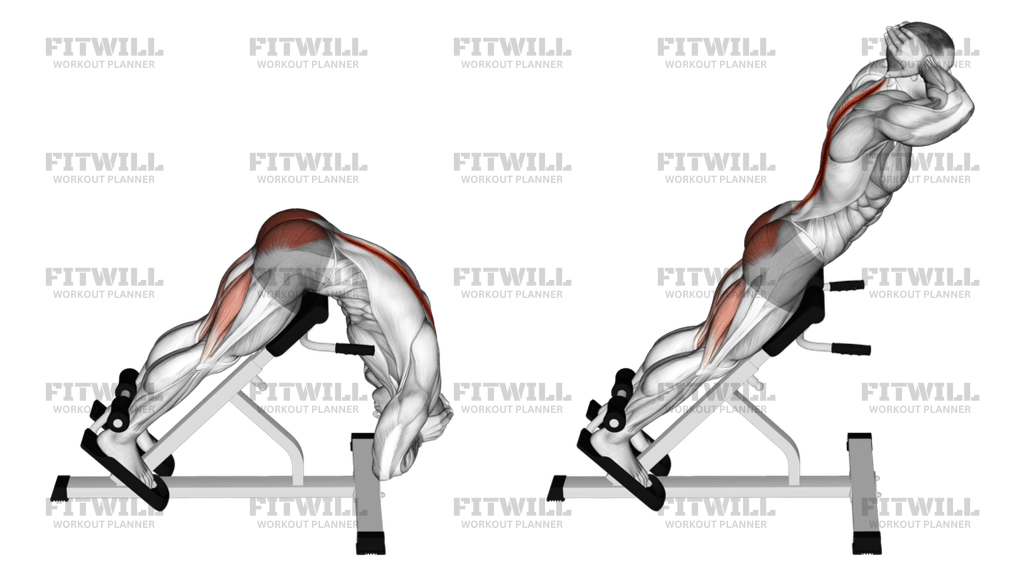
"Hyperextension" trains the posterior chain with bodyweight resistance, emphasizing the gluteus maximus, hamstrings, and spinal erectors. The upper back and abdominal muscles stabilize the trunk so the movement remains a controlled hip hinge. Set the pad across the upper thighs and front of the hips—not across the stomach—so you can hinge freely. Lower your torso as a long, braced unit, then drive the hips into the pad and squeeze the glutes to return to a neutral, straight body line. Keep your neck aligned with your spine and avoid hyperextending or throwing the chest upward at the top. This single higher-rep set is a useful bridge between the machine isolation work and the loaded posterior-chain exercise, reinforcing clean hip-extension mechanics with relatively low fatigue.
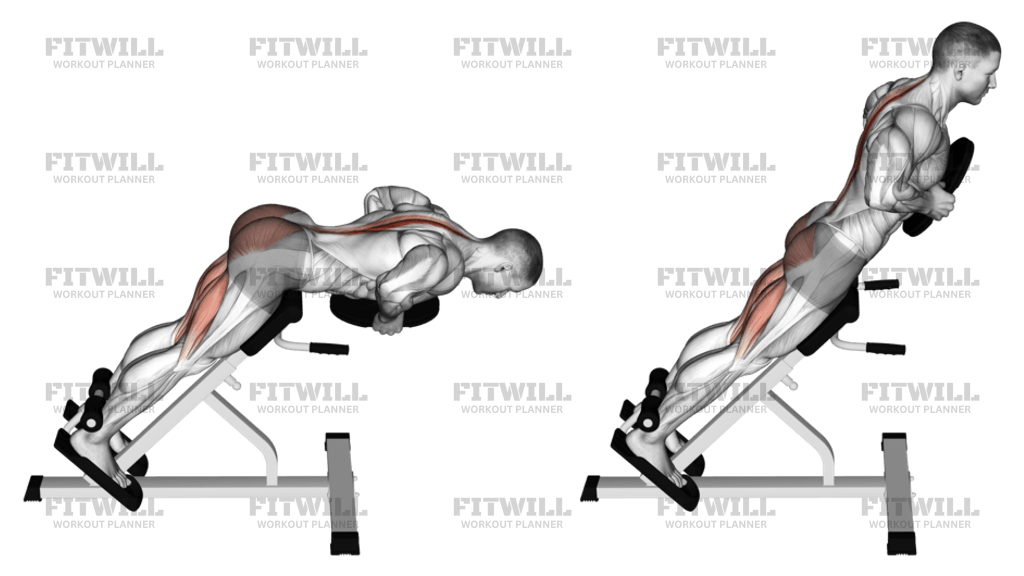
"Plate Hyperextension" progresses the bodyweight hyperextension by adding external load while retaining the stable Roman-chair setup. It primarily works the glutes, hamstrings, and erector spinae, with the core bracing to resist unwanted spinal movement. Hold the plate snugly against the chest, anchor the feet securely, and hinge at the hips with a long, neutral spine. Rise by extending the hips and contracting the glutes, stopping when the torso reaches neutral rather than leaning excessively backward. Common errors include holding the plate too far from the body, bouncing out of the bottom, rounding sharply through the low back, or turning the movement into a lumbar-extension contest. Following bodyweight Hyperextension with this loaded variation adds meaningful posterior-chain hypertrophy volume without requiring the axial loading of heavy deadlifts or barbell good mornings.
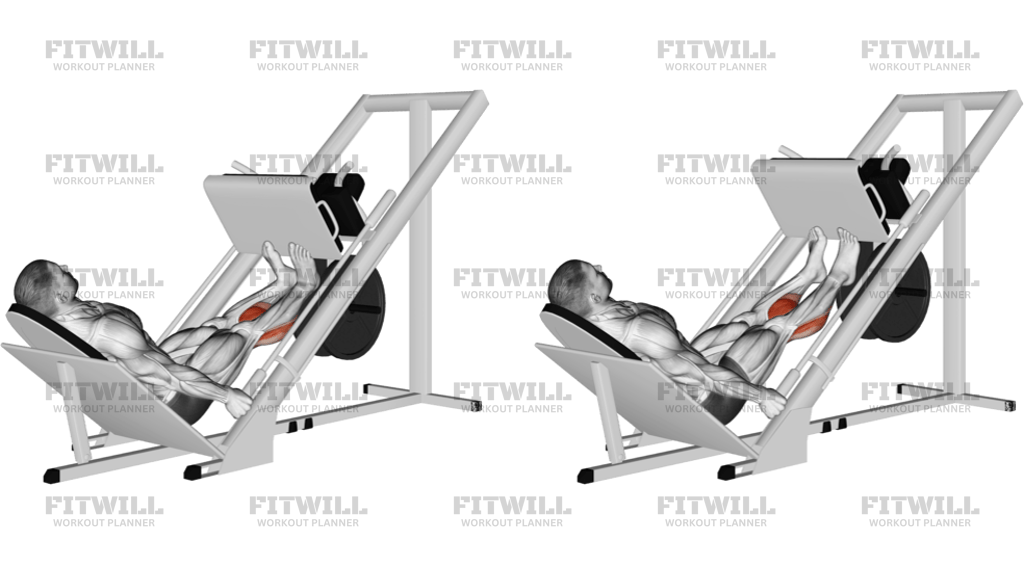
"Sled Calf Press On Leg Press" focuses on the calves through plantarflexion, primarily training the gastrocnemius and soleus. The tibialis posterior and small intrinsic foot muscles help stabilize the ankle and foot against the platform. Keep the balls of your feet securely on the lower portion of the leg-press platform, maintain stable hips and a supported lower back, and allow the heels to descend slowly into a comfortable stretch. Press through the forefoot to raise the heels as high as possible, briefly squeeze at the top, and resist the sled on the way down. Avoid bouncing at the bottom, using tiny partial reps, locking the knees aggressively, or allowing the feet to slide. The five sets of 20 reps provide the sustained tension and high volume that calves often respond well to, while improving ankle strength for running, jumping, and lower-body lifting.
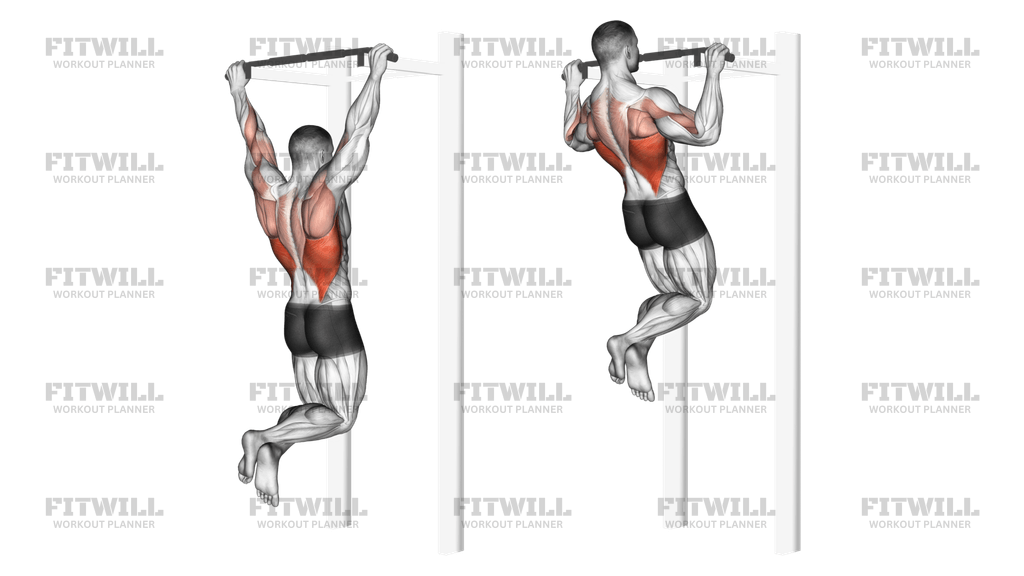
"Pull-Up" provides the upper-body component of the workout and primarily targets the latissimus dorsi, with major assistance from the biceps, brachialis, forearm flexors, rhomboids, middle and lower trapezius, and rear deltoids. The abdominals, obliques, and glutes stabilize the body to prevent swinging. Begin from a controlled hang with an overhand grip, set the shoulders down away from the ears, brace the ribs, and pull by driving the elbows down toward your sides. Bring the upper chest toward the bar or clear the bar with the chin without craning the neck, then lower under control to full or near-full arm extension. Avoid kipping, kicking the legs, shrugging through the shoulders, or cutting the lowering phase short. Pull-Up complements the leg-focused training by adding a challenging compound upper-back movement and improving relative upper-body strength.
Overall, this workout delivers comprehensive lower-body hypertrophy volume for the quads, hamstrings, glutes, calves, and lower back, plus substantial lat and arm work from Pull-Up. Warm up with 5–10 minutes of easy cycling, incline walking, or rowing, followed by leg swings, bodyweight hinges, ankle mobility, and a few progressively lighter preparation sets on the first two machine exercises. Rest about 60–90 seconds on the isolation movements and calf press, and 90–150 seconds for Hyperextension, Plate Hyperextension, and Pull-Up; take longer if form or performance drops noticeably. Perform this workout once weekly as a high-volume lower-body session, or up to twice weekly only if overall recovery, soreness, and other leg training are well managed. Progress gradually by adding reps within the listed ranges, slowing the eccentric phase, improving range of motion, or increasing load in small increments once every prescribed rep is clean and controlled.
Вижте цялата тренировка в приложението Fitwill.
[ Fitwill — Дневник и планиране на тренировки ]
Планирайте следващата си тренировка. Вижте напредъка си.
Създайте тренировка за залата или за вкъщи, записвайте всяка серия и следете напредъка си — всичко в едно приложение.
