Καθιστή Έκταση Γονάτου Ενός Ποδιού Με Πρόσθετο Βάρος
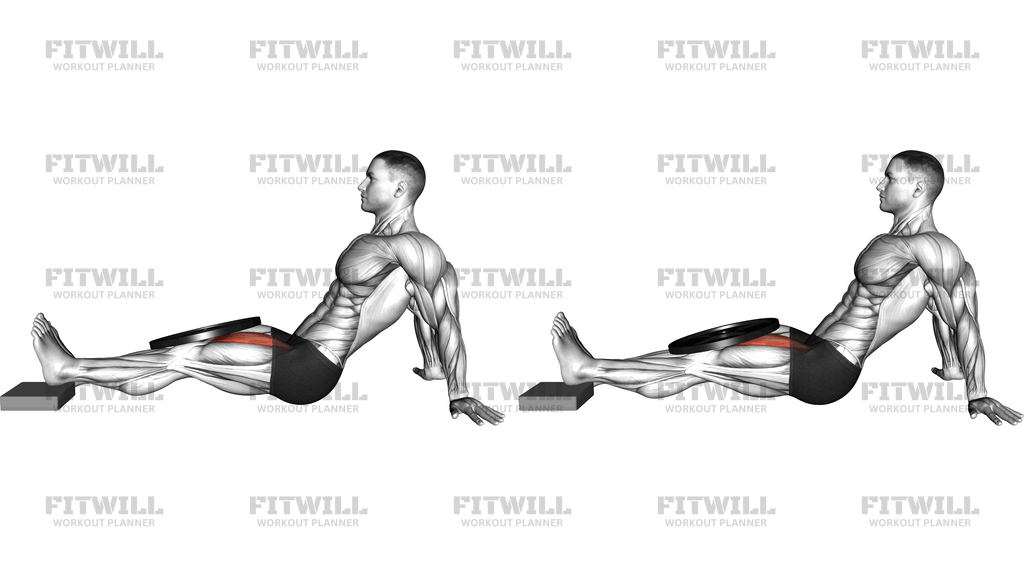
Η Καθιστή έκταση γονάτου ενός ποδιού με πρόσθετο βάρος είναι μια απλή αλλά πολύ στοχευμένη άσκηση για τους τετρακέφαλους, που εκτελείται στο πάτωμα με τίποτα περισσότερο από έναν δίσκο και ένα χαμηλό κούτσουρο ή σκαλοπάτι. Κάθεσαι με τον κορμό γερμένο προς τα πίσω και στηριγμένο στα χέρια σου, το ένα πόδι τεντωμένο μπροστά με τη φτέρνα να ακουμπά σε μια χαμηλή βάση, και έναν δίσκο τοποθετημένο στον μηρό λίγο πάνω από το γόνατο που δουλεύει. Από εκεί, τεντώνεις το γόνατο ενάντια στην αντίσταση του δίσκου, ανυψώνοντας ελαφρώς τη φτέρνα από το κούτσουρο πριν την κατεβάσεις ξανά με έλεγχο.
Αυτή η κίνηση απομονώνει ένα πόδι τη φορά, κάτι που κάνει εύκολο να εντοπίσεις και να διορθώσεις διαφορές δύναμης ανάμεσα στους τετρακέφαλους του αριστερού και του δεξιού ποδιού. Επειδή το γόνατο ξεκινά σχεδόν τεντωμένο και κινείται σε μικρό εύρος, η έμφαση πέφτει ακριβώς στο τελικό σημείο της έκτασης, εκεί όπου οι τετράκεφαλοι, ιδίως οι πλατύες μύες και ο ορθός μηριαίος που κατεβαίνει μπροστά στον μηρό, πρέπει να δουλέψουν σκληρά για να κλειδώσουν πλήρως το γόνατο. Αυτόν τον έλεγχο στο τελικό εύρος πολλοί ασκούμενοι δεν τον γυμνάζουν ποτέ απευθείας, ακόμα κι αν κάνουν βαριά squats ή πιέσεις ποδιών.
Η τοποθέτηση είναι αυτή που κάνει την άσκηση να δουλεύει. Ο δίσκος πρέπει να ακουμπά στον μηρό λίγο πάνω από την επιγονατίδα, όχι πάνω στο ίδιο το γόνατο, ώστε το βάρος να πιέζει τον μηρό προς τα κάτω ενώ η κνήμη είναι ελεύθερη να ανέβει. Το χαμηλό κούτσουρο κάτω από τη φτέρνα δίνει στο πόδι ένα σημείο στήριξης στην αρχή και δημιουργεί ένα μικρό, ορατό εύρος κίνησης καθώς η φτέρνα ανασηκώνεται όταν το γόνατο φτάνει σε πλήρη έκταση. Το γερτό πίσω πάνω στα χέρια σου αφήνει την πλάτη άνετη και τα ισχία χαλαρά, ώστε τίποτα άλλο να μην κλέβει δουλειά από τους τετρακέφαλους.
Η άσκηση ταιριάζει σε ανθρώπους που γυμνάζονται στο σπίτι με περιορισμένο εξοπλισμό, σε ασκούμενους που θέλουν επιπλέον όγκο για τους τετρακέφαλους χωρίς φόρτιση της σπονδυλικής στήλης, και σε όσους δουλεύουν τη δύναμη και τον έλεγχο της έκτασης του γονάτου αφού το γόνατο έχει εγκριθεί για προπόνηση. Είναι επίσης χρήσιμο εκπαιδευτικό εργαλείο: το μικρό εύρος κάνει εύκολο να νιώσεις τη σύσπαση του τετρακέφαλου και να μάθεις πώς πρέπει να νιώθει ένα πλήρως τεντωμένο, κλειδωμένο γόνατο.
Κράτα τις επαναλήψεις αργές και σκόπιμες, όχι γρήγορες. Το εύρος είναι μικρό, οπότε η αδράνεια δεν προσφέρει τίποτα· η αξία προέρχεται από το δυνατό πάτημα της πίσω πλευράς του γονάτου προς τα κάτω, τη σύντομη παραμονή στην κορυφή και την καθοδηγούμενη κάθοδο. Ξεκίνα με έναν ελαφρύ δίσκο μέχρι να μπορείς να κρατάς τον μηρό ακίνητο και την κίνηση να προέρχεται καθαρά από το γόνατο, και μετά πρόσθεσε βάρος σταδιακά.
[ Ημερολόγιο & Προγραμματιστής Προπονήσεων ]
Βάλε την επόμενη προπόνησή σου στο Fitwill
Έχε το πλάνο και το ημερολόγιο έτοιμα όταν είσαι έτοιμος.


Οδηγίες
- Κάθισε στο πάτωμα και τέντωσε το ένα πόδι ίσιο μπροστά σου, سپafter placing: και μετά άκουσε το άλλο σου πόδι-flat: place the other foot flat on the floor with the knee bent for balance.
- Rest the heel of your working leg on a low block or step so the foot is slightly elevated and the leg is close to straight.
- Lean your torso back and place your hands on the floor behind your hips, fingers pointing forward, to support your upper body.
- Lay a weight plate flat on the thigh of the working leg, a few centimeters above the kneecap, and hold it steady with one hand until you are set.
- Brace your trunk lightly and keep the thigh relaxed and still; the only joint that should move is the knee.
- Press the back of your knee down toward the floor to straighten the leg fully, letting the heel rise slightly off the block as the quadriceps contract.
- Hold the fully extended position for a second, squeezing the quad hard with the plate pressing down on the thigh.
- Lower the heel back to the block slowly, letting the knee soften only a small amount before the next rep.
- Breathe out as you extend the knee and in as you lower the heel, keeping the breath steady throughout the set.
- Complete all repetitions on one leg, remove the plate, then set up on the other side and match the rep count.
Συμβουλές & Κόλπα
- The most common error is placing the plate directly over the kneecap, which is uncomfortable and changes the leverage; keep it on the meat of the thigh above the knee.
- If the plate slides during the set, put a small towel between the plate and your skin or hold it lightly with your free hand rather than clamping the thigh.
- Watch the heel: if it never leaves the block, the knee is not reaching full extension, so either reduce the weight or focus harder on pressing the knee down.
- Do not let the hips rock backward as you press; if your torso keeps sinking toward the floor, brace the trunk more and lean a little more weight into your hands.
- Keep the kneecap and toes pointing straight up. Letting the leg rotate outward shifts work away from the quad and can pinch the inside of the knee.
- Avoid bouncing the heel off the block. Because the range is so short, fast reps turn it into a reflex drill instead of quad work.
- If the floor is hard on your heel or the block is too tall, swap it for a thin mat or a slightly lower step so the knee starts only slightly bent.
- Warm the knee up with a few bodyweight versions before adding the plate, especially in cold rooms or early morning sessions.
- Expect the non-dominant leg to feel weaker; never let the stronger leg dictate the rep count for both sides.
Συχνές Ερωτήσεις
What muscles does the Weighted Seated Single Leg Knee Extension work?
It targets the quadriceps on the front of the thigh, with strong emphasis on the last few degrees of knee extension where the vastii and rectus femoris do most of the work. The hip and trunk muscles only stabilize; they do not drive the movement.
Why is the heel placed on a block during the Weighted Seated Single Leg Knee Extension?
The block supports the heel at the start and gives it room to lift as the knee straightens fully. It also confirms the leg starts in a near-straight position, so the exercise stays in that short, end-range arc.
Can beginners do the Weighted Seated Single Leg Knee Extension?
Yes, and it is actually a good beginner exercise because the range is short and easy to control. Start with no weight or a very light plate and learn to feel the quad contracting before adding load.
How heavy should the plate be on the thigh?
Use a weight you can press through a full, visible heel lift for 10 to 15 slow reps without the thigh or hips shifting. If the heel barely moves or the plate slides around, it is too heavy.
Is the Weighted Seated Single Leg Knee Extension a substitute for a leg extension machine?
It is not a full substitute because the range is much shorter, but it complements machine work by strengthening the lockout portion one leg at a time. It is a solid option when you have no machine available.
Should my knee hurt when doing the Weighted Seated Single Leg Knee Extension?
You should feel muscular effort in the thigh, not joint pain. If the knee itself complains, reduce the weight, check that the plate sits on the thigh rather than over the kneecap, and stop if discomfort persists.
Why train one leg at a time instead of both knees together?
The single-leg setup lets you match reps side to side and exposes any strength difference between legs. It also lets the plate sit securely on one thigh instead of balancing across two.
How many sets and reps should I do?
Two to four sets of 10 to 15 controlled reps per leg works well for most people. Because the range is short, prioritize a firm squeeze at the top over adding more weight.
What should I do if the plate keeps slipping off my thigh?
Place a towel on the thigh under the plate or wear longer training pants to add friction. You can also hold the plate lightly with your free hand while the other hand supports you on the floor.