Kneeling Shoulder Tap
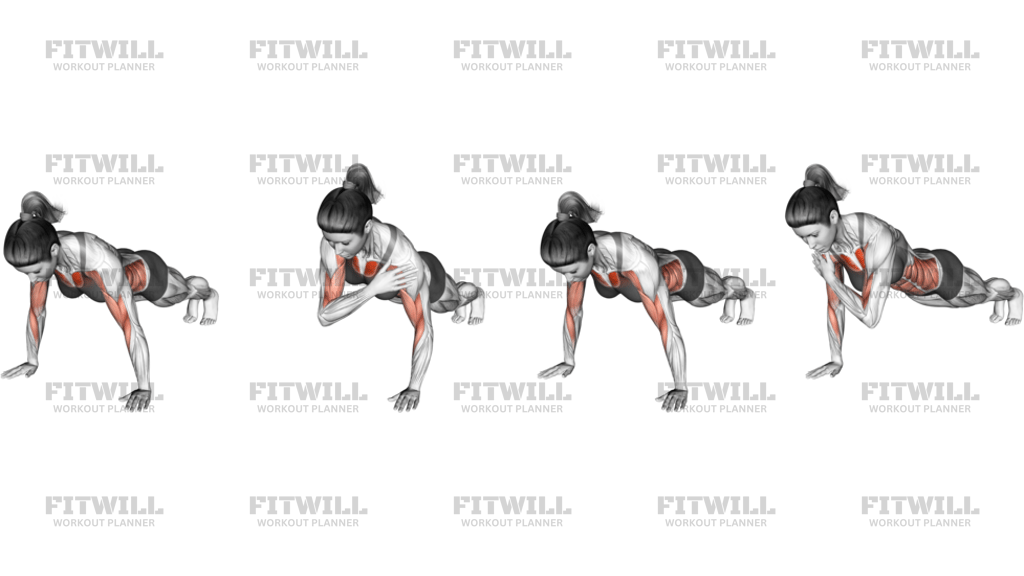
Kneeling Shoulder Tap is a body-weight stability exercise that trains you to resist rotation while one hand leaves the floor to tap the opposite shoulder. The movement looks simple, but it asks a lot from the core, shoulders, and upper back because every tap tries to shift your balance and twist your torso. That makes it useful for building control in a kneeling plank position without the extra challenge of a full toe-supported plank.
The setup matters more than the tap itself. When your hands are planted under the shoulders and your knees stay down, you want a straight line from the head through the hips to the knees, with the pelvis held steady instead of rocking side to side. That stable base lets the supporting shoulder and trunk do the real work while the reaching arm moves just enough to touch the opposite shoulder and come back down.
Kneeling Shoulder Tap is often used as a warmup, core drill, or accessory movement between heavier upper-body sets. It teaches you how to keep breathing under tension, keep the ribs from flaring, and keep the hips from drifting as each hand leaves the floor. If you rush the rhythm or reach too far, the tap turns into a sway, so the best reps are controlled and deliberate rather than fast.
This exercise is also helpful for beginners who are still building plank strength, or for lifters who want a lower-intensity version of a shoulder-tap drill. The kneeling position shortens the lever and reduces the load on the shoulders and abs, but it still demands coordination and anti-rotation strength. That makes it a practical bridge between basic plank work and harder variations like full plank shoulder taps or taps on unstable surfaces.
Keep the motion crisp and repeatable. Each rep should start with the body braced, one hand lifting cleanly, the opposite shoulder tapped without shifting the torso, and the hand returning to the floor under control. If the hips twist, the shoulders collapse, or the neck cranes forward, shorten the pause, slow the pace, or reduce the number of reps until you can keep the torso quiet from start to finish.
[ Workout Log & Planner ]
Put your next workout in Fitwill
Keep your plan and training log ready when you are.


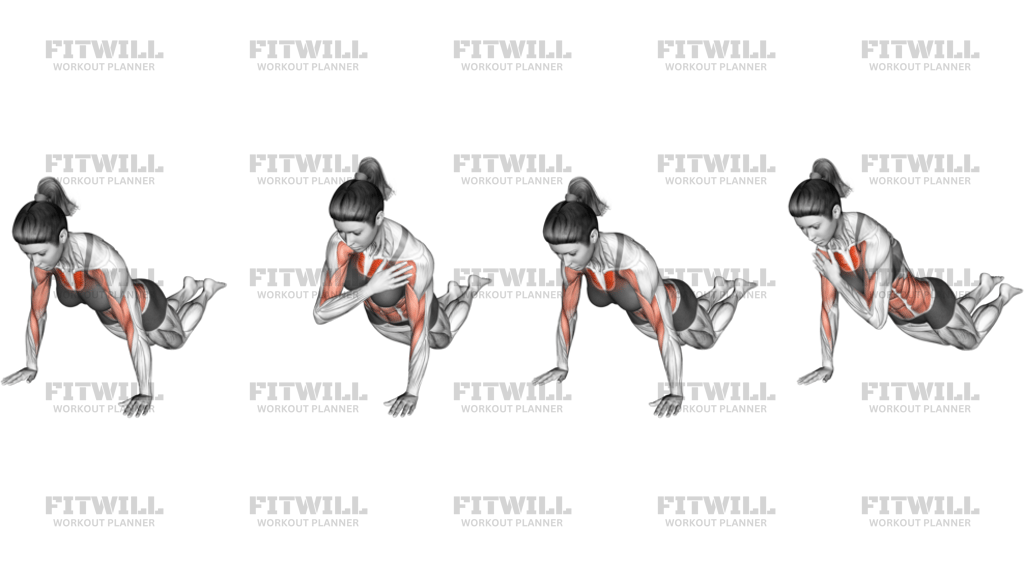
Instructions
- Kneel on a mat and place both hands on the floor under your shoulders, with your knees under your hips and your toes relaxed behind you.
- Walk your hands slightly ahead if needed so your shoulders stay stacked over your wrists and your trunk can stay long instead of sagging.
- Set your head in line with your spine, tuck your chin slightly, and tighten your midsection before you lift one hand.
- Shift your weight into the supporting arm and both knees without letting your hips twist or drift to one side.
- Lift one hand from the floor and tap the opposite shoulder with a short, controlled reach.
- Place the hand back on the floor in the same spot, then re-stabilize both shoulders before the next rep.
- Alternate sides while keeping the pelvis level and the rib cage from opening as the hand leaves the ground.
- Breathe out as the hand lifts and taps, then inhale as you return to the floor and reset your brace.
- Finish the set by lowering both knees fully and relaxing your shoulders before you come out of the position.
Tips & Tricks
- Keep your hands just outside shoulder width if the narrow setup makes the tapping side of the body wobble.
- Tap the opposite shoulder with a short reach; a long cross-body reach usually twists the torso and turns the drill into a balance contest.
- Press the floor away through the supporting arm so the shoulder blade stays active instead of sinking toward the mat.
- If your hips swing, widen the knee stance a little or slow the cadence until the pelvis stays quiet.
- Keep the rib cage stacked over the pelvis; flaring the ribs makes the lower back take over the work.
- Use a smooth exhale on each tap to help the trunk stay braced without holding your breath the whole set.
- Keep the knees planted on a comfortable pad so you can focus on control instead of discomfort on the floor.
- Stop the set when you can no longer return the tapping hand to the same floor position without leaning.
Frequently Asked Questions
What muscles does Kneeling Shoulder Tap train?
It mainly trains the core to resist rotation, with the shoulders, chest, and triceps helping support your body as each hand leaves the floor.
Is Kneeling Shoulder Tap easier than a full plank shoulder tap?
Yes. The kneeling version shortens the lever and reduces the load on your trunk and shoulders, so it is a good step before full plank shoulder taps.
How do I keep my hips from rocking during Kneeling Shoulder Tap?
Widen your knee stance slightly, slow the tap, and keep your hands under your shoulders so the torso has less reason to twist.
Where should my hands and knees be set up?
Place your hands under or just slightly in front of your shoulders and keep your knees under your hips on a mat or other soft surface.
Should I tap the shoulder quickly or hold the top position?
A short pause at the tap is useful if you can keep the pelvis still. If the pause causes you to sway, make the reach smaller and keep the motion smooth.
Can beginners do Kneeling Shoulder Tap safely?
Yes, as long as they can keep the torso steady and avoid collapsing through the supporting shoulder. It is often a better starting point than toe-supported shoulder taps.
What is the biggest form mistake in Kneeling Shoulder Tap?
The most common mistake is shifting the hips toward the supporting side and letting the body rotate each time one hand leaves the floor.
How can I make Kneeling Shoulder Tap harder?
Slow the taps, pause longer at the top, bring the knees slightly farther back, or progress to a full plank shoulder tap when the kneeling version stays perfectly still.