Day 2 of Week 8 - Full-Body
Completado por Sergey · 3 de mayo de 2026
This full-body gym hypertrophy workout is designed to build muscle across your back, legs, shoulders, and calves using cables, leverage machines, dumbbells, and bodyweight exercises. The high-volume set and rep structure (starting with higher reps and tapering down) promotes progressive overload, muscular endurance, and time under tension—key drivers of hypertrophy. This workout is best suited for intermediate lifters but can be adjusted for advanced trainees by increasing load or intensity techniques. Because it relies on cable stations and leverage machines, it is ideal for a commercial gym setting.
"Cable Bar Lateral Pulldown" primarily targets the latissimus dorsi, with assistance from the biceps, rear delts, and mid-back muscles. Focus on pulling your elbows down and slightly back rather than yanking the bar with your hands. Keep your chest tall and avoid excessive leaning. The higher first set (30 reps) acts as a metabolic primer and warm-up, preparing the back for heavier sets to follow. This vertical pulling movement builds width and sets the foundation for the rest of the back work.
"Cable Elevated Row" shifts emphasis to the mid-back, including the rhomboids, middle trapezius, and posterior deltoids, while still engaging the lats and biceps. Maintain a neutral spine and squeeze your shoulder blades together at the end of each rep. Avoid shrugging or using momentum. Paired after pulldowns, this horizontal row balances back development by adding thickness to complement the width built from vertical pulling.
"Lever Leg Extension" isolates the quadriceps. Keep your hips glued to the seat and control the lowering phase to maximize tension. Avoid locking out aggressively at the top. The higher-rep first set increases blood flow to the knees and quads, preparing them for heavier tension. This isolation movement pre-fatigues the quads before moving into hamstring work, creating balanced thigh development.
"Lever Lying Leg Curl" targets the hamstrings, particularly the biceps femoris, semitendinosus, and semimembranosus. Keep your hips pressed into the pad and avoid arching your lower back. Control the eccentric phase to increase hamstring activation. By pairing quad isolation with hamstring isolation, the workout ensures balanced knee joint strength and improved muscular symmetry.
"Hyperextension" (bodyweight) focuses on the erector spinae, glutes, and hamstrings. Maintain a neutral spine and hinge at the hips rather than rounding your back. This initial set acts as activation work for the posterior chain.
"Plate Hyperextension" increases resistance to further challenge the lower back and glutes. Hold the plate securely at your chest and move in a slow, controlled manner. These sets enhance posterior chain endurance and strength, supporting spinal stability and improving performance in compound lifts.
"Lever Seated Shoulder Press" primarily targets the anterior and lateral deltoids, with assistance from the triceps and upper chest. Keep your core braced and avoid flaring your elbows excessively. Press in a controlled arc and avoid locking out harshly. The machine provides stability, allowing you to focus on shoulder hypertrophy with reduced injury risk.
"Dumbbell Single Leg Calf Raise" isolates the gastrocnemius and soleus while also challenging balance and ankle stability. Hold a dumbbell in one hand and use a controlled tempo—pause briefly at the top and lower slowly. Training one leg at a time corrects strength imbalances and improves lower-leg development.
"Dumbbell Standing Around World" is a shoulder mobility and stability movement that targets the deltoids while engaging the rotator cuff and upper chest. Move the dumbbell in a controlled circular motion around your head while maintaining a tight core. Avoid excessive arching of the lower back. This exercise improves shoulder control and endurance, complementing the pressing work.
"Cable Straight Arm Pulldown (with rope)" isolates the lats without heavy biceps involvement. Keep your arms nearly straight with a slight elbow bend and pull the rope down by driving through your shoulders. Avoid leaning excessively. This movement reinforces mind-muscle connection in the lats and adds extra volume for back hypertrophy.
"Wide Grip Pull-Up" serves as a challenging finisher targeting the upper lats, teres major, and upper back. Maintain a controlled descent and avoid swinging. This bodyweight movement integrates all previous back work into a functional compound pattern, testing strength and endurance after pre-fatigue from cables.
Overall, this workout delivers comprehensive full-body muscle stimulation with a strong emphasis on back and posterior chain development. Rest 60–90 seconds between moderate sets and up to 2 minutes for heavier sets. Perform this routine 1–2 times per week as part of a split program. Begin with 5–10 minutes of light cardio and dynamic mobility for shoulders and hips before starting. To progress, gradually increase load, add controlled tempo (3–4 second eccentrics), or incorporate intensity techniques such as drop sets on the final set of machine exercises. Consistency and progressive overload will drive noticeable gains in strength and muscle size.
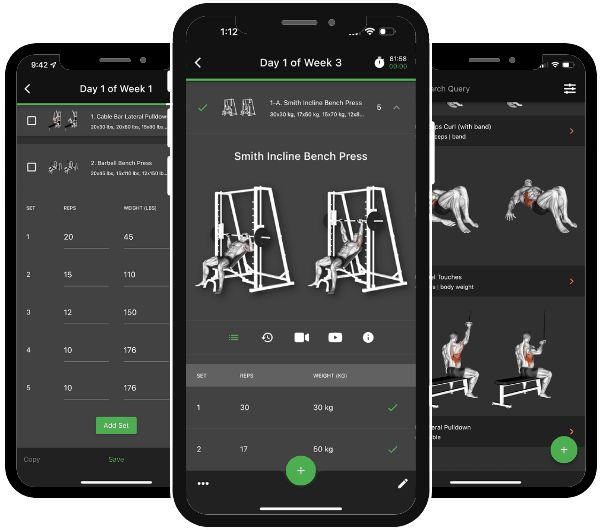
See the full workout in the Fitwill app.
Construye tu mejor versión, un entrenamiento a la vez
Desbloquea tu potencial con Fitwill. Crea y sigue tus entrenamientos eligiendo entre más de 5,000 ejercicios para casa o gimnasio. Siente el progreso y disfruta de los resultados.
¿Listo para un cambio? ¡Descarga ahora y comienza tu viaje!