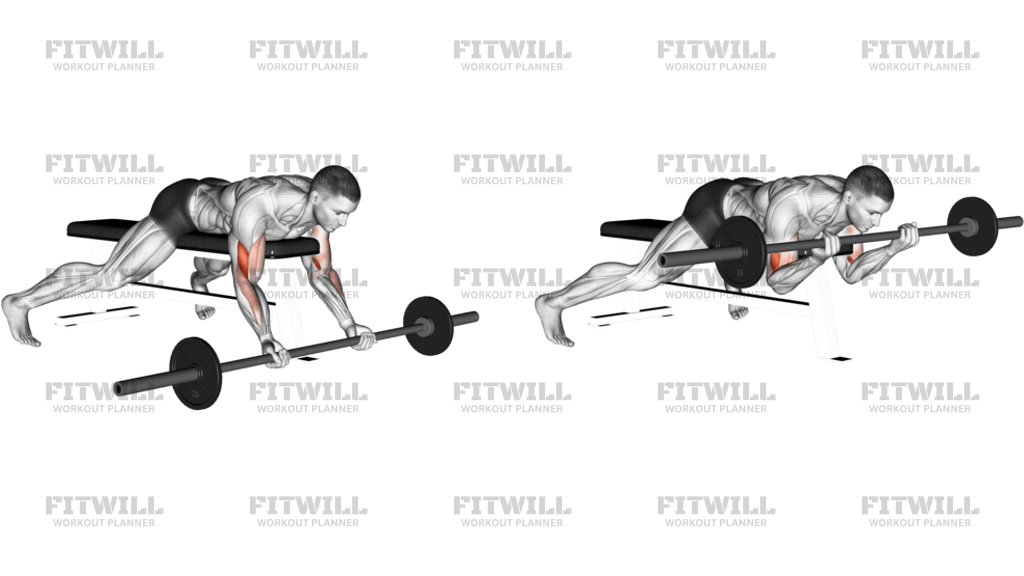
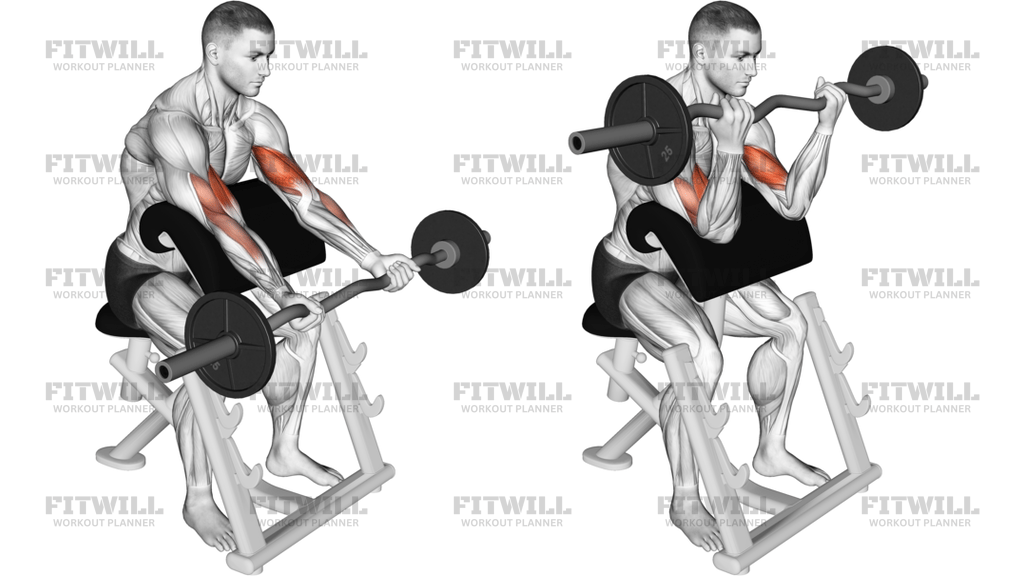
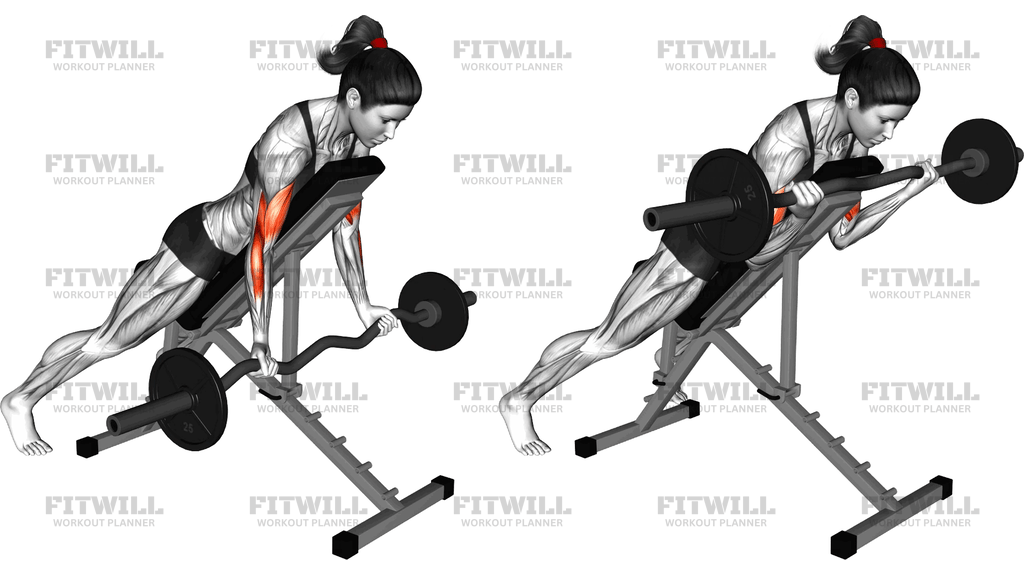
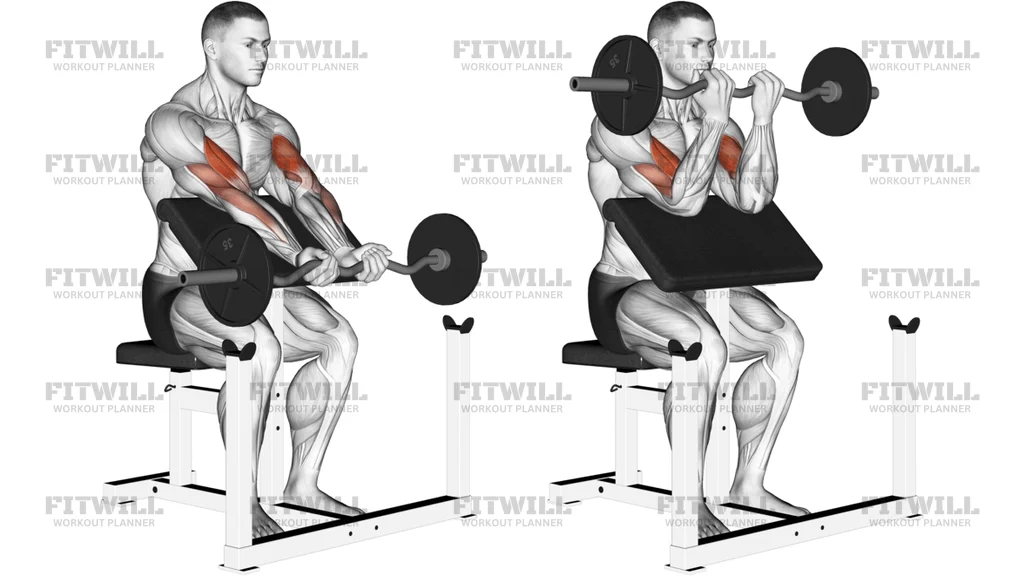
EZ Barbell Decline Close-Grip Face Press
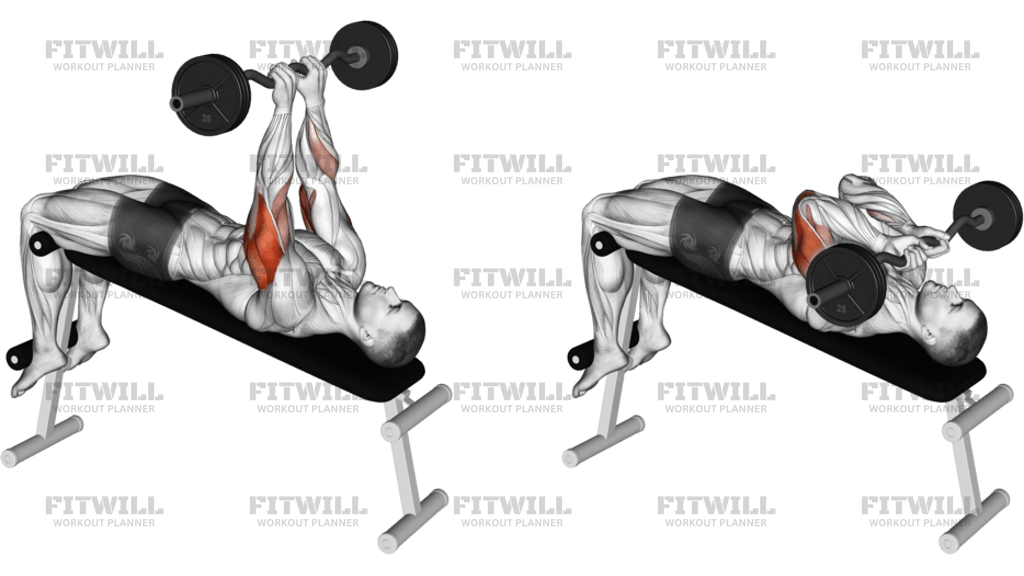
EZ Barbell Decline Close-Grip Face Press is a decline-bench triceps press variation that keeps the body anchored while the elbows do most of the work. The angled EZ-bar grip makes the wrist position more natural than a straight bar, and the decline setup helps keep the torso fixed so the set stays focused on elbow extension instead of body momentum. It is a useful accessory when you want direct upper-arm work with a controlled bar path.
The main training effect is on the triceps, with the forearms and front of the shoulders helping stabilize the bar. Because the lifter is lying on a decline bench with the feet secured, the bench angle and upper-back position matter more than they would in a standing press. If the rib cage flares or the elbows drift too wide, the movement starts to turn into a loose press instead of a clean triceps-focused repetition.
Set up by lying back on the decline bench, hooking the feet securely, and taking a narrow grip on the EZ bar that keeps the wrists comfortable. Start with the bar above the upper chest or face line, shoulders pinned into the bench, and elbows pointed slightly forward rather than flared out. A steady brace through the midsection helps keep the lower back from over-arching as the bar lowers.
Lower the bar in a controlled arc toward the forehead or upper face, letting the elbows bend while the upper arms stay mostly quiet. From the bottom, press the bar back to full elbow extension without bouncing, shrugging, or letting the shoulders roll forward. The best reps feel smooth and deliberate, with the triceps finishing the press and the bar returning to the same line on every repetition.
EZ Barbell Decline Close-Grip Face Press works well as a triceps accessory after heavier benching or pressing work, especially when you want to train elbow extension without standing load or swinging. Keep the rep range strict and pain-free, and reduce the load if the wrists, elbows, or shoulders start losing their stacked position. When the setup is consistent, this exercise gives you a precise way to load the back of the upper arms while the decline bench keeps the rest of the body from helping too much.
Fitwill
Log Workouts, Track Progress & Build Strength.
Achieve more with Fitwill: explore over 9600 exercises with images and videos, access built-in and custom workouts, perfect for both gym and home sessions, and see real results.
Start your journey. Download today!




Instructions
- Lie back on the decline bench and secure your feet under the pads so your hips stay planted.
- Take a narrow grip on the EZ bar and stack your wrists over the angled handles that feel most comfortable.
- Start with the bar above your upper chest or face line, with your shoulders pressed into the bench.
- Keep your elbows slightly forward and tucked as you brace your ribs down.
- Lower the bar slowly toward your forehead or upper face by bending at the elbows.
- Stop when the bar is close enough that your upper arms can stay mostly fixed.
- Press the bar back up by straightening the elbows until your arms are fully extended.
- Exhale as you press and keep the bar path tight and smooth.
- Re-rack the bar carefully from the locked-out position before releasing your grip.
Tips & Tricks
- Use the decline bench hooks to keep your hips from sliding when the bar gets heavier.
- Choose the EZ-bar grip width that keeps your wrists neutral instead of bent back.
- Keep your elbows pointed slightly forward; flared elbows turn this into a sloppy press.
- Lower the bar to the forehead or upper face, not behind the head.
- Pause briefly near the bottom if the bar path starts drifting toward your chest.
- Slow the lowering phase so the triceps stay under tension instead of the shoulders taking over.
- If your elbows ache, shorten the range a little and keep the rep path tighter.
- Re-rack from full lockout so you are not unloading a bent elbow under the bar.
Frequently Asked Questions
What muscles does EZ Barbell Decline Close-Grip Face Press work?
It mainly targets the triceps, with the forearms and front shoulders helping stabilize the bar. The decline setup keeps the torso quiet so the arms do most of the work.
Where should the bar go on EZ Barbell Decline Close-Grip Face Press?
Lower it toward the forehead or upper face, then press it back to the same line. If the bar drops behind your head or wanders toward your chest, the triceps tension usually gets less precise.
How close should my grip be on the EZ bar?
Use the narrow inner angles that feel natural on the wrists without forcing them inward. Too wide usually shifts the work away from the triceps and makes the elbows flare.
Is EZ Barbell Decline Close-Grip Face Press good for beginners?
Yes, if the load is light and the decline bench setup feels stable. Beginners should focus on a short, controlled elbow bend before adding weight.
Should my elbows stay tucked during EZ Barbell Decline Close-Grip Face Press?
Yes, keep them slightly forward and close to the line of the bar. Letting them flare wide usually turns the movement into a less controlled press.
What if my wrists hurt on EZ Barbell Decline Close-Grip Face Press?
Use the angled grips on the EZ bar and lower the load until the wrists stay stacked. If the wrists still feel irritated, shorten the range and avoid forcing a straighter bar position.
How is EZ Barbell Decline Close-Grip Face Press different from a skull crusher?
This version keeps the bench declined and the grip close, so the bar path feels a bit more press-like and the body is more locked in. A skull crusher often travels farther toward or behind the head.
What is the biggest mistake in EZ Barbell Decline Close-Grip Face Press?
The biggest mistake is letting the shoulders and rib cage take over when the bar lowers. Keep the upper back pinned to the bench and make the elbows do the bending and straightening.