Sled 45° Leg Press
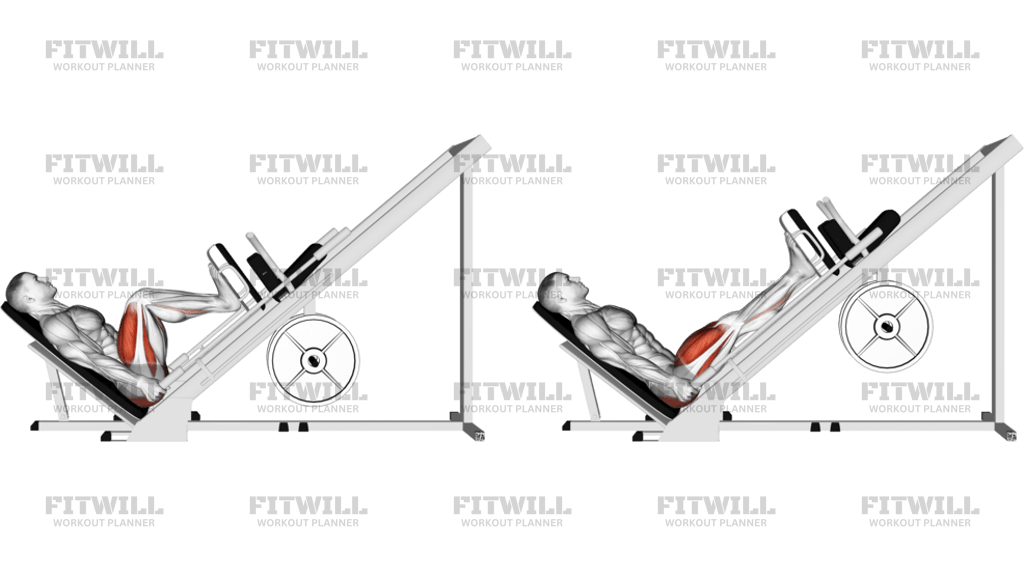
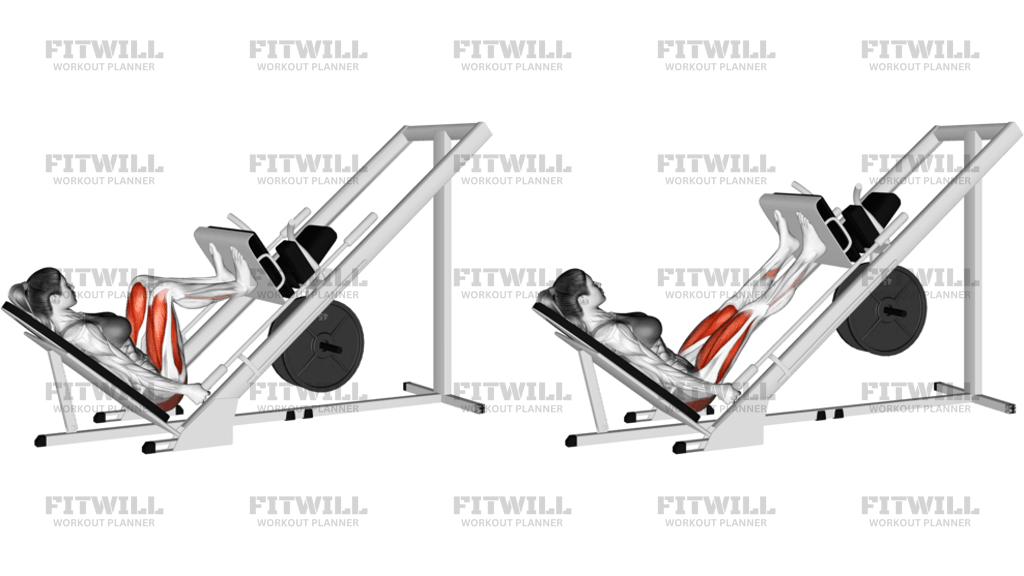
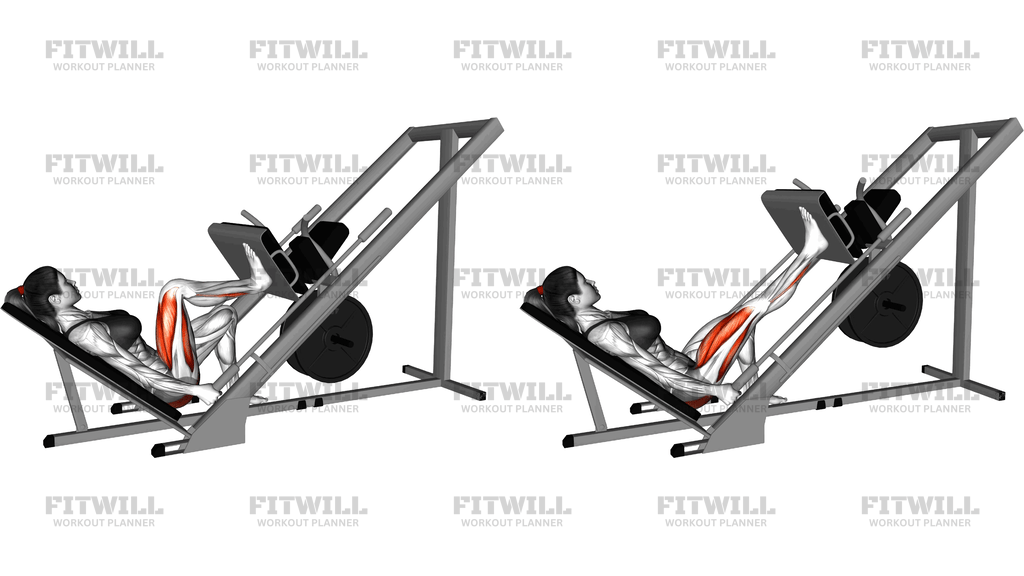
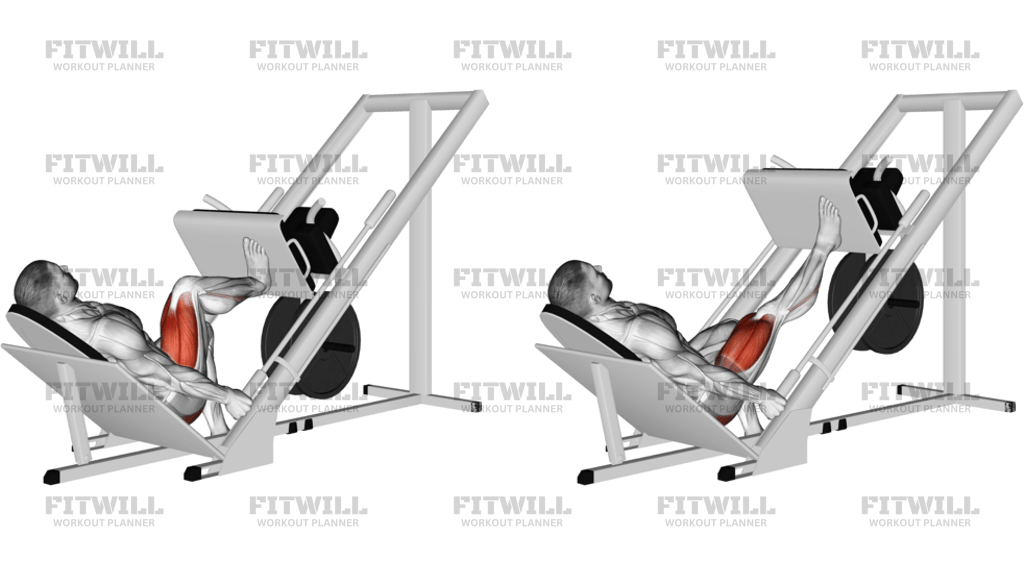
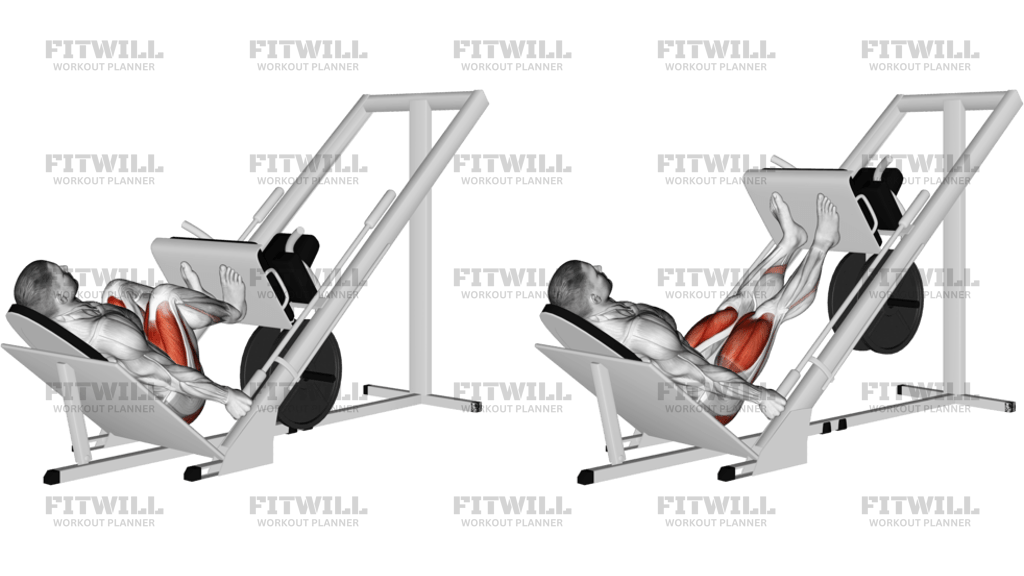
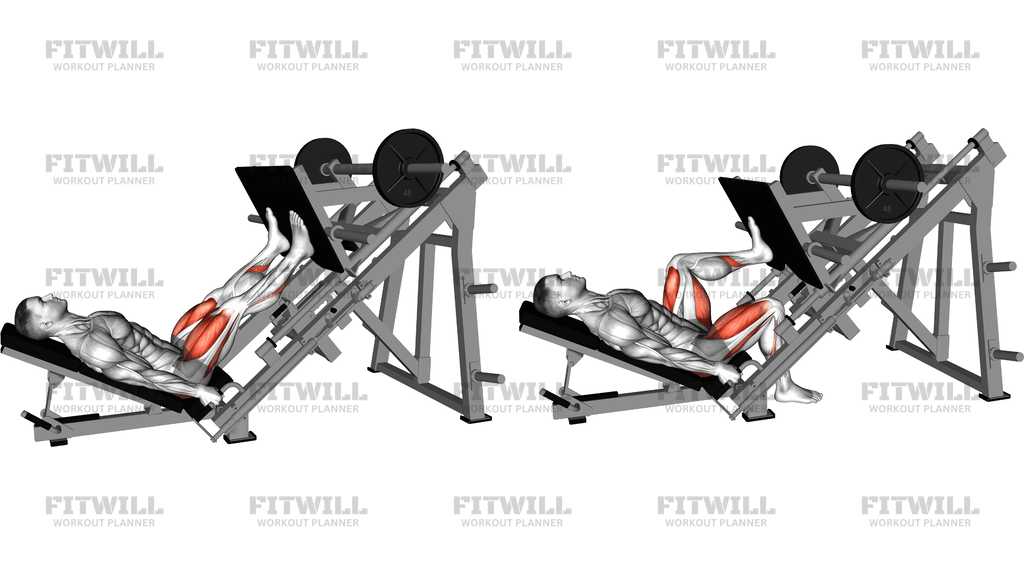
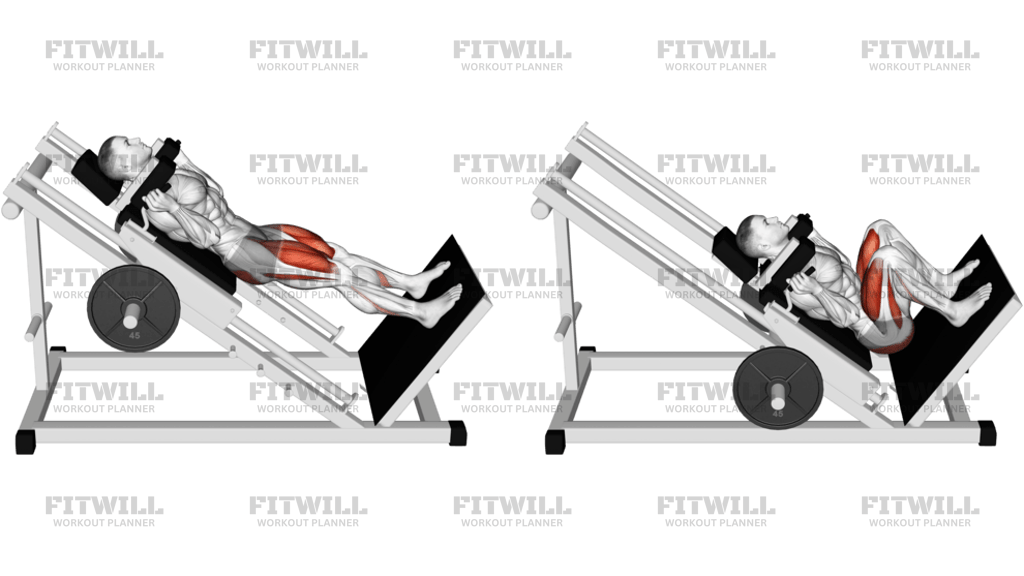
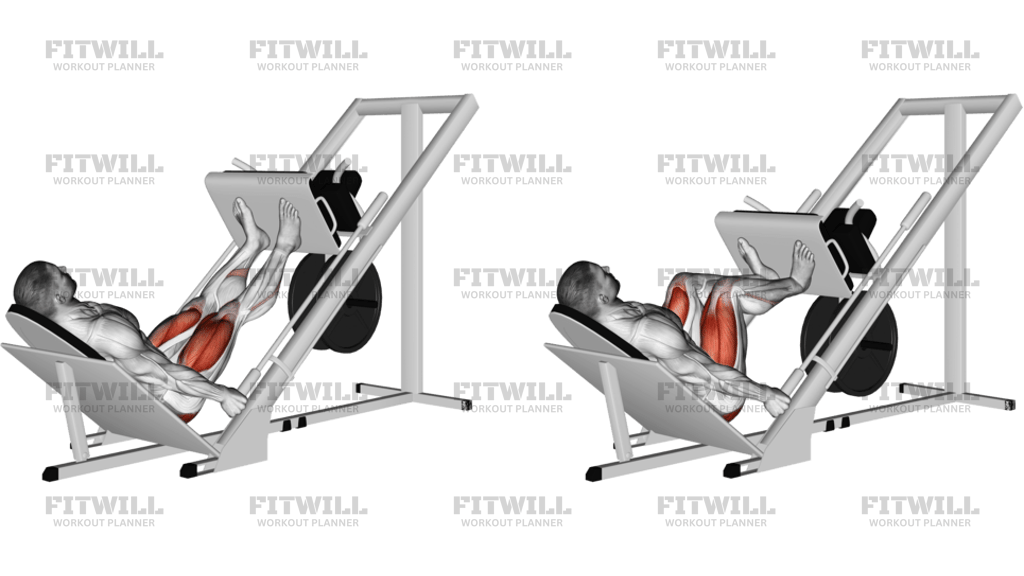
The Sled 45° Leg Press is a guided lower-body strength exercise that lets you load the legs without balancing the weight over your spine. In the image, the lifter is reclined on a sled machine with the feet driving a large angled platform. That setup makes the movement especially useful when you want to train the quads hard while still giving the back and upper body a supported position.
The exercise primarily targets the quads, but the glutes, hamstrings, and adductors also contribute as the knees and hips bend and extend through the press. Because the sled travels on fixed rails, the challenge is not balancing the load. The challenge is choosing a foot position, depth, and tempo that keep tension on the working muscles instead of dumping stress into the lower back or locking the knees.
Setup matters a lot on this machine. A higher foot placement usually shifts more work toward the glutes and hamstrings, while a lower stance tends to bias the quads more. Whichever stance you use, keep the entire foot planted, let the knees track in line with the toes, and keep the hips and low back anchored against the seat or pad. If the pelvis curls off the back pad at the bottom, the range is too deep for that load or stance.
On each rep, lower the sled under control until you reach a depth you can own, then press it away by driving through the midfoot and heel. The knees should travel smoothly without collapsing inward, and the sled should move in a steady line rather than bouncing at the bottom. Finish the rep before the knees snap into a hard lockout; keep a small bend so the legs stay loaded and the joints stay comfortable.
This is a practical exercise for hypertrophy, accessory strength work, and controlled leg volume in beginner through advanced programs. It is also useful when you want to train the legs with less standing balance demand than a squat. Use a range of motion you can repeat cleanly, breathe deliberately, and stop the set if the hips lift, the heels come off the platform, or the sled starts to move faster than you can control.
[ Workout Log & Planner ]
Put your next workout in Fitwill
Keep your plan and training log ready when you are.


Instructions
- Set the seat or back pad so your hips and low back stay supported while your knees can bend comfortably on the platform.
- Place both feet shoulder-width apart on the sled platform, with the entire foot flat and the knees lined up over the toes.
- Unlock the sled and hold the handles or side grips so your torso stays fixed against the pad.
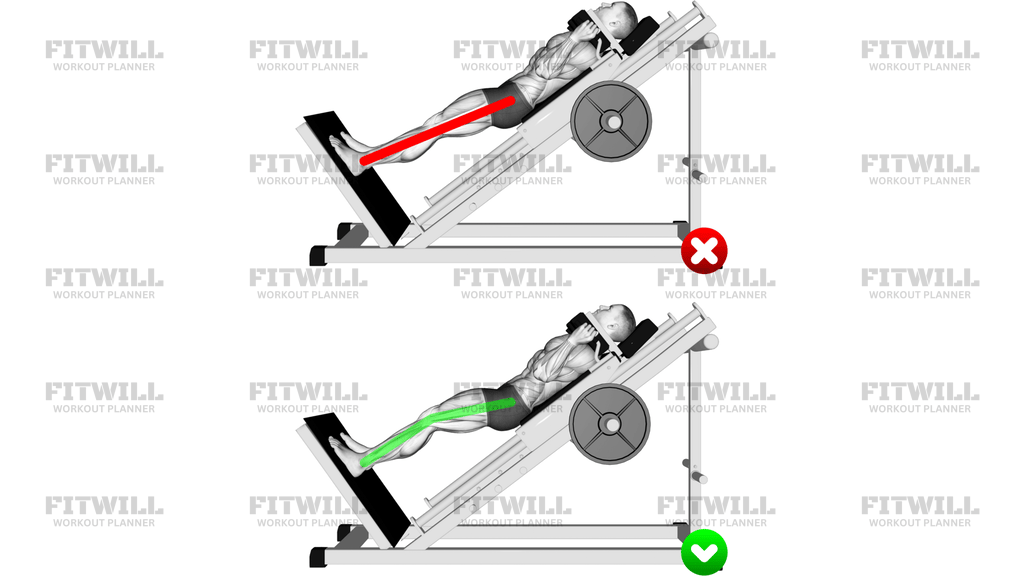
- Lower the sled slowly by bending the knees and hips until your thighs approach your torso without the pelvis lifting.
- Keep the knees tracking in the same direction as the toes and let the heels stay planted on the platform.
- Drive the sled away by pressing through the midfoot and heel until the legs are almost straight.
- Stop short of a hard knee lockout so the quads stay loaded and the joints stay comfortable.
- Repeat for the planned reps, breathing out as you press and inhaling as you lower.
- Re-rack the sled fully and exit only after the carriage is secure.
Tips & Tricks
- A lower foot position biases the quads more, while a higher foot position shifts more work toward the glutes and hamstrings.
- Do not let the pelvis tuck under at the bottom; that is the clearest sign the range is deeper than your hips can control.
- Keep the heels down through the whole rep so the push comes from the legs instead of the toes.
- Lower under control for a full second or two instead of dropping into the bottom position and bouncing the sled.
- Use a stance width that lets the knees travel naturally without collapsing inward or flaring far outside the toes.
- Keep your head and upper back relaxed against the pad instead of craning forward to help the press.
- Choose a load that lets you pause briefly near the bottom without losing position or shifting your hips.
- If your knees ache, shorten the range slightly and check that your feet are not too low on the platform.
Frequently Asked Questions
What does the Sled 45° Leg Press train most?
It mainly trains the quads, with the glutes, hamstrings, and adductors helping as the sled moves through the press.
Where should my feet go on the platform?
Start with both feet about shoulder-width apart and flat on the platform. A lower foot position tends to bias the quads, while a higher one shifts more work to the hips.
How deep should I lower the sled?
Lower only until you can keep your hips and low back in contact with the pad. If the pelvis starts to roll up, the depth is too deep for that setup.
Should I lock my knees at the top?
No. Finish the press with soft knees instead of snapping into a hard lockout so the load stays on the muscles rather than the joints.
Is this good for beginners?
Yes, because the sled is guided and the back is supported. Beginners should use a light load and learn a controlled lowering phase first.
Why do people put their feet higher on the sled?
A higher stance usually increases hip involvement and can feel easier on the knees for some lifters. It is also common when someone wants more glute and hamstring emphasis.
What is the most common mistake on this machine?
The most common mistake is letting the hips curl off the back pad or bouncing out of the bottom instead of controlling the descent.
Can I use the leg press instead of squats?
It can be a strong lower-body builder, but it does not fully replace squats if you want the same balance, trunk, and standing strength demands.