Standing Wheel Rollout
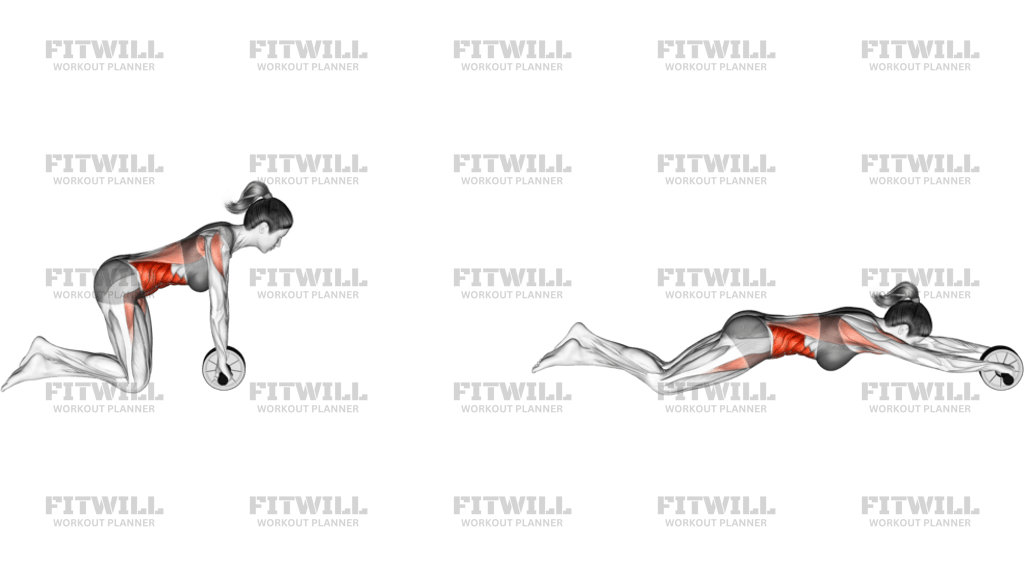
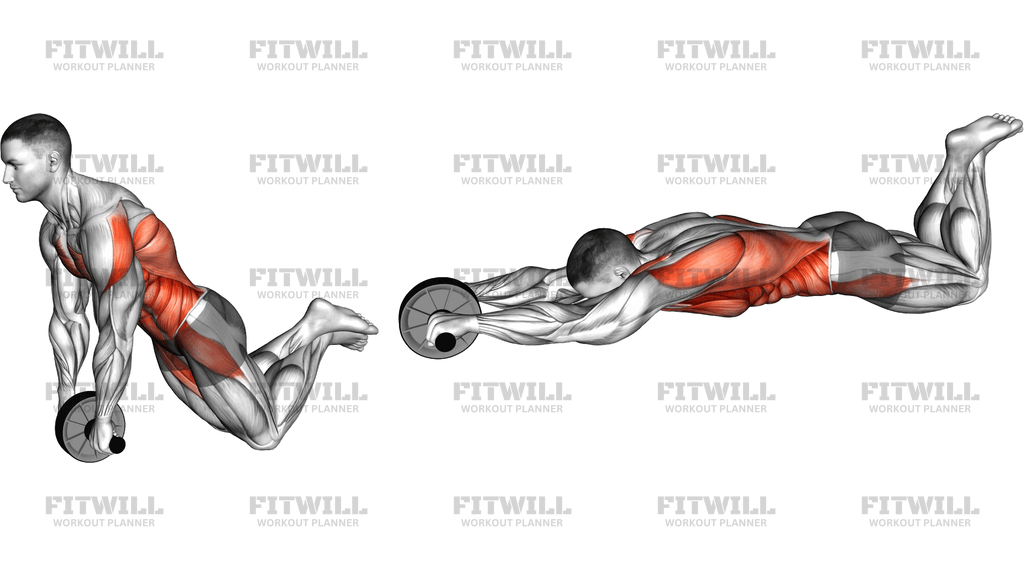
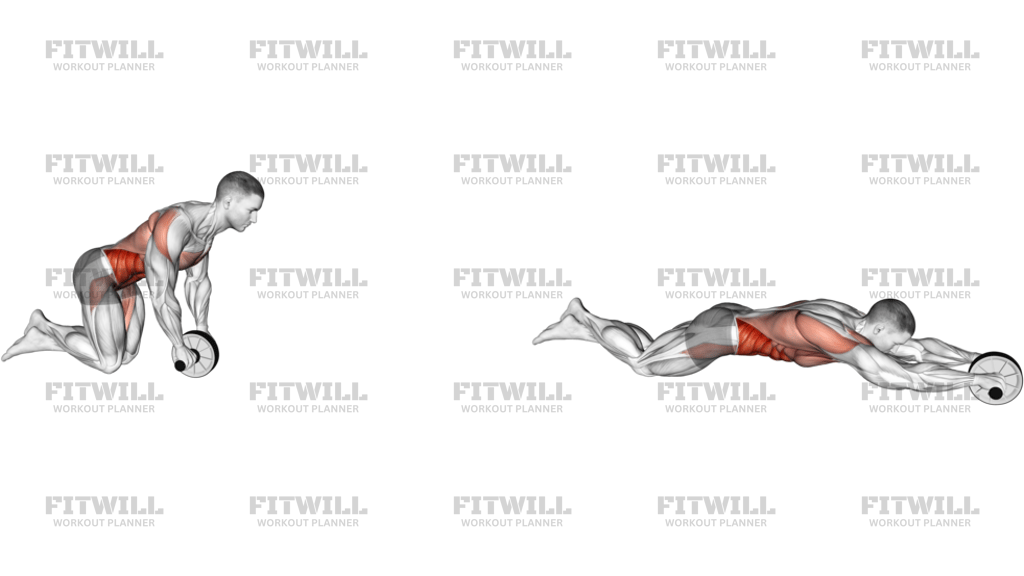
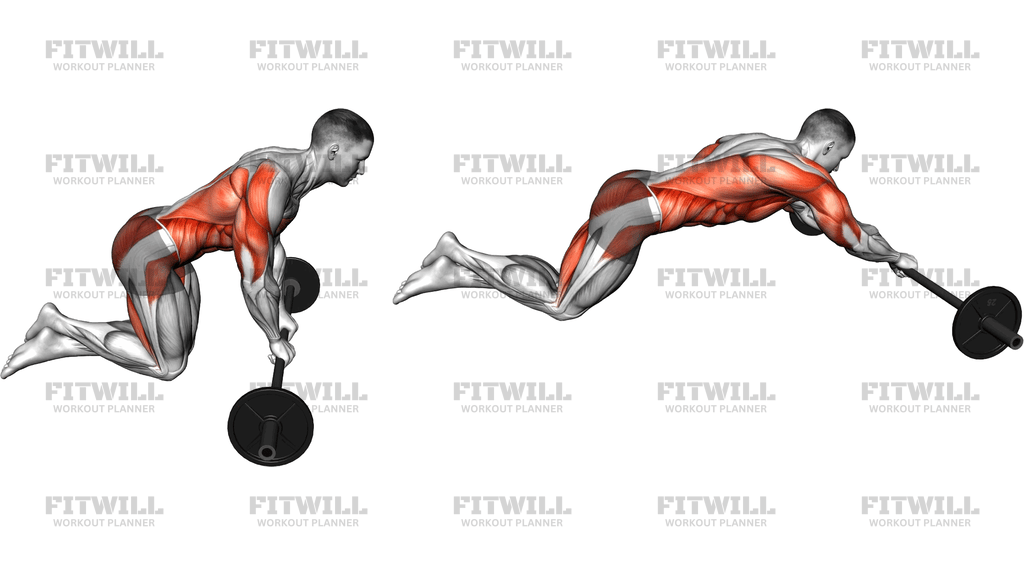
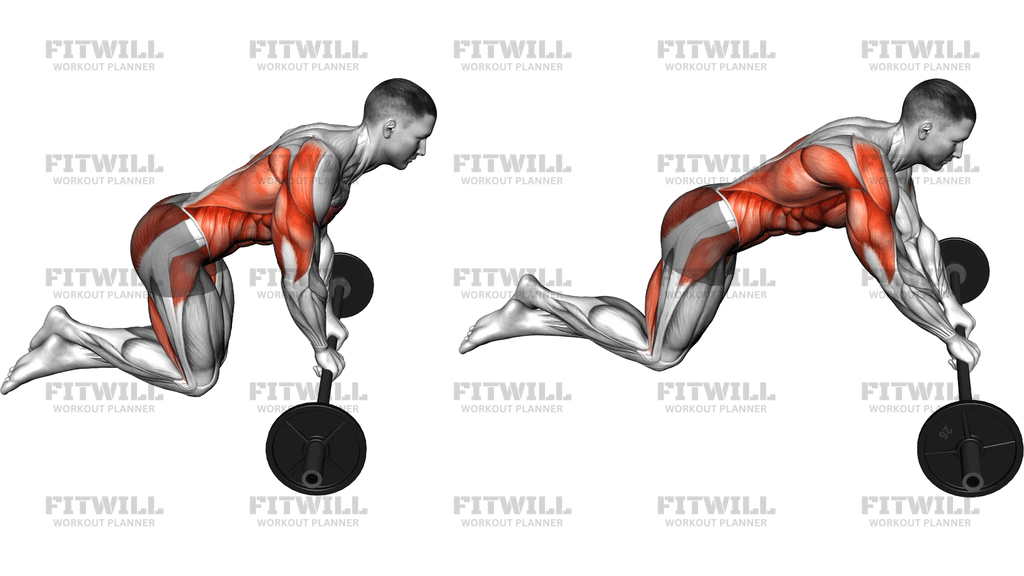
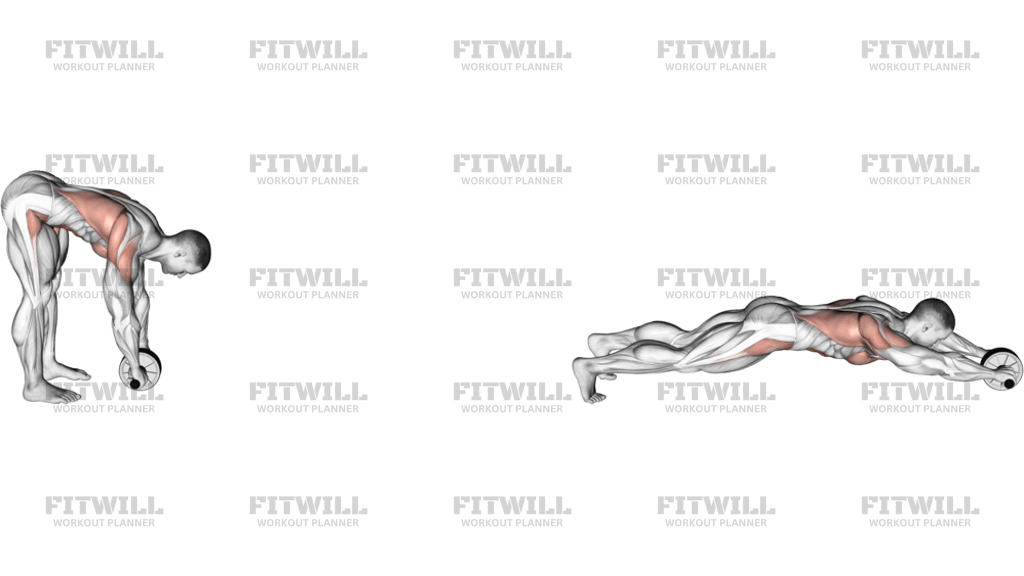
Standing Wheel Rollout is a demanding anti-extension core exercise performed with an ab wheel or wheel roller from a standing hinge position. In the image, the lifter starts standing over the wheel, then rolls forward until the body reaches a long, near-horizontal line with the arms fully extended. The exercise asks the trunk, shoulders, and hips to stay organized while the wheel travels farther away from the feet than in a kneeling rollout.
The main training effect is on the abs, especially the rectus abdominis, with the obliques, deep abdominal wall, lats, shoulders, and hip flexors helping to stabilize the long lever. That long body position makes this a much more advanced rollout variation than a kneeling version, because the torso has to resist low-back extension while the shoulders support a large forward reach. The goal is not to touch the floor or chase maximum distance; the goal is to keep the ribs, pelvis, and shoulder line controlled as the wheel moves.
Setup is critical. Place the wheel on the floor in front of you, stand with a balanced stance, and grip the handles with straight arms before you begin the descent. A small bend in the knees is acceptable if it helps you keep your hips stacked and your lower back from arching. As you roll forward, think about reaching the wheel away from your feet while keeping your chest long and your ribs from flaring open.
On the way out, the body should stay tense from shoulders to hips so the wheel rolls in a straight line instead of wobbling side to side. On the way back, pull the wheel toward you by bracing the abs hard, driving the lats, and bringing the hips back under the torso without snapping the lower back into extension. Breathing should stay controlled: inhale as you prepare and roll out, then exhale through the hardest part of the return.
Standing Wheel Rollout fits best in advanced core work, strength-focused accessory blocks, or progression work for athletes who already control kneeling rollouts well. Because the lever is long and the demands are high, it is best treated as a low-rep technical strength movement. If the lower back starts to sag, the shoulders shrug, or the wheel drifts off line, reduce the range immediately or switch to a shorter rollout variation.
[ Workout Log & Planner ]
Put your next workout in Fitwill
Keep your plan and training log ready when you are.


Instructions
- Stand with your feet about hip-width apart and place the wheel on the floor just in front of your toes.
- Grip the handles with straight arms, hinge at the hips, and keep your weight centered over the wheel.
- Brace your abs, pull your ribs down, and keep a small bend in the knees if that helps you stay controlled.
- Roll the wheel forward slowly while letting your shoulders, torso, and hips travel together as one long line.
- Keep reaching forward until your body is nearly horizontal and your lower back still feels flat and supported.
- Pause for a moment in the furthest position you can hold without losing tension or letting the hips sag.
- Pull the wheel back toward your feet by tightening the abs and lats and bringing the hips back under the torso.
- Finish tall in the standing start position, reset your brace, and repeat for the planned number of reps.
Tips & Tricks
- Treat this as an advanced rollout. If you cannot keep your ribs down on the way out, regress to a kneeling wheel rollout.
- Keep the wheel traveling straight ahead. If it snakes left or right, your shoulders are not staying square to the floor.
- Think about reaching long through the handles instead of dumping your chest toward the floor.
- A slight knee bend can save the low back, but let the hips stay extended rather than turning the rep into a squat.
- Stop the rollout before your lower back arches. The safest end range is the one you can hold without losing abdominal tension.
- Keep the neck neutral and look slightly ahead of the wheel instead of tucking the chin hard into the chest.
- Drive the return with the abs and lats; do not jerk the wheel back with a hip snap or a shrug.
- Short sets work better here than high reps. Once the line breaks, the exercise stops training the intended pattern.
Frequently Asked Questions
What muscle does Standing Wheel Rollout target most?
The abs do most of the work, especially the rectus abdominis, with the obliques and deep core helping resist low-back extension.
Can beginners perform this exercise?
Not usually. Most beginners should start with a kneeling rollout or a shorter standing range before using this version.
How far should I roll the wheel forward?
Roll only as far as you can keep your ribs down, your hips controlled, and your lower back from arching.
Why do my shoulders feel so involved?
Your shoulders help support the long lever and control the wheel path, so they work hard to keep the rollout stable.
Should I keep my knees straight the whole time?
Keep them mostly straight if you can, but a soft bend is fine if it helps you maintain abdominal tension and a neutral spine.
What is the most common mistake with this movement?
Letting the lower back arch as the wheel goes out is the biggest problem, because it shifts stress away from the abs.
How do I breathe during a standing rollout?
Take a breath before the rollout, then exhale through the hard part of the return while keeping your brace intact.
How can I make the exercise harder over time?
Increase the rollout distance, slow the return, reduce knee bend, or add clean reps without letting the line break.