Lever Full Squat
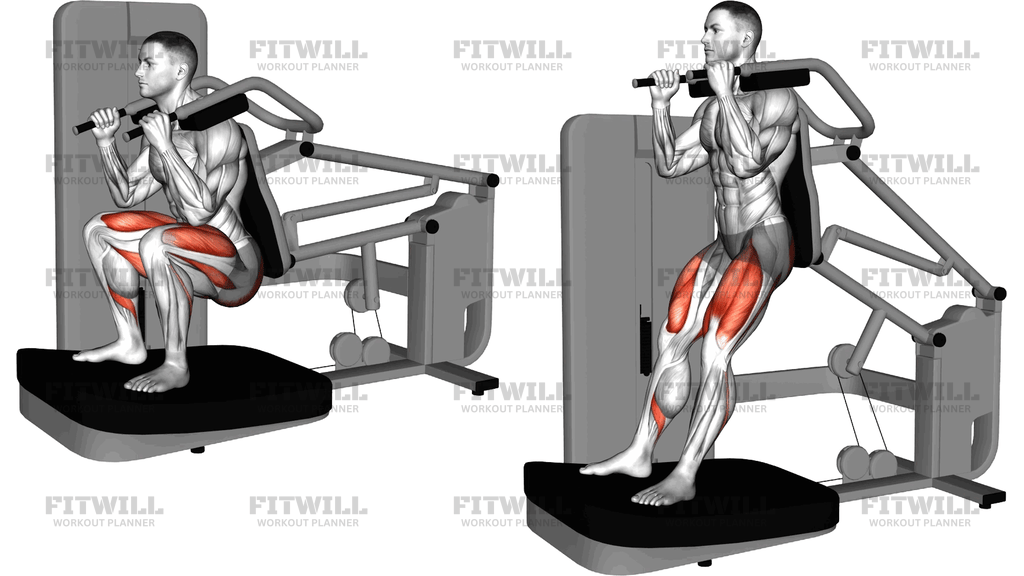
Lever Full Squat is a machine-based squat variation that lets you train the legs through a guided path while keeping the torso supported by the shoulder pads. The fixed machine track reduces balance demands, so you can focus on depth, knee tracking, and steady force through the feet instead of fighting to stabilize a free bar.
The exercise is aimed at the thighs, with the quads doing most of the work and the glutes, adductors, and calves helping through the bottom and standing phases. The image shows the lifter standing on the platform with the shoulders under the pads, then lowering into a deep squat before driving back to full hip and knee extension. That makes this a strong choice when you want a controlled lower-body strength or hypertrophy movement with clear repeatability.
Setup matters because a small change in foot placement changes the stress on the knees and hips. Place your feet flat on the platform, brace your midsection, and keep your back and hips pinned into the machine pads before the first rep. Once the machine is moving, keep the knees traveling in line with the toes and let the heels stay grounded so the force stays through the whole foot.
During the repetition, lower with control until you reach a deep squat depth that you can own without the heels lifting or the pelvis tucking hard at the bottom. Drive upward by pushing the platform away, keeping the chest lifted and the knees from collapsing inward. The movement should feel smooth and deliberate, not bouncy or rushed.
Use this exercise when you want a leg movement that is easier to load than a free squat and more stable than a balance-heavy variation. It works well in leg sessions, quad-focused blocks, and higher-repetition hypertrophy work. Beginners can use it with moderate range and light resistance, but the priority should always be clean depth, consistent foot pressure, and a controlled return to the bottom.
[ Workout Log & Planner ]
Put your next workout in Fitwill
Keep your plan and training log ready when you are.


Instructions
- Step onto the platform and place your shoulders under the machine pads, then take a shoulder-width or slightly wider stance with both feet flat.
- Grip the handles if the machine has them and set your back against the pad so your torso stays supported before you move.
- Brace your trunk, unlock the knees and hips, and keep the heels down as you begin the descent.
- Lower yourself under control until your thighs reach a deep squat position that you can hold without losing foot contact or pelvic position.
- Keep the knees tracking over the toes and the chest lifted as you settle into the bottom of the squat.
- Drive through the middle of the feet and heels to press the platform away and stand back up.
- Finish the rep by fully extending the hips and knees without snapping into the top position.
- Reset your breath at the top, keep the pads secure on your shoulders, and repeat for the planned reps.
Tips & Tricks
- Choose foot placement first: lower on the platform usually biases the quads more, while a slightly higher stance can feel friendlier on the knees and hips.
- Keep your whole foot planted. If the heels lift, the load is moving you instead of your legs controlling the machine.
- Do not let the knees cave inward on the way up. Push them in line with the toes as you press through the platform.
- Use a depth you can own. A slightly higher, cleaner squat is better than diving into the bottom and losing pelvic control.
- Avoid bouncing out of the bottom position; that can hide weak control and make the machine feel heavier than it should.
- Keep the torso and hips in contact with the pads so the machine guides the squat instead of your upper body drifting forward.
- Breathe in and brace before the descent, then exhale as you drive through the sticking point on the way up.
- If your low back starts rounding at the bottom, shorten the range and keep the descent more controlled.
- Use a load that lets every rep look the same; this exercise is most useful when the track, depth, and tempo stay consistent.
Frequently Asked Questions
What does Lever Full Squat train most?
It mainly targets the quads, with the glutes, adductors, and calves helping through the squat and stand phases.
How is this different from a barbell squat?
The machine supports your shoulders and guides the path, so it is easier to balance and usually simpler to load than a free squat.
Where should my feet go on the platform?
Start with a shoulder-width or slightly wider stance and keep both feet flat so pressure stays through the full foot, not just the toes.
How deep should I squat on this machine?
Go as deep as you can while keeping the heels down, the knees tracking well, and the lower back from rounding hard at the bottom.
Why do my heels want to lift?
The stance may be too low on the platform or the load may be too heavy. Adjust foot placement or reduce the weight so the feet stay planted.
Is this a good exercise for beginners?
Yes, because the machine removes a lot of balance demands. Start light and learn the path before adding heavier loads.
What is the most common form mistake?
Letting the knees cave inward, lifting the heels, or bouncing out of the bottom are the most common issues.
How should I breathe during the reps?
Take a breath and brace before lowering, then exhale as you drive back up and reset at the top for the next rep.