Medicine Ball Catch And Overhead Throw
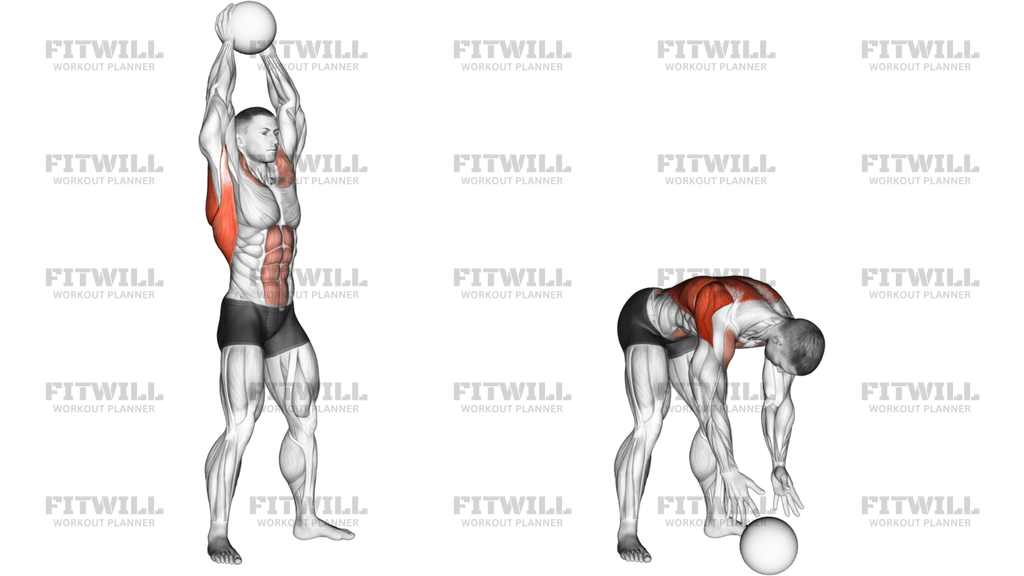
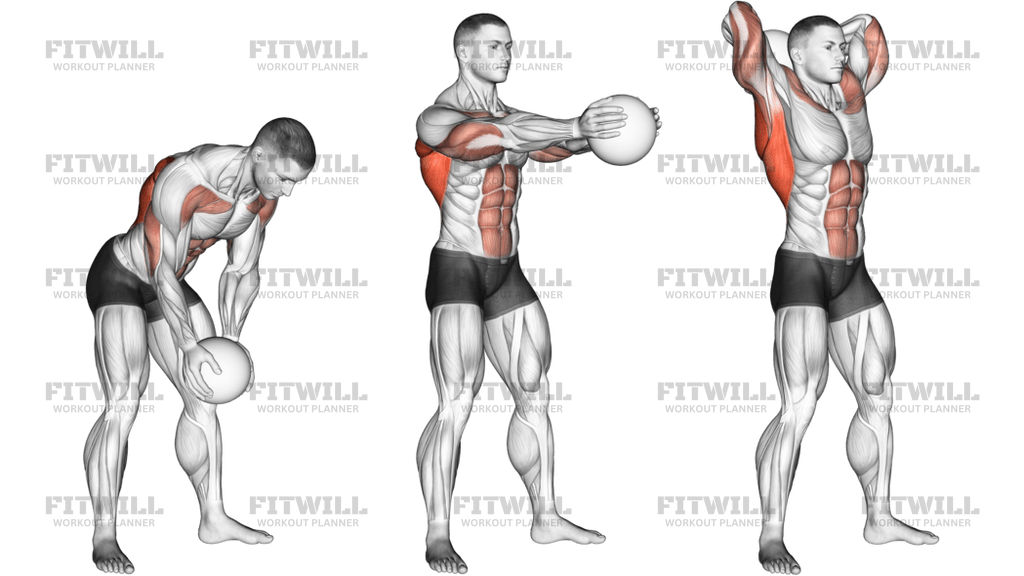
Medicine Ball Catch And Overhead Throw is a dynamic medicine-ball drill that starts from a loaded hinge and finishes with a fast overhead release. It is useful when you want to train power, coordination, and control in one rep instead of turning the movement into a slow, isolated press. The catch matters as much as the throw, because the ball has to be absorbed cleanly before the next rep can start.
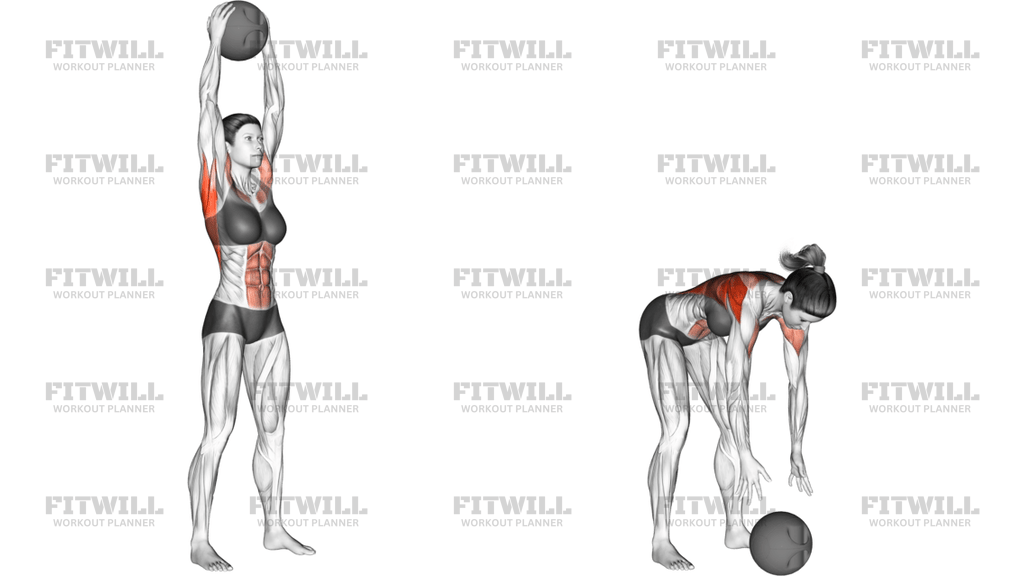
The main muscles involved are the lats, upper back, shoulders, and arms, with the trunk working hard to stop the ribs from flaring as the ball moves overhead. In anatomy terms, the latissimus dorsi helps guide the path, while the rhomboids, biceps brachii, and forearm flexors help stabilize the upper body and grip. A solid hinge and a quiet torso make the difference between a crisp athletic drill and a rep that turns into a back-driven swing.
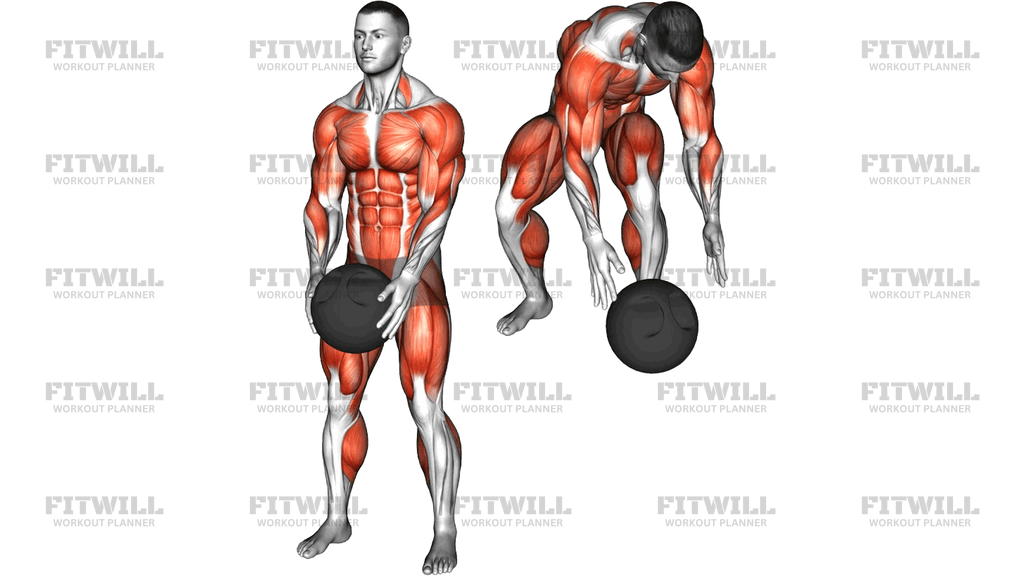
Set up with your feet about shoulder-width apart and the ball held with both hands in front of your thighs or shins. When you lower into the catch position, keep a small knee bend, a long spine, and your weight centered through the whole foot so the hips can load without collapsing forward. That setup lets you receive the ball, brace, and drive the next throw without losing balance or turning the movement into a squat or a back extension.
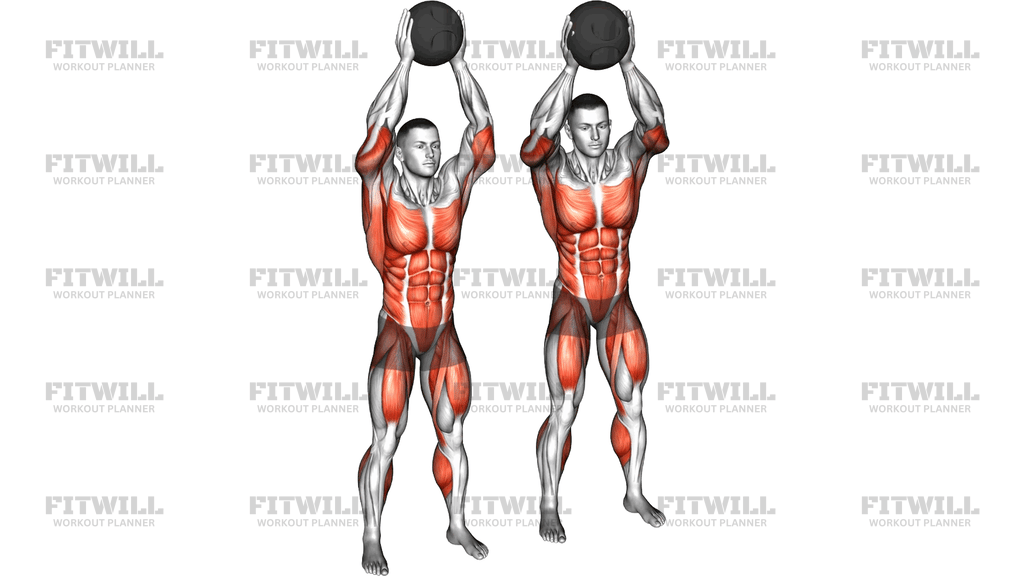
As you throw, extend the hips and knees first, then guide the ball overhead with the shoulders and arms finishing the reach. Keep the ball path close enough that it stays under control, and avoid leaning back at the top just to make the throw look bigger. When the ball comes back, catch it with bent elbows and soft knees, absorb the impact by hinging again, and reset before the next repetition so every rep looks and feels the same.
Medicine Ball Catch And Overhead Throw fits well in warmups, athletic conditioning, or accessory power work when you want fast, repeatable reps with a clear body line. Use a light enough ball that speed stays sharp and the catch stays quiet. Stop the set if the lower back starts doing the job of the lats and shoulders, or if the ball starts drifting so far forward that you have to chase it instead of controlling it.
[ Workout Log & Planner ]
Put your next workout in Fitwill
Keep your plan and training log ready when you are.


Instructions
- Stand with your feet about shoulder-width apart and hold the medicine ball with both hands in front of your thighs.
- Hinge at the hips and bend your knees slightly so the ball lowers toward your shins while your chest stays long and your spine stays neutral.
- Keep your weight centered through the middle of your feet and let your arms stay slightly bent rather than locked out.
- Brace your trunk, then drive through your legs and hips to rise powerfully out of the hinge.
- Bring the ball up in front of your torso and continue the path overhead without leaning back through your lower ribs.
- Release the ball overhead if you are throwing it to a partner or rebound target, or follow the return path if the ball is coming straight back.
- Catch the ball with soft elbows, absorb the force by bending your knees, and sit the hips back into the hinge.
- Reset the ball low in front of your thighs, rebrace, and repeat for the planned number of reps.
Tips & Tricks
- Choose a light ball that you can accelerate overhead without turning the rep into a back arch.
- Keep the ball close to your body on the rise; letting it drift forward makes the throw feel loose and slow.
- If the catch lands hard, bend the elbows earlier and absorb it with the hips instead of reaching straight arms forward.
- Think hips first, arms second. If the shoulders start the throw, the rep usually loses power and control.
- Keep your ribs stacked over your pelvis at the finish so the lower back does not steal the work.
- Use a smaller hinge if the ball is moving too fast to control on the way back down.
- The rep should sound quiet on the catch; a loud slap or bounce usually means the load is too heavy.
- Stop the set as soon as you have to chase the ball or twist to recover balance.
Frequently Asked Questions
What muscles does Medicine Ball Catch And Overhead Throw work?
The lats are the main focus, with the upper back, shoulders, arms, and core helping control the ball path.
Is Medicine Ball Catch And Overhead Throw a power drill or a strength exercise?
It is mainly a power drill. The goal is a fast, coordinated throw and a clean catch, not a slow grind.
How heavy should the medicine ball be for this movement?
Use a light ball that lets you move quickly and catch quietly. If the throw slows down or your back starts arching, the ball is too heavy.
Do I need a partner or wall for Medicine Ball Catch And Overhead Throw?
Yes, you need some kind of return setup, such as a partner, wall, or rebound target, so you can catch the ball and repeat the drill.
Why does my lower back take over on the overhead throw?
That usually happens when you lean back to finish the rep. Keep the ribs down, drive from the hips, and let the shoulders finish the overhead path.
Can beginners do Medicine Ball Catch And Overhead Throw?
Yes, if they start with a very light ball and a short, controlled range. The catch should feel smooth, not surprising.
Should I catch the ball with straight arms?
No. Keep a soft bend in the elbows so the shoulders can absorb the impact and the next rep starts from a stable position.
How many reps work best for this drill?
Short sets of crisp reps work best because the exercise depends on speed and timing. Stop before the ball path or catch gets sloppy.