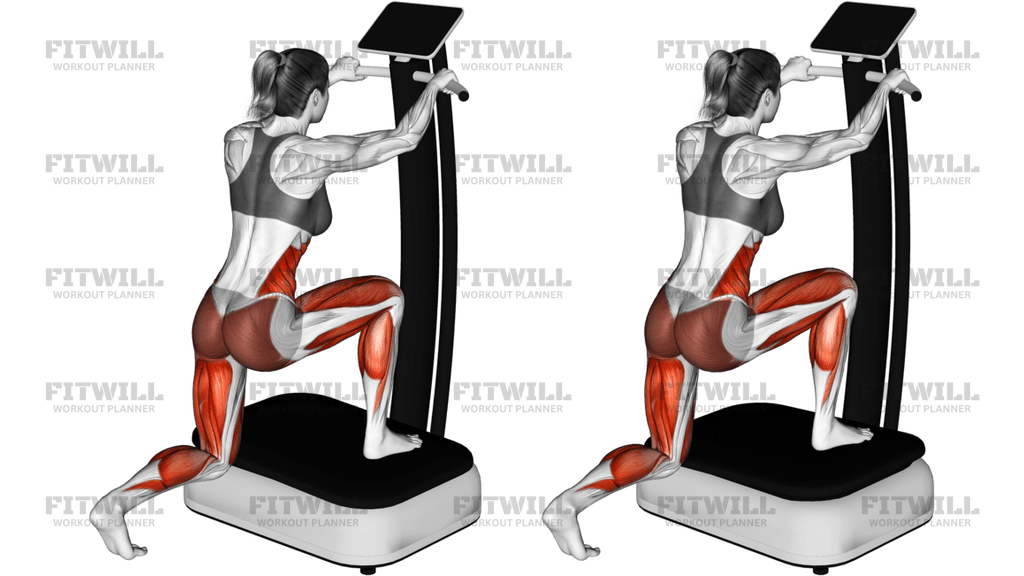
Vibrate Plate Standing
Vibrate Plate Standing is a vibration-platform hold that trains lower-body steadiness, posture, and balance while the machine supplies the stimulus. It is less about producing a large visible movement and more about standing in a controlled position long enough for the thighs, hips, calves, and trunk to keep you centered over the plate. The exercise is often categorized as a stretching or activation drill because the body stays mostly upright while the vibrations challenge your ability to stabilize.
The standing position matters because small changes in foot placement, knee bend, and torso angle change how the vibration is absorbed. A shoulder-width stance with soft knees usually gives the most stable base. From there, the body learns to keep the pelvis quiet, the ribs stacked over the hips, and the feet rooted without stiffening the joints or bouncing with the platform.
The goal is to let the vibration travel through a steady posture, not to fight it with rigid tension. Good reps here look like a quiet upper body, relaxed shoulders, and even pressure through the feet while the lower body makes small stabilizing corrections. That is why this exercise can be useful in warmups, mobility-focused sessions, recovery blocks, or low-load conditioning work when you want controlled whole-body activation without heavy loading.
Because this is a standing support drill rather than a classic lift, the best results come from short, clean holds with crisp posture. Beginners can use it if they start with low intensity and step off slowly. More advanced users can make the drill harder by narrowing the stance slightly, changing arm position, or increasing the vibration setting, but only if the knees stay soft and the spine remains tall.
Keep the movement honest: if you start locking your knees, leaning forward, or gripping the machine too hard, the exercise stops training balance and starts becoming a compensation drill. Treat the vibration plate as the resistance, keep your body organized over it, and finish each hold by stepping off carefully so the setup stays stable from start to finish.
Fitwill
Log Workouts, Track Progress & Build Strength.
Achieve more with Fitwill: explore over 9600 exercises with images and videos, access built-in and custom workouts, perfect for both gym and home sessions, and see real results.
Start your journey. Download today!




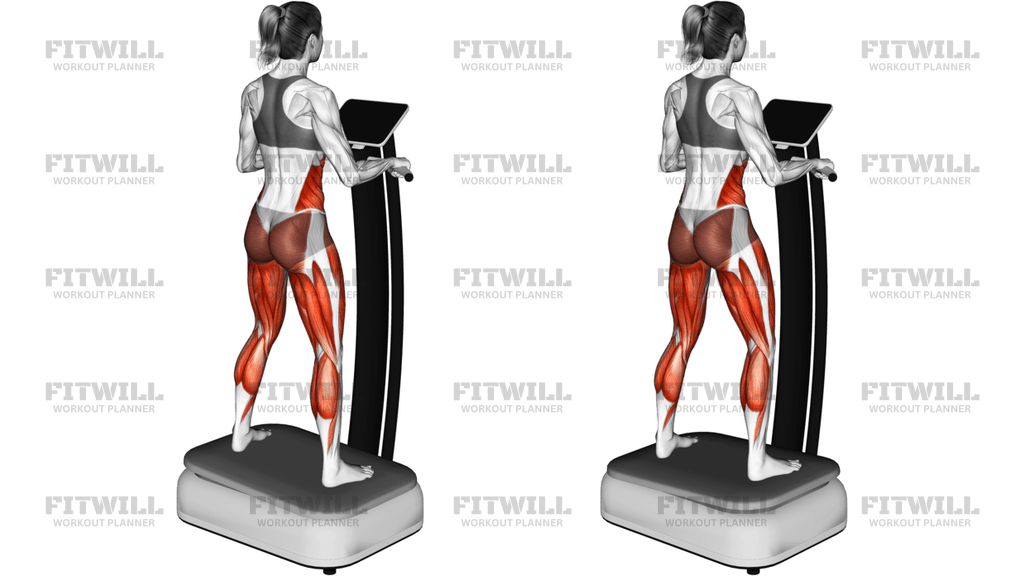
Instructions
- Place the vibrate plate on a stable surface and step onto it with both feet about hip- to shoulder-width apart.
- Stand tall with your weight centered through the midfoot and heels, and keep a soft bend in both knees.
- Let your arms hang naturally at your sides or rest them lightly on the machine handles if you need balance support.
- Set your chest over your hips, keep your chin level, and avoid leaning forward into the platform.
- Brace your abdomen just enough to keep your ribs stacked over your pelvis without holding your breath.
- Hold the standing position while the plate vibrates, keeping the knees unlocked and the feet planted evenly.
- Breathe in a steady rhythm and avoid bouncing, twisting, or straightening the legs to fight the vibration.
- If the machine allows, finish the hold by lowering the intensity before stepping off one foot at a time.
Tips & Tricks
- Keep the knees slightly bent the whole time; locking them can make the vibration feel harsher and less controlled.
- Start with a low vibration setting and short holds until you know how your ankles, knees, and hips respond.
- Keep pressure spread across the whole foot instead of drifting onto the toes.
- If you hold the machine handles, use them only for light balance support, not to hang your bodyweight.
- A quieter torso usually means better work from the legs and core, so avoid swaying at the hips.
- If the vibration starts forcing your shoulders up, reset your posture and relax your neck.
- Short, focused holds are more useful than fighting through a shaky position that breaks your alignment.
- Step off slowly at the end of the set, because the body can feel less stable immediately after vibration.
Frequently Asked Questions
What does Vibrate Plate Standing train most?
It mainly trains standing stability and lower-body support through the thighs, calves, hips, and trunk.
Can beginners perform this exercise?
Yes, beginners can use it if they start on a low setting, keep a soft knee bend, and hold the position for a short time.
Should I keep my knees bent or straight on the plate?
Keep them slightly bent. Locked knees usually make the position feel harsher and reduce your ability to stabilize.
Do I need to hold the handles?
No, but light hand contact is fine if it helps you stay balanced without unloading your legs.
How long should I stay on the vibration plate?
Use short, controlled holds at first. Increase the duration only if your posture stays tall and steady.
What is the biggest form mistake here?
The most common mistake is bouncing, locking the knees, or leaning into the handles instead of standing quietly over the plate.
What stance works best on the plate?
A hip- to shoulder-width stance is usually the most stable starting point, with weight centered through the whole foot.
Can I make Vibrate Plate Standing harder?
Yes. You can use a slightly narrower stance, longer holds, or a higher vibration setting as long as your posture stays controlled.