Barbell Sitted Alternate Leg Raise
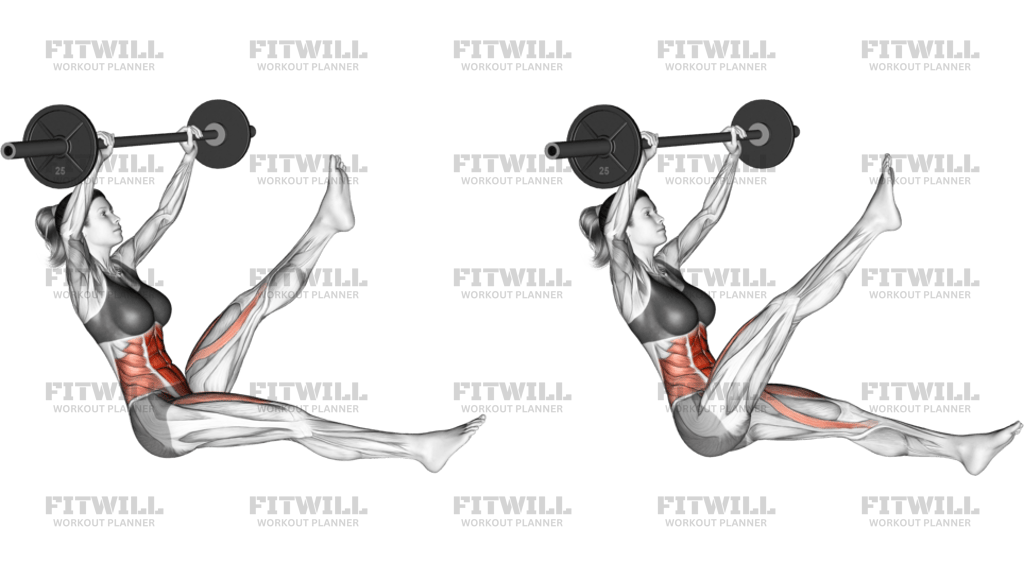
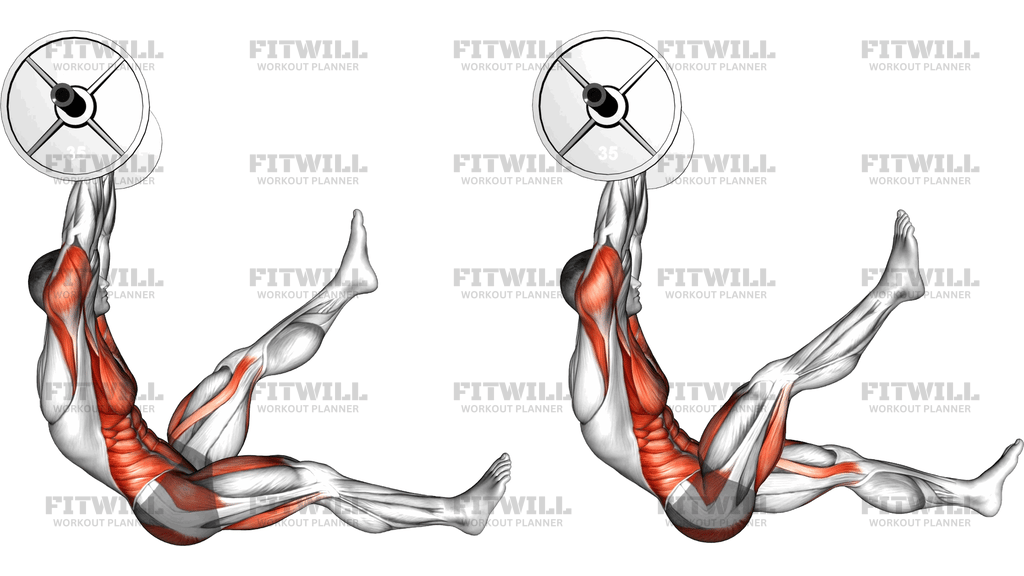
Barbell Sitted Alternate Leg Raise is a seated core exercise that combines an overhead bar hold with alternating straight-leg raises. The bar gives you a fixed counterbalance, but the real challenge is keeping your trunk steady while the legs move one at a time. That makes it useful for building lower-abdominal control, hip flexor strength, and the ability to resist arching or swinging through the midsection.
The exercise starts with a long seated position and a slight backward lean, which is why the setup matters so much. With the bar held overhead and the arms locked out, the torso has to stay organized while the hips alternate between flexion and extension. If the ribs flare or the low back takes over, the movement turns into a swing instead of a core drill, so the posture should stay tight from the first rep.
Each repetition should feel deliberate. One leg lifts while the other stays long and low, and the pelvis should stay as quiet as possible so the movement comes from the abs and hip flexors rather than from rocking the body. Keep the knees mostly straight, move the legs through a controlled arc, and avoid kicking upward or letting the feet crash back to the floor between reps.
This is best used as accessory core work, a warm-up for trunk control, or part of an abdominal circuit where precision matters more than load. Because the bar is held overhead, the shoulders and upper back also have to stabilize the position, so the exercise rewards clean coordination and punishes sloppy reps. A lighter bar, a slower tempo, and a shorter range are usually better than forcing a bigger leg lift.
Use Barbell Sitted Alternate Leg Raise when you want a strict, body-control-focused core movement that exposes weak bracing or excessive hip flexor dominance. It is not a good exercise for racing through reps or using momentum, and it becomes much less effective once the torso starts bobbing or the lower back starts to arch. Keep the motion smooth, breathe on purpose, and stop the set when you can no longer keep the bar steady and the legs alternating cleanly.
Fitwill
Log Workouts, Track Progress & Build Strength.
Achieve more with Fitwill: explore over 9600 exercises with images and videos, access built-in and custom workouts, perfect for both gym and home sessions, and see real results.
Start your journey. Download today!




Instructions
- Sit on the floor with your legs extended, then hold the barbell overhead with both arms straight and your hands a little wider than shoulder width.
- Lean back slightly from the hips, keep your chest open, and set your ribs down so your lower back does not overarch.
- Brace your abs before the first rep and keep the bar steady over your shoulders as you begin moving.
- Lift one straight leg a few inches to a foot off the floor while the other leg stays long and low.
- Lower the raised leg under control as you lift the opposite leg, keeping the motion smooth and alternating side to side.
- Keep both knees mostly straight and avoid swinging the legs or rocking the torso to create momentum.
- Exhale as one leg lifts and inhale as it lowers, keeping the breathing rhythm even through the set.
- Finish the last rep by lowering both legs to the floor, then bring the bar down safely before resting.
Tips & Tricks
- Use a very light bar or an empty barbell if the overhead hold starts to pull your shoulders out of position.
- If your low back arches, reduce the backward lean and raise each leg only as high as you can keep the ribs pinned down.
- Keep the bar stacked over the shoulders, not drifting forward, so the arms stay as a steady anchor instead of a moving load.
- Think about lifting from the lower abs and hip flexors, not kicking from the thigh or snapping the leg upward.
- A small, controlled leg lift is more effective than a high one if it lets you keep the torso still.
- Slow the lowering phase to make the abs work harder and to stop the legs from dropping into the floor.
- Keep your chin tucked and your neck relaxed so you do not crane forward while you watch the legs move.
- End the set as soon as the bar starts wobbling or the alternating pattern turns into a swing.
Frequently Asked Questions
What does Barbell Sitted Alternate Leg Raise train the most?
It mainly trains the abs and hip flexors, with the obliques and deep core helping keep the torso steady.
Why is the bar held overhead during this exercise?
The overhead hold acts as a counterbalance and makes the trunk work harder to stay controlled while the legs alternate.
How far should I lean back from the seated position?
Lean back only enough to feel the abs working without letting the lower back arch or the chest collapse.
Should my knees stay straight or bent?
Mostly straight legs match the exercise best, but a slight bend is fine if it helps you keep the movement strict.
What is the biggest form mistake to avoid?
The most common mistake is swinging the legs or rocking the torso so the lift comes from momentum instead of core control.
Is this a good exercise for beginners?
Yes, but beginners should use a very light bar and a short range until they can keep the torso fixed and the legs alternating cleanly.
What should I do if my hip flexors cramp?
Shorten the range, slow the tempo, and make sure the ribs stay down; cramping usually means the movement is too aggressive.
How can I make the exercise harder?
Hold the bar more steadily, slow the lowering phase, and use a longer leg lever while still keeping the body from swinging.