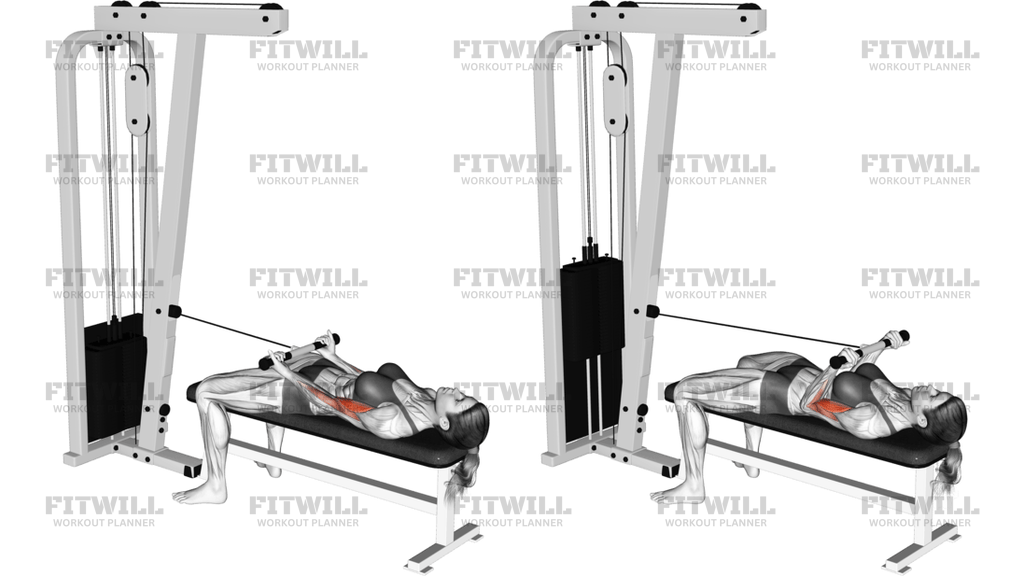
Cable Lying Bicep Curl
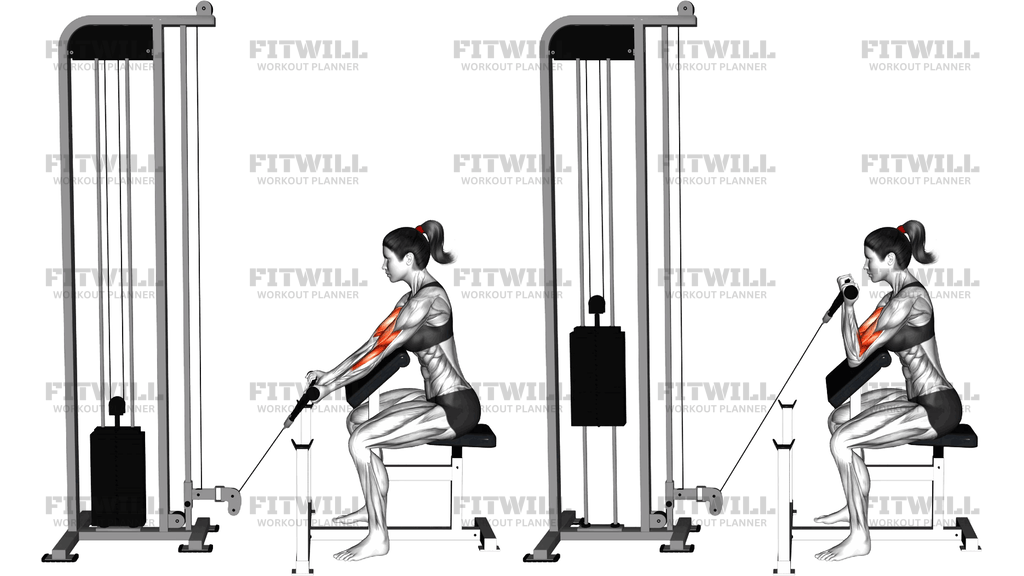
Cable Lying Bicep Curl is a supine cable curl performed on a flat bench with a low pulley and a handle attachment. The bench takes the body out of a standing cheat position, so the biceps have to do the work while the cable keeps tension on the arm through the whole rep. It is a useful accessory movement when you want strict elbow flexion without leg drive, torso swing, or shoulder heave.
The setup matters because the cable line determines where the resistance is hardest. Lie flat beside the cable stack so the handle can travel smoothly as you curl, and plant your feet so your torso stays quiet. A shoulder-width underhand grip usually feels strongest and keeps the wrist in a comfortable position. If the bench is too far from the pulley or the cable angle changes during the set, the rep quickly turns into a shoulder-dominant pull instead of a clean biceps curl.
On each rep, start with the elbows slightly behind or beside the torso, then curl the handle toward the shoulders by bending only at the elbows. Keep the upper arms pinned to the bench and avoid letting the shoulders roll forward. The finish should feel like a hard biceps contraction, not a shrug or chest press. Lower the handle slowly until the elbows are nearly straight and the biceps are stretched under control, then repeat without bouncing off the bottom.
This exercise is best used as a strict hypertrophy or technique variation when you want continuous cable tension and a more isolated arm training stimulus. It is also helpful for lifters who struggle to stay honest on standing curls because the bench reduces body English. Load selection should stay conservative enough that the wrists remain stacked, the elbows do not drift, and the neck stays relaxed against the bench.
Treat the movement like a precision curl rather than a momentum exercise. Keep the grip firm but not white-knuckled, breathe out as you curl, and stop the set when the shoulders start helping or the handle path gets sloppy. That keeps the exercise focused on the biceps and forearms while protecting the shoulders and elbows from unnecessary strain.
[ Workout Log & Planner ]
Put your next workout in Fitwill
Keep your plan and training log ready when you are.


Instructions
- Place a flat bench beside a low cable pulley so the handle can move in a smooth line as you curl.
- Lie on your back on the bench and plant both feet firmly on the floor.
- Grip the handle with an underhand, shoulder-width hold and let your arms start long without locking the elbows hard.
- Set your shoulders down on the bench and keep your upper arms quiet before you begin.
- Exhale and curl the handle toward your shoulders by bending only at the elbows.
- Keep your wrists neutral and let the cable stay in line with your forearms as you lift.
- Squeeze the biceps briefly at the top without letting the shoulders roll forward.
- Lower the handle slowly until the arms are nearly straight and the tension stays on the biceps.
- Reset each rep without bouncing the weight or arching off the bench.
Tips & Tricks
- If your elbows drift forward, move the bench or pulley so the cable pulls more directly through the forearms.
- Keep the wrists stacked instead of letting them fold back, especially near the top of the curl.
- A slightly lighter load usually works better here because the bench removes most of the cheating you might use on standing curls.
- Stop the negative before the cable yanks your shoulders off the bench.
- Think about bringing your knuckles toward your shoulders rather than pulling with the hands.
- Keep the upper arms quiet; if they swing, the front delts are taking over.
- Use a controlled full extension, but do not slam into a hard lockout at the bottom.
- If the cable line feels awkward, shorten the range until the rep stays smooth and elbow-driven.
Frequently Asked Questions
What does Cable Lying Bicep Curl train most?
It primarily trains elbow flexion at the biceps, with the forearms helping to hold the grip and control the handle.
Why lie on a bench instead of doing a standing cable curl?
The bench reduces body swing and shoulder drive, so the curl stays stricter and the biceps have to create more of the movement.
What grip should I use on the handle?
A shoulder-width underhand grip is the most common choice because it keeps the wrist and elbow path comfortable and direct.
How close should the bench be to the cable stack?
Close enough that the cable stays smooth through the rep, but not so close that the handle jams into the machine or changes angle abruptly.
Should my elbows move during the curl?
They should stay mostly fixed in place. A small amount of natural drift is fine, but the movement should come from the elbows, not the shoulders.
Can beginners use this exercise?
Yes, if they keep the load light and learn to curl without arching off the bench or shrugging the shoulders.
What is the most common mistake with the cable and bench setup?
The most common mistake is placing the bench so far from the pulley that the resistance pulls at an awkward angle and turns the rep into a shoulder movement.
How should I breathe during each rep?
Exhale as you curl the handle up, then inhale as you lower it under control.
What muscles help besides the biceps?
The forearms help with grip, and the front of the shoulders may assist slightly if the load is too heavy or the elbows start drifting.