Cable Seated Overhead Curl
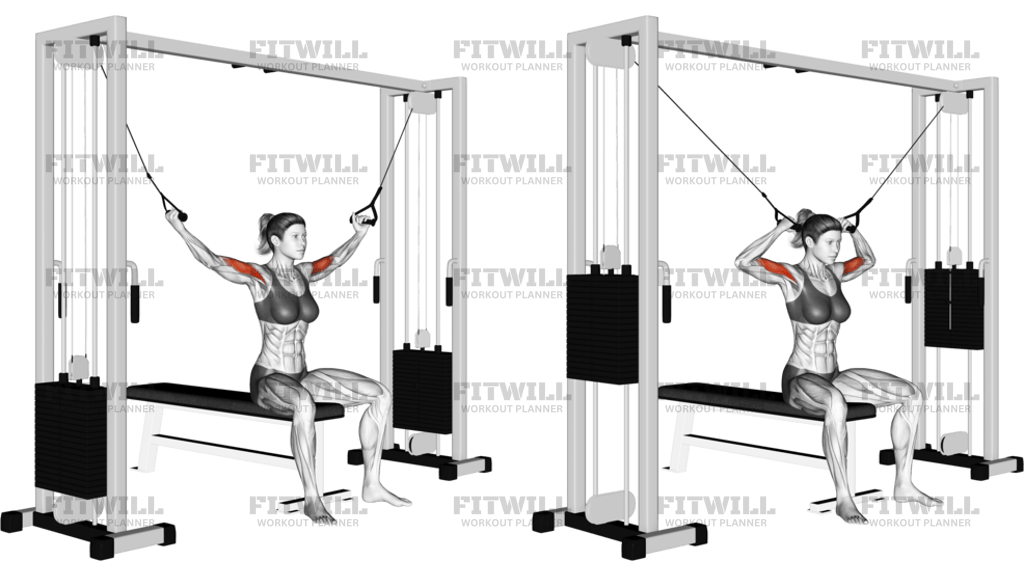
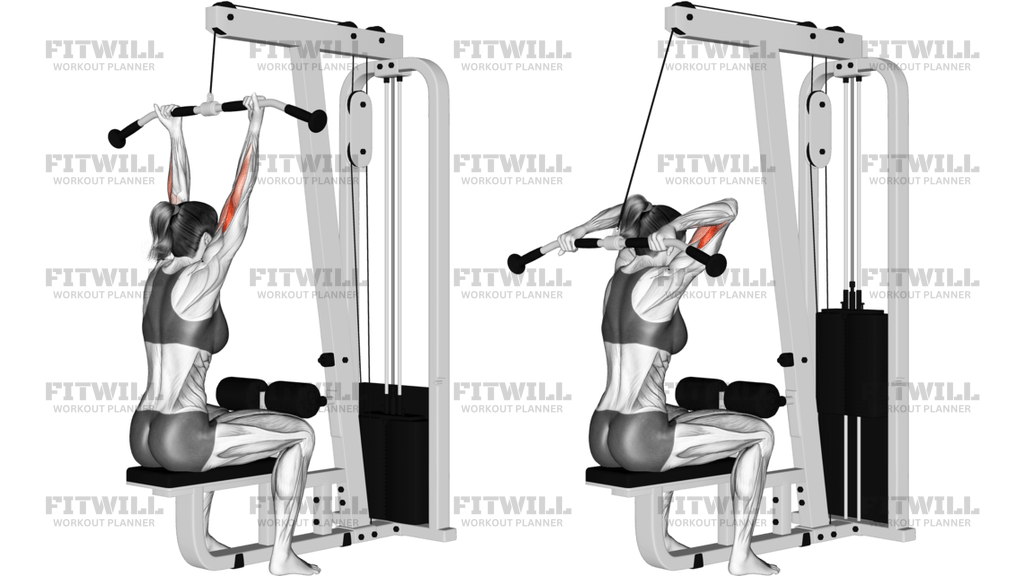
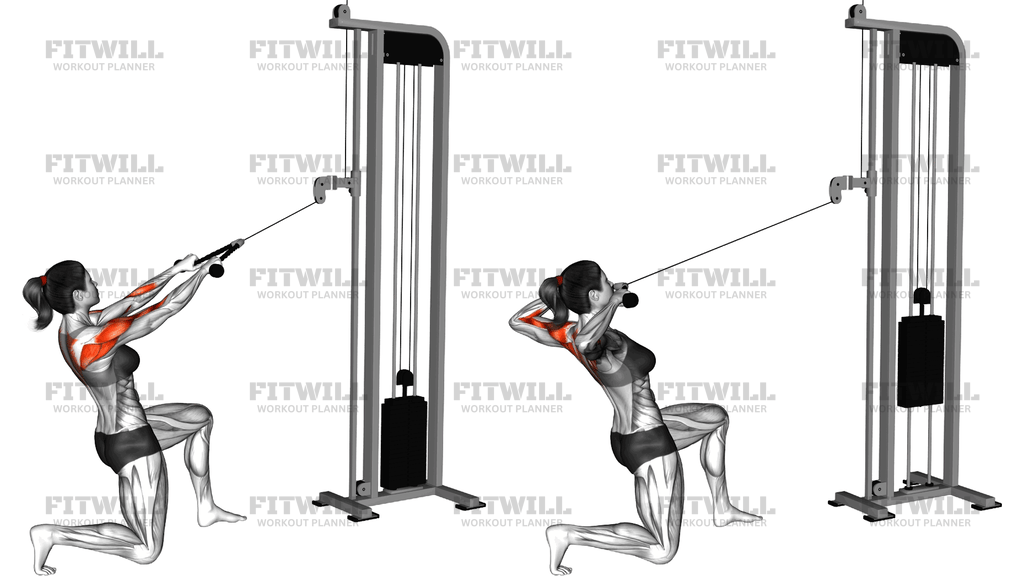
Cable Seated Overhead Curl is a seated dual-cable biceps variation that keeps tension on the arms while they start in a long, overhead position. The bench is placed between two low cable stacks, and each hand holds a handle attachment so the line of pull stays outward and slightly behind the head. That setup makes the exercise feel very different from a regular curl: the biceps have to work while the shoulders stay organized and the torso stays still.
The movement is built around elbow flexion, but the stretched setup makes the shoulder position and bench placement matter just as much as the curl itself. With the arms out to the sides and the cables pulling from both directions, the biceps brachii do the main work while the brachialis, brachioradialis, forearms, and shoulder stabilizers help keep the motion clean. When the bench is centered and the pulleys are even, the rep feels smooth and symmetrical instead of twisted or rushed.
Good execution starts before the first rep. Sit tall, plant both feet, keep the ribs stacked over the pelvis, and set the shoulders down without forcing them back hard. The upper arms should stay mostly fixed while the forearms travel through the curl path. Because the cables already load the bottom position, the goal is not to heave the handles up, but to keep steady tension from the stretched start through the squeeze near the temples or ears.
This is a useful accessory exercise for arm-focused training, upper-body days, or any program that wants more biceps work without relying on free-weight momentum. Keep the resistance light enough that the neck stays relaxed, the wrists stay straight, and the elbows do not drift forward as fatigue builds. If the shoulders feel pinched or the bench position is awkward, shorten the range slightly or switch to a more conventional curl variation.
Fitwill
Log Workouts, Track Progress & Build Strength.
Achieve more with Fitwill: explore over 9600 exercises with images and videos, access built-in and custom workouts, perfect for both gym and home sessions, and see real results.
Start your journey. Download today!




Instructions
- Place a bench between two low cable stacks and sit in the middle with a handle in each hand.
- Plant both feet, sit tall, and let your arms start out to the sides with the elbows bent and the cables lightly tensioned.
- Set your shoulders down and keep your wrists straight before the first rep starts.
- Fix your upper arms in place so the curl comes from the elbows instead of a shoulder swing.
- Curl both handles upward toward the sides of your head, keeping the elbows mostly out and still.
- Squeeze the biceps briefly at the top without leaning back or shrugging your shoulders.
- Lower the handles slowly until your arms are open again and the cables still have tension.
- Breathe out as you curl up, breathe in as you lower, and reset your posture before the next repetition.
Tips & Tricks
- Use lighter resistance than a standard cable curl, because the overhead start makes the bottom position much more demanding.
- Center the bench so both pulleys pull evenly; if one side feels different, your setup is off.
- Keep the ribs stacked over the pelvis instead of arching back to finish the rep.
- If your shoulders pinch, bring the elbows a little forward and shorten the range before loading it up.
- A firm but relaxed shoulder set works better than forcing the shoulder blades together.
- Keep the wrists straight so the handles do not fold the forearms back as fatigue rises.
- Stop the set when the elbows start drifting forward or the neck begins to tense.
- Control the lowering phase all the way back to the stretched start; do not let the cables yank the arms open.
Frequently Asked Questions
What muscles does Cable Seated Overhead Curl work?
It primarily trains the biceps, with help from the brachialis, brachioradialis, forearms, and shoulder stabilizers.
Why sit between two cable stacks for this curl?
The dual-cable setup keeps tension on both arms and creates the overhead line of pull that makes this variation unique.
Where should my hands finish at the top?
They should come toward the sides of your head, near temple or ear level, without the elbows drifting far forward.
Should my elbows stay wide during the set?
They should stay mostly out to the sides, but not so wide that the shoulders take over or the arms lose a stable path.
Can beginners use this exercise?
Yes, but only with light resistance and a short, controlled range until the shoulder position feels natural.
What is the most common form mistake?
Leaning back or flaring the rib cage to cheat the handles upward is the biggest mistake.
What if the cable tension feels uneven?
Re-center the bench and check that both pulleys are at the same height and loaded similarly before continuing.
Is there a safer alternative if my shoulders do not like this position?
Yes. A seated or standing cable curl with the arms lower and closer to the torso is usually a better option.