Cable Lying Triceps Extension
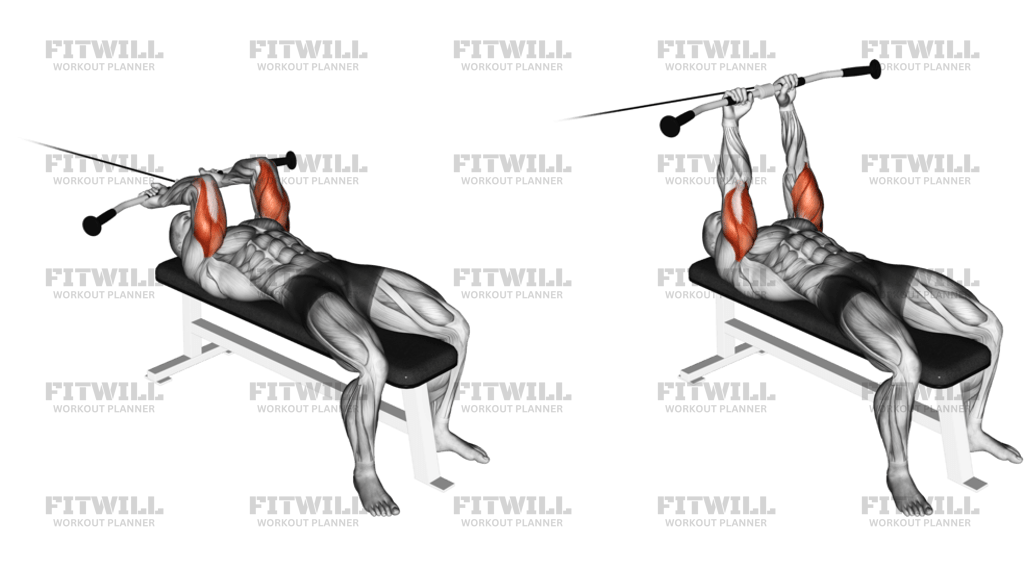
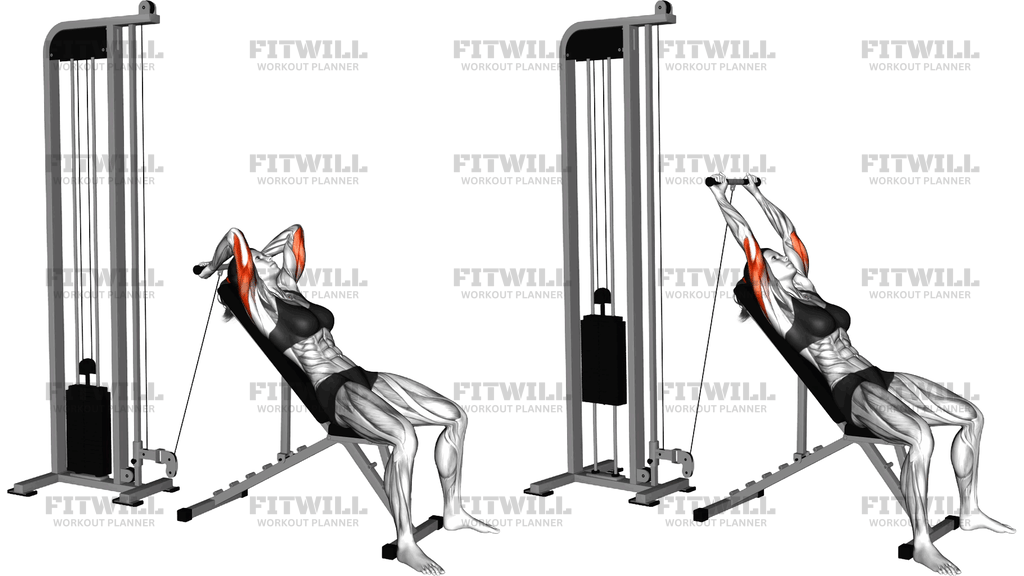
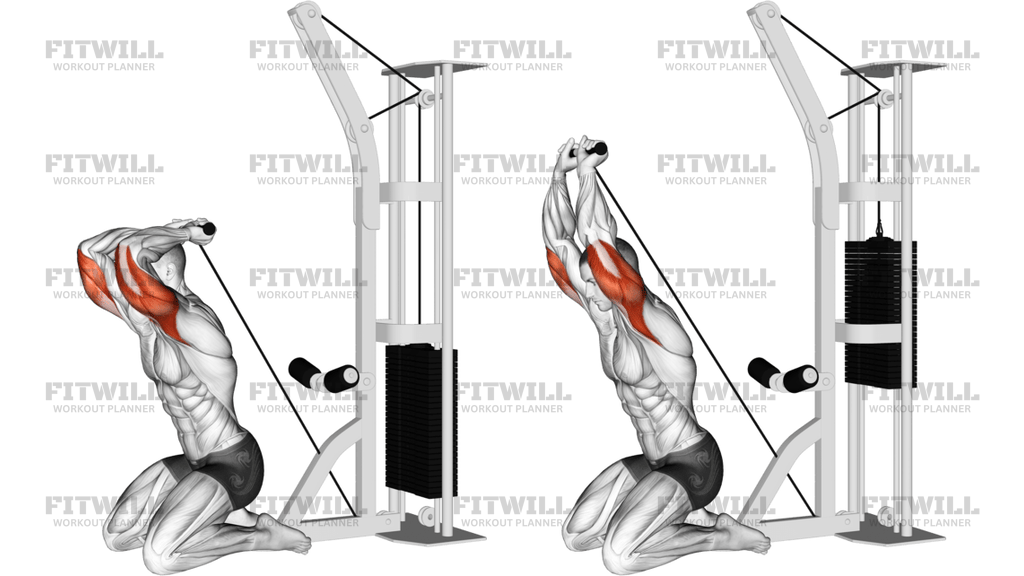
Cable Lying Triceps Extension is a bench-supported triceps exercise performed with a cable machine and a handle attachment. You lie on a flat bench beside a low pulley, then bend and straighten the elbows so the cable travels from behind the head to above the shoulders. That setup keeps tension on the triceps through the whole rep, which makes this variation especially useful when you want strict arm work without the loose feel of a free-weight skullcrusher.
The main training focus is the triceps brachii, with the forearms helping you hold the handle and the shoulders and trunk helping keep the bench position steady. In practical terms, this is an isolation exercise: the upper arms should stay mostly fixed while the elbows do the moving. When the setup is right, you should feel a long triceps stretch at the bottom and a hard elbow extension at the top, not a shoulder press or a pullover.
Bench placement matters more here than in many arm exercises. The bench needs to sit close enough to the pulley that the cable stays loaded even when the handle is behind your head, and your head should be near the cable end so the line of pull stays consistent. If the bench is too far away, the stack will slack out and the movement turns sloppy. If you are too close, the handle can hit your face or force the elbows into an awkward path.
Use a smooth tempo and keep the upper arms quiet while the forearms swing through the arc. Lower the handle only as far as you can keep the shoulders down on the bench and the elbows pointed mostly up. Then extend the arms until they are nearly straight over the shoulders, finishing with the triceps rather than snapping the elbows. That controlled rhythm is what makes the cable version effective for both hypertrophy and joint-friendly arm training.
This exercise fits well near the end of an upper-body workout, during an accessory block, or anywhere you want direct triceps volume without standing balance demands. It is usually beginner-friendly when loaded lightly and set up carefully, but the elbow and shoulder positions still need attention. If your elbows ache or the cable path feels unstable, shorten the range slightly, reduce the load, and keep the reps precise instead of forcing more weight.
[ Workout Log & Planner ]
Put your next workout in Fitwill
Keep your plan and training log ready when you are.


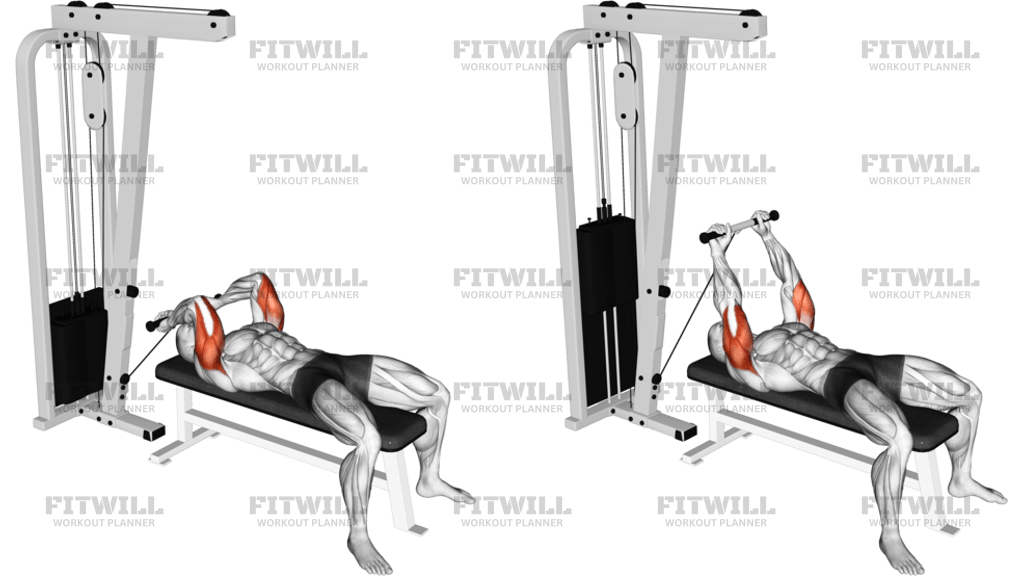
Instructions
- Set a flat bench beside a low cable pulley so the head of the bench sits close to the stack, then lie back with your shoulders and upper back supported and your feet flat on the floor.
- Grab the handle with both hands, start with the elbows bent, and bring the handle just behind your forehead so the cable stays tight before you begin the first rep.
- Keep your ribs down and brace your abs so your lower back does not arch as the cable pulls on your arms.
- Point the elbows mostly up and slightly in, then lower the handle behind your head by bending only at the elbows.
- Let the forearms travel while the upper arms stay nearly still; stop the descent when you feel a strong triceps stretch without your shoulders lifting off the bench.
- Press the handle back up by straightening the elbows until your arms are nearly vertical over your shoulders.
- Squeeze the triceps at the top for a brief moment, but do not slam the elbows into a hard lockout.
- Inhale on the lowering phase and exhale as you extend the elbows back to the start.
- After the last rep, guide the handle back down and out of the way before sitting up.
Tips & Tricks
- Place the bench close enough to the pulley that the cable still pulls on the handle when it is behind your head.
- Use a grip width that lets your wrists stay stacked over your forearms instead of bending them back.
- Keep the upper arms quiet; if they drift toward your chest, the movement turns into a shoulder exercise.
- Lower only to the point where the shoulders stay pinned to the bench and the triceps stay in control.
- Do not let the elbows flare wide on the way down; that usually shifts tension away from the triceps.
- A short pause in the stretched position removes the bounce and makes the cable work harder on the triceps.
- If the lower back starts arching, reduce the load and reset your ribs before the next rep.
- Choose a load that lets you extend smoothly without jerking the handle off the bottom.
- A slight chin tuck helps keep the neck long and stops you from craning forward to watch the handle.
Frequently Asked Questions
What muscles does Cable Lying Triceps Extension work?
The triceps are the primary target, with the forearms helping you hold the handle and the shoulders and core stabilizing the bench position.
Why use a cable instead of dumbbells for this movement?
The cable keeps tension on the triceps through more of the range, especially when the handle is behind your head and again near the top.
Should my upper arms move during the rep?
They should stay mostly fixed. The elbows bend and straighten while the upper arms stay aimed up and slightly back.
How far should I lower the handle?
Lower it only until you feel a strong triceps stretch and the shoulders still stay on the bench. If the elbows flare or the shoulders roll, shorten the range.
Is this exercise beginner-friendly?
Yes, as long as the load is light and the bench is set close to the pulley so the cable path feels stable and predictable.
What is the most common form mistake?
Letting the elbows drift wide or turning the rep into a shoulder press by moving the upper arms too much.
Can I use a rope instead of the handle in the image?
Yes. A rope can feel easier on the wrists, while a straight handle feels more fixed and may make it easier to keep both elbows tracking evenly.
Where does this fit in a workout?
It works well as direct triceps accessory work near the end of an upper-body session or after pressing exercises.
What should I do if my elbows feel irritated?
Reduce the load, shorten the bottom range a little, and keep the lowering phase slower so the joint is not taking a sudden stretch.