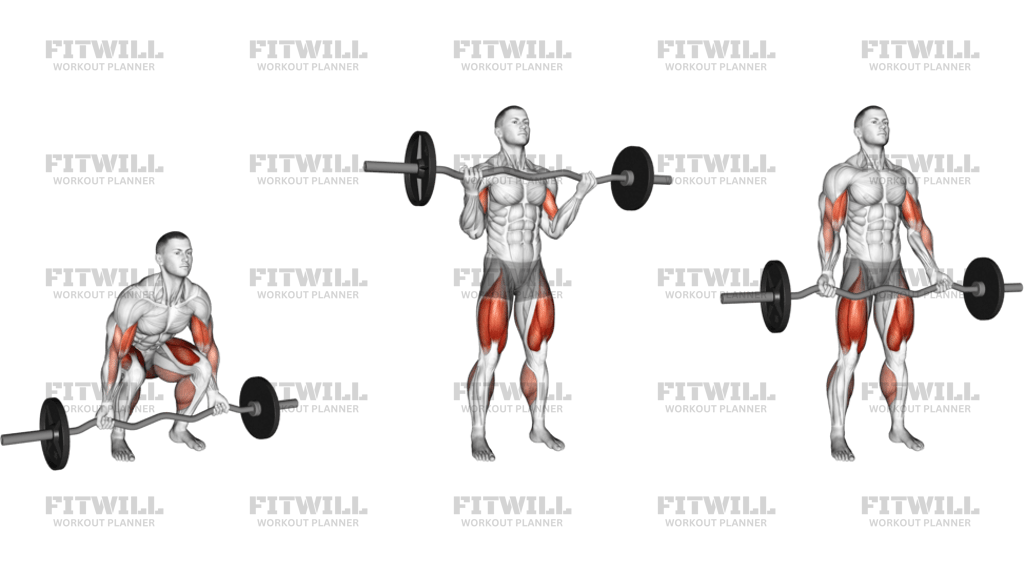
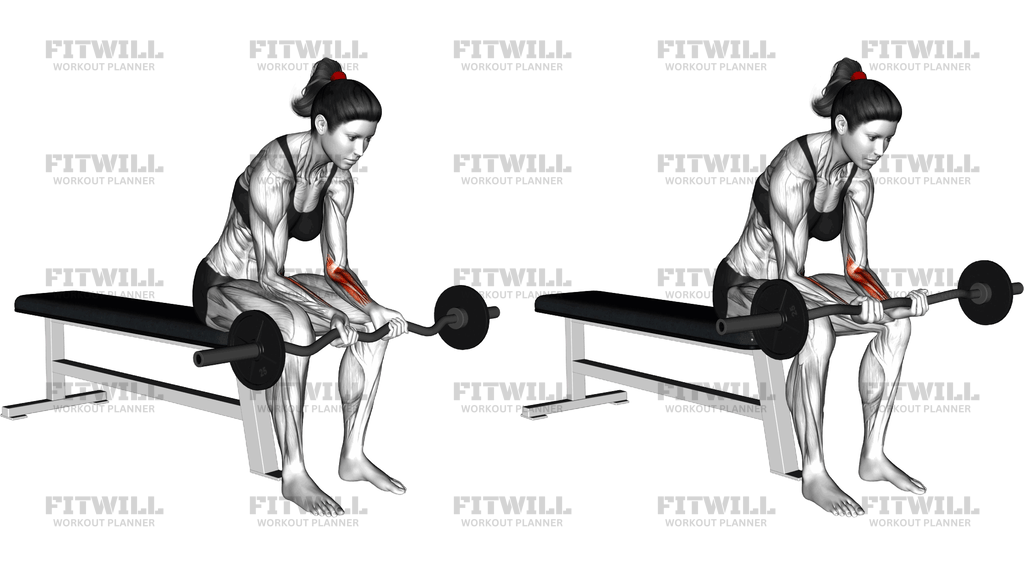
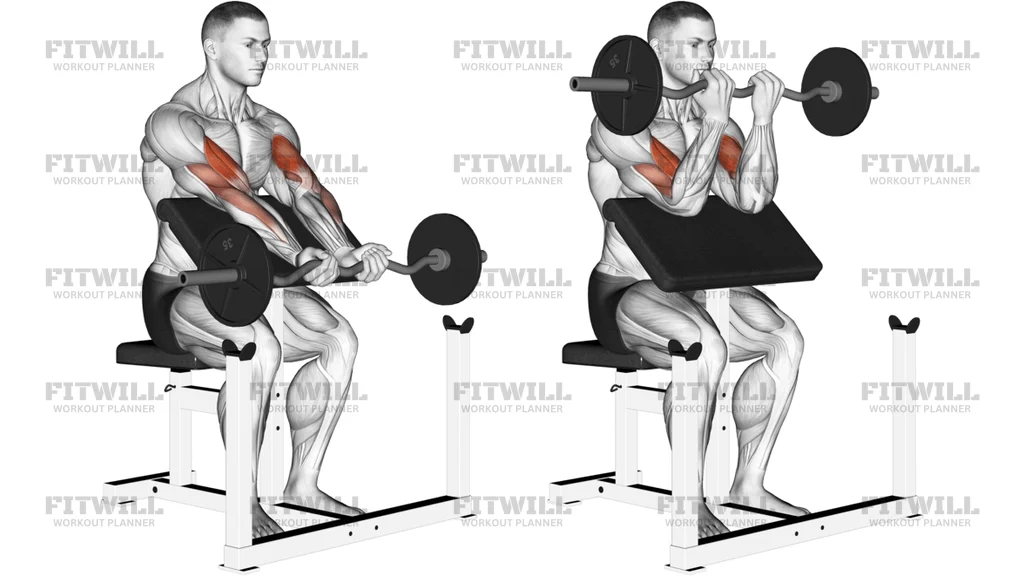
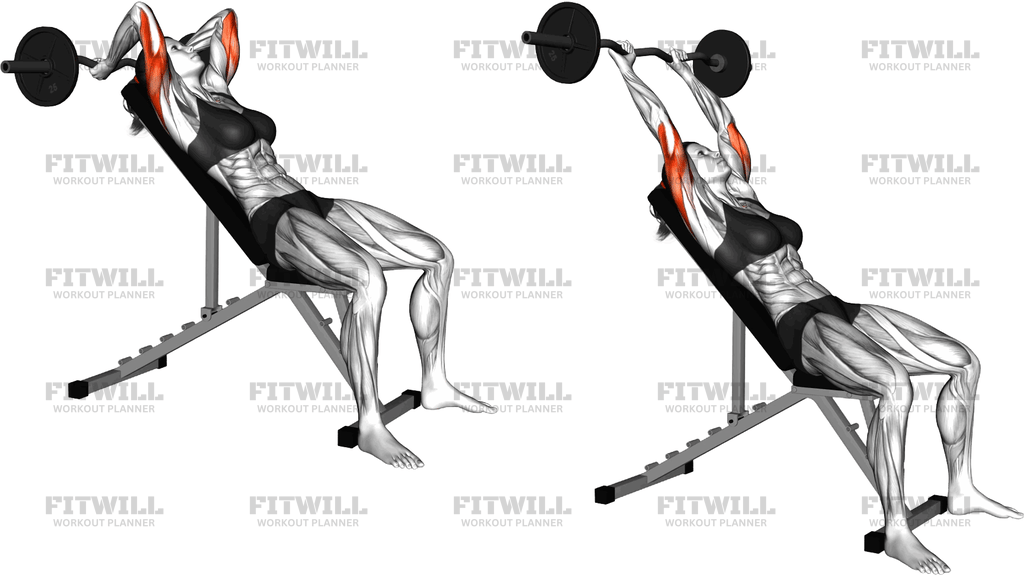
EZ Barbell Standing Wrist Reverse Curl
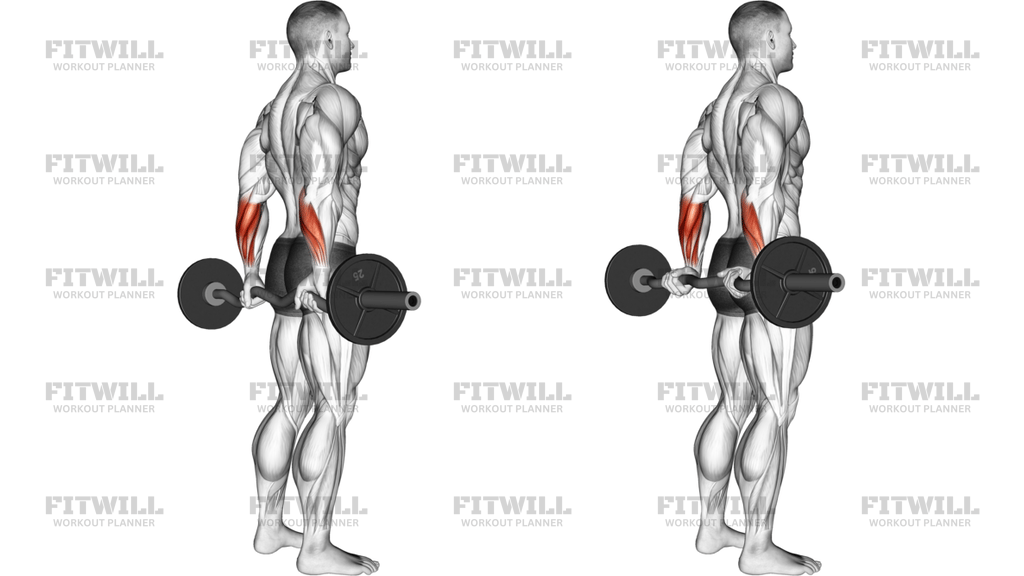
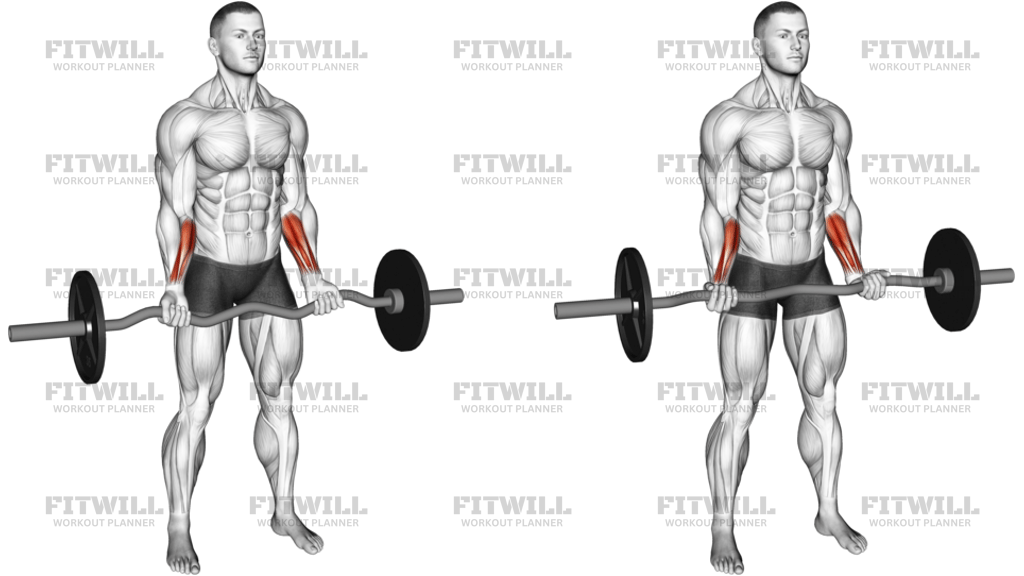
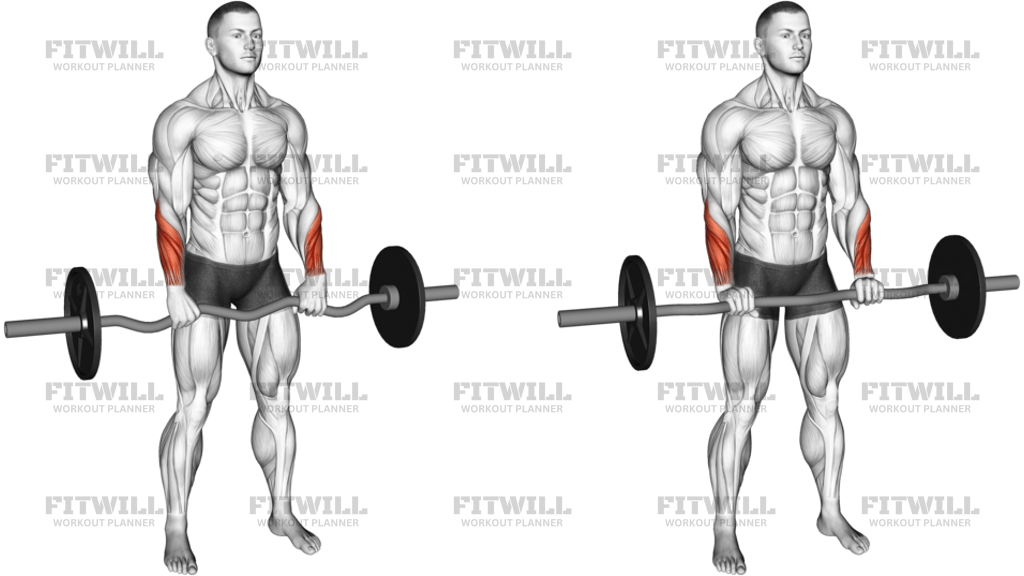
EZ Barbell Standing Wrist Reverse Curl is a standing forearm isolation movement that targets the wrist extensors with the hands in a pronated grip on an EZ bar. The exercise looks small, but it is useful for building the back side of the forearm, improving wrist control, and balancing all the gripping and pressing work that tends to dominate many programs. Because the range is short and the joints are small, the quality of the setup matters more than the load.
The EZ bar shape gives your wrists a slightly more comfortable angle than a straight bar for many lifters, especially when the hands are held in front of the thighs. Stand tall with the bar hanging against the front of the legs, elbows straight, shoulders relaxed, and wrists neutral before the first rep. From there, the wrists do the work while the upper arms stay still. If the elbows drift, the torso leans back, or the shoulders shrug, the set stops being a wrist exercise and turns into a body-English curl.
During each repetition, let the bar settle in the fingers, then lift the backs of the hands toward the forearms by extending the wrists. The movement should feel controlled and deliberate, with a clear pause at the top and a slow return to a neutral wrist position. Breathing should stay easy and regular, with no need to hold your breath for this short lever movement. The goal is a smooth arc at the wrists, not a bigger swing or a higher bar path.
EZ Barbell Standing Wrist Reverse Curl is most useful as accessory work after heavier pulling, pressing, or arm training, when the forearms need focused volume without a lot of systemic fatigue. It can also be helpful for athletes who want better grip endurance, lifters whose wrists feel overworked from standard curls, or anyone trying to bring up forearm development on purpose. Because the load is usually modest, the exercise rewards patience and repeatability more than aggressive loading.
Keep the movement pain-free and honest. The wrists should move, but the elbows, rib cage, and hips should not help the rep finish. If the bar feels awkward, shorten the range slightly, lighten the load, or use a grip width that lets the wrists sit in a more natural line. Done this way, EZ Barbell Standing Wrist Reverse Curl is a simple but very direct tool for building forearm strength and control.
[ Workout Log & Planner ]
Put your next workout in Fitwill
Keep your plan and training log ready when you are.


Instructions
- Stand tall with your feet about hip-width apart and hold the EZ bar in front of your thighs with an overhand grip.
- Let the bar rest in your fingers, keep your wrists straight, and keep your elbows close to your sides.
- Set your shoulders down and keep your chest lifted without leaning back.
- Extend your wrists to raise the backs of your hands and roll the bar toward your fingertips.
- Pause briefly at the top when the forearms are fully shortened.
- Lower the bar slowly until your wrists return to a neutral line.
- Keep your elbows, torso, and hips quiet while the wrists move through each rep.
- Reset the bar against your thighs before the next repetition if you need to regain control.
Tips & Tricks
- Keep the load light enough that your elbows never need to bend to finish a rep.
- The bar should sit low in the fingers; if it is buried deep in the palm, the wrists cannot move freely.
- Use the angled portions of the EZ bar that let your wrists feel neutral instead of twisted inward.
- Lower the bar more slowly than you lift it to keep tension on the forearm extensors.
- If you feel the exercise in your shoulders or lower back, you are leaning or shrugging to cheat the rep.
- A shorter range is better than forcing the wrists into a painful top position.
- Higher-rep sets usually work better than heavy triples for this movement because the target muscles are small.
- Stop before your grip opens and the bar starts to slide, since that usually means the wrists have already lost control.
Frequently Asked Questions
What muscles does EZ Barbell Standing Wrist Reverse Curl work?
It primarily trains the wrist extensors on the top side of the forearm. The grip, fingers, and upper arm stabilize the bar, but the wrist action is the main driver.
How is EZ Barbell Standing Wrist Reverse Curl different from a regular wrist curl?
A regular wrist curl uses a supinated grip and emphasizes the palm side of the forearm. This version uses an overhand grip so the backs of the hands lift toward the forearms.
Why use an EZ bar instead of a straight bar?
The EZ shape usually lets the wrists sit in a friendlier angle, which can make the exercise feel smoother and less irritating at the joints.
Should my elbows move during EZ Barbell Standing Wrist Reverse Curl?
No. Keep the elbows close to the sides and as still as possible so the wrists do the work instead of turning the set into a partial curl.
Is EZ Barbell Standing Wrist Reverse Curl beginner-friendly?
Yes, as long as the load is very light and the range stays pain-free. Beginners usually benefit from slower reps and shorter sets while learning the wrist path.
How wide should my hands be on the EZ bar?
Use the grip angle and hand spacing that keep your wrists comfortable and straight at the start. If a wider or narrower bend feels cleaner, choose that instead of forcing a fixed width.
What if I feel pain in my wrists during the set?
Reduce the load, shorten the range, or change to the EZ-bar hand position that feels most natural. Sharp wrist pain is a sign to stop rather than push through.
Where does this fit in a workout?
It works best as accessory work after bigger presses and pulls, or at the end of an arm session when you want direct forearm volume without much overall fatigue.