Straight Arm Pulldown On Cable (with Straight Bar)
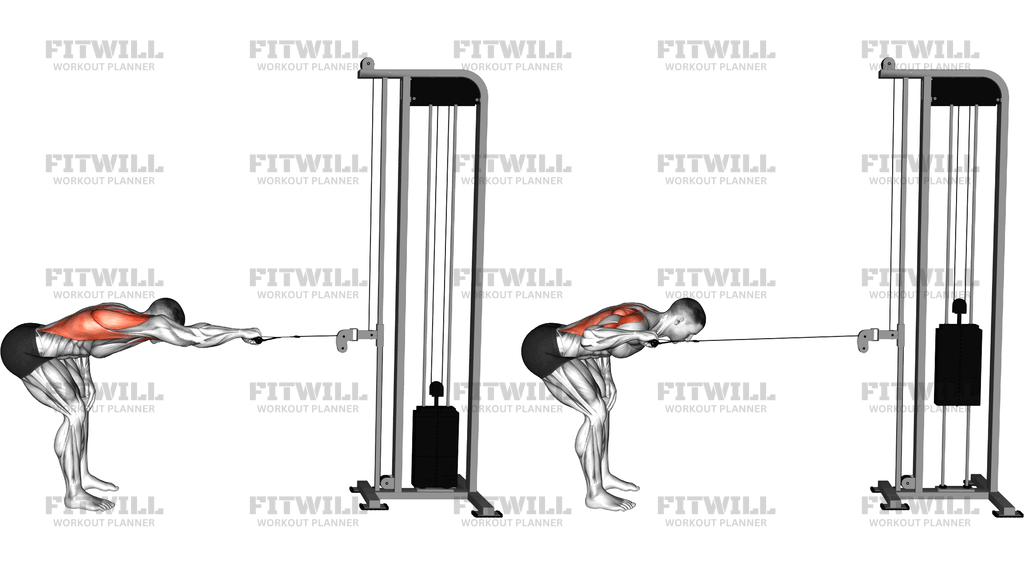
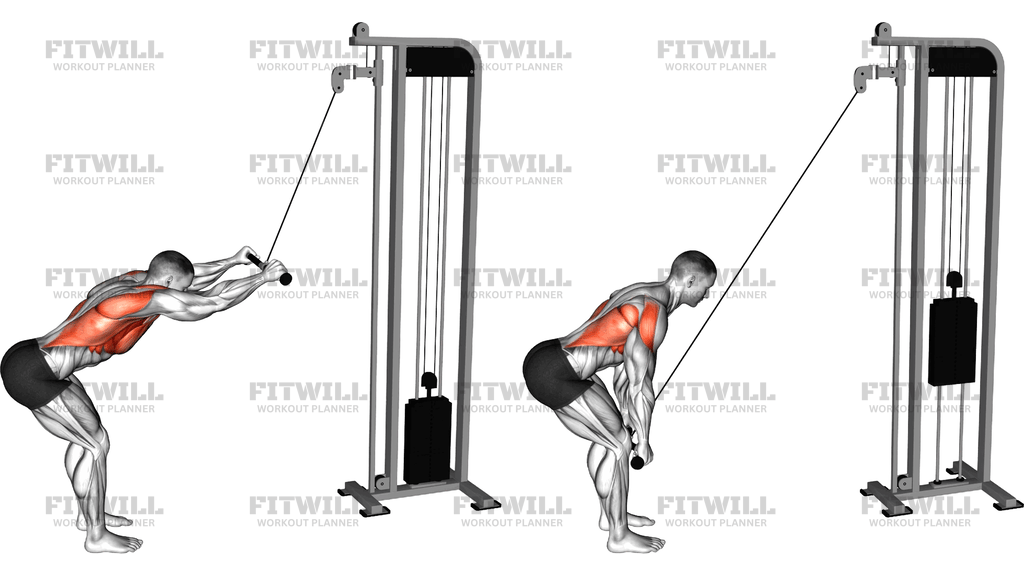
The straight arm pulldown on cable (with straight bar) is a standing exercise on a cable machine, performed from a high pulley with a straight bar attachment. Unlike the lat pulldown, the elbows remain almost fully extended throughout the set, so the lats do the work through shoulder extension and not elbow flexion. In this version you bend forward at the hips, so that the torso leans toward the machine, allowing the bar to travel from above the head down to the thighs in a long, sweeping arc.
This exercise is a favorite for those who want to feel their lats working without their biceps limiting the set. Because the arms stay straight, the biceps contribute very little, making it a useful auxiliary exercise for those whose arms tend to take over in pulldowns and rows. It also teaches you what lat contraction really feels like, something that will carry over to every pulling exercise in your program.
The main muscles worked are the lats, with the support of the teres major, the rear delts, and the triceps, which hold the elbows locked against the cable tension. The mid back and the core work isometrically to keep the torso steady in the bent position, while the weight pulls you upward and forward.
The setup here matters more than in most exercises on a cable machine. The distance from the machine, the angle of the bend at the hips, and a slight forward lean determine whether the lats get loaded or whether the cable simply pulls your shoulders forward. Stand far enough back, so that the bar is above and slightly in front of your head with the cable already under tension, then push your hips back until the torso is angled well forward and the knees are slightly bent.
To execute it correctly, grab the bar with a pronated grip about shoulder-width apart, tighten your core, and pull the bar down toward the thighs in a smooth arc, keeping the arms long. Think about driving the elbows down and slightly back, instead of pulling with the hands. Pause briefly with the bar at the thighs, then let it rise back with control, until the arms are again above the head.
This exercise fits well as a preparatory warm-up before heavy pulls, as a finishing exercise for lat work with higher repetitions, or as a standalone choice on days when you want back volume without loading the elbows. Common mistakes include bending the elbows as fatigue sets in, swinging the torso to move the weight, and turning the exercise into a triceps pushdown by pushing with the hands instead of the elbows. Keep the load moderate and let the long lever of the straight arm do the work.
[ Ημερολόγιο και σχεδιασμός προπονήσεων ]
Οργάνωσε την επόμενη προπόνησή σου στο Fitwill
Το πρόγραμμα και το ημερολόγιό σου είναι έτοιμα όποτε θέλεις να προπονηθείς.


Οδηγίες εκτέλεσης
- Set the pulley of the cable machine at the high position and attach a straight bar.
- Grab the bar with a pronated grip about shoulder-width apart, then step back one to two steps, so that the cable is already under tension with the arms extended above the head.
- Push the hips back and bend forward until the torso is angled well toward the floor, with the knees slightly bent and the feet about hip-width apart.
- Tighten the core and pull the shoulder blades down slightly, so that the shoulders are not raised toward the ears.
- Keeping the elbows almost locked, pull the bar down in a wide arc toward the front of the thighs.
- At the bottom, squeeze the lats and hold the bar against the legs for a moment, without letting the shoulders roll forward.
- Slowly let the bar travel back up along the same arc, until the arms are extended above the head and you feel a stretch in the lats.
- Exhale as you pull the bar down and inhale as you return it to the starting position.
- Complete your repetitions without letting the weight stack fall with a bang, and adjust your stance and bend again before the next set.
Συμβουλές
- If the elbows bend as fatigue sets in, reduce the weight — bent elbows turn the exercise into a lat pulldown and the biceps take over.
- Do not push the bar down with the triceps; think about pulling the elbows toward the hips while the arms stay long.
- Aim the bar at the thighs, not the chest — pulling to chest height recruits the rear delts more and shortens the lats' range.
- Keep the bend steady; if the torso rises and falls with each repetition, you are using momentum from the lower back instead of the lats.
- Stand far enough back, so that the cable pulls the arms slightly forward at the top — if the cable is vertical above the head, the top position loses tension.
- Use a moderate weight and a return of 2–3 seconds; the stretching phase at the top holds much of the benefit.
- If the shoulders pinch at the top, stop a little before full extension above the head or use a slightly narrower grip.
- The wrists should stay neutral and straight — bent wrists under tension strain the forearms and shift the emphasis away from the lats.
Συχνές ερωτήσεις
Which muscles does the straight arm pulldown on cable (with straight bar) work?
The lats are the primary moving muscle, with the support of the teres major and the rear delts. The triceps work statically to keep the elbows locked, while the core stabilizes the bent torso.
Why do the arms have to stay straight in the straight arm pulldown on cable (with straight bar)?
With straight arms, the biceps cannot help, so the lats are forced to extend the shoulders on their own. Bending the elbows simply turns the exercise into a lat pulldown with less isolation of the lats.
Should I stand upright or bend forward in this exercise?
The bent position shown here allows the bar to travel from above the head down to the thighs in a long arc, which stretches the lats at the top. The fully upright version shortens this range and reduces the stretch.
How far from the cable machine should I stand?
Step back until the cable is angled slightly downward in front of you at the start, with the tension already on the lats before the first pull. If you are too close, the bar drifts back toward the head; if you are too far, the cable pulls you forward.
Is the straight arm pulldown on cable (with straight bar) suitable for beginners?
Yes, it is beginner-friendly, because the cable's path is stable and the load can be easily adjusted. Start with a light weight and prioritize feeling the lats over moving heavy weights.
How does it differ from the triceps pushdown?
The pushdown is driven by the extension of the elbows, while in the straight arm pulldown the elbows are already locked and the movement occurs at the shoulder. If you feel the triceps burning, you are pushing the bar instead of pulling the elbows down.
What can I use if my gym does not have a straight bar attachment?
A rope attachment, an EZ bar, or single handles work with the same technique. The rope allows a slightly outward path of the hands, which some find more comfortable for the shoulders.
Where should the bar end at the bottom of each repetition?
Bring it to the front of the thighs with a brief squeeze of the lats. Stopping at chest or hip height cuts the range short and reduces the lats' involvement.
Is this exercise safe for the lower back?
It places a moderate demand on the lower back, because you hold a bent position, so keep the weight moderate and the bend steady. If the lower back tires before the lats, reduce the load or tighten your core more.
Should I use it before or after heavy rows and pulldowns?
Either works: light sets before heavy pulls warm up the lats and practice the mind-muscle connection, while sets with more repetitions after the rows work excellently as a finishing exercise.