Air Twisting Crunch
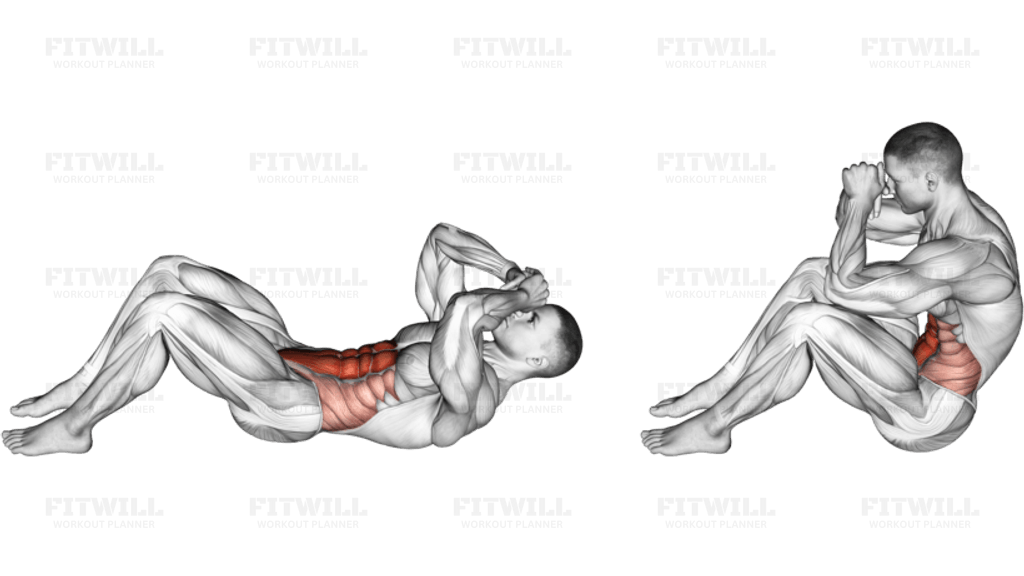
The Air Twisting Crunch is a body-weight waist exercise that adds controlled rotation to a standard crunch. Instead of curling straight up, you lift the shoulders and turn the rib cage toward one side so the obliques contribute more directly. It is a simple no-equipment option for building rotational core endurance, practicing better trunk control, and adding variety to floor-based ab training.
The primary muscles are the obliques, with the rectus abdominis assisting during the crunch portion of the movement. The goal is not to force a dramatic twist or chase elbow-to-knee contact, but to shorten the side of the waist while the abs stay engaged. A good rep feels small, deliberate, and controlled, with the torso doing the work instead of the arms pulling the head forward.
Begin on your back with the knees bent and feet flat on the floor so the lower body stays stable. Place the hands lightly behind the head or across the chest, brace the abs, and keep the chin slightly tucked before you lift. Curl the shoulders off the floor while rotating to one side, pause briefly when the obliques contract, then lower back down with control before repeating or switching sides.
The range of motion should stay within what you can control without letting the hips roll or the lower back strain. Exhale as you crunch and rotate, then inhale as you return to the floor. If you feel the movement mostly in the neck, reduce the range, lighten the hands behind the head, and focus on leading the twist from the ribs rather than the elbows.
This exercise fits well in home workouts, warmups, core finishers, or waist-focused sessions with straight crunches, planks, and leg raises. Beginners can use a small rotation and alternate sides slowly, while more experienced users can perform all reps on one side before switching to increase local fatigue. It is also useful when you want rotational core work without equipment, jumping, or a large setup.
Common mistakes include twisting too far, yanking with the arms, lifting too high, or rushing through the lowering phase. Keep the feet planted, shoulders relaxed, and tempo steady so the obliques stay under tension through the whole rep. Stop or modify the set if your lower back or neck feels strained, because clean torso rotation is more valuable than forcing extra range.
[ Workout Log & Planner ]
Put your next workout in Fitwill
Keep your plan and training log ready when you are.


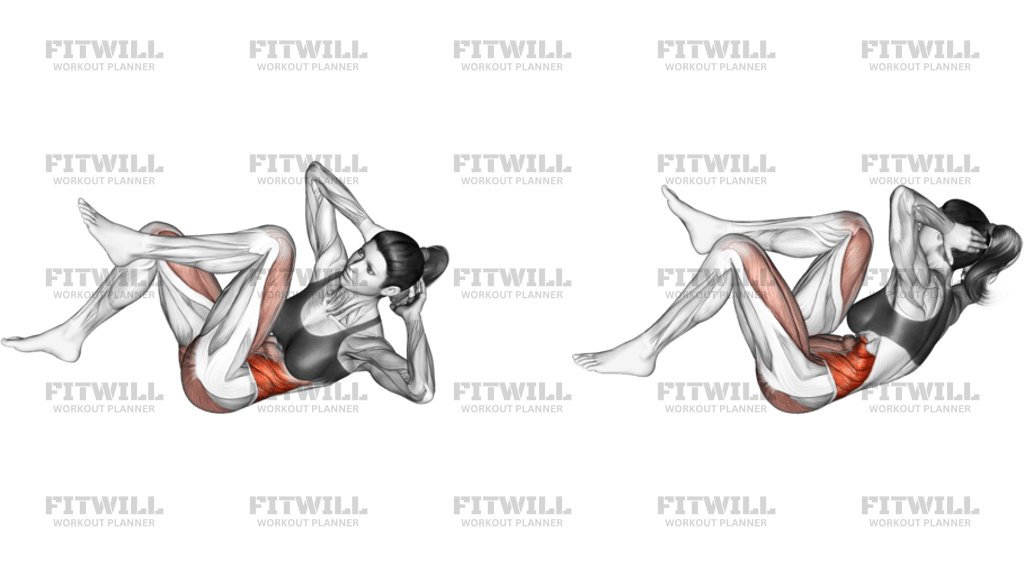
Instructions
- Lie on your back with your knees bent and feet flat on the floor.
- Place your hands lightly behind your head or across your chest.
- Brace your abs and keep your lower back controlled.
- Curl your shoulders off the floor while rotating your torso to one side.
- Pause briefly when you feel the obliques contract.
- Lower back to the starting position with control.
- Repeat to the other side or complete all reps on one side before switching.
- Continue until the set is complete.
Tips & Tricks
- Lead the twist from your rib cage instead of pulling with your arms.
- Keep your chin slightly tucked and your neck relaxed.
- Use a controlled tempo so the obliques stay under tension.
- Do not twist so far that your hips roll off the floor.
- Exhale as you crunch and rotate.
- Reduce the range if your lower back or neck feels strained.
- Keep both feet planted so the rotation stays in your upper torso instead of turning into a hip roll.
- Pause for a moment at the top of each twist rather than bouncing from side to side.
Frequently Asked Questions
What muscles does the Air Twisting Crunch target?
It primarily targets the obliques, with the rectus abdominis assisting during the crunch.
Is Air Twisting Crunch better than a regular crunch?
It is not necessarily better, but it adds rotation, which makes it more useful for training the side waist.
Should my elbow touch my knee?
No. Focus on rotating your torso with control rather than forcing elbow-to-knee contact.
Can beginners do Air Twisting Crunch?
Yes. Beginners should use a small range of motion and keep the hands light to avoid pulling on the neck.
Why do I feel it in my neck?
You may be pulling with your hands or lifting too high. Keep your neck neutral and let your abs initiate the crunch.
Should I alternate sides on every Air Twisting Crunch rep?
You can alternate sides for rhythm and balance, or finish all reps on one side before switching if you want a stronger oblique burn. Keep the same range on both sides.
How high should I lift during Air Twisting Crunch?
Lift only your head, shoulders, and upper back enough to rotate the rib cage. Sitting too high usually shifts the work toward the hip flexors.
What should stay still during Air Twisting Crunch?
Your feet, hips, and lower back should stay controlled on the floor while your ribs rotate. If the hips roll, make the twist smaller.