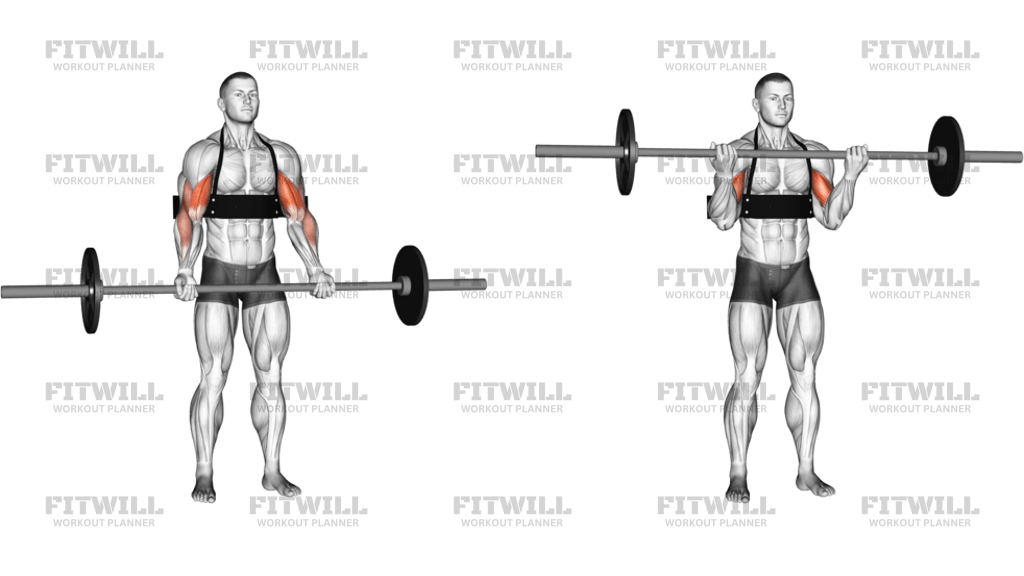
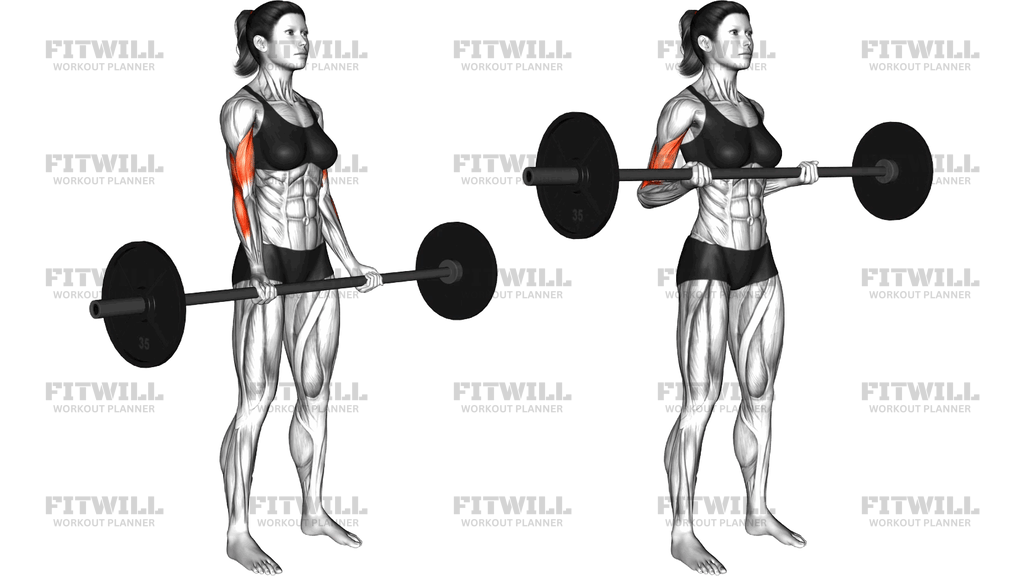
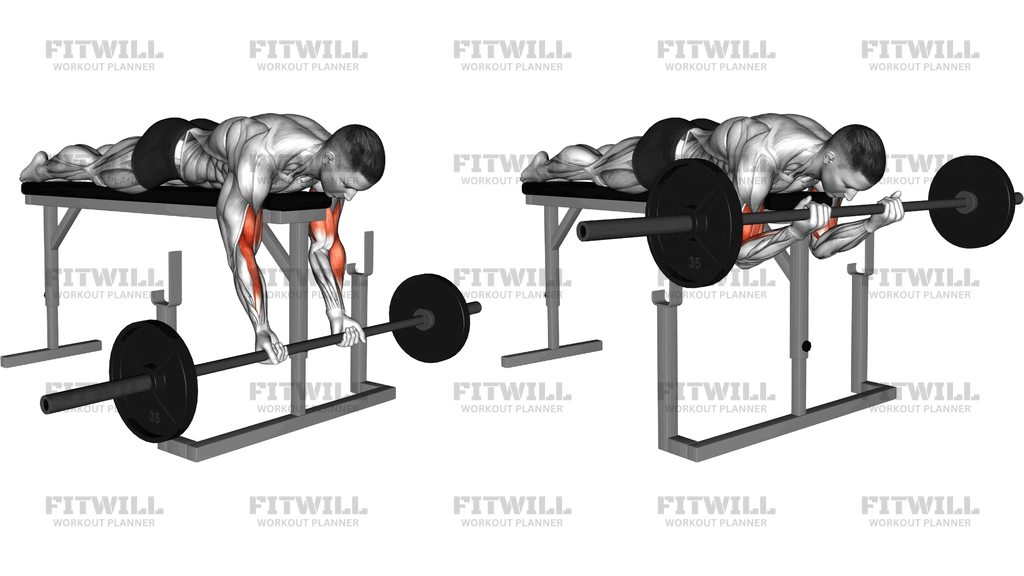
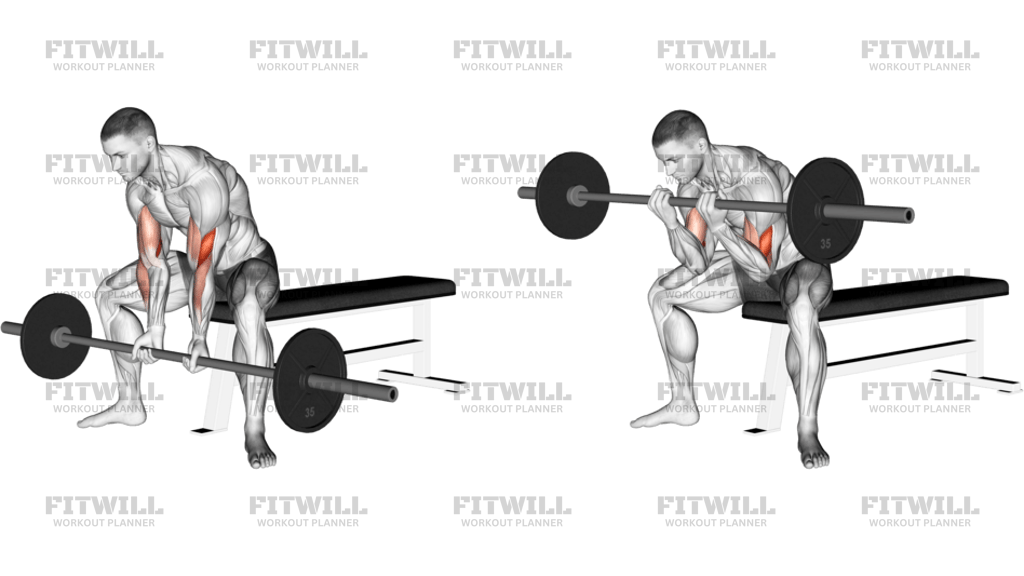
Barbell Alternate Biceps Curl
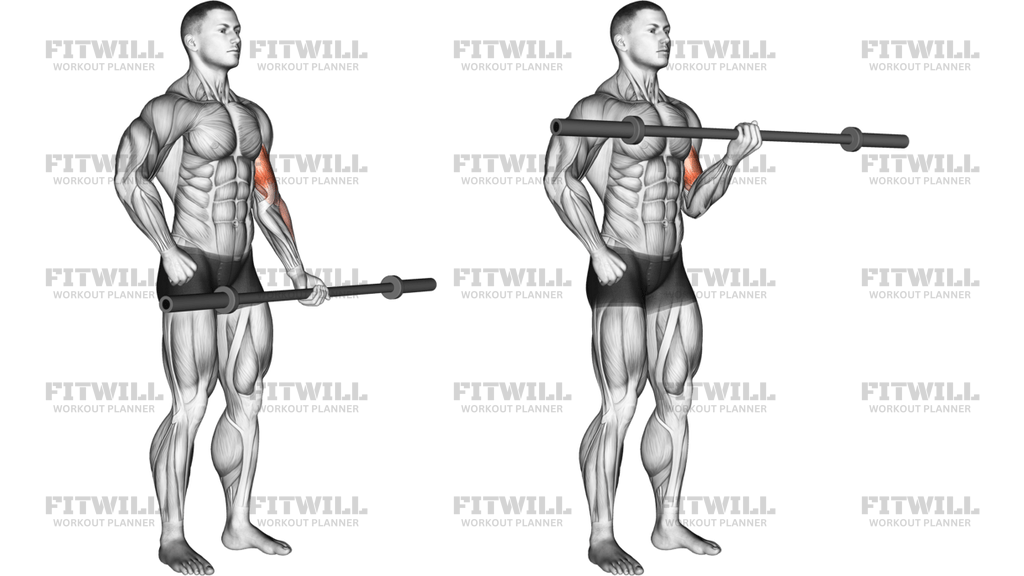
Barbell Alternate Biceps Curl is a standing arm exercise that uses a barbell while emphasizing one side of the curl at a time. You hold the bar with an underhand grip, keep the torso still, and focus on bending one elbow while the other arm helps steady the bar. The variation demands more control than a standard curl because the bar wants to tilt if one side moves faster or higher than the other.
The primary target is the biceps brachii, with help from the brachialis, brachioradialis, and forearm muscles that support the grip. Because the barbell connects both hands, the non-working side still has to stabilize and keep the implement level. A good rep should feel strict through the working biceps without the shoulders or hips creating momentum.
Set up with the feet about hip-width apart and the bar resting in front of the thighs. Use an underhand grip, keep the wrists straight, and brace the abs so the ribs stay stacked over the hips. Before curling, pin the elbows near the sides and keep the shoulders relaxed.
Curl one side upward by bending that elbow while keeping the opposite side controlled, then lower smoothly before alternating. The bar should stay manageable and close to the body rather than swinging forward. Move slowly enough that both sides stay coordinated and the working elbow does not drift far in front of the torso.
Barbell Alternate Biceps Curl can be used as a strict biceps accessory, a lighter coordination drill, or a way to focus attention on side-to-side control. Use a lighter load than a regular barbell curl because the alternating action challenges balance and grip. If the bar tilts sharply or the torso starts leaning, the weight is too heavy.
Common mistakes include heaving through the hips, bending the wrists back, letting the elbows travel forward, or rushing the switch from one side to the other. Keep the movement compact and deliberate. The exercise should train biceps control, not become a whole-body swing.
[ Workout Log & Planner ]
Put your next workout in Fitwill
Keep your plan and training log ready when you are.


Instructions
- Stand tall with your feet about hip-width apart and hold a barbell with an underhand grip.
- Brace your core, keep your chest lifted, and let the bar rest in front of your thighs.
- Curl one side upward by bending that elbow while keeping the opposite side controlled.
- Squeeze the biceps near the top without letting your shoulder roll forward.
- Lower that side with control until the arm is nearly straight.
- Repeat the curl on the opposite side while keeping the bar close to your body.
- Keep your wrists straight and elbows near your ribs through each alternating rep.
- Continue until both sides complete the planned number of controlled curls.
Tips & Tricks
- Keep your elbows close to your body instead of letting them drift forward.
- Avoid using your hips to start the curl.
- Lower each rep slowly so the biceps stay under tension.
- Choose a weight that lets both sides move evenly.
- Keep the bar from tilting sharply as one side curls by gripping firmly with both hands.
- Do not bend your wrists backward at the top of the curl.
- Pause briefly before switching sides so the next curl starts from a still bar.
Frequently Asked Questions
What muscles does the Barbell Alternate Biceps Curl work?
It mainly targets the biceps, with the brachialis, brachioradialis, and forearm muscles assisting the curl and grip.
Why alternate sides with a barbell?
Alternating sides adds control and coordination while helping you focus on one arm's contraction at a time.
Should my elbows move during the curl?
Your elbows should stay close to your sides. A small amount of natural movement is fine, but avoid swinging them forward to lift the weight.
How heavy should I go on Barbell Alternate Biceps Curl?
Use less weight than a standard barbell curl so you can keep the bar controlled while one side curls at a time.
Why does the bar tilt during Barbell Alternate Biceps Curl?
The bar usually tilts when one side moves too fast or the weight is too heavy. Slow down and keep both hands gripping evenly.
Should I swing my hips to start the alternating curl?
No. Keep your hips still and start each rep by bending the working elbow so the biceps do the work.
Can I replace Barbell Alternate Biceps Curl with dumbbells?
Yes. Alternating dumbbell curls are easier to control independently, while the barbell version adds a coordination challenge because both hands share one implement.