Barbell Reverse Curl
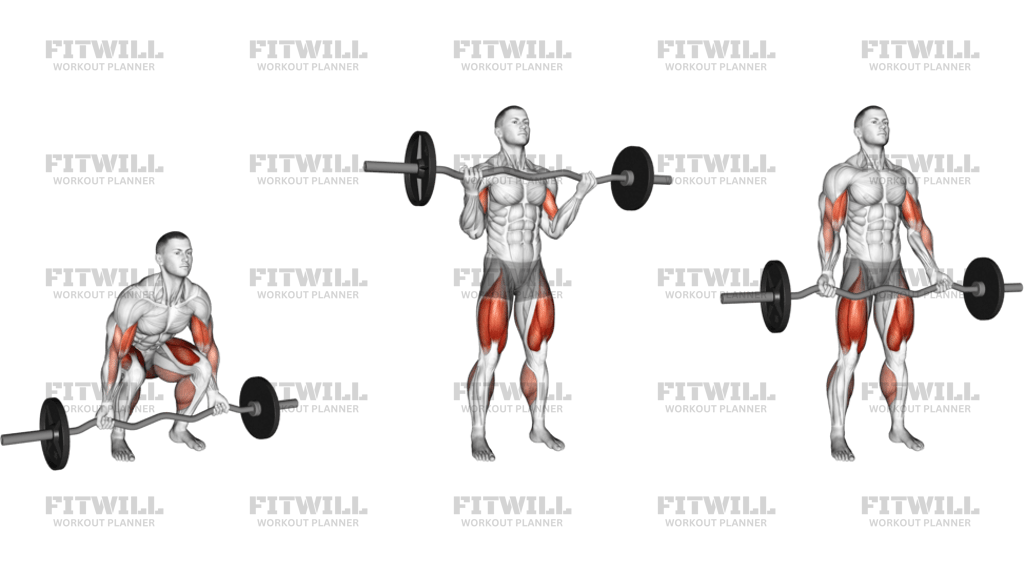
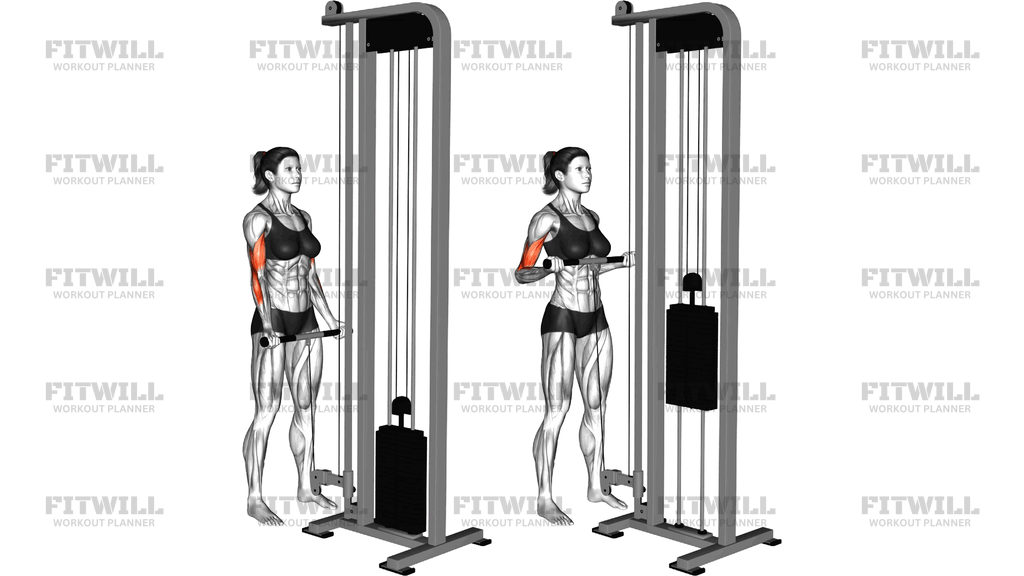
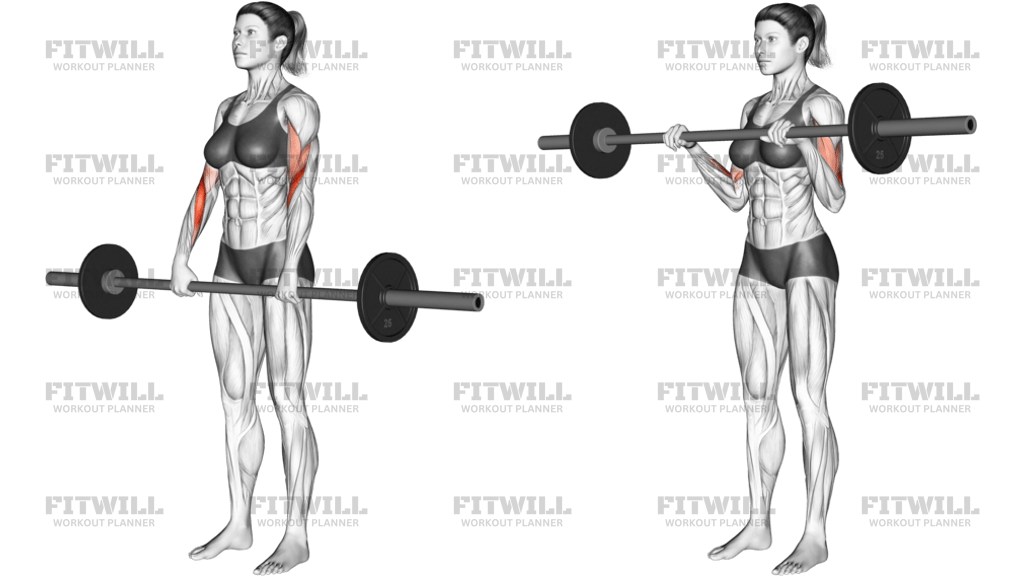
Barbell Reverse Curl is a standing arm and forearm exercise performed with a pronated, overhand grip on a straight barbell. The setup shifts much of the work away from the usual palm-up curl pattern and places more demand on the brachioradialis, the muscles around the forearm, and the elbow flexors that have to work hard while the wrists stay organized.
The exercise looks simple, but the grip and wrist position are what make it useful. With the palms facing down, the forearms have to control both elbow flexion and the tendency for the wrists to fold back. That is why a clean reverse curl is less about heaving the bar upward and more about keeping the bar path smooth, the elbows quiet, and the forearms doing the work from the first inch of the rep to the last.
A good setup matters because small errors are magnified with this movement. Stand tall with the feet about hip-width apart, hold the bar in front of the thighs, and keep the wrists stacked so the knuckles do not drift behind the forearms. The elbows should stay close to the sides and the shoulders should remain down instead of rolling forward as the bar rises.
During the lift, curl the bar in a short, efficient arc toward the lower chest or upper abdomen without swinging the torso. The bar should stay close to the body, the upper arms should stay nearly still, and the lowering phase should be deliberate so the forearms stay loaded instead of dropping the weight. Exhale as you curl, inhale as you lower, and reset cleanly before the next repetition.
Barbell Reverse Curl is useful as accessory work on arm day, as a forearm-focused movement after pulling sessions, or as a grip-strength builder in programs that need more elbow and wrist resilience. It is usually best performed with lighter loads and strict tempo, because the wrists and elbows will be the first places to complain if the weight gets too heavy or the bar starts to swing.
[ Workout Log & Planner ]
Put your next workout in Fitwill
Keep your plan and training log ready when you are.


Instructions
- Stand upright with your feet about hip-width apart and hold a straight barbell in front of your thighs with an overhand, shoulder-width grip.
- Let your arms hang straight, stack your wrists over the bar, and keep your elbows tucked close to your ribs.
- Set your chest tall, shoulders down, and torso still before starting the first rep.
- Brace lightly through your midsection and squeeze the bar so the grip stays firm without bending the wrists back.
- Curl the bar upward by bending only at the elbows, keeping the upper arms almost fixed at your sides.
- Raise the bar in a smooth path toward the lower chest or upper abdomen until the forearms are fully contracted without letting the shoulders roll forward.
- Pause briefly at the top, then lower the bar slowly until the arms are straight again and the bar returns to the thighs.
- Exhale on the way up, inhale on the way down, and reset your posture before the next repetition.
Tips & Tricks
- Keep the wrists in line with the forearms; if the bar starts to fold your wrists back, the load is too heavy.
- Think about lifting with the elbows instead of snapping the hands upward.
- A straight bar is harder on the wrists than an EZ-bar, so start lighter than you would for a regular curl.
- The bar should stay close to the torso; if it swings forward, the forearms lose tension.
- Do not let the shoulders creep up or the chest collapse as fatigue builds.
- Use a controlled lowering phase of about two to three seconds to keep the forearms under tension.
- A shoulder-width grip is a good default, but a slightly narrower grip can feel friendlier on the wrists for some lifters.
- Stop the set when you have to lean back or hitch the bar to finish the rep.
Frequently Asked Questions
What muscles does a Barbell Reverse Curl work most?
It emphasizes the brachioradialis and the forearm muscles that control the overhand curl, with the biceps helping mainly as an elbow flexor and stabilizer.
Why use an overhand grip instead of a regular curl grip?
The pronated grip shifts the effort toward the forearms and makes wrist control a bigger part of the exercise than a palm-up curl.
How should my elbows move during the rep?
Keep them close to your sides and mostly fixed. If they drift forward a lot, the rep usually turns into a body swing instead of a forearm exercise.
Where should the bar travel at the top?
For most lifters, the bar finishes around the lower chest or upper abdomen. You do not need to force it higher if the wrists start to bend or the shoulders start to roll.
What if the straight bar hurts my wrists?
That usually means the grip or load is too aggressive for your wrists. Reduce the weight first, and if needed use a more wrist-friendly curl variation on another day.
Is this exercise good for beginners?
Yes, as long as they start light and keep the wrists stacked. The movement is simple, but the overhand grip makes form matter more than ego loading.
Should I feel this more in my forearms or upper arms?
Most people feel it strongly in the outer forearm and around the elbow crease, with the upper arm working less than in a standard curl.
How do I make the reverse curl harder without cheating?
Add a little load, slow down the lowering phase, or use cleaner pauses at the top. Do not turn it into a hip-driven curl just to move heavier weight.