Barbell Standing Close-Grip Curl
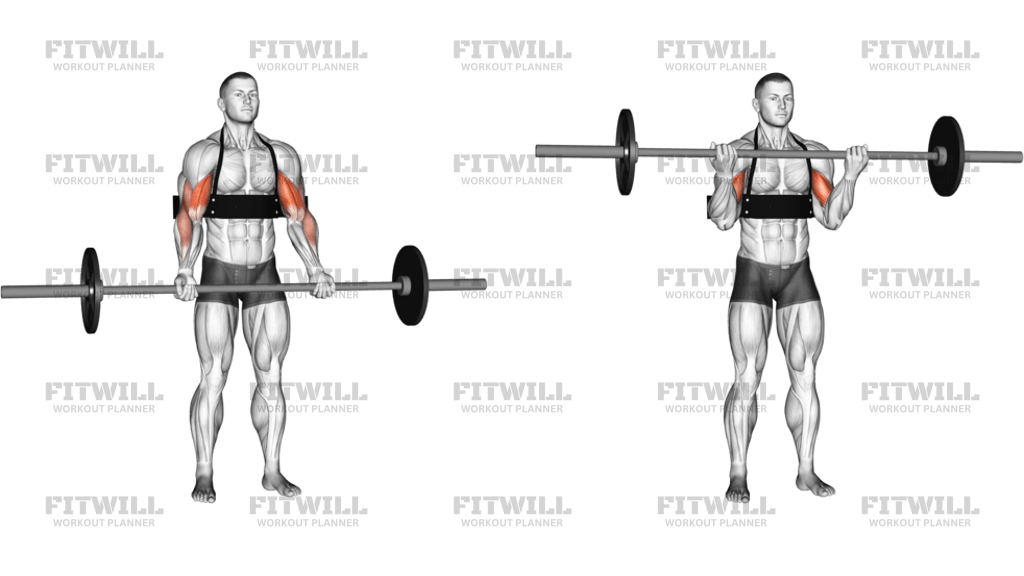
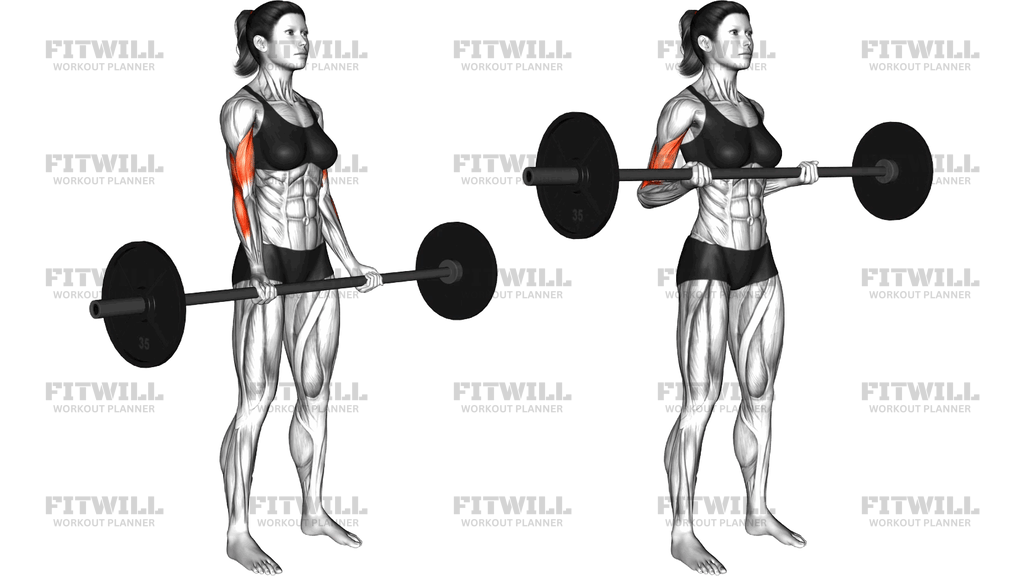
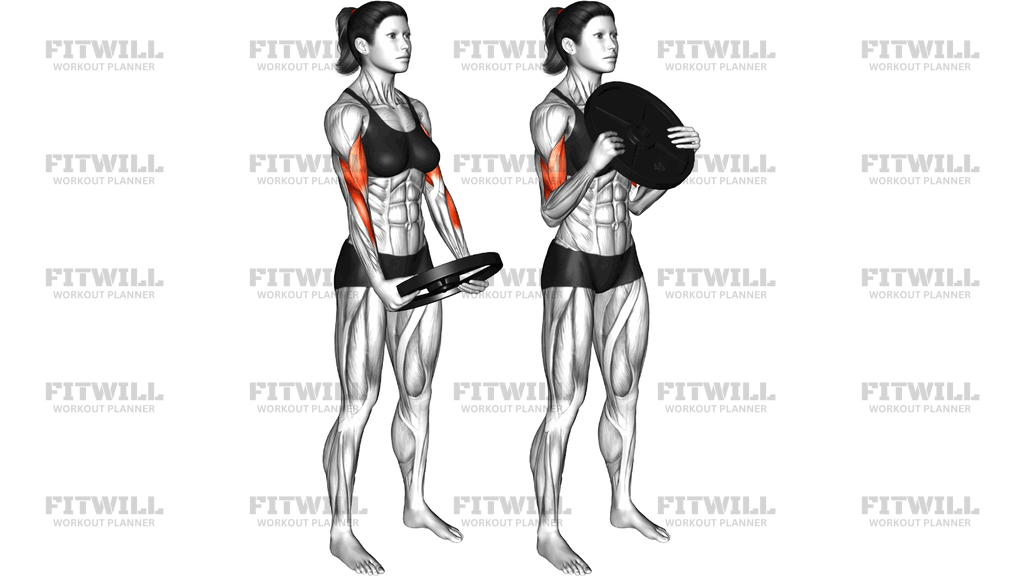
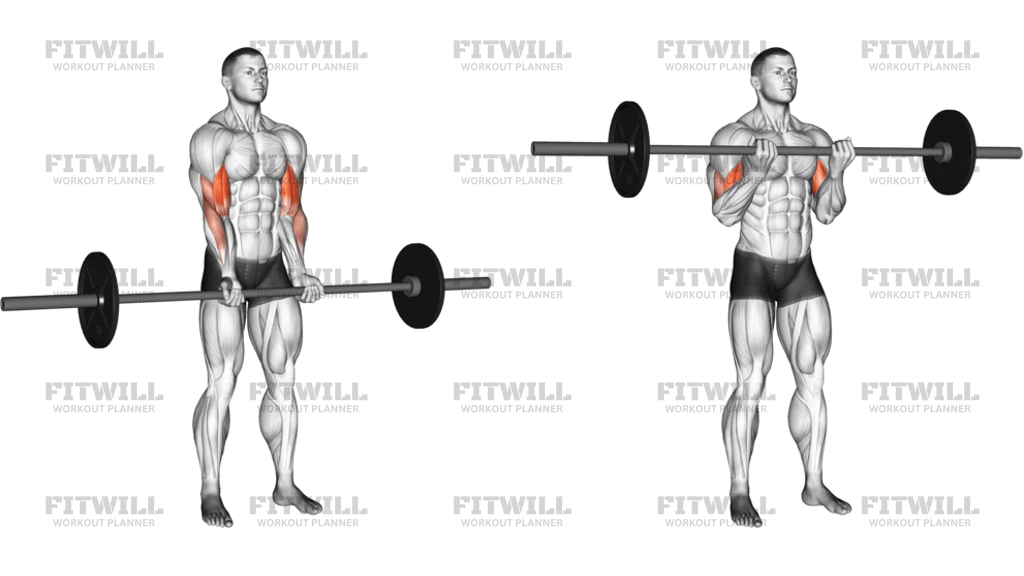
The Barbell Standing Close-Grip Curl is a biceps curl performed with the hands closer together than a standard barbell curl. The narrow underhand grip changes the elbow and wrist angle, keeping the upper arms close to the torso while the biceps, brachialis, and forearms flex the elbows.
This movement mainly targets the biceps brachii, with the brachialis, brachioradialis, and wrist flexors supporting the lift. The close grip can feel more focused for some lifters, but it also asks more from the wrists. The correct grip is close, not painful, and the bar should move because the elbows flex rather than because the torso swings.
Set up standing tall with the bar in front of the thighs, hands inside shoulder width, and palms facing forward. Keep the elbows pinned near the ribs, curl the bar toward the upper chest, squeeze briefly, then lower until the arms are extended without letting the shoulders roll forward.
Use this curl as a biceps accessory when you want a stricter barbell variation or a different arm angle from standard curls. Choose a load you can lift without leaning back. If the straight bar bothers your wrists, use an EZ bar or dumbbells instead.
[ Workout Log & Planner ]
Put your next workout in Fitwill
Keep your plan and training log ready when you are.


Instructions
- Stand tall with your feet about hip width and hold the barbell in front of your thighs.
- Use a close underhand grip, usually narrower than shoulder width, with your palms facing forward.
- Brace your core and keep your chest lifted without leaning back.
- Pin your elbows near your sides before the first rep starts.
- Curl the bar upward by bending your elbows while keeping your upper arms mostly still.
- Squeeze the biceps near the top without letting the elbows drift far forward.
- Lower the bar slowly until the arms are extended and the biceps are stretched.
- Reset your posture at the bottom before starting the next curl.
Tips & Tricks
- Choose a close grip that your wrists tolerate; narrower is not better if it hurts.
- Keep the bar close to the body so the shoulders do not take over.
- Avoid turning the last few inches into a back lean or hip thrust.
- Use a full, controlled lower rather than dropping the bar from the top.
- Keep your wrists neutral instead of letting them bend backward under the bar.
- Use an EZ bar if the straight bar forces uncomfortable wrist rotation.
- Pause briefly at the top only if you can keep the elbows from sliding forward.
- Use moderate reps and clean form before increasing weight.
Frequently Asked Questions
What does the close grip change?
It changes the arm angle and can make the curl feel more focused while still targeting the biceps.
Should I use heavy weight?
Use a weight you can curl without swinging. Strict control matters more than load.
What muscles help the biceps?
The brachialis, brachioradialis, and forearm flexors assist the movement.
How close should my hands be?
Place them inside shoulder width, but keep the wrists comfortable. Do not force an extremely narrow grip.
Should my elbows move during the close-grip curl?
Keep them close to your sides with only minimal movement. Large elbow travel usually means the shoulders are helping.
Is a straight bar required?
No. An EZ bar is a good substitute if the straight bar bothers your wrists.
Where should I feel the exercise?
You should feel the biceps working strongly, with some forearm and brachialis involvement from the close grip.
What is the most common mistake?
Swinging the torso to finish heavy reps. Reduce the load and keep the upper arms still.