Barbell Standing Reverse-Grip Curl
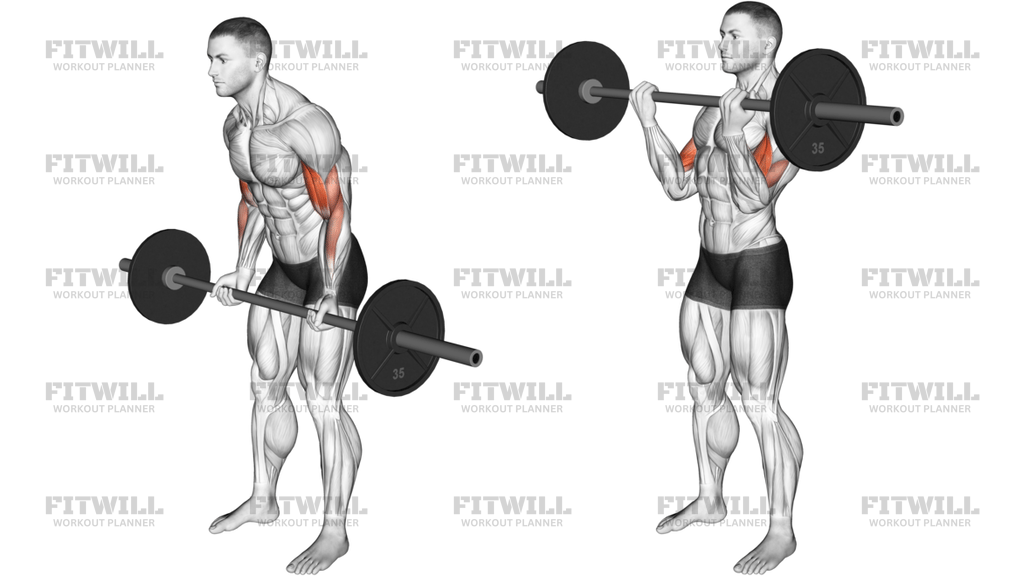
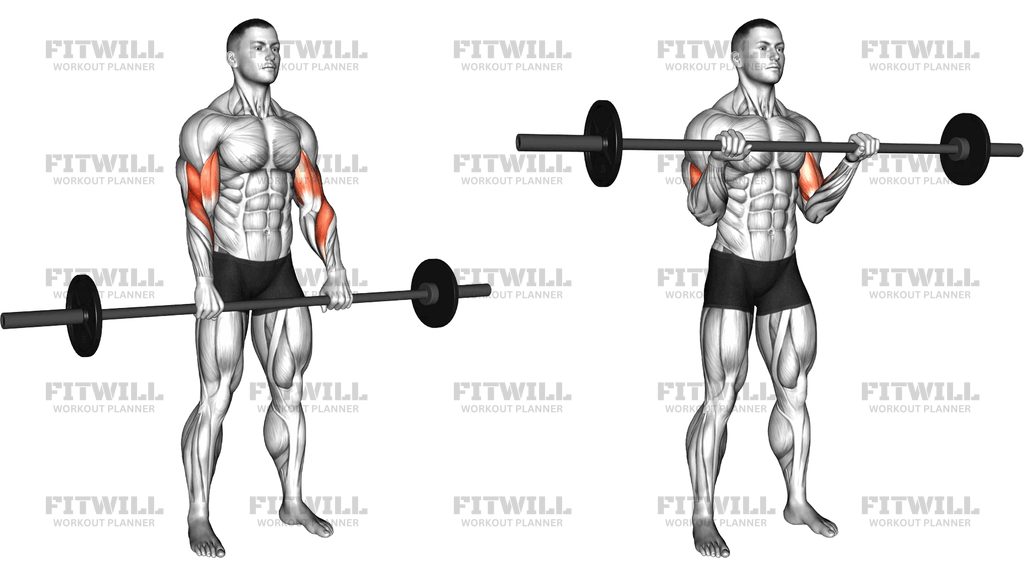
The Barbell Standing Reverse-Grip Curl is a curl performed with a palms-down grip. That pronated grip shifts more work toward the brachioradialis, brachialis, and wrist extensors while the biceps still assist with elbow flexion. It is a classic forearm and upper-arm accessory.
Because the palms-down grip is less mechanically strong than a standard underhand curl, the exercise should be loaded more conservatively. The wrists need to stay neutral as the elbows bend, and the bar should move without the torso swinging backward. Clean control is what makes the forearms work.
Set up with the bar in front of the thighs, hands about shoulder width, palms facing the floor, and elbows close to the sides. Curl the bar upward while keeping the knuckles aligned with the forearms, pause briefly, then lower slowly until the arms extend again. The upper arms should stay mostly still.
Use Reverse-Grip Curls after biceps work, in a forearm block, or when you want to strengthen elbow flexion with a different grip. If the straight bar creates wrist or elbow discomfort, use an EZ bar or dumbbells with a neutral-to-pronated grip.
[ Workout Log & Planner ]
Put your next workout in Fitwill
Keep your plan and training log ready when you are.


Instructions
- Stand tall with the barbell in front of your thighs and your feet about hip width.
- Grip the bar with your palms facing down and your hands about shoulder width apart.
- Brace your core, lift your chest, and keep your elbows near your sides.
- Keep your wrists straight so your knuckles stay in line with your forearms.
- Curl the bar upward by bending your elbows without swinging your torso.
- Pause briefly near the top while keeping the palms-down grip firm.
- Lower the bar slowly until the arms are extended and the forearms are loaded.
- Reset at the bottom before starting the next strict rep.
Tips & Tricks
- Use noticeably less weight than a normal underhand curl.
- Keep the wrists neutral; letting them fold back reduces forearm control.
- Focus on lifting with the elbows rather than pulling the shoulders forward.
- Lower slowly to challenge the brachioradialis and wrist extensors.
- Keep the bar close to your body so the load does not drag you forward.
- Use chalk or a secure grip if the palms-down position slips.
- Choose an EZ bar if the straight bar forces painful wrist rotation.
- Stop the set when you have to lean back to finish the curl.
Frequently Asked Questions
What does the reverse grip change?
It increases the demand on the forearms and brachialis while still involving the biceps.
Why is it harder than a regular curl?
The palms-down grip puts the arms in a less mechanically strong position.
Should my wrists bend?
No. Keep the wrists neutral so the forearms and elbow flexors work safely.
What grip width should I use?
A shoulder-width palms-down grip works well for most lifters. Adjust slightly if your wrists need a more comfortable angle.
Where should I feel reverse-grip curls?
You should feel the forearms and brachioradialis strongly, with the brachialis and biceps assisting.
Can I use an EZ bar?
Yes. An EZ bar often makes the pronated grip more comfortable while keeping the same exercise goal.
Should my elbows stay pinned?
Keep them close to your sides. A small amount of natural movement is fine, but they should not swing forward to lift the bar.
Is this a biceps or forearm exercise?
It trains both, but the reverse grip makes it especially useful for forearms and brachialis development.