Decline Push-Up
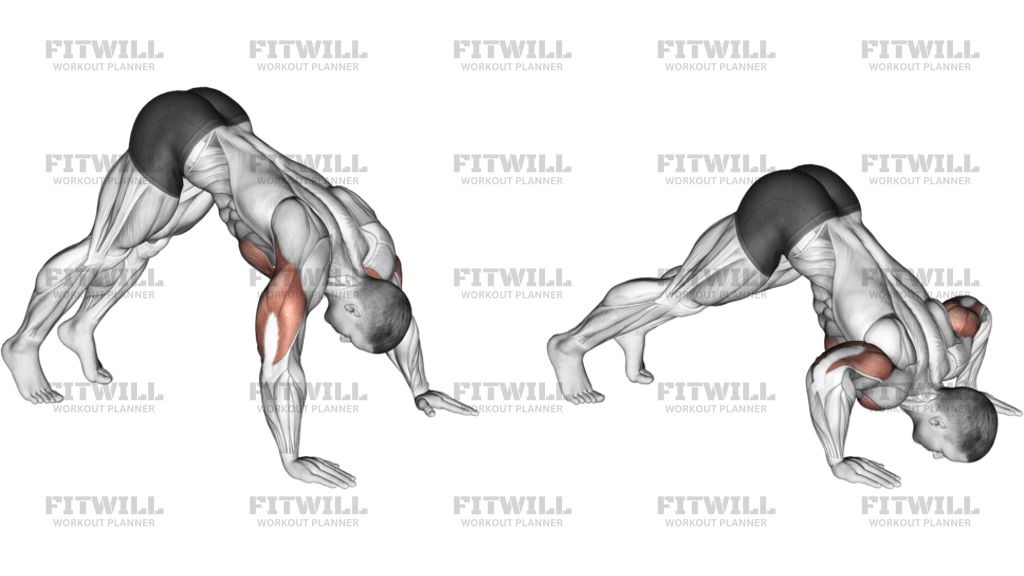
Decline Push-Up is a bodyweight pressing exercise for the upper chest, triceps, shoulders, and core. Elevating the feet shifts more load toward the upper chest and shoulders, which makes the standard push-up pattern a little more demanding without changing the basic mechanics. It works best when the line from head to heels stays straight and the feet stay secure in the elevated position.
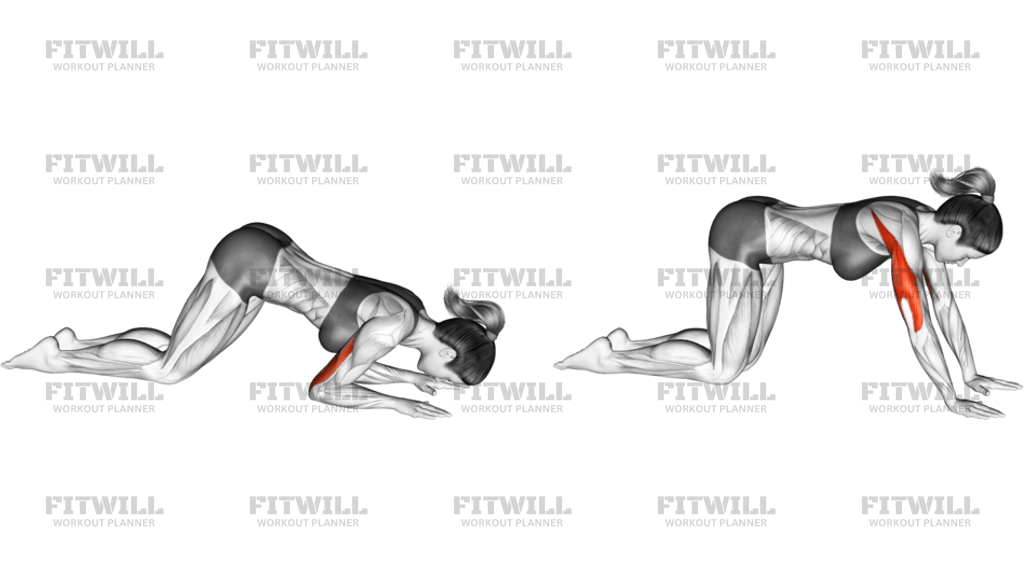
The main emphasis is the upper chest, triceps, shoulders, and core. The supporting muscles keep the body stable so the target area can do the work instead of momentum taking over. A good rep feels like a strong chest press with the core braced hard enough to keep the pelvis from sagging as the body lowers and rises.
Start by setting up carefully. Place your hands on the floor in the position named by the variation and elevate your feet securely. Brace your abs and keep a straight line from head to heels. Set your shoulders down away from your ears. This setup determines whether the exercise feels precise or rushed, and the feet should feel stable before the first rep begins.
Move through the rep with a smooth tempo. Lower your chest with the elbows tracking in a controlled angle. Pause before the shoulders lose position. Press back to the top without sagging the hips. Return to the starting position without dropping, twisting, or relaxing the posture. If the feet are sliding or the hips are dropping, the set has moved past a clean decline push-up.
Use the form cues to keep the movement specific. Keep the body in one straight line. Do not let the elbows flare wildly. Lower under control. Keep the shoulders away from your ears. If those cues become hard to maintain, reduce the range, speed, or difficulty.
Use Decline Push-Up as a bodyweight pushing movement. Progress by improving control first, then adding reps, hold time, range, or tempo only when the current version stays clean.
[ Workout Log & Planner ]
Put your next workout in Fitwill
Keep your plan and training log ready when you are.


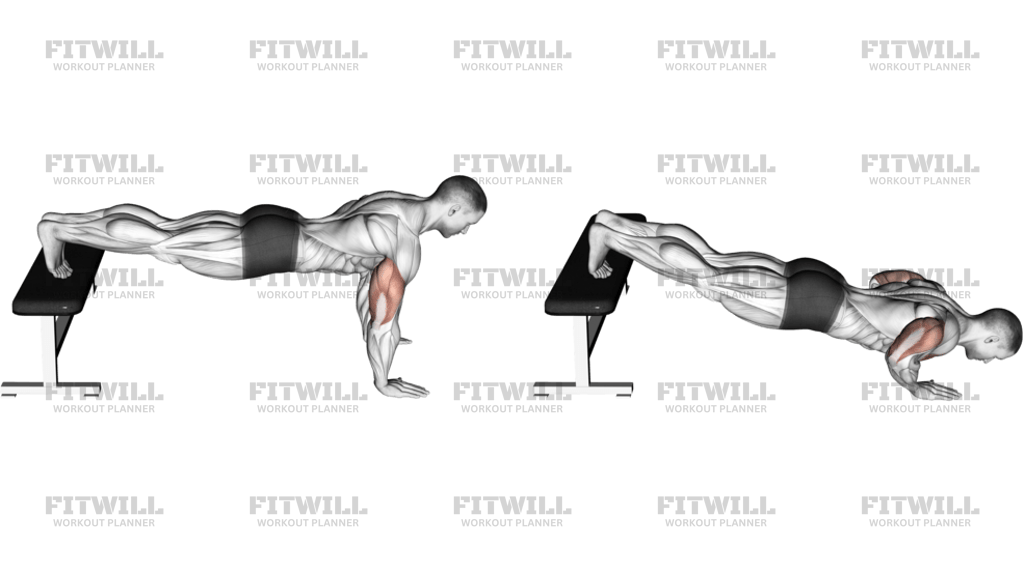
Instructions
- Set your hands on the floor in the position named by the variation.
- Brace your abs and keep a straight line from head to heels.
- Set your shoulders down away from your ears.
- Lower your chest with elbows tracking in a controlled angle.
- Pause before the shoulders lose position.
- Press back to the top without sagging the hips.
- Reset your plank before the next rep.
- Use an easier variation if control breaks down.
Tips & Tricks
- Keep the body in one straight line.
- Do not let the elbows flare wildly.
- Lower under control.
- Keep shoulders away from your ears.
- Use an incline or knees-down version if needed.
- Stop before wrist or shoulder pain.
- Breathe out as you press.
- Progress only when reps look consistent.
Frequently Asked Questions
What muscles does Decline Push-Up work?
Decline Push-Up mainly works the upper chest, triceps, shoulders, and core. Stabilizers help keep the body aligned through the movement.
Is Decline Push-Up good for beginners?
Yes. Use an easier variation, lighter load, or smaller range until every rep is controlled.
How many reps should I do?
Most strength versions work well for 8 to 15 controlled reps. Mobility drills can be done for slow reps or short holds.
What is the most common mistake?
The most common mistake is rushing and using momentum instead of keeping the target area in control.
Should Decline Push-Up hurt?
No. Muscle effort or mild stretching is normal, but sharp pain, pinching, tingling, or dizziness means you should stop.
When should I use Decline Push-Up?
Use it where it matches the goal: warmup and mobility early, strength work in the main session, or accessory work near the end.
Why elevate the feet?
Elevating the feet shifts more load to the upper chest and shoulders, making the push-up harder.