Diamond Push-Up
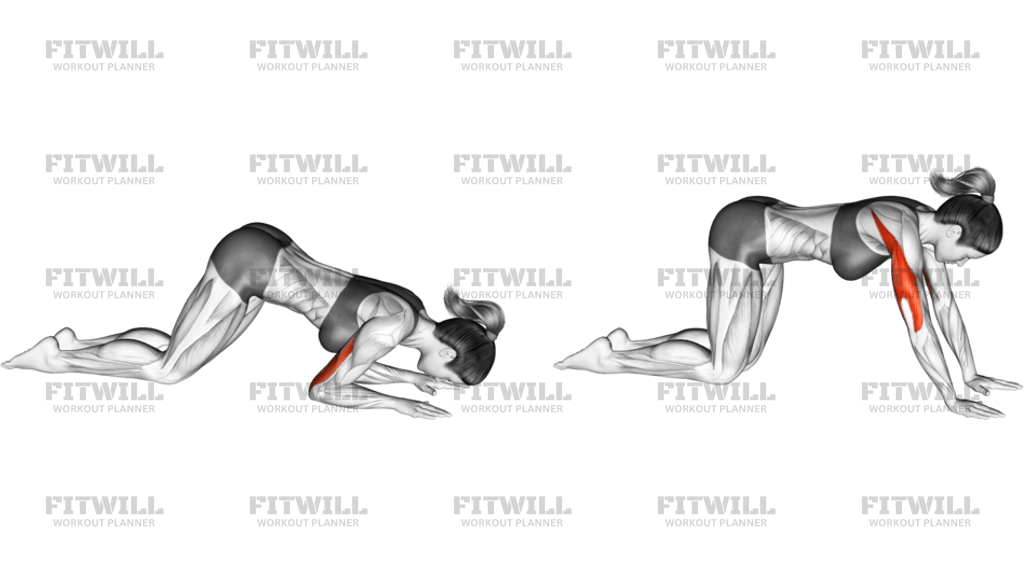
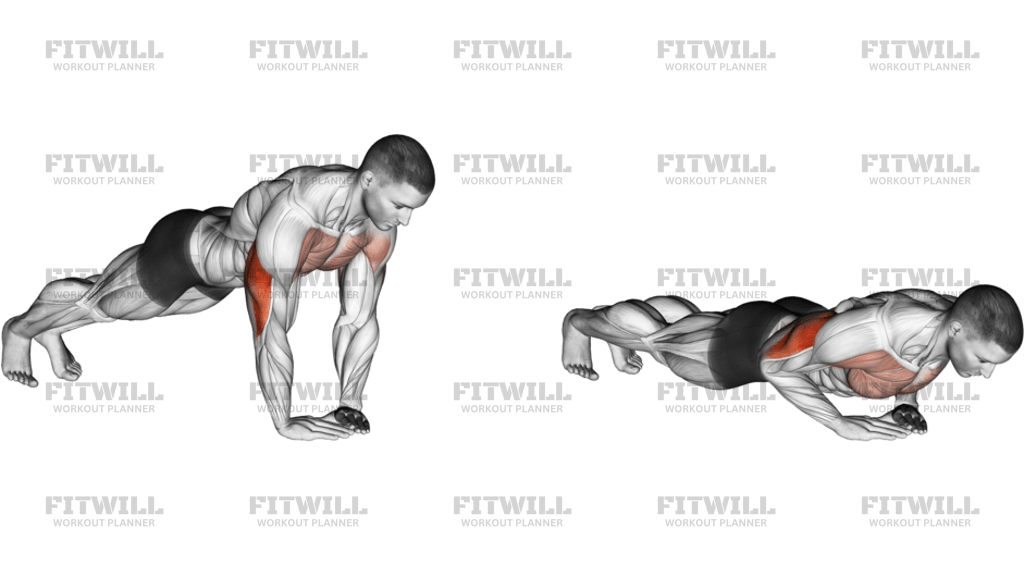
Diamond Push-Up is a close-hand bodyweight press that shifts a lot of the demand onto the triceps while still training the chest, front delts, serratus, and trunk. The narrow diamond hand position creates a longer elbow-extension demand than a standard push-up, so small changes in hand placement and elbow path matter more than brute force.
Set the diamond under the center of the chest, not up by the face. When the thumbs and index fingers touch, the wrists should feel stacked and the shoulders should be able to stay down and stable. A good setup lets you keep the rib cage controlled, the hips level, and the neck long instead of turning the rep into a shrug or a hip sag.
Lower by bending the elbows back and slightly out, keeping the upper arms close to the sides as the chest moves toward the hands. The torso should move as one unit. At the bottom, the chest hovers close to the diamond without collapsing through the shoulder blades. Press the floor away to return to a full plank and finish with the elbows straight without losing the line from head to heels.
This variation is useful for triceps strength, pressing endurance, and bodyweight progression work. It is often programmed as an accessory after larger presses or as a pure bodyweight push movement when equipment is limited. If wrist, elbow, or shoulder position starts to drift, reduce the range, raise the hands on a bench, or use a less aggressive hand width so the rep stays clean.
The exercise should feel concentrated in the triceps with steady work from the chest and shoulders, not like a loose plank falling into the floor. Good reps are controlled on the way down, brief at the bottom, and decisive on the way up. When the diamond position and body line stay consistent, the movement becomes a precise triceps-focused press instead of a generic push-up.
[ Workout Log & Planner ]
Put your next workout in Fitwill
Keep your plan and training log ready when you are.


Instructions
- Place your hands on the floor under the center of your chest and touch your thumbs and index fingers together to form a diamond.
- Walk your feet back into a straight plank so your body forms one line from head to heels.
- Stack your shoulders over or just slightly ahead of your hands and keep your neck neutral.
- Brace your ribs down, squeeze your glutes, and keep your hips level before you start the rep.
- Inhale and lower your chest toward the diamond by bending your elbows back and slightly out.
- Keep your upper arms close to your sides and let your chest travel as one unit, without letting the hips dip.
- Pause briefly at the bottom when the chest is just above the hands and the shoulders still feel controlled.
- Exhale and press the floor away until your elbows are straight and you are back in a rigid plank.
- Reset your plank before the next rep, or shorten the range and elevate the hands if your wrists or shoulders lose position.
Tips & Tricks
- Keep the diamond under the sternum; if the hands drift forward, the rep turns into a shoulder-heavy push.
- A slightly wider diamond is often safer on the wrists than forcing the hands to touch perfectly tightly.
- Think about bending the elbows back along your ribs instead of letting them flare out to the sides.
- Keep the glutes tight so the low back does not sag when the triceps start to fatigue.
- Lower under control for 2 to 3 seconds so you can keep the chest and shoulders organized at the bottom.
- If the bottom position feels unstable, raise the hands on a bench or box to reduce the load and wrist angle.
- Do not reach the chin forward first; let the chest and shoulders descend together toward the hand diamond.
- Stop the set when the elbows start drifting wide, the hips lose line, or the wrists start to ache.
- Use a full lockout at the top, but do not shrug into the shoulders when you finish each rep.
Frequently Asked Questions
What muscles does Diamond Push-Up work?
Diamond Push-Up mainly works the triceps, with strong help from the chest, front shoulders, serratus, and core.
Where should my hands be in a Diamond Push-Up?
Place the diamond under the center of your chest, not under your face. Your thumbs and index fingers should form the shape while your shoulders stay stable over the hands.
How close do my elbows stay to my body?
They should track back and stay fairly close to your ribs, usually around a 20 to 45 degree angle. A hard flare tends to shift stress away from the triceps and into the shoulders.
Is Diamond Push-Up harder than a regular push-up?
Usually yes. The narrow hand position increases triceps demand and can make the wrists and shoulders feel more compressed if the setup is sloppy.
Can beginners do Diamond Push-Up?
Yes, but many beginners do better with an incline, knee-supported version, or a slightly wider hand position before trying the floor version.
What is the most common form mistake?
Letting the hips sag or the elbows flare wide is the most common mistake. Both usually show that the rep has become more of a survival plank than a controlled press.
How can I make the movement easier?
Raise your hands on a bench or box, shorten the range slightly, or do the rep from your knees while keeping the diamond hand position.
Should Diamond Push-Up hurt my wrists?
No. Some wrist extension is normal, but sharp wrist pain usually means the hand position is too narrow or the surface is too low, and an incline or handles may help.
What is a good tempo for Diamond Push-Up?
A controlled descent and a strong press up work well. If the bottom position gets sloppy, slow the lowering phase and make the rep cleaner before adding speed or volume.