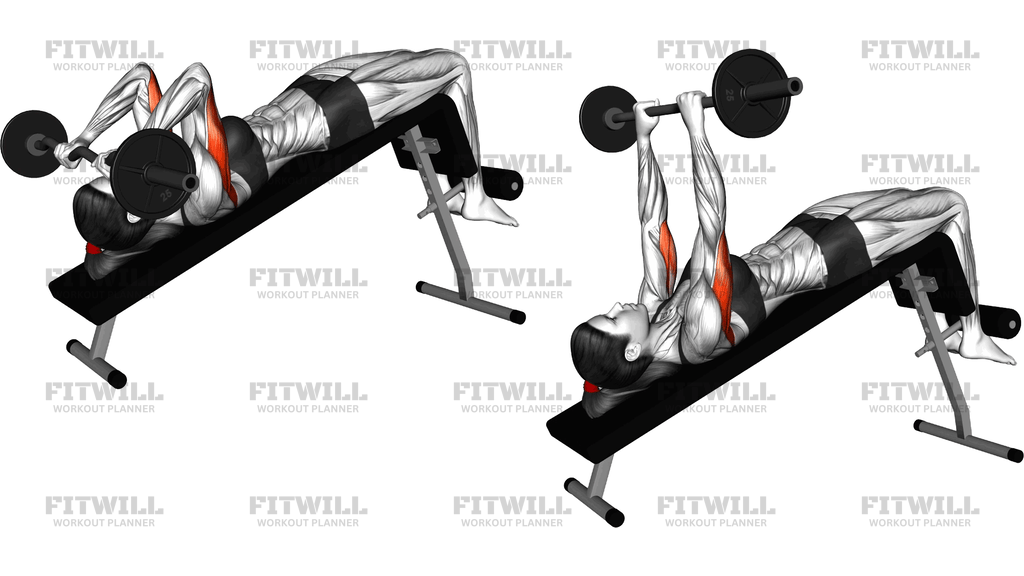
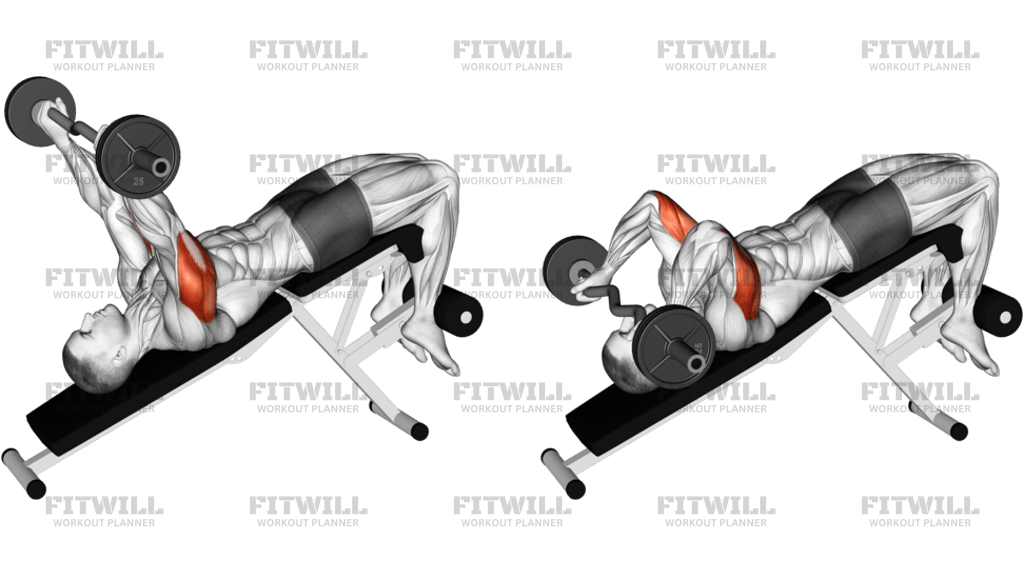
EZ Barbell JM Bench Press
EZ Barbell JM Bench Press is a flat-bench triceps exercise that blends a close-grip press with a lying extension. It is built to load the triceps hard while keeping the elbows, wrists, and shoulders in a position that is usually easier to control than a straight bar version. The angled EZ bar also gives the hands a more natural grip, which can help lifters who feel wrist irritation on rigid-bar pressing patterns.
The movement is most useful when you want triceps strength without turning the set into a chest-dominant bench press. The elbows stay tucked and travel in a short, deliberate arc, so the triceps do the bulk of the work while the shoulders and upper back keep the bench position stable. That makes the exercise a good accessory choice for pressing programs, arm-focused training, and lifters who want a direct triceps stimulus with a smaller range than a skull crusher.
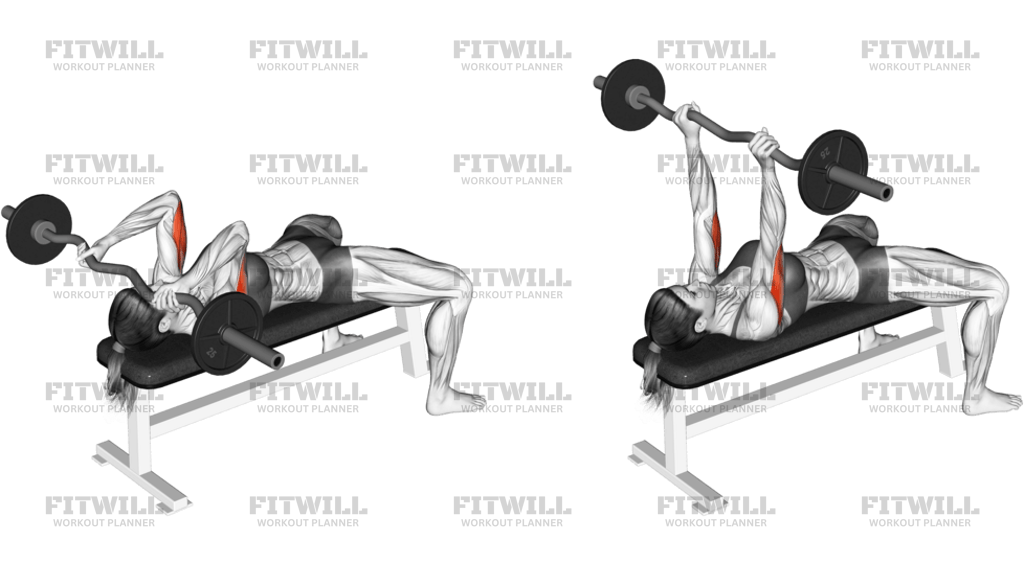
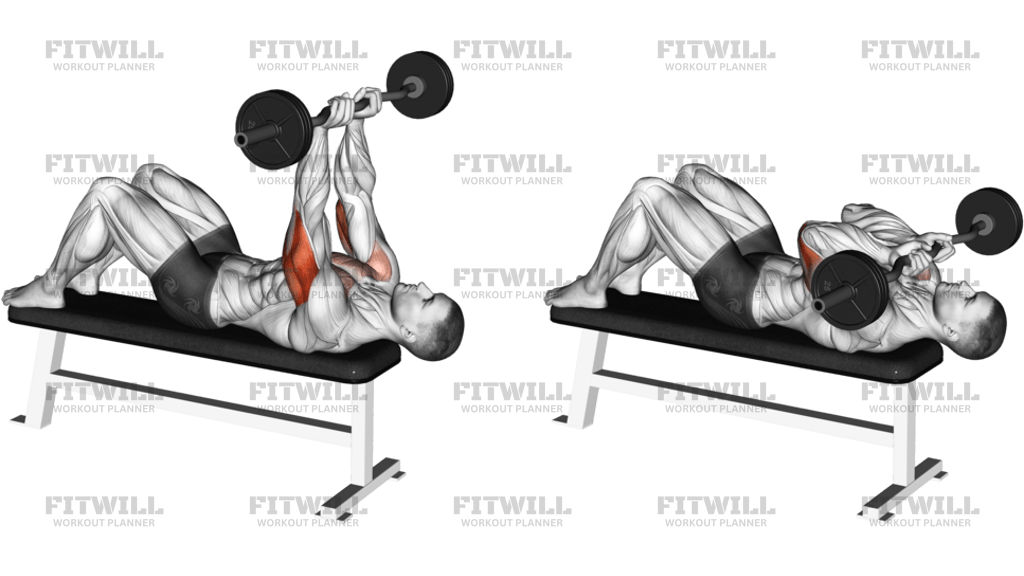
The setup matters because the line of the rep is what separates a JM press from an ordinary close-grip bench press or a lying triceps extension. Lie flat on the bench with your feet planted, shoulder blades set, and your hands on the angled sections of the EZ bar slightly inside shoulder width. Start with the bar over the upper chest, wrists stacked over the forearms, and elbows pointed forward rather than flared out to the sides.
On each rep, lower the bar in a short arc toward the upper chest or throat line by letting the elbows bend and travel forward. Keep the upper arms from drifting wide, then press the bar back up by straightening the elbows without turning it into a chest press. The best reps look compact and controlled, with no bouncing off the chest, no shoulder roll forward, and no loss of wrist position. If the bar path gets sloppy, shorten the range or reduce the load before the elbows or shoulders complain.
EZ Barbell JM Bench Press is best treated as a precision accessory lift rather than a max-effort press. Use it for moderate sets, smooth tempo, and clean elbow mechanics, especially if you are pairing it with bench pressing, dips, or overhead work. Stop the set if the elbows ache from the open-and-close action or if the shoulders feel pinched at the bottom, since the goal is to train the triceps through a controlled press-extension pattern, not to force extra range.
[ Workout Log & Planner ]
Put your next workout in Fitwill
Keep your plan and training log ready when you are.


Instructions
- Lie flat on a bench with your feet planted and your shoulder blades lightly pinned to the pad.
- Grip the angled sections of the EZ bar slightly inside shoulder width so your wrists stay neutral.
- Hold the bar over the upper chest with your elbows pointed forward and tucked close to your ribs.
- Brace your torso and lower the bar in a short arc toward the upper chest or throat line.
- Keep the upper arms angled forward instead of flaring wide as the elbows bend.
- Pause briefly when the bar is close to the chest and the forearms still feel stacked under the load.
- Press the bar back up by straightening the elbows until you return to the start position.
- Keep the bench contact, wrist angle, and elbow path the same on every rep.
- Rerack the bar only after the final rep is fully locked out and stable.
Tips & Tricks
- Let the bar travel only a short distance; the JM press should feel compact, not like a deep chest press.
- Keep the elbows slightly forward of the torso so the triceps stay loaded instead of the shoulders taking over.
- If the wrists feel cranky, move your hands to a more comfortable angled section of the EZ bar before adding weight.
- Use a lighter load than your close-grip bench press numbers; this lift usually breaks down when it gets too heavy.
- Keep the upper arms from drifting straight out to the sides, which turns the rep into a shoulder-dominant press.
- Lower with a slow eccentric and a controlled stop near the upper chest instead of bouncing off the chest.
- If the elbows feel irritated, shorten the range slightly and keep the forearms more vertical through the bottom.
- Treat each rep like a triceps press-extension, not a full bench press, so the bar path stays tight and repeatable.
Frequently Asked Questions
What muscles does EZ Barbell JM Bench Press target?
It mainly targets the triceps, especially through elbow extension, with the chest, front shoulders, and forearms helping stabilize the press.
How is EZ Barbell JM Bench Press different from a close-grip bench press?
The JM press uses a shorter, more elbow-dominant path. Instead of pressing the bar like a normal bench press, you let the elbows travel forward and lower the bar toward the upper chest or throat line.
Where should the EZ bar touch in EZ Barbell JM Bench Press?
The bar usually lowers close to the upper chest or lower throat area, but it should stop wherever you can keep the elbows tucked and the wrists stacked.
Is EZ Barbell JM Bench Press good for building triceps size?
Yes. It places a lot of tension on the triceps while keeping the movement more controlled than many heavier pressing variations.
Why use an EZ bar instead of a straight bar?
The angled grip can be easier on the wrists and lets many lifters keep a more comfortable hand position during the lower and press phases.
What is the most common mistake in EZ Barbell JM Bench Press?
The biggest mistake is turning it into a regular bench press by flaring the elbows and pressing the bar in a big arc instead of keeping the triceps-focused line.
Should EZ Barbell JM Bench Press hurt my elbows?
No. You should feel triceps work and controlled elbow bend, but sharp elbow pain usually means the load is too heavy or the range is too deep.
What rep range works well for EZ Barbell JM Bench Press?
Moderate sets of about 6 to 12 clean reps usually work well because the exercise is best kept controlled rather than chased with maximal loads.