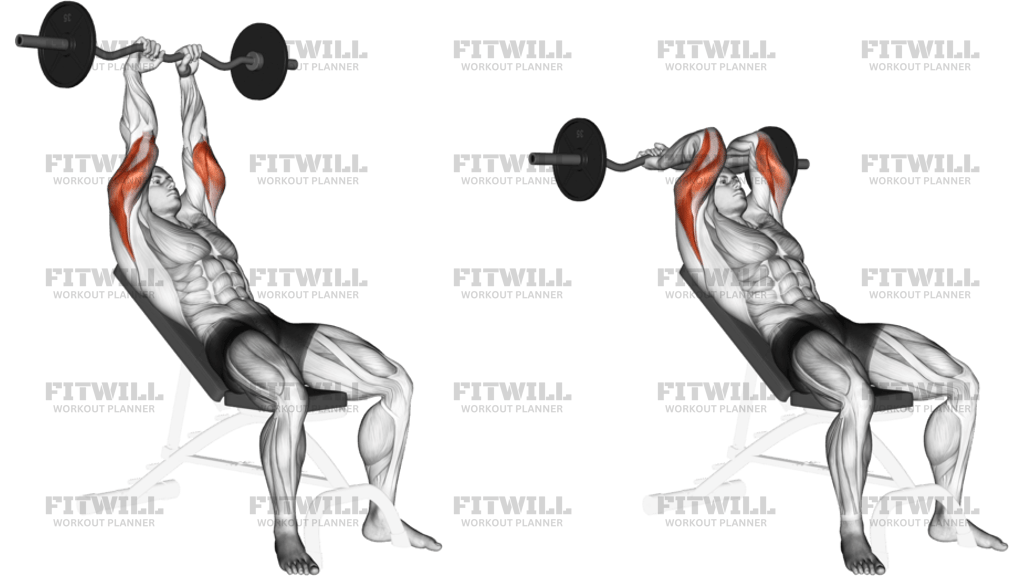
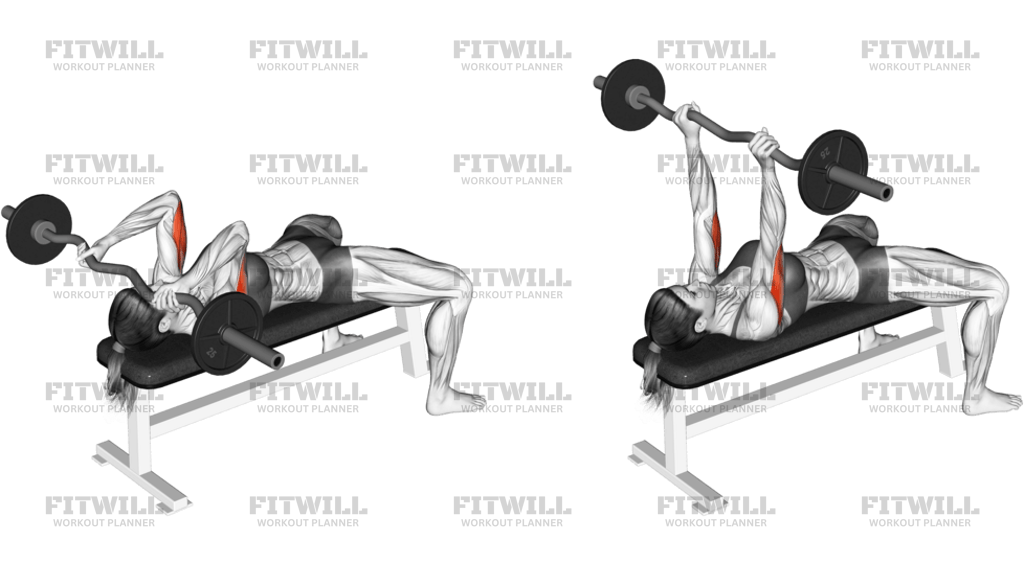
EZ Barbell Decline Triceps Extension
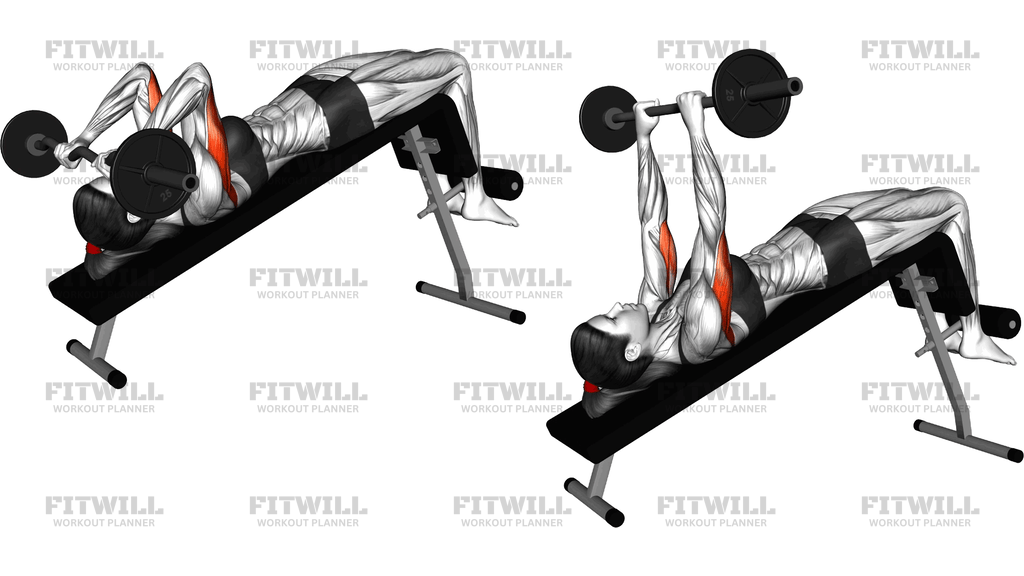
EZ Barbell Decline Triceps Extension is a decline-bench triceps isolation exercise where you lie back, lower an EZ bar in a controlled arc, and extend the elbows to finish each rep. The decline angle changes the line of pull so the triceps, especially the long head, work through a deep elbow-flexion stretch before driving the bar back up. Compared with standing or bench-supported variations, the decline setup gives your upper arms a stable base and makes it easier to keep the work on the elbows instead of turning the rep into a press.
The EZ bar matters because its angled grips usually feel friendlier on the wrists than a straight bar. That grip position helps most lifters keep the forearms aligned with the bar while the elbows bend and extend. In anatomy terms, the triceps brachii is the primary mover, while the forearm flexors, anterior deltoids, and abdominal muscles help stabilize the bar path and torso. The exercise is useful when you want focused arm work after compound pressing or when you need a controlled triceps movement that does not require standing balance.
Setup quality changes the whole lift. Lie on the decline bench with your head supported, feet locked in place, and the bar held above the upper chest or slightly behind the line of the face. Keep the elbows pointed mostly upward, the wrists stacked, and the shoulders set lightly into the pad. From there, the rep should feel like a hinge at the elbow, not a shoulder-dominant pullover. If the upper arms drift too much or the shoulders take over, the long-head stretch disappears and the set turns less effective.
On the way down, lower the bar in a smooth arc toward the forehead or just behind it, then reverse the motion by extending the elbows until the arms are straight again. The eccentric phase should be slow enough that you can keep the bar path consistent and the elbows from flaring open. Breathe in as you lower, exhale as you press back up, and stop the set if the wrists collapse, the elbows wander, or the shoulders start driving the movement.
This is best used as accessory work with moderate or lighter loading, higher control, and clean repetitions. It fits well after presses, during an arm-focused block, or anywhere you want direct triceps volume without a lot of body English. Beginners can use it, but the first priority is learning how to keep the upper arms quiet and the elbows doing the work. If your elbows feel irritated, shorten the range slightly, reduce the load, or switch to a cable variation that is easier to control.
[ Workout Log & Planner ]
Put your next workout in Fitwill
Keep your plan and training log ready when you are.


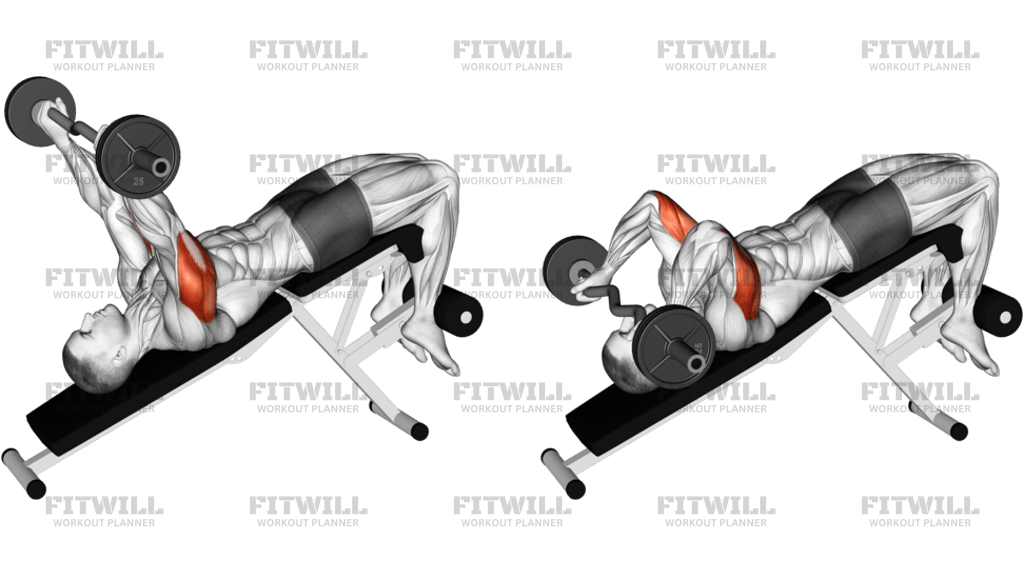
Instructions
- Set a decline bench so your head is supported and your feet are locked in place, then lie back and grip the EZ bar with a shoulder-width or slightly narrower overhand grip.
- Start with the bar above your upper chest or slightly behind the face line, wrists stacked over the forearms, and elbows pointing mostly upward.
- Pull your shoulders gently into the bench so your torso stays still and the elbows can act as the only moving joint.
- Inhale and bend the elbows to lower the bar in a smooth arc toward your forehead or just behind it.
- Keep the upper arms nearly fixed; let only a small amount of shoulder drift happen if it helps you keep tension and comfort.
- Lower until the triceps are stretched and the forearms are close to parallel or slightly past parallel without letting the shoulders roll forward.
- Exhale and extend the elbows to bring the bar back up along the same path until the arms are straight but not aggressively locked.
- Reset the elbows and wrists before each rep, then repeat for the planned number of repetitions with the same bar path and pace.
Tips & Tricks
- Choose the EZ-bar grip angle that lets your wrists stay neutral; if the wrists bend back, the load is too heavy or the grip is too wide.
- Think about hinging at the elbows only, because letting the upper arms drift changes the exercise into a shoulder-dominant movement.
- Lower the bar slightly behind the forehead if that keeps constant triceps tension and prevents the elbows from flaring out.
- Keep your upper back and hips settled on the decline pad so you do not turn the rep into a bridge or body swing.
- Use a slow lowering phase so the bottom position stays controlled and the elbows are not shocked by the load.
- Stop the descent as soon as the shoulders start taking over or the elbow position becomes hard to control.
- Use moderate-to-light loading and higher-quality reps; this variation rewards precision more than maximal weight.
- If the elbows feel irritated, shorten the range slightly and keep the forearms moving in the same path on every rep.
Frequently Asked Questions
What does the decline bench change in this triceps extension?
The decline angle puts the arms in a more stretched, overhead-like line, which increases the triceps challenge through the bottom half of the rep.
Why use an EZ bar instead of a straight bar?
The angled grips usually let the wrists stay in a more comfortable position and make it easier to keep the elbows lined up.
Which part of the triceps works hardest here?
All three heads work, but the long head usually gets a strong stimulus because the shoulder stays flexed while the elbow bends and extends.
Should the bar lower to my forehead or behind my head?
Either can work, but the best bottom position is the one where your elbows stay controlled and your shoulders do not take over.
Are my elbows supposed to stay perfectly still?
They should stay mostly fixed, with only a small adjustment if needed for comfort; large elbow flare usually means the rep has drifted off target.
Can beginners use this exercise?
Yes, but start light and learn the bar path first, because the decline setup makes sloppy reps and heavy loads more noticeable.
What is the most common mistake?
People usually let the shoulders or upper arms move too much, which turns a triceps isolation movement into a press-like motion.
When should I program this exercise?
It fits best as accessory triceps work after compound pressing or on an arm-focused day when you want controlled elbow extension volume.