Hanging Straight Twisting Leg Hip Raise
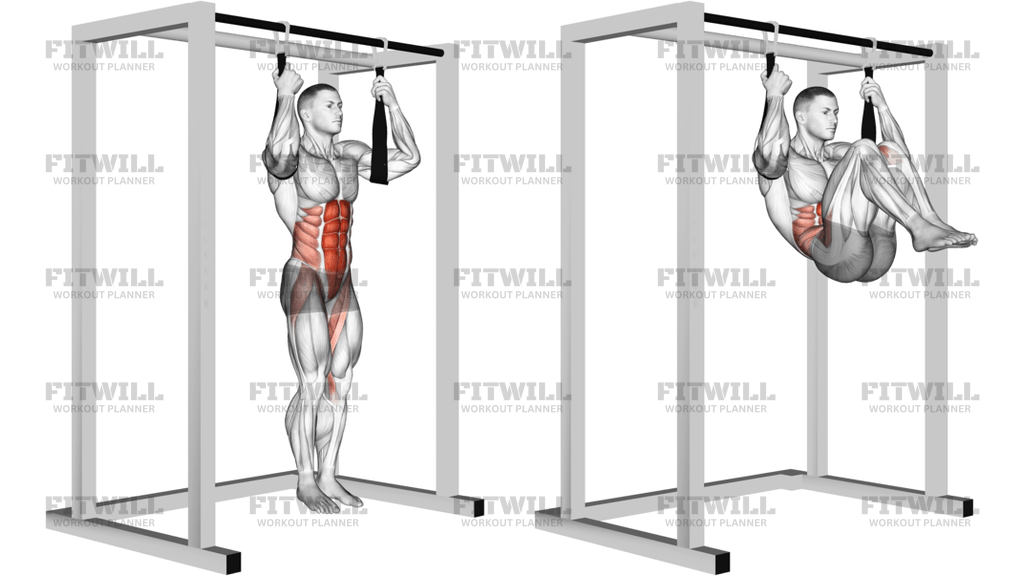
Hanging Straight Twisting Leg Hip Raise is a hanging abdominal exercise that combines a straight-leg raise with a controlled twist through the pelvis and trunk. The setup demands more than just leg strength: your grip, shoulders, lats, and deep core all have to stabilize you while the lower body travels through a long lever. That makes the movement useful for building anti-swing control, oblique strength, and stronger hip flexion under bodyweight load.
The twist is what separates this exercise from a basic hanging leg raise. As the legs come up, the pelvis rotates slightly so the feet travel toward one side instead of staying perfectly centered. That rotation should come from the core and hips, not from yanking the body around with momentum. If the torso starts whipping or the shoulders lose their active hang, the rep has gone too heavy or too fast.
Because you are hanging, the start position matters. A stable grip, packed shoulders, and a quiet lower back set the tone for the whole set. Once you are braced, the legs should rise smoothly on an arc with no kicking or swing. The best reps feel like you are lifting the pelvis toward the ribs while staying tall through the torso and controlled through the return.
This exercise is a strong choice for advanced core training, especially when you want more demand than floor-based crunches or knee raises. It can fit into ab work, gymnastics-style conditioning, or bodyweight strength sessions. Keep the range honest: only twist as far as you can while keeping the bar grip secure, the shoulders quiet, and the descent controlled.
Use a version that matches your control level. Straight legs and a full twist are demanding, so beginners may need bent knees or a smaller range first. The goal is clean body position and repeatable reps, not max height at any cost. If the shoulders pinch, the lower back arches, or the legs start swinging, reduce the range and slow the tempo.
[ Workout Log & Planner ]
Put your next workout in Fitwill
Keep your plan and training log ready when you are.


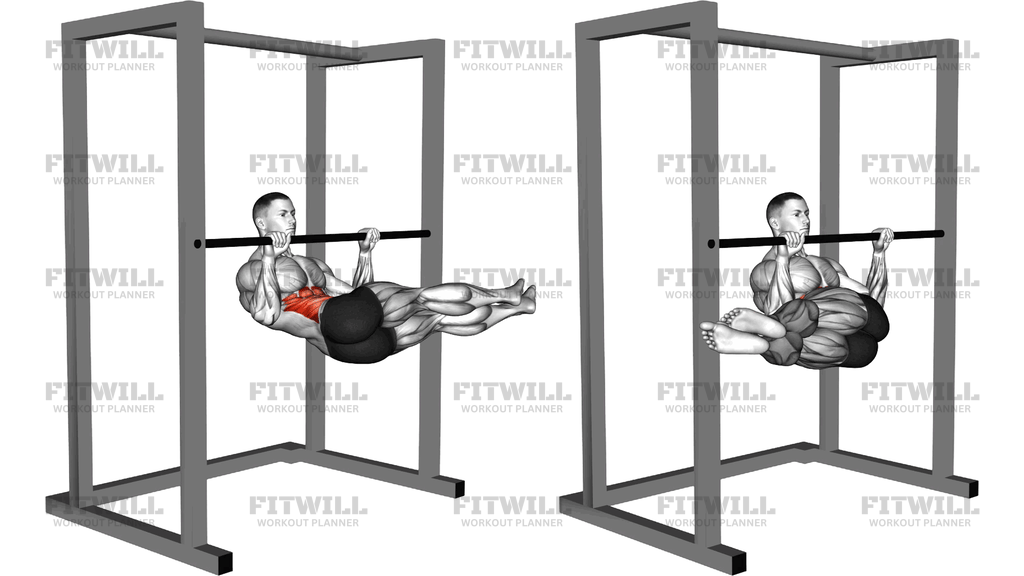
Instructions
- Grip an overhead pull-up bar and hang with your arms straight, shoulders active, and ribs stacked over your pelvis.
- Set your hands slightly wider than shoulder width so you can keep the hang steady while the legs move.
- Brace your abs, squeeze your inner thighs lightly, and keep your legs together before the first rep.
- Without kicking, raise your straight legs forward and slightly up as your pelvis begins to tuck.
- As the legs rise, twist the hips so the feet travel toward one side of the bar in a controlled arc.
- Lift until you reach your strongest clean top position without losing your grip or letting your shoulders shrug.
- Pause briefly, then lower the legs and unwind the twist slowly until your body is hanging still again.
- Reset the hang before the next rep so each repetition starts from a quiet, controlled position.
Tips & Tricks
- Keep the shoulders depressed and active; if you hang passively, the swing will take over quickly.
- Think about curling the pelvis up toward the ribs instead of only lifting the feet.
- The twist should be small and deliberate. A huge rotation usually means the torso is compensating for weak ab control.
- Move the legs as one unit with the thighs squeezed together so the lower body does not scissor apart.
- Exhale as the legs rise and rotate; that usually helps keep the ribs from flaring.
- Use bent knees if straight legs force you to swing or arch the lower back.
- Lower more slowly than you lift so you do not drop out of the top position.
- Stop the set if the bar grip starts slipping, because the shoulders will usually follow.
Frequently Asked Questions
What muscles does Hanging Straight Twisting Leg Hip Raise work?
It mainly targets the rectus abdominis and obliques, with the hip flexors, deep core, lats, and grip working hard to stabilize the hang and control the leg path.
What makes the twisting version different from a regular hanging leg raise?
The pelvis rotates slightly as the straight legs come up, so the obliques have to control both the lift and the side-to-side twist.
Should my legs stay straight the whole time?
As straight as your mobility and control allow. If straight legs make you swing or arch, bend the knees a little and keep the twist clean.
How high should I lift in the top position?
Lift only as high as you can while keeping the hang active and the twist controlled. Clean position matters more than touching the bar or forcing extra range.
What is the biggest mistake on this exercise?
Swinging the body to create the twist instead of controlling the pelvis and ribs. Once momentum starts, the abs stop doing most of the work.
Is this a good beginner core exercise?
Usually not in the full straight-leg version. Beginners often do better with bent-knee hanging raises first, then progress to a smaller twist and longer lever.
How do I make Hanging Straight Twisting Leg Hip Raise harder?
Use straighter legs, a slower lowering phase, a longer pause at the top, or a stricter stop between reps so there is no rebound from the bottom.
Why do my shoulders fatigue before my abs?
The hanging position is demanding. If your grip or shoulder stability fails first, shorten the set or use a controlled regression so the core can stay the main limiter.
Should this exercise hurt my lower back?
No. A little abdominal effort is expected, but pinching or sharp back pain usually means you are arching, swinging, or lifting too far for your current control.