Incline Close-Grip Push-Up
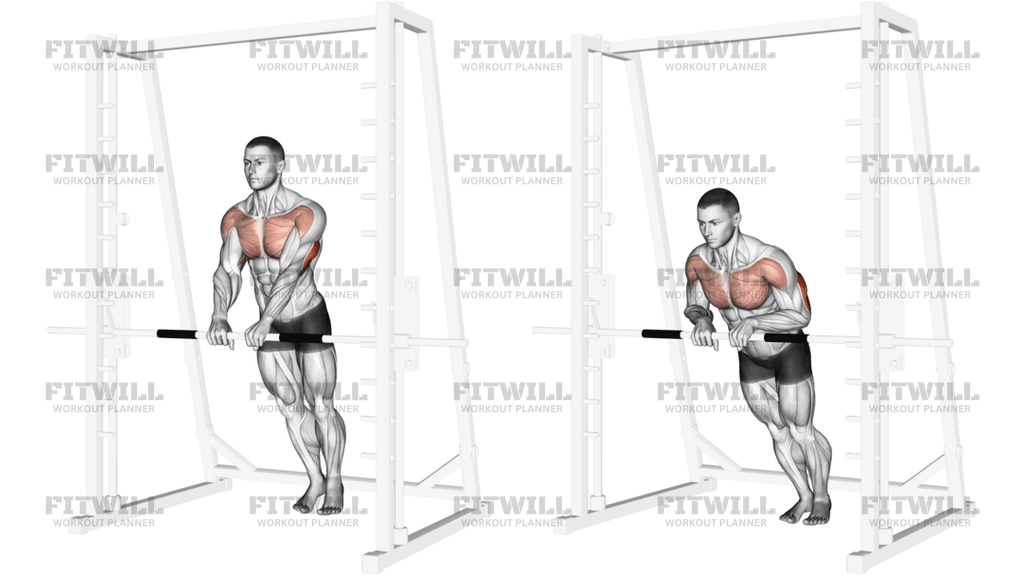
Incline Close-Grip Push-Up is a bodyweight pressing exercise performed with the hands on a fixed elevated bar or similar support. In the image, the bar is set on a rack so the body can stay in a straight line while the hands press from an incline position. That elevation makes the movement easier than a floor close-grip push-up, but the narrow hand placement still puts a strong demand on the triceps, chest, front shoulders, and trunk.
The setup changes the difficulty more than people expect. A higher bar shortens the lever and reduces how much of your bodyweight you have to press; a lower bar makes the exercise much harder. The goal is to find a height that lets you keep the torso rigid, the wrists stacked under the shoulders, and the elbows tracking close enough to the body to emphasize the triceps without forcing the shoulders to flare.
Start from a braced plank position with the feet back, toes planted, glutes tight, and ribs controlled. From there, lower the chest toward the bar by bending the elbows and keeping the upper arms angled slightly in toward the torso. The body should move as one unit: no sagging through the hips, no reaching the chin forward, and no shrugging up into the ears. Press the bar away until the elbows are straight and the body returns to a long line.
This is a useful regression for standard close-grip push-ups, a triceps-focused variation for upper-body training, and a practical option when the floor version is too demanding to keep clean. It also works well in warm-ups or higher-rep conditioning blocks because the elevated hands allow more control over range, tempo, and body position.
The biggest quality markers are elbow path, bar height, and trunk tension. If the shoulders feel pinched, the wrists ache, or the lower back starts to sag, the setup is usually too low or the body is losing tension before the rep is finished. Keeping the movement crisp and repeatable matters more than forcing extra depth.
[ Workout Log & Planner ]
Put your next workout in Fitwill
Keep your plan and training log ready when you are.


Instructions
- Set a fixed bar or Smith machine bar at about lower-chest to waist height, then place your hands slightly narrower than shoulder width on the bar.
- Walk your feet back until your body forms a straight line from head to heels, with your toes planted and your weight balanced over the balls of the feet.
- Stack your shoulders over your hands, keep your wrists neutral, and tighten your glutes and abs before the first rep.
- Bend your elbows and lower your chest toward the bar while keeping the elbows tucked about 30 to 45 degrees from your sides.
- Keep your ribs down and your neck long as you descend so the torso moves as one solid plank.
- Lower until your chest is close to the bar or you reach the deepest position you can control without losing shoulder position.
- Press the bar away and straighten your arms until you return to a tall plank with the elbows locked out under control.
- Inhale on the way down and exhale as you drive back up, then reset your brace before the next repetition.
Tips & Tricks
- A higher bar makes the exercise easier and shifts more work away from the triceps; lower the bar only after you can keep the body line solid.
- Keep the hands just inside shoulder width rather than touching; an ultra-narrow grip often turns into wrist strain instead of better triceps work.
- Think about bringing your chest to the bar, not your head forward, so the shoulders stay packed and the neck does not jut out.
- If the elbows flare wide, the press becomes more chest-dominant and can irritate the shoulders; keep them angled in a few degrees instead.
- A slow lowering phase of about two to three seconds usually makes the rep cleaner and makes it easier to feel the triceps controlling the descent.
- Stop the set when your hips start to sag or your shoulders shrug up toward your ears; those are the first signs the plank position is gone.
- Keep the forearms close to vertical near the bottom; if they drift far behind the wrists, step your feet back a little or raise the bar.
- Use a stable fixed bar rather than an unstable surface so the narrow hand position does not have to fight extra movement.
Frequently Asked Questions
What muscles does Incline Close-Grip Push-Up work?
It mainly targets the triceps, chest, and front shoulders, with the core and glutes working hard to keep the body rigid on the incline.
Why use a bar instead of the floor?
The elevated bar shortens the lever and reduces how much bodyweight you press, so it is easier to learn than a floor close-grip push-up while still training the same pattern.
How wide should my hands be on the bar?
Place the hands slightly narrower than shoulder width. If they are too close together, the wrists usually take over and the shoulders lose a clean path.
Where should my elbows go on the descent?
Let them track close to the torso at roughly a 30 to 45 degree angle. Flaring them wide usually shifts stress to the shoulders and makes the rep less triceps-focused.
How do I make this exercise easier or harder?
Raise the bar to make it easier and lower the bar to make it harder. You can also change the tempo, but bar height is the main load adjustment.
Should my chest touch the bar?
Only go as deep as you can while keeping the shoulders set and the torso tight. Light contact is fine, but do not collapse into the bar to chase extra range.
Is Incline Close-Grip Push-Up good for beginners?
Yes. It is a good progression if the bar is high enough that you can keep a straight body line and complete reps without losing control.
What is the most common mistake?
The most common mistake is letting the hips sag while trying to force more reps. Once the plank breaks, the press stops training the intended pattern.