One-Arm Dip
One-Arm Dip is a unilateral bodyweight pressing exercise performed with one hand braced behind the body on a bench. The setup shifts most of the load into the working arm, so the triceps must extend the elbow while the shoulder and trunk keep the torso stable. In the image, the free arm is held forward for balance and the legs are positioned to help scale the challenge, which makes this a practical bench-based triceps movement rather than a swinging dip variation.
The exercise is mainly used to build triceps strength and control, but it also asks the rear shoulder, chest, forearm, and core to resist rotation. Because only one arm is supporting the body, small setup errors matter more than they do in a two-arm dip. Bench height, hand placement, and leg position all change how much stress lands on the elbow and shoulder, so the best version is the one that lets you descend smoothly without twisting or collapsing at the bottom.
Set the working hand on the bench beside the hip with the fingers pointing forward or slightly outward, then scoot the body close enough that the shoulder can stay stacked over the hand. Keep the chest lifted, the ribs controlled, and the non-working arm in front of you as a counterbalance. From there, bend the supporting elbow and lower the hips in a short, controlled arc until the upper arm approaches parallel to the floor or the shoulder reaches its comfortable end range.
Press back up by driving the bench away, finishing with the elbow straight and the shoulder still packed rather than shrugged. The rep should look smooth from top to bottom: no bouncing off the bench, no rushing through the bottom, and no sharp turn of the torso to help the arm out. If the free leg or both legs are extended, the movement becomes harder; if one knee is bent or the feet are closer to the bench, the lever shortens and the rep becomes more manageable.
This is a good accessory choice when you want targeted triceps work with little equipment, especially in home workouts, upper-body finishers, or single-side strength work. It also exposes left-right differences quickly because one side may dip deeper or press more cleanly than the other. Keep the range pain-free, control the lowering phase, and stop the set if the shoulder rolls forward, the wrist shifts badly, or the torso starts yawing to one side.
[ Workout Log & Planner ]
Put your next workout in Fitwill
Keep your plan and training log ready when you are.


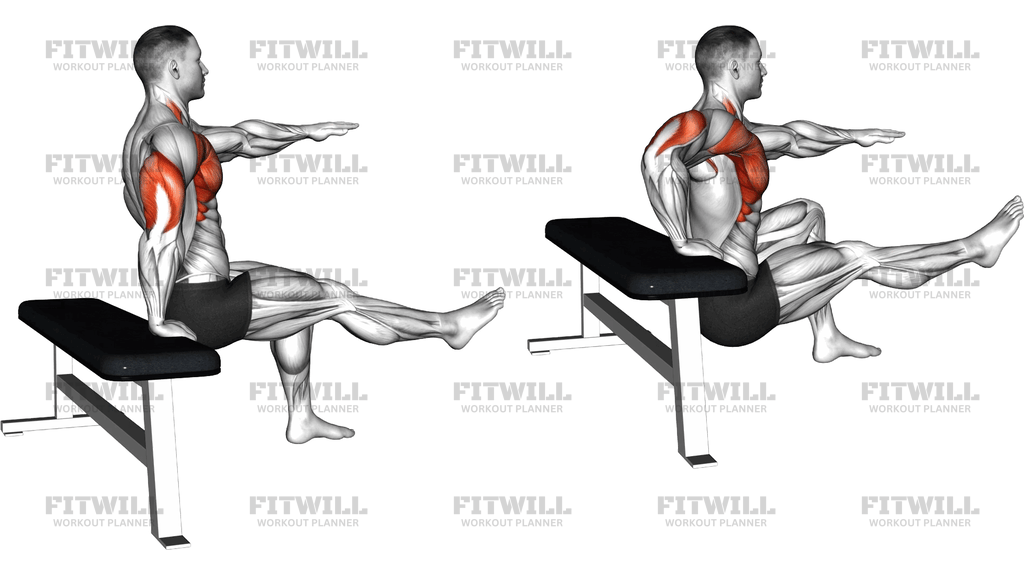
Instructions
- Sit on the edge of a flat bench and place one hand beside your hip with the fingers pointing forward or slightly out.
- Shift your weight onto that hand, then slide your hips just off the bench so the support shoulder stays stacked over the wrist.
- Extend the non-working arm forward for balance and set your legs in the position you can control, with straighter legs making the rep harder and a bent knee making it easier.
- Lift your chest and keep the ribs down so the torso stays tall instead of folding over the bench.
- Bend the supporting elbow and lower your hips straight down and slightly forward in a short, controlled arc.
- Keep the upper arm close to the body and stop the descent before the shoulder rolls forward or pain appears at the front of the shoulder.
- Press through the palm to straighten the elbow and return to the top without bouncing off the bench.
- Exhale as you press up and inhale on the way down for each repetition.
- Reset your hips and shoulder position before the next rep if you feel yourself twisting or sliding on the bench.
Tips & Tricks
- Keep the working shoulder directly over the hand; drifting too far behind the wrist turns the bottom position into a shoulder stress test.
- A small forward lean is normal, but a big torso swing usually means the bench is too low or the set is too hard.
- If the elbow flares hard to the side, move the hand a little closer to the hip and keep the upper arm more in line with the ribs.
- The free arm should help you balance, not yank the torso upward or forward.
- Straightening the legs increases the lever length and makes the triceps work harder; bending one knee is the easiest regression shown by the image.
- Pause briefly near the bottom only if the shoulder stays comfortable and the torso remains square.
- Keep the wrist firm and the palm planted so the load goes through the triceps instead of collapsing into the shoulder.
- Use a depth that feels controlled in the working arm; forcing extra range often turns into shoulder pinching before it improves triceps work.
- Stop the set when the hips start rotating or the bench edge becomes the only thing supporting your balance.
Frequently Asked Questions
What does the one-arm dip train most?
It primarily trains the triceps, with the shoulder, chest, forearm, and core helping keep the body stable on the bench.
Why does the free arm stay in front of the body?
Reaching the free arm forward helps counterbalance the weight behind you and makes it easier to keep the torso from twisting.
How should my legs be set up on this dip?
Straighter legs make the exercise harder, while bending one knee or keeping the feet closer to the bench shortens the lever and reduces the load.
How deep should I go on the bench dip?
Lower only as far as the working shoulder stays comfortable and the elbow can track smoothly without the front of the shoulder collapsing forward.
What is the most common form mistake?
People usually twist the torso or bounce out of the bottom instead of letting the triceps press the body back up in a controlled line.
Is this harder than a regular two-arm bench dip?
Yes, one-arm support makes the movement much more demanding because the triceps also have to resist rotation and side-to-side shifting.
Can I use this if I am still building triceps strength?
Yes, but start with a bent-knee setup and a shallow, smooth range before trying longer legs or deeper reps.
What should I feel in my shoulder during the rep?
You should feel the shoulder stabilizing the dip, not pinching or rolling forward; if the front of the shoulder feels sharp, shorten the range.