Overhead Triceps Stretch
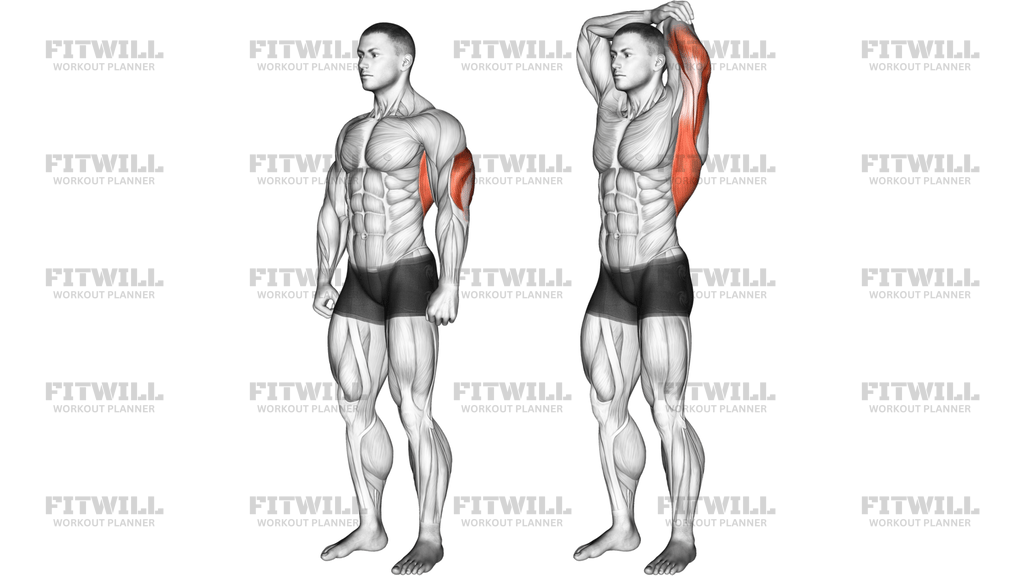
Overhead Triceps Stretch is a standing bodyweight mobility exercise that opens the back of the upper arm while also asking the shoulder and upper back to stay stacked. The position shown in the image places one arm overhead with the elbow bent and the opposite hand gently guiding the elbow, which makes the stretch more specific to the triceps than to the wrist or forearm alone. It is commonly used after pressing, pushing, or overhead lifting when the elbows and shoulders feel tight.
The main target is the triceps brachii, especially the long head because the shoulder is flexed overhead while the elbow is bent. The shoulder stabilizers, forearm, and core help hold the torso still so the stretch stays where you want it. If the ribs flare or the lower back arches, the stretch quickly moves away from the arm and into a loose standing lean, so posture matters more here than force.
The best setup is tall, quiet, and controlled. Stand with your feet planted, brace lightly through the midsection, and let the lifted elbow point mostly up instead of drifting wide. The non-stretching hand should only add enough pressure to deepen the stretch after the shoulder is already in position. That small amount of guidance is usually enough to create a clear pull along the back of the upper arm without pinching the shoulder.
During the hold, the goal is steady breathing and an honest but tolerable stretch sensation. Exhale to let the arm settle, keep the neck relaxed, and avoid yanking the elbow across the head or forcing the hand lower behind the back. A good rep here feels long and specific, not aggressive. If the shoulder or elbow feels sharp, shorten the range and keep the stretch more upright.
This movement fits well as a cooldown drill, between upper-body sets, or as a short mobility reset before pressing work. Beginners can use it safely because the load is simply body weight and the range is easy to scale. Progress comes from better shoulder position, calmer breathing, and a smoother line from the elbow through the upper arm, not from trying to jam the hand farther down the back.
[ Workout Log & Planner ]
Put your next workout in Fitwill
Keep your plan and training log ready when you are.


Instructions
- Stand tall with your feet about hip-width apart and soften both knees so you can keep your balance without leaning back.
- Lift one arm overhead and bend the elbow so your hand moves down behind your head toward the upper back.
- Keep the working elbow pointing mostly toward the ceiling instead of flaring out to the side.
- Draw your ribs down and stack your chest over your pelvis before you add any pressure with the other hand.
- Use the opposite hand to gently guide the bent elbow a little farther back and slightly inward.
- Keep the shoulder away from your ear and the neck relaxed as you settle into the stretch.
- Hold the position for a calm breath cycle or two, then exhale and let the triceps lengthen without forcing the joint.
- Release slowly, return the arm overhead under control, and switch sides to repeat the same setup on the other arm.
Tips & Tricks
- The opposite hand should guide the elbow, not yank it; if the shoulder feels crowded, back off the pressure immediately.
- Keep the elbow line mostly vertical so the stretch stays on the triceps instead of turning into a shoulder twist.
- If your low back arches, shorten the reach and exhale until the ribs settle back over the pelvis.
- A slight forward angle of the elbow is fine if it lets the shoulder stay open and pain-free.
- Keep the neck soft and avoid jutting the chin forward when the overhead arm starts to feel heavy.
- You should feel a long stretch along the back of the upper arm, not a pinch deep in the front of the shoulder.
- Use smaller pressure changes than you think you need; tiny adjustments are enough to change the stretch intensity.
- Hold both sides for the same amount of time so the shoulder and elbow position stay balanced.
Frequently Asked Questions
What muscle does the overhead triceps stretch target most?
It mainly targets the triceps brachii, with the long head usually feeling the strongest stretch because the arm is overhead.
Should the elbow point straight up during the stretch?
Mostly yes. Keeping the elbow close to vertical helps bias the stretch toward the triceps instead of letting the shoulder rotate and take over.
How hard should I pull the elbow with the other hand?
Only enough to deepen the stretch a little. The guiding hand should add pressure gradually, not force the arm into a painful range.
Why do I need to keep my ribs down?
If the ribs flare, the lower back arches and the stretch shifts away from the triceps. A stacked torso keeps the tension where you want it.
Is this a standing or kneeling stretch?
The image shows a standing version. You can also kneel on a mat if you want less balance demand, but the arm position stays the same.
What should I feel if the setup is correct?
You should feel a clear pull along the back of the upper arm, with a light shoulder stretch and no sharp pinch in the elbow or front of the shoulder.
Can beginners use this stretch safely?
Yes. It is easy to scale because the only load is body weight and the range can be made smaller until the shoulder feels comfortable.
When is the best time to use this stretch?
It works well after pressing, pushing, or overhead work, and it also fits as a short cooldown drill when the triceps feel tight.