Push-Up
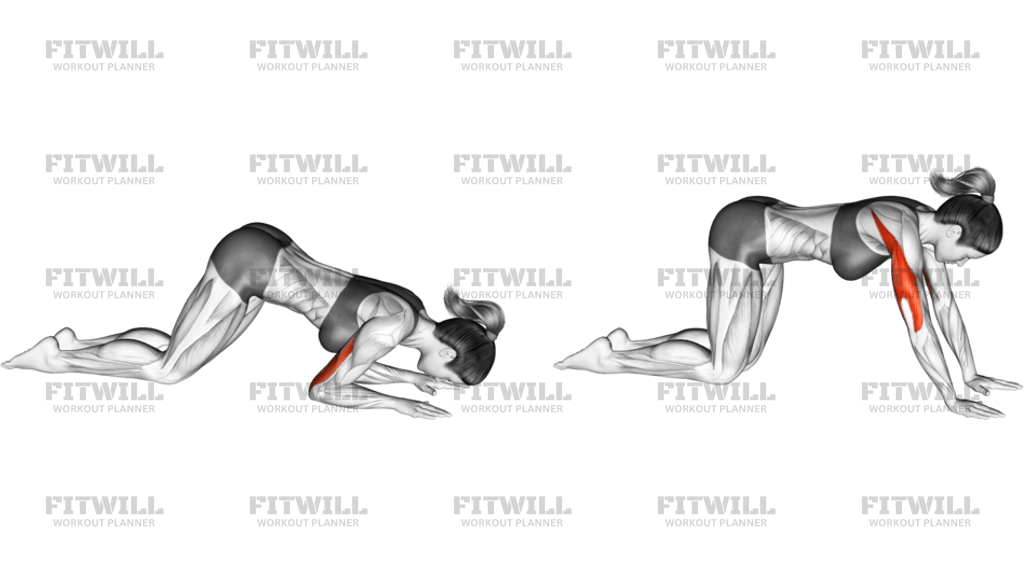
Push-Up is a bodyweight horizontal press performed from a high plank on your hands and toes. It trains the triceps hard while the chest, front shoulders, forearms, and core work together to keep the torso rigid and the press smooth. Because the load is your own body, small changes in hand position, elbow angle, and trunk position make a big difference in how the repetition feels.
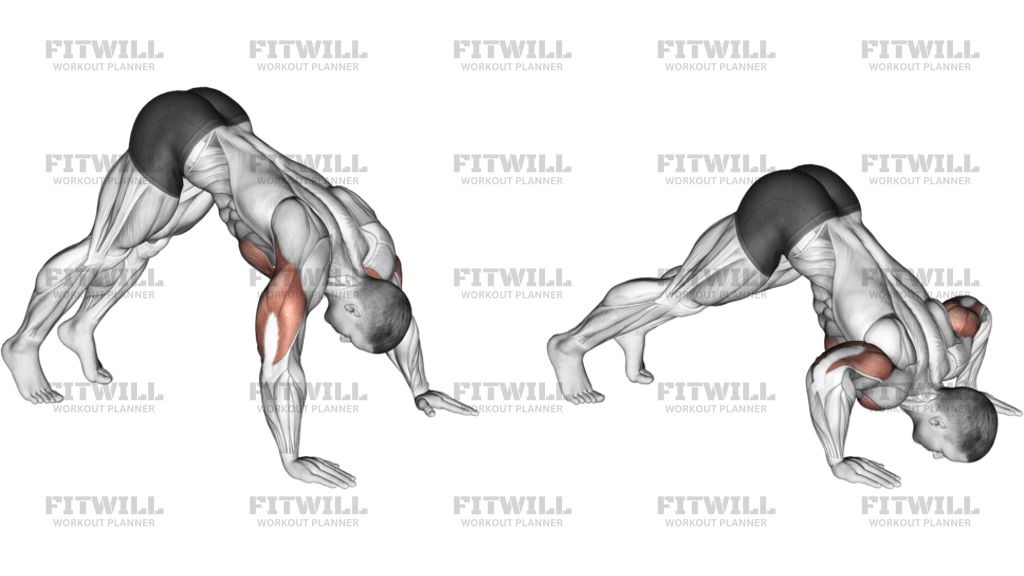
In this version, the triceps are the primary focus, with help from the chest and front deltoids as you lower and press away from the floor. The image shows a standard floor push-up rather than a machine or bench variation, so the quality of the plank matters as much as the push itself. When the shoulders drift forward, the hips sag, or the elbows flare too wide, the stress shifts away from the triceps and the rep becomes harder to control.
A clean setup starts with the hands planted under or slightly wider than the shoulders, fingers spread for a firm base, and the legs extended so the body forms one straight line from head to heels. The ribs should stay down, the glutes lightly squeezed, and the neck long so the head does not lead the movement. This position lets you generate force through the arms without losing tension through the middle of the body.
On each rep, lower the chest toward the floor under control, then press the floor away until the elbows are straight without locking out hard. Keep the elbows tracking back at a comfortable angle instead of dumping straight out to the sides. Match the breathing to the effort so you can stay braced: inhale on the way down, exhale as you press up. If the floor range is too much to keep clean, elevate the hands or shorten the range before adding reps.
Push-Up is useful anywhere you want a simple upper-body strength builder that also demands core control, scapular stability, and repeatable technique. It works well for strength circuits, accessory work, warmups, and conditioning blocks because it can be scaled by hand height, tempo, or body angle. The safest and most productive reps are the ones where the torso stays aligned, the shoulders stay controlled, and the press pattern looks the same from the first rep to the last.
[ Workout Log & Planner ]
Put your next workout in Fitwill
Keep your plan and training log ready when you are.


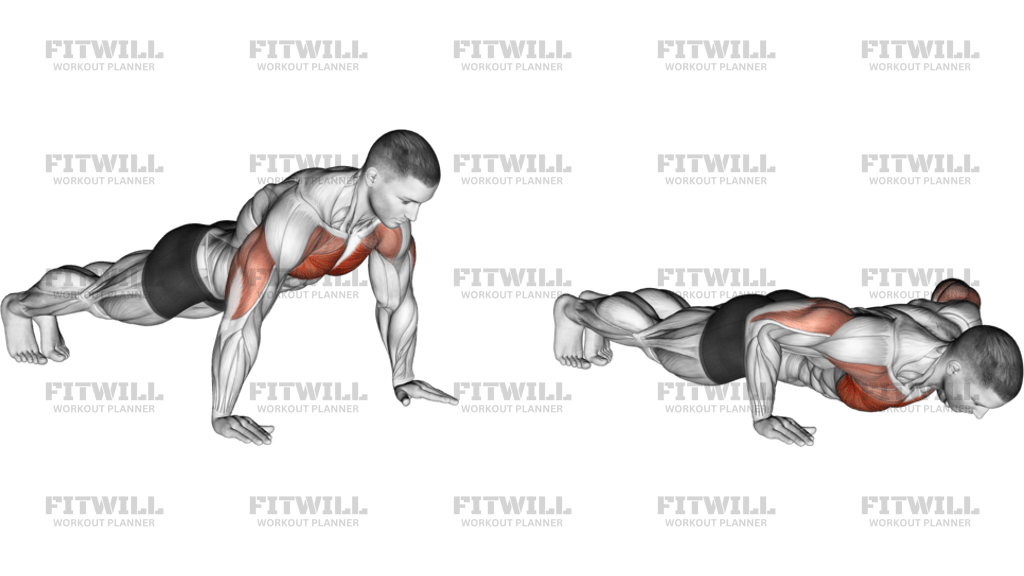
Instructions
- Place your hands on the floor under or just outside your shoulders, spread your fingers, and set your toes back so your body is in a long high plank.
- Lock in a straight line from the back of your head to your heels by squeezing your glutes, tightening your thighs, and pulling your ribs down.
- Let your shoulders sit over or slightly in front of your wrists so you can press from a stable base instead of a collapsed chest position.
- Take a breath in, then lower your chest toward the floor with control while keeping your elbows at a moderate angle behind your torso.
- Stop just before your chest touches down if that is the deepest position you can control cleanly.
- Press the floor away until your elbows are straight and your shoulder blades finish moving naturally around your ribcage.
- Exhale as you drive up and keep the neck neutral so the head does not lead the rep.
- Reset the plank before the next rep so each push-up starts from the same tight body position.
Tips & Tricks
- A slightly narrower hand position usually shifts more work to the triceps; a much wider setup tends to spread the load into the chest and shoulders.
- If your hips sag before your chest reaches the floor, shorten the range or elevate your hands before the set turns into a low-back compensation drill.
- Keep the elbows from flaring straight out to the sides; a moderate angle back from the torso is usually friendlier on the shoulders.
- Think about pushing the floor away rather than just straightening the arms, which helps you finish each rep with a stronger upper-back and shoulder position.
- Your glutes should stay active the whole set so the torso does not fold in the middle when fatigue builds.
- Pause briefly near the bottom only if you can keep the body line rigid; a long collapse at the bottom usually just adds strain without improving the rep.
- Use a slower lowering phase if you want more triceps tension and less bouncing off the floor.
- If wrist pressure becomes the limiter, try doing the push-up on dumbbell handles, push-up bars, or fists instead of letting the wrists cave backward.
Frequently Asked Questions
What does a standard Push-Up train most?
This version emphasizes the triceps, while the chest, front shoulders, forearms, and core help stabilize and press.
How should my hands be placed for a Push-Up?
Start with your hands under or slightly wider than your shoulders, fingers spread, and wrists stacked so the floor feels stable.
How deep should I lower on each rep?
Lower until your chest is close to the floor, but only as far as you can keep the plank rigid and the shoulders under control.
Why does my lower back arch during Push-Ups?
That usually means the core and glutes are losing tension. Tighten the plank, shorten the range, or elevate your hands if needed.
Can beginners do this exercise?
Yes. Beginners often do better with elevated hands on a bench or box so they can keep the same body line without collapsing.
What is a common elbow mistake in a Push-Up?
Flaring the elbows straight out can irritate the shoulders and shift the work away from the triceps. Keep them at a moderate angle back.
How can I make Push-Ups easier or harder?
Elevate your hands to make them easier, or slow the lowering phase and use a lower hand position to make them harder.
Should I lock out hard at the top?
Finish with straight elbows, but do not slam into the joint lockout. Keep tension through the shoulders and trunk.