Rear Decline Bridge
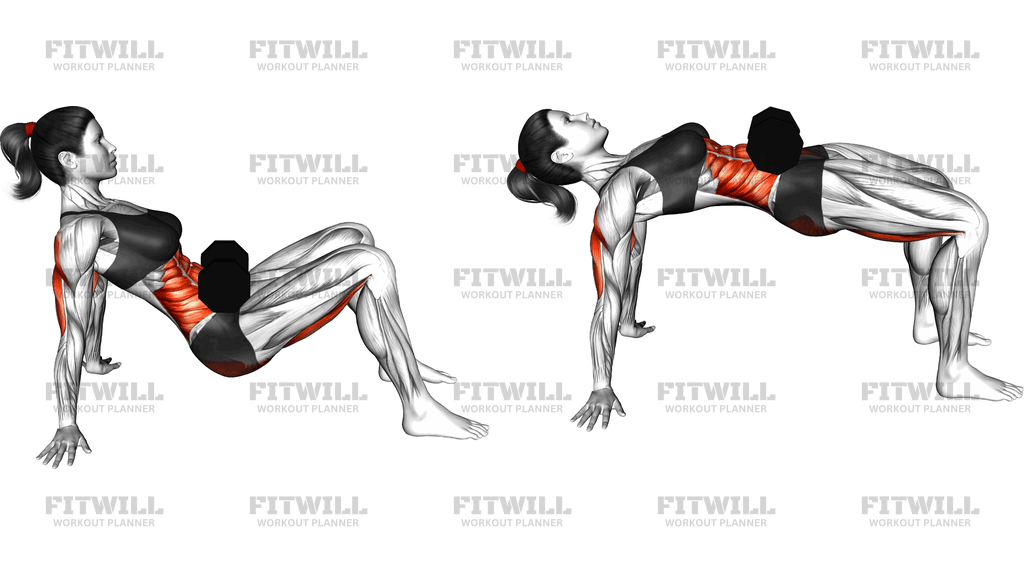
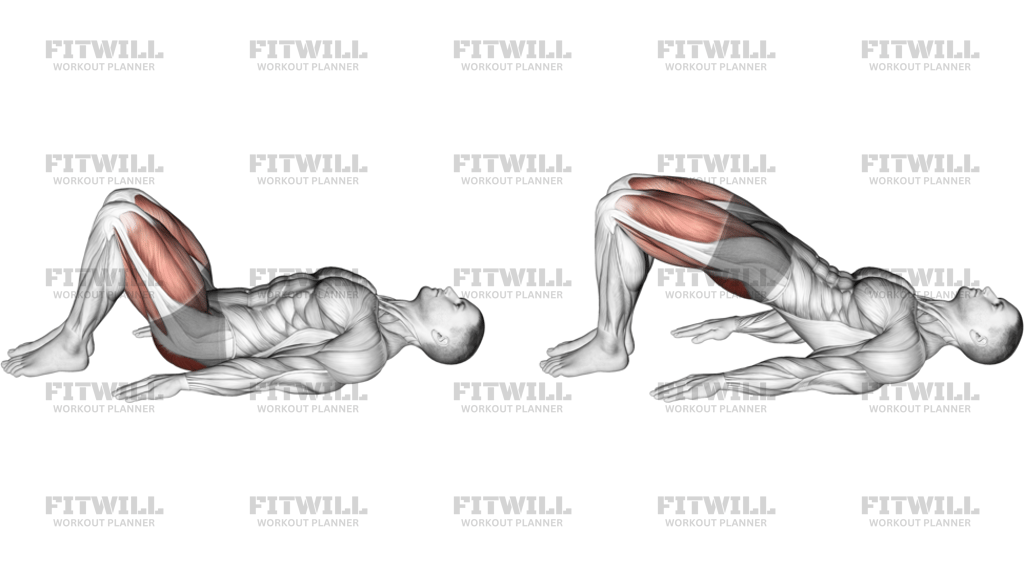
Rear Decline Bridge is a bodyweight bridge variation built around a simple but demanding hip extension pattern. You lie on your back, plant your feet, and drive the hips up by squeezing the glutes hard at the top. The movement looks basic, but the quality of each rep depends on how well you keep the ribs down, the pelvis controlled, and the feet set in a position that lets the glutes do the work.
This exercise is most useful when you want direct glute work without loading the spine heavily. It also challenges the hamstrings and deep trunk stabilizers, especially if you keep the top position honest instead of overextending the lower back. The anatomy focus centers on the Gluteus maximus, with support from the hamstrings, rectus abdominis, and erector spinae.
The setup matters more than people expect. Start with the feet flat, knees bent, and heels close enough that you can push through the whole foot without feeling cramped. If the feet are too far away, the hamstrings usually take over; if they are too close, the lift can feel jammed and short. A clean start gives you room to drive the hips straight up instead of rocking or twisting.
At the top, think about bringing the belt line toward the ceiling rather than arching the lower back. The best version of Rear Decline Bridge finishes with the ribs stacked over the pelvis, the glutes fully tightened, and the neck relaxed on the floor. A brief squeeze at lockout can make the set more productive, especially when you are using it as accessory work, a warm-up bridge, or a finisher for posterior-chain training.
Rear Decline Bridge is also a good option for beginners because it teaches hip extension in a controlled range before you move on to heavier thrusts or loaded bridges. It is still easy to cheat by flaring the ribs, pushing through the toes, or lifting so high that the lower back does the job instead of the glutes. Keep the rep smooth, stop before control breaks, and use the exercise to build repeatable glute tension rather than chasing height.
[ Workout Log & Planner ]
Put your next workout in Fitwill
Keep your plan and training log ready when you are.


Instructions
- Lie on your back on the floor with your knees bent, feet flat, and arms relaxed by your sides.
- Set your feet about hip-width apart so your heels can drive into the floor without your knees collapsing inward or flaring wide.
- Tuck your chin slightly and flatten your ribs so your lower back starts in a neutral, supported position.
- Press through your heels and lift your hips until your shoulders, hips, and knees form a straight line.
- Squeeze your glutes at the top and avoid arching your lower back to get the last bit of height.
- Pause for a moment in the top position while keeping your feet planted and your knees steady.
- Lower your hips under control until they hover just above the floor or gently touch down if you are resetting between reps.
- Breathe out as you lift and inhale as you lower, keeping the tempo smooth and repeatable for the planned number of reps.
Tips & Tricks
- Push through your heels, not your toes, so the glutes stay in charge of the bridge.
- If you feel the hamstrings cramp, bring your feet a little closer and shorten the range slightly.
- Keep the ribs from flaring up at the top; the finish should come from hip extension, not a big lower-back arch.
- A one-second squeeze at the top makes this bodyweight version much harder without changing the setup.
- Stop the rep when your pelvis starts to tilt or one side of the hips rises faster than the other.
- Keep your chin gently tucked so you do not crane the neck while looking for height.
- If the set feels too easy, slow the lowering phase before you add extra reps or hold time.
- Use a pad or mat if the floor makes it hard to keep your upper back and heels stable.
- Think about driving the knees forward over the mid-foot rather than pushing them outward aggressively.
Frequently Asked Questions
What does Rear Decline Bridge train most?
It mainly trains the glutes, with the hamstrings and core helping keep the pelvis steady as you bridge up and down.
How should my feet be placed for Rear Decline Bridge?
Keep your feet about hip-width apart with your heels planted so you can drive straight through the floor without wobbling side to side.
Why do my hamstrings take over in Rear Decline Bridge?
Your feet are probably too far from your hips, which shifts the load away from the glutes. Bring them a little closer and shorten the top range if needed.
Can beginners do Rear Decline Bridge safely?
Yes. It is a good beginner glute exercise because you can learn hip extension with bodyweight before moving on to heavier bridge or thrust variations.
How high should I lift in Rear Decline Bridge?
Lift only until your hips and torso line up. If you keep pushing higher by arching the lower back, the glutes usually stop doing most of the work.
What are the most common mistakes in Rear Decline Bridge?
The biggest mistakes are flaring the ribs, pushing through the toes, and twisting the hips instead of lifting them evenly.
Can Rear Decline Bridge replace hip thrusts?
It can be a useful lower-intensity glute builder, but hip thrusts usually allow more loading. This bridge is better for control, activation, and higher-rep accessory work.
How do I make Rear Decline Bridge harder without weights?
Add a pause at the top, slow the lowering phase, or move to single-leg bridge work once the two-leg version feels too easy.