Reverse Dip
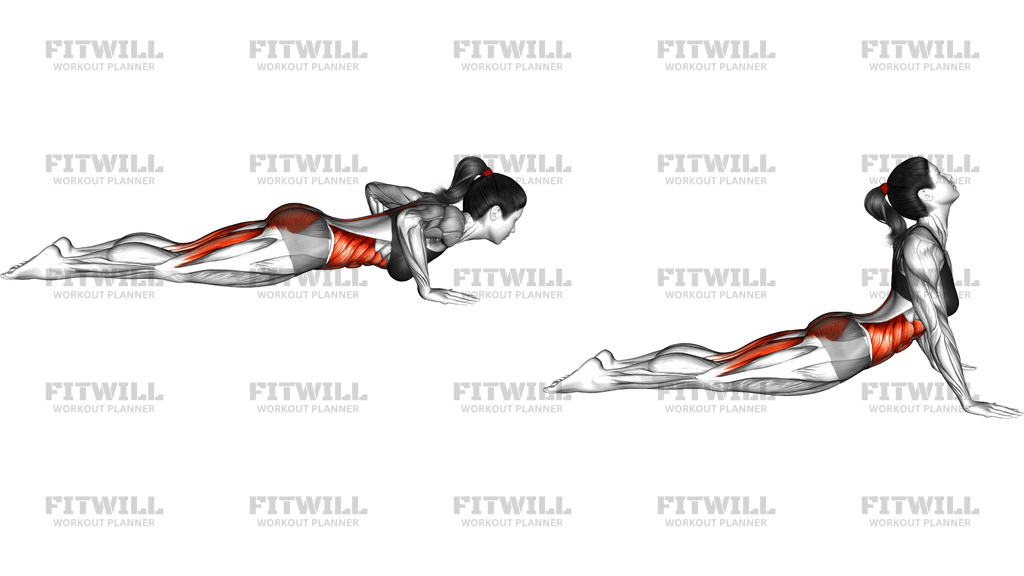
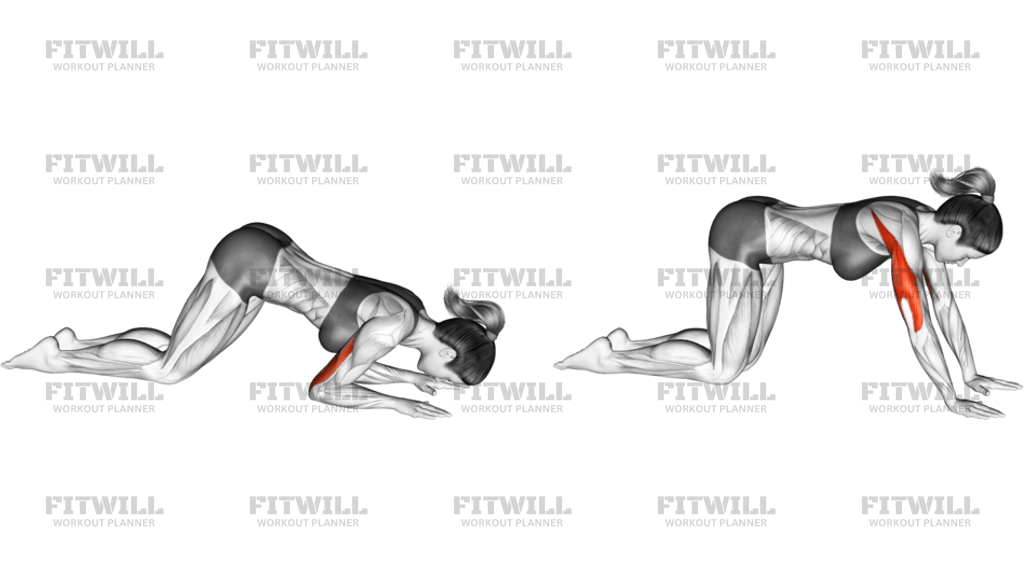
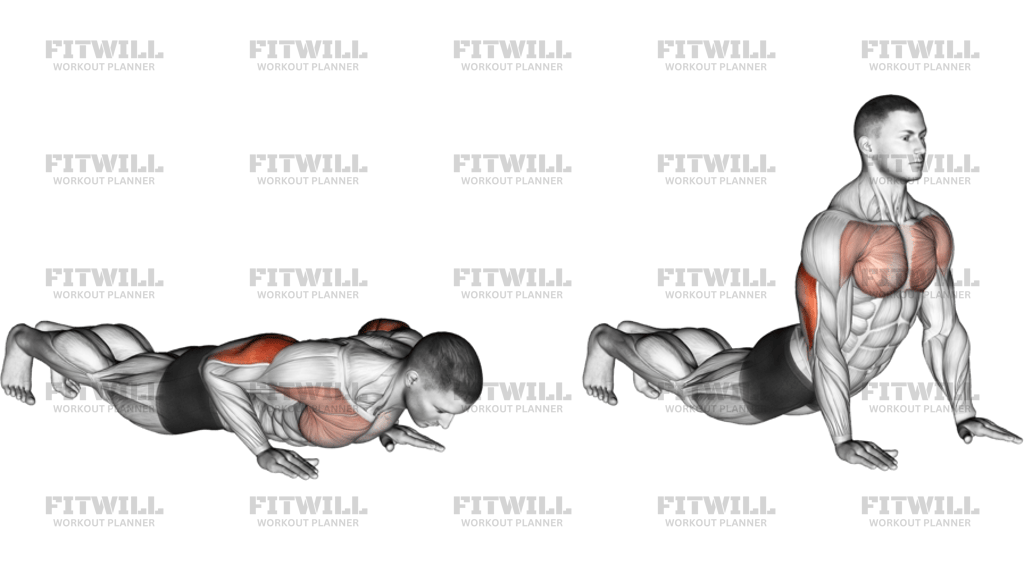
Reverse Dip is a bodyweight triceps exercise performed from a prone, face-down position on the floor. It is built around a press pattern: you start low with the chest close to the ground, then press the floor away until the elbows straighten and the chest lifts. The image shows a controlled floor-based reverse dip, so the setup matters as much as the pressing action. Hands, shoulders, ribs, and pelvis need to stay organized so the triceps can do the work without the lower back or neck taking over.
The primary training emphasis is the triceps, with the chest and front deltoids contributing to the press and the forearms helping maintain a solid hand position. In anatomy terms, the main work centers on the triceps brachii, with assistance from the forearm flexors, anterior deltoid, and rectus abdominis. This makes the movement useful when you want direct elbow-extension work without loading a bench or using external weight.
A good reverse dip starts by placing the palms on the floor beside the lower ribs or just under the shoulders, depending on your build, with the elbows tucked close to the torso. Keep the legs long, the toes grounded, and the neck neutral so the torso can move as one unit. From there, lower under control until the chest hovers close to the floor, then press back up by driving the palms down and back through the upper arms. The top position should feel firm and extended, not locked by a shrug or a collapsed lower back.
Because this is a floor-based pressing drill, the quality of each repetition is tied to rhythm and range. Use a controlled lowering phase, a brief pause near the bottom if you can keep alignment, and a smooth press back to the start. Breathing should stay quiet and deliberate: inhale as you lower, then exhale as you press through the hardest part of the rep. If the shoulders roll forward, the hips sag, or the elbows flare wide, shorten the range and reset before continuing.
Reverse Dip fits well as an accessory triceps movement, a light bodyweight strength drill, or a controlled push-up variation when you want more elbow-extension demand than a standard plank. It also works well in home workouts where no equipment is available beyond the floor. Beginners can use it if they keep the range small and the torso braced; more advanced lifters can slow the lowering phase or add pauses to make the set more demanding without losing the clean bodyline that the exercise requires.
[ Workout Log & Planner ]
Put your next workout in Fitwill
Keep your plan and training log ready when you are.


Instructions
- Lie face down on the floor with your legs long, toes planted, and palms on the floor beside your lower ribs or just under your shoulders.
- Tuck your elbows close to your torso and set your chest only a few centimeters above the floor before you begin the first rep.
- Keep your neck neutral, your ribs lightly braced, and your glutes gently tight so your lower back does not sag.
- Lower your chest toward the floor by bending the elbows and keeping them pointed mostly back rather than flaring out wide.
- Pause briefly at the bottom only if you can keep the shoulders packed and the torso aligned.
- Press the floor away through your palms until your elbows straighten and your chest lifts into the top position.
- Finish each rep with control, without shrugging the shoulders or letting the hips lead the motion.
- Inhale on the descent, exhale as you press up, and reset your body before starting the next repetition.
Tips & Tricks
- Keep the palms planted under the same line each rep; if the hands slide forward, the shoulders usually take over the movement.
- Think about bending and straightening the elbows, not pushing your head up, so the triceps stay on task.
- If your lower back arches hard, shorten the range and squeeze the glutes before you press again.
- A narrow elbow path usually feels cleaner on this exercise than letting the elbows flare out like a wide push-up.
- Pause the set if the chest stops hovering low and you start bouncing out of the bottom position.
- Use a small range of motion at first; the goal is a strong press from a stable floor position, not a dramatic backbend.
- Keep the neck long and the gaze slightly forward on the floor to avoid cranking the cervical spine.
- If the wrists feel stressed, adjust the hand angle slightly outward while keeping the palms flat and the forearms vertical.
Frequently Asked Questions
What muscle does Reverse Dip target most?
The triceps are the primary target, with the chest, front shoulders, and forearms helping during the press.
Can beginners perform this exercise?
Yes, beginners can use a short range of motion and slow tempo as long as they can keep the torso braced and the shoulders controlled.
Where should my hands be during the reverse dip?
Start with the palms on the floor beside the lower ribs or just under the shoulders, then keep them planted in the same spot through each rep.
Should my elbows flare out on the way down?
No. Keep the elbows tucked close to the torso so the press stays triceps-focused and the shoulders do not dominate the rep.
What should I feel at the top of the rep?
You should feel a strong triceps lockout with the chest lifted, the ribs controlled, and the shoulders not shrugged toward the ears.
Is this the same as a bench dip?
No. This version is performed face down on the floor, so the body presses against gravity from a prone position instead of supporting bodyweight behind the body on a bench.
What is the most common form mistake?
Letting the lower back sag and forcing the chest up with momentum instead of using a controlled elbow-extension press.
How can I make Reverse Dip harder?
Slow the lowering phase, add a short pause close to the floor, or increase the number of strict reps while keeping the same floor setup.