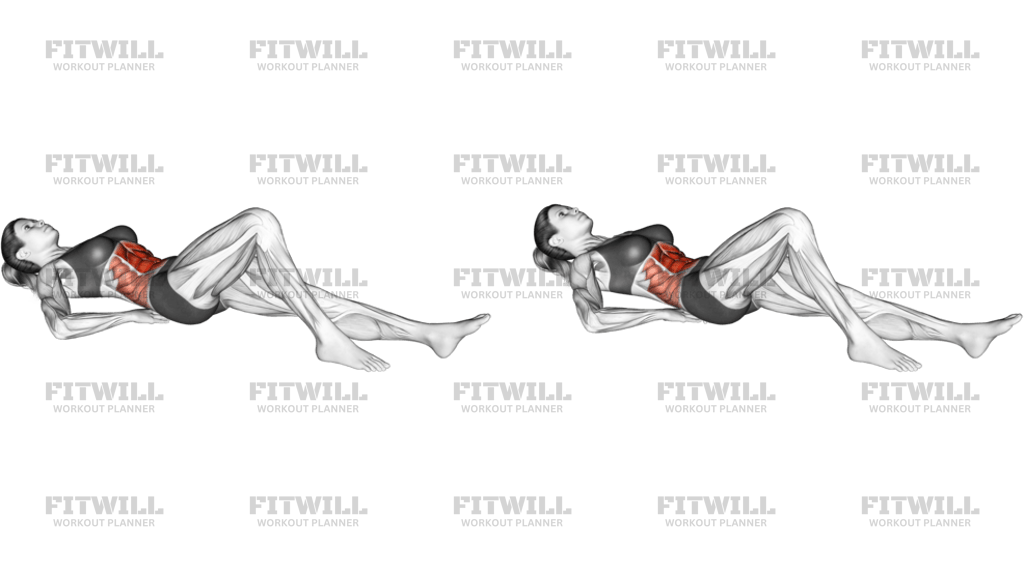
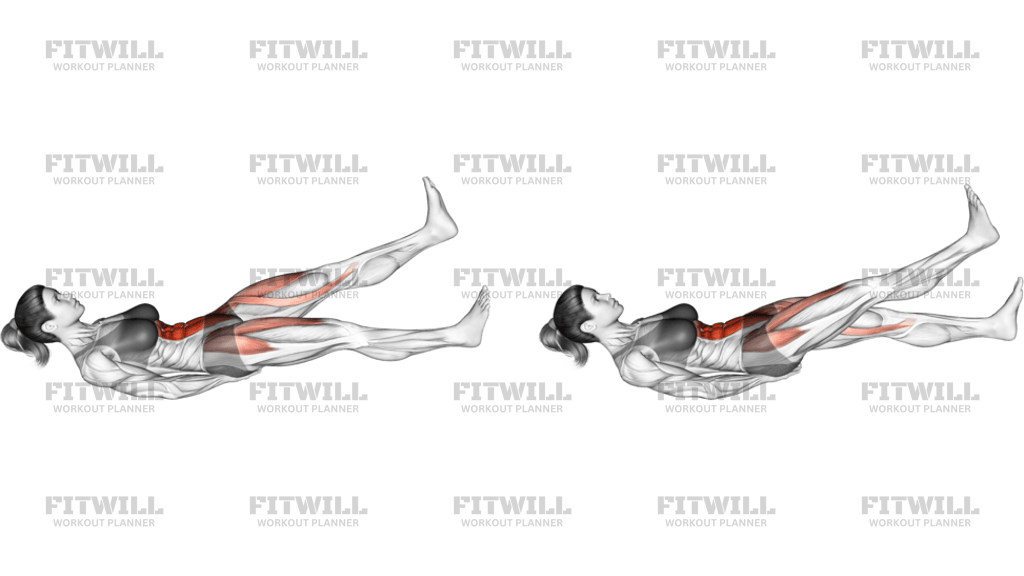
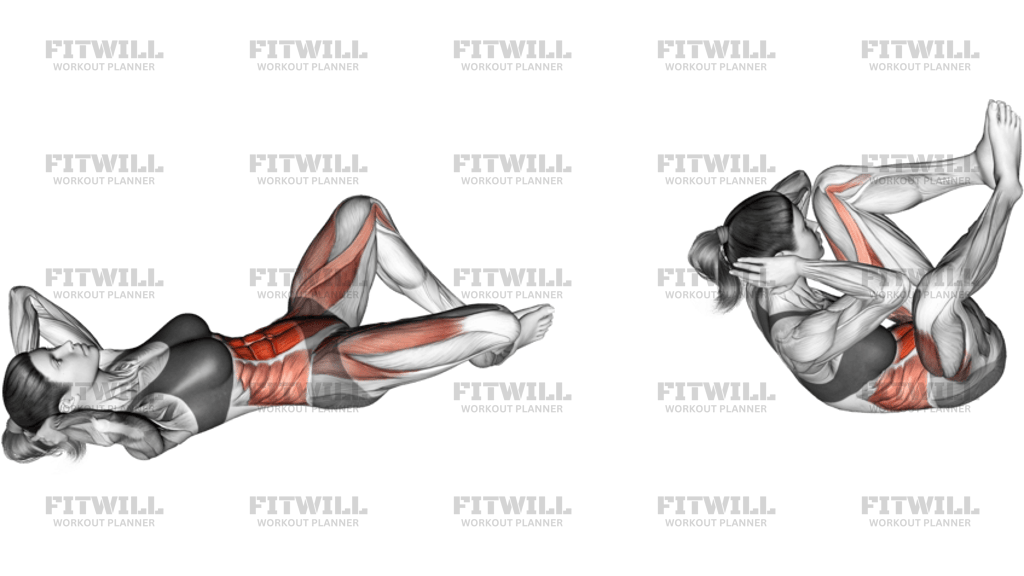
Seated Leg Raise
Seated Leg Raise is a bodyweight core exercise performed on a bench with the hands braced beside the hips and the torso leaned back slightly. It trains the abs through active hip flexion while the bench support lets you focus on lifting and lowering the legs without standing balance or swinging the body. The setup matters because the bench edge, hand position, and torso angle determine whether the abs stay loaded or the hip flexors and momentum take over.
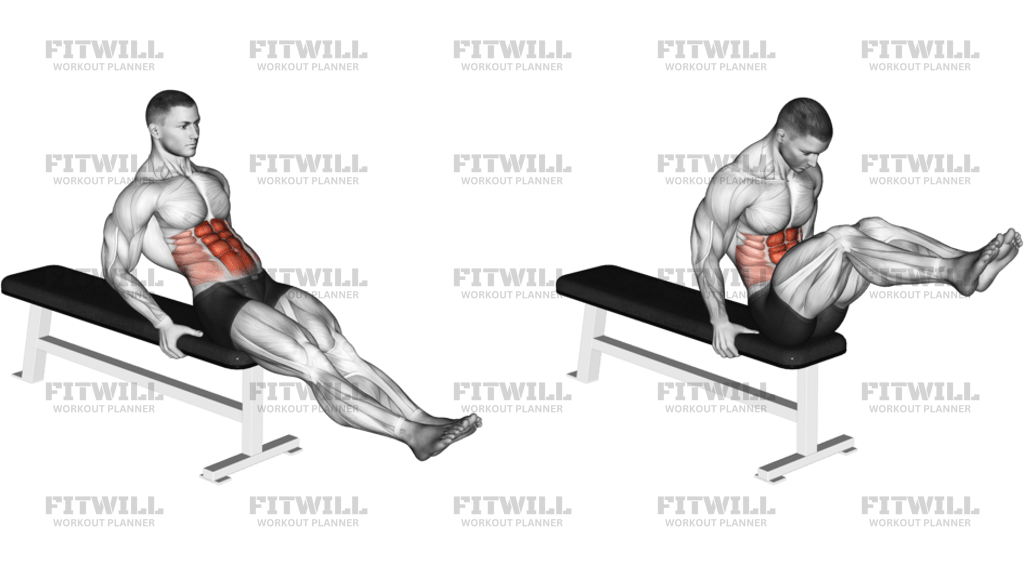
In the image, the legs stay long and lifted together, which makes this a straight-leg version of the seated raise. That means the Rectus Abdominis is the main target, with the Iliopsoas, External Obliques, and Transversus Abdominis helping stabilize the pelvis and keep the trunk from collapsing backward. Seated Leg Raise is especially useful when you want direct abdominal work that still teaches control through the whole front line of the body.
A good rep starts by sitting tall enough on the bench that the feet can clear the floor, then leaning back just enough to keep the torso steady. The hands should press firmly into the bench for support while the ribcage stays down and the pelvis stays slightly tucked. From there, lift both legs together in a smooth arc instead of kicking them up, then lower them under control before the lower back starts to arch.
This exercise is best when the movement is deliberate and repeatable. If the legs are raised higher than you can control, the hip flexors usually take over and the low back begins to arch; if the legs are lowered too fast, the abs lose tension before the next rep begins. Seated Leg Raise works well as accessory core work, in a warm-up for abdominal activation, or in a focused mid-session block where strict bodyweight reps are more useful than load.
Keep the range honest and match it to your current control level. Beginners can use a smaller lift, a slight knee bend, or one leg at a time until they can hold the torso still through the full arc. The goal is not just to move the legs, but to keep the abs doing the work from the first rep to the last.
[ Workout Log & Planner ]
Put your next workout in Fitwill
Keep your plan and training log ready when you are.


Instructions
- Sit on the end of a flat bench with your hands gripping the bench beside your hips.
- Lean your torso back slightly and extend both legs forward so your heels hover off the floor.
- Set your shoulders down, draw your ribs in, and lightly tuck your pelvis before each rep.
- Lift both legs together by flexing at the hips until your feet rise in front of you.
- Keep the knees mostly straight, with only a small bend if your hamstrings feel tight.
- Pause briefly at the top without letting your lower back arch or your torso rock back.
- Lower the legs slowly until they are just above the floor and the abs are still working.
- Exhale as you raise the legs and inhale as you lower them under control.
- Reset your brace before the next rep and continue for the planned number of repetitions.
Tips & Tricks
- Choose a bench height that lets your feet clear the floor without shrugging your shoulders up.
- Press your palms into the bench hard enough to steady the torso, not to heave the legs upward.
- If your lower back arches at the top, lift the legs a little less and keep the ribcage pulled down.
- A slight knee bend is better than locking the legs so hard that your hip flexors cramp.
- Keep the descent slow; dropping the legs turns Seated Leg Raise into a swing instead of an abdominal rep.
- Think about curling the pelvis toward your ribs as the legs rise to keep tension on the abs.
- Stop the set when you start leaning farther back to fake extra range.
- If the straight-leg version is too hard, switch to bent-knee raises or one leg at a time.
Frequently Asked Questions
What muscles does Seated Leg Raise work most?
The Rectus Abdominis does most of the work, with the hip flexors and obliques helping stabilize the lift.
Do My Legs Need To Stay Completely Straight In Seated Leg Raise?
Mostly straight is ideal, but a small knee bend is fine if it helps you keep the pelvis still and the low back from arching.
Why Does My Lower Back Lift Off The Bench During Seated Leg Raise?
That usually means the legs are coming up too high or the torso is leaning back too far. Shorten the range and keep the ribs down.
Is Seated Leg Raise Good For Beginners?
Yes, if you keep the motion small and controlled. Start with bent knees or one leg at a time until you can hold the torso steady.
Should I Touch The Floor Between Reps In Seated Leg Raise?
No. Hover the heels or feet just above the floor so the abs stay under tension and you do not lose the brace.
What Bench Setup Works Best For Seated Leg Raise?
Use a flat bench with enough room to sit near the edge and let your legs clear the floor without scraping the ground.
How Do I Make Seated Leg Raise Harder Without Adding Weight?
Slow the lowering phase, pause briefly at the top, and keep the legs a little lower on the way down so the abs stay working.
Can I Replace Seated Leg Raise With Another Core Exercise?
A captain's chair knee raise or lying leg raise can work as a substitution, but the bench-supported seated version keeps the torso braced in a different way.