Single-Arm Push-Up
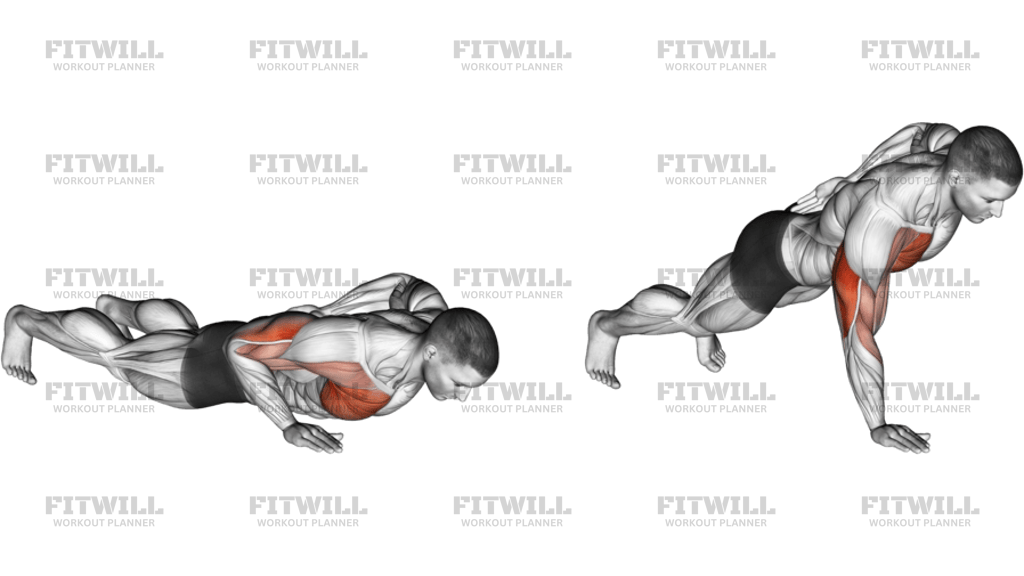
Single-Arm Push-Up is a demanding bodyweight pressing exercise that builds chest, triceps, shoulder, and trunk strength in one coordinated pattern. Because one arm has to support most of the load, the exercise also exposes side-to-side differences in pressing strength, shoulder stability, and core control. It is a useful test and builder for lifters who want more than a standard push-up: the goal is not just to press, but to keep the torso square while one arm does the work.
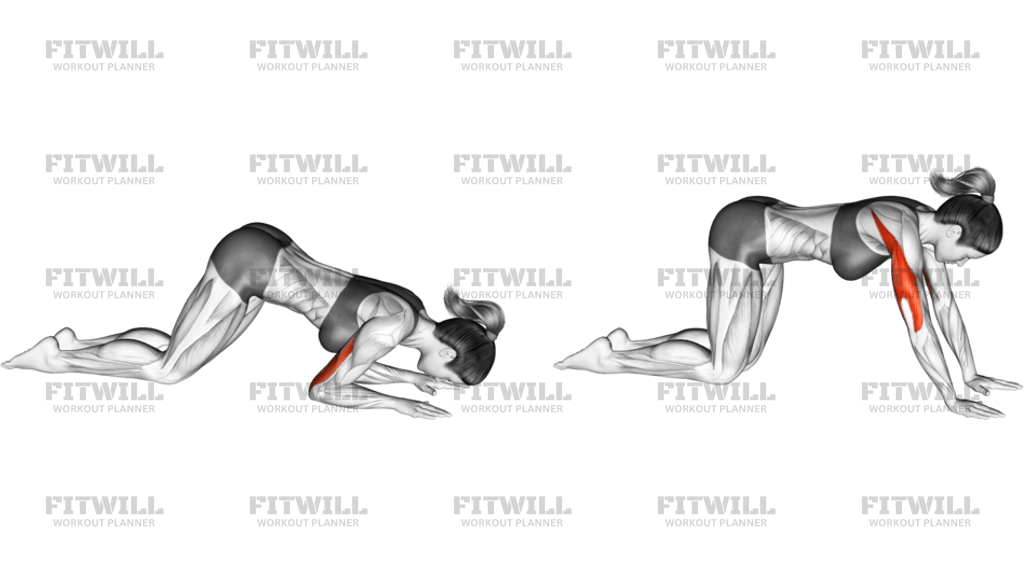
The main training effect comes from the triceps and chest, with the front shoulder, forearm, and core working hard to keep the body from twisting or sagging. In practical terms, that means the planted hand, elbow, shoulder, ribs, and hips all need to stay organized together. If the hips rotate open or the rib cage collapses, the set usually becomes a twisting plank instead of a clean press.
Setup matters more here than it does in a regular push-up. Place one hand under or just slightly outside the shoulder, spread the feet wider than a normal push-up stance, and tuck the free arm behind your back or along your torso so it does not help the press. From the top position, squeeze the glute on the non-working side, keep the body in one long line from head to heel, and let the shoulder blade of the working side move naturally as you lower.
Each repetition should descend under control with the elbow tracking back at a comfortable angle, not flaring straight out. Lower until the chest is as close to the floor as your position allows without losing alignment, then press the floor away through the full hand and straighten the elbow to return to the top. Breathing should stay deliberate: inhale on the way down, then exhale as you drive up and re-stack the ribs over the pelvis.
Single-Arm Push-Up is often used as advanced accessory work, a strength benchmark, or a skill exercise once standard push-ups are already solid. It can be regressed with a higher hand position, a wider stance, or a reduced range of motion, but the intent should always remain the same: one side presses while the torso resists rotation. For that reason, quality matters more than repetition count, and the set should stop as soon as the hips start turning or the shoulder loses its stable path.
[ Workout Log & Planner ]
Put your next workout in Fitwill
Keep your plan and training log ready when you are.


Instructions
- Start in a high plank with one hand planted under or just outside your shoulder, your feet set wider than a normal push-up stance, and your free arm tucked behind your back or along your side.
- Lock your body into a straight line from head to heels and keep your hips level before you begin the first rep.
- Press the floor away with the working hand, spread your fingers, and keep your wrist stacked under the shoulder for a stable base.
- Take a breath, brace your midsection, and keep your ribs from flaring as you lower.
- Bend the working elbow and lower your chest toward the floor in a controlled path, letting the elbow travel back at a comfortable angle.
- Keep your shoulders square to the floor and resist letting the free side rotate open as you descend.
- Lower until your chest is just above the floor or as low as you can go without losing plank position.
- Exhale and press the floor away to return to the top until the elbow is straight and the body is back in one line.
- Pause briefly at the top to regain a solid plank before starting the next repetition.
- Step out of the plank carefully when the set is done, keeping the working shoulder and wrist under control.
Tips & Tricks
- If your hips want to twist open, widen your feet before you try to force a deeper rep.
- Keep the free hand pinned behind your back or on your ribs so it does not quietly help the press.
- A slightly slower descent usually makes the one-arm position cleaner and helps you keep the shoulder under control.
- Let the working elbow travel back, not straight out to the side, to keep the press path more natural.
- Keep the planted palm active by spreading the fingers and pressing through the thumb mound as well as the heel of the hand.
- If your chest collapses before your elbow bends much, reduce range of motion or raise the hand on a bench or box.
- Do not chase a perfect chest-to-floor rep if the torso is rotating; a shorter, square rep is better.
- Keep your neck long and eyes slightly ahead of your hands so the head does not drop first.
- Stop the set when the shoulder starts to shrug toward the ear or the hips no longer stay level.
- Use singles or low reps per side if you want quality strength work; fatigue shows up fast in this variation.
Frequently Asked Questions
What muscles does Single-Arm Push-Up train most?
It mainly trains the chest and triceps, with the front shoulder and core working hard to keep the body from twisting.
Is Single-Arm Push-Up suitable for beginners?
Not as a first push-up variation. Most beginners should build up through standard push-ups, incline one-arm progressions, or assisted versions before trying full reps.
Where should my free hand go during Single-Arm Push-Up?
Tuck it behind your back or hold it close to your torso so it stays out of the way and does not help you rotate through the rep.
Why do my hips twist during Single-Arm Push-Up?
Usually the stance is too narrow or the core is losing tension. Widen your feet, keep the ribs down, and slow the descent until the torso stays square.
How far should I lower in Single-Arm Push-Up?
Lower as far as you can while keeping the shoulder, ribs, and hips aligned. A partial rep with a stable torso is better than forcing chest-to-floor contact.
How can I make Single-Arm Push-Up easier?
Use a bench, box, or sturdy platform to elevate the working hand, or keep the same setup and shorten the range of motion until you can stay square.
Why is the foot stance so wide in Single-Arm Push-Up?
The wider stance gives you a bigger base of support so the torso can resist rotation while one arm does most of the pressing.
What is the most common mistake in Single-Arm Push-Up?
Letting the body rotate or the hips drop before the chest gets close to the floor. If that happens, regress the variation and rebuild control.