Sled Closer Hack Squat
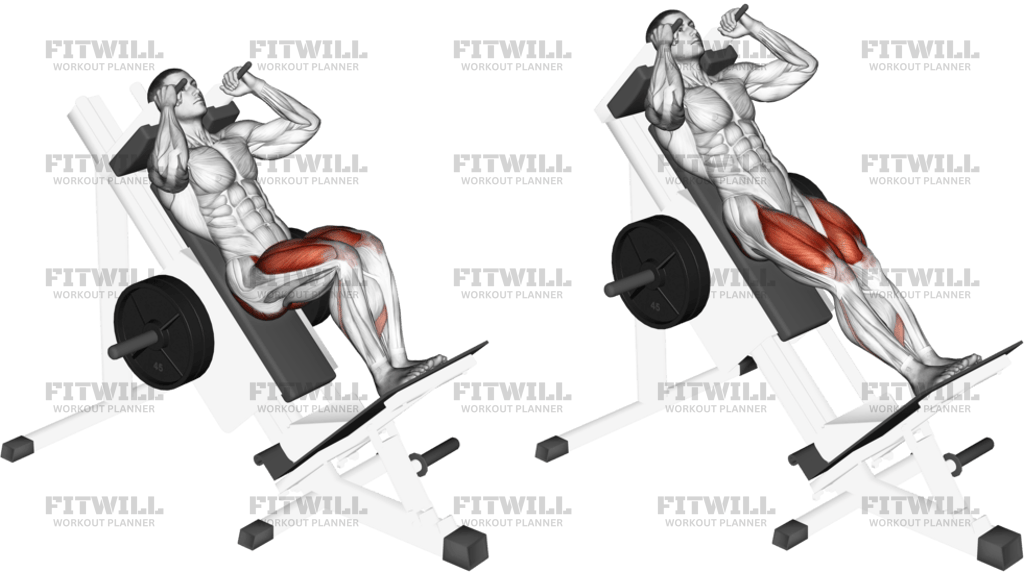
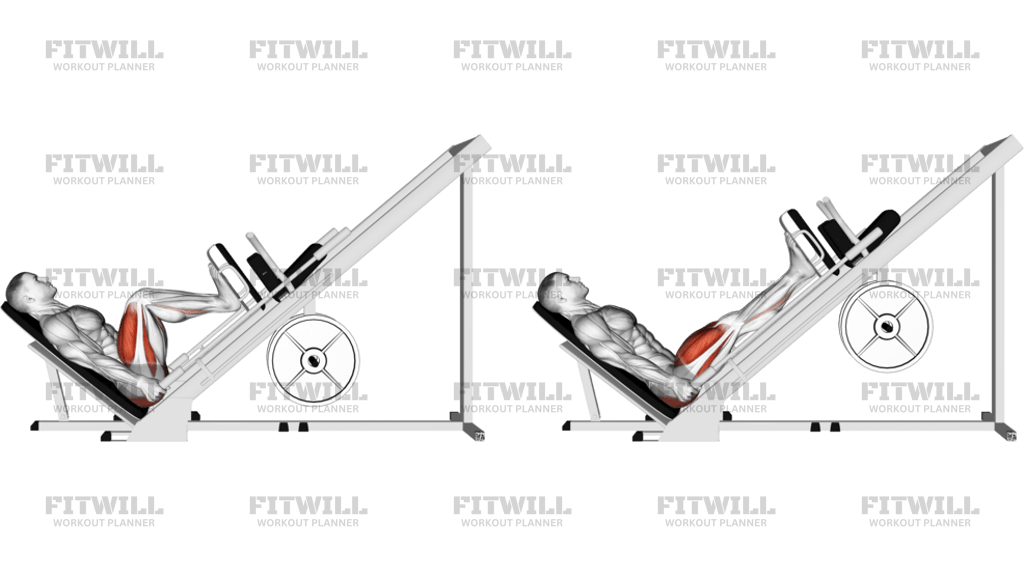
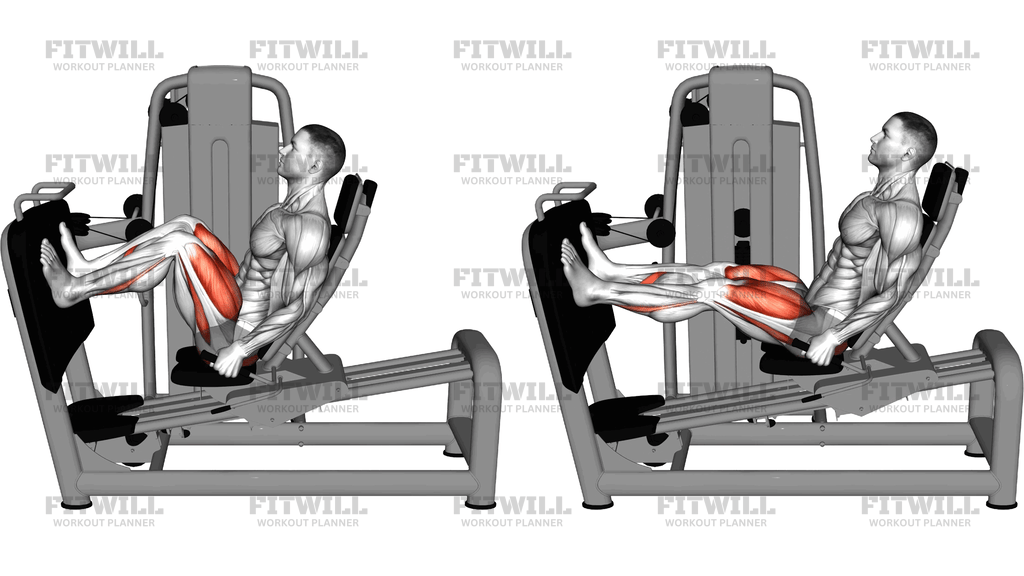
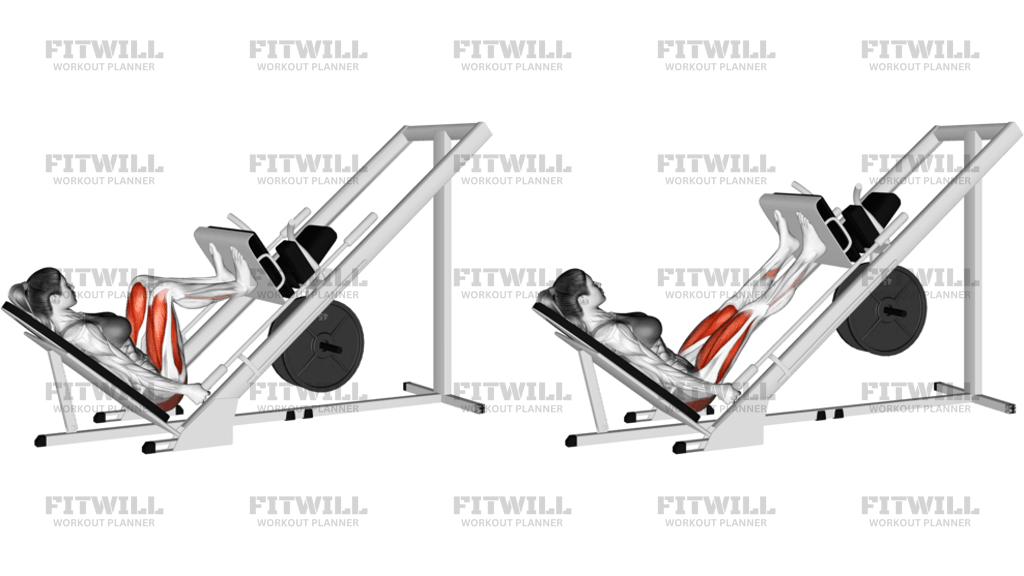
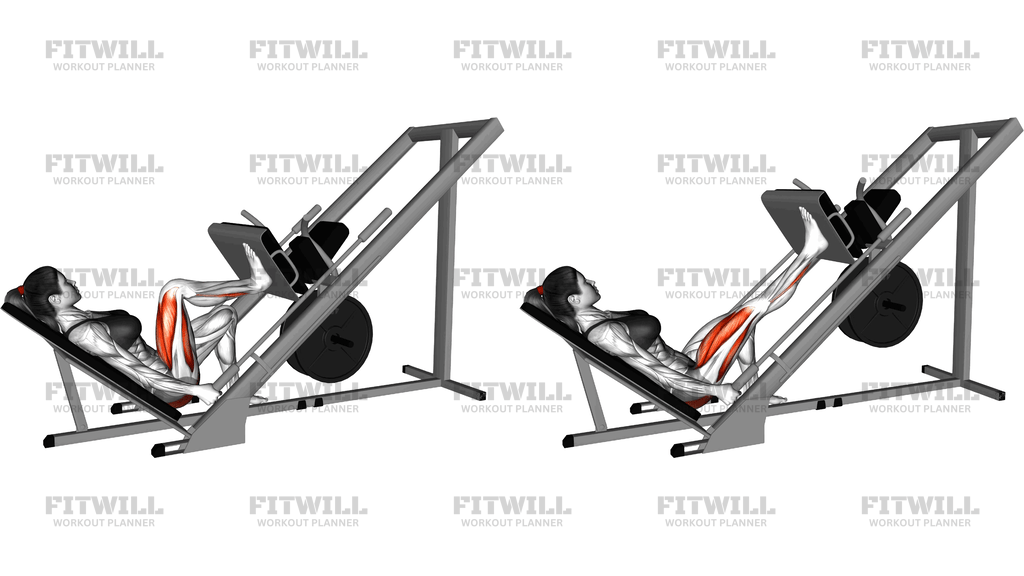
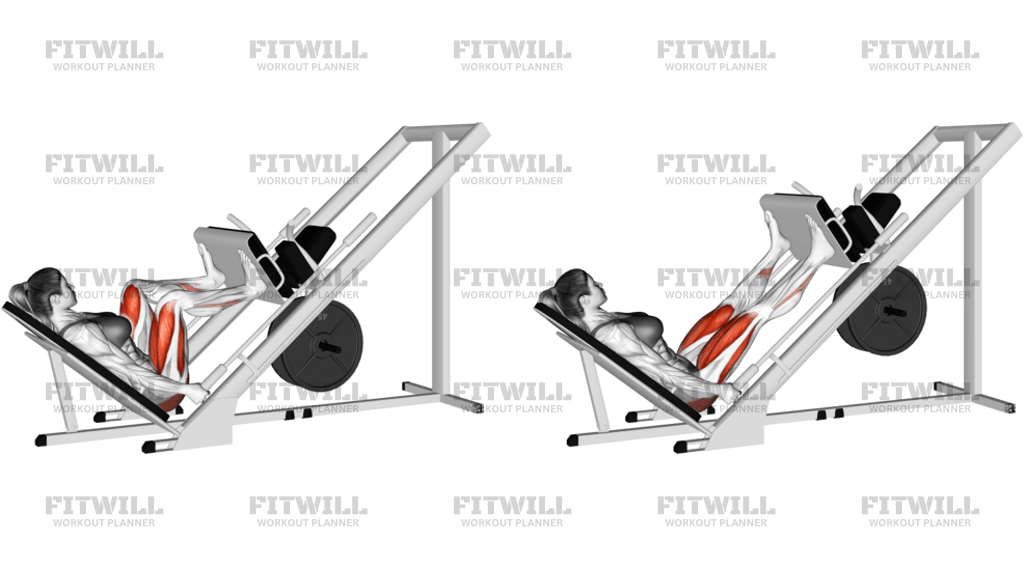
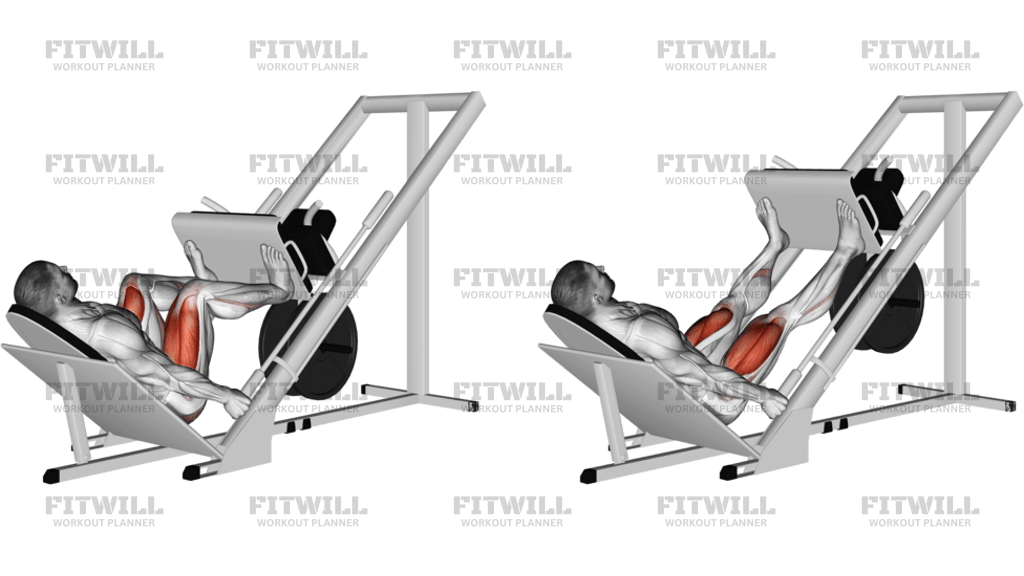
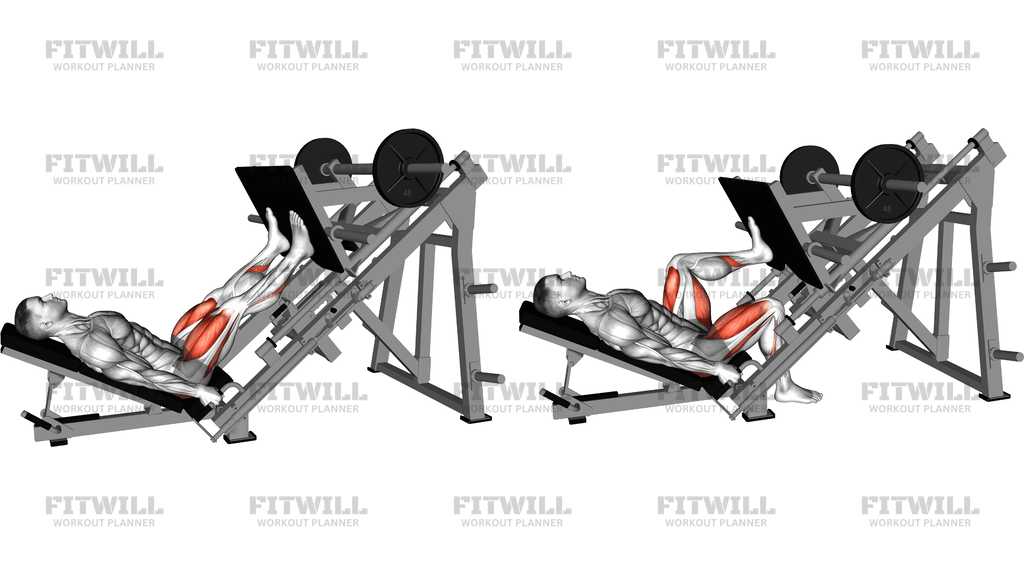
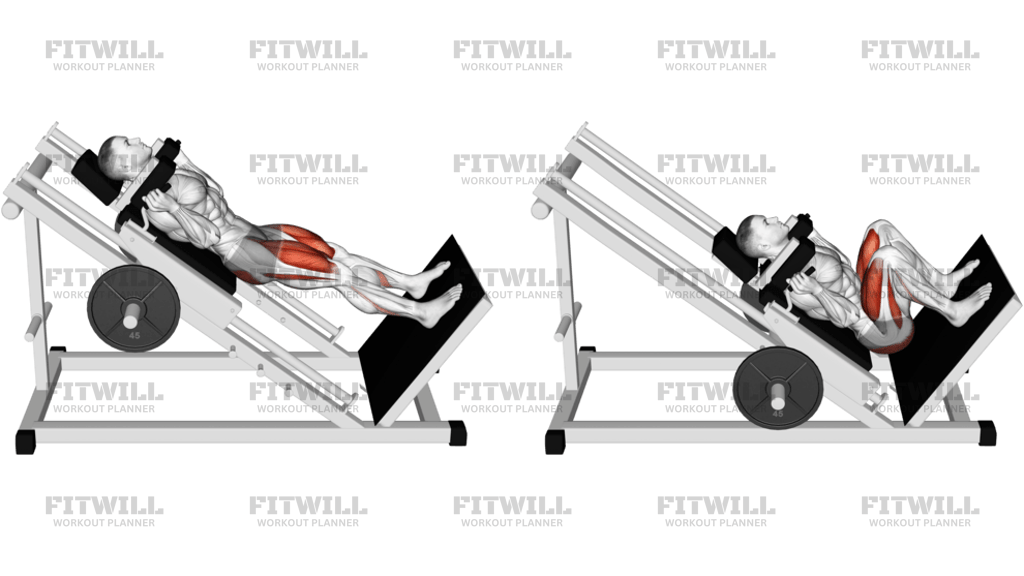
Sled Closer Hack Squat is a close-stance hack squat performed on a sled machine with your back supported and your shoulders fixed under the pads. The guided track removes the balance demands of a free squat, so you can focus on knee and hip drive, leg tension, and a consistent depth from rep to rep.
Because the stance is narrower, the exercise usually shifts more attention toward the front of the thighs while the glutes, hamstrings, and calves help stabilize and finish the press. In anatomy terms, the main work centers on the quadriceps, with support from the gluteus maximus, biceps femoris, gastrocnemius, and core musculature. The exact emphasis depends on how low you place your feet on the platform and how deep you squat, but the machine path keeps the movement more repeatable than a barbell squat.
The setup matters more than the load. Your feet should be planted firmly on the platform, usually about hip-width or slightly narrower with the toes turned out just enough for the knees to track comfortably. Keep your lower back against the pad, grip the handles, and unlock the sled before you descend. A controlled first rep lets you find the machine’s line of travel and the depth you can own without your pelvis tucking or your heels lifting.
On each repetition, lower the sled by bending the knees and hips together until your thighs reach a comfortable depth, then drive through the whole foot to push the sled back up. Keep the knees tracking in line with the toes and avoid letting them cave inward as you come out of the bottom. A brief pause at the bottom can help remove bounce, but the return should still be smooth and deliberate rather than explosive.
Use Sled Closer Hack Squat when you want a lower-body strength exercise that is easier to standardize than a free squat and more quad-focused than a wide stance version. It works well for accessory volume, hypertrophy blocks, or controlled strength work, especially when you want to train the legs hard without loading the spine with a barbell. Keep the range pain-free, choose a load that lets you hold position against the pads, and stop the set if your heels rise, your hips twist, or the sled starts to drift away from the line you can control.
[ Workout Log & Planner ]
Put your next workout in Fitwill
Keep your plan and training log ready when you are.


Instructions
- Step onto the sled platform and place your shoulders and upper back firmly against the pads, then grab the side handles for support.
- Set your feet about hip-width or slightly narrower on the platform, toes turned out just enough for your knees to track naturally.
- Unlock the sled and keep your lower back pressed into the pad before you start the first rep.
- Lower the sled by bending your knees and hips together until your thighs reach a deep, comfortable bottom position.
- Keep your heels down and your knees moving in the same direction as your toes as you descend.
- Pause briefly at the bottom only if you can stay tight against the back pad without bouncing.
- Drive through the full foot to press the sled back up until your legs are straight but not forcefully locked.
- Inhale on the way down, exhale as you drive up, and re-brace before each new repetition.
Tips & Tricks
- A slightly narrower stance usually shifts the work toward the quadriceps, but if your knees feel pinched, widen it a little until the track feels natural.
- Keep your feet high enough on the platform that your heels stay planted and your pelvis does not curl up off the pad at the bottom.
- If the sled path feels unstable, slow the lowering phase first; most control issues show up on the descent, not the press.
- Do not let your knees collapse inward as the sled comes up, especially when fatigue makes the last few reps grind.
- Hold the side handles lightly so your torso stays anchored without yanking your shoulders forward.
- Use a depth you can control without rounding the lower back; a shallower rep with clean alignment is better than a deeper rep you cannot own.
- Press through the middle of the foot and heel together so the platform does not shift your weight onto your toes.
- Stop one or two reps before your hips start to peel off the pad or the sled loses its smooth line of travel.
Frequently Asked Questions
What muscles does Sled Closer Hack Squat work most?
It emphasizes the quadriceps first, with the glutes and hamstrings helping you control the bottom and drive the sled back up.
Can beginners perform this exercise?
Yes. The sled and back pad make it easier to learn than a free squat, as long as you start with a light load and controlled depth.
Where should my feet be on the platform?
Start with your feet about hip-width or slightly narrower, with toes turned out just enough that your knees can travel comfortably over them.
How deep should I lower the sled?
Lower only as far as you can keep your lower back on the pad, your heels down, and your knees tracking cleanly.
Why use a closer stance on the hack squat?
A narrower stance usually makes the exercise feel more quad-dominant and can let you train the thighs without taking as wide a squat position.
What should I do if my lower back lifts off the pad?
Reduce the depth or move your feet a little higher on the platform until you can keep your pelvis and back anchored through the full rep.
Is this the same as a barbell squat?
No. The machine fixes the path and support points, so it is easier to isolate the legs and standardize each repetition.
How do I make the reps safer?
Keep the descent slow enough to stay braced, avoid bouncing out of the bottom, and stop before the sled drifts into a range you cannot control.