Sled 45 Degrees Leg Press
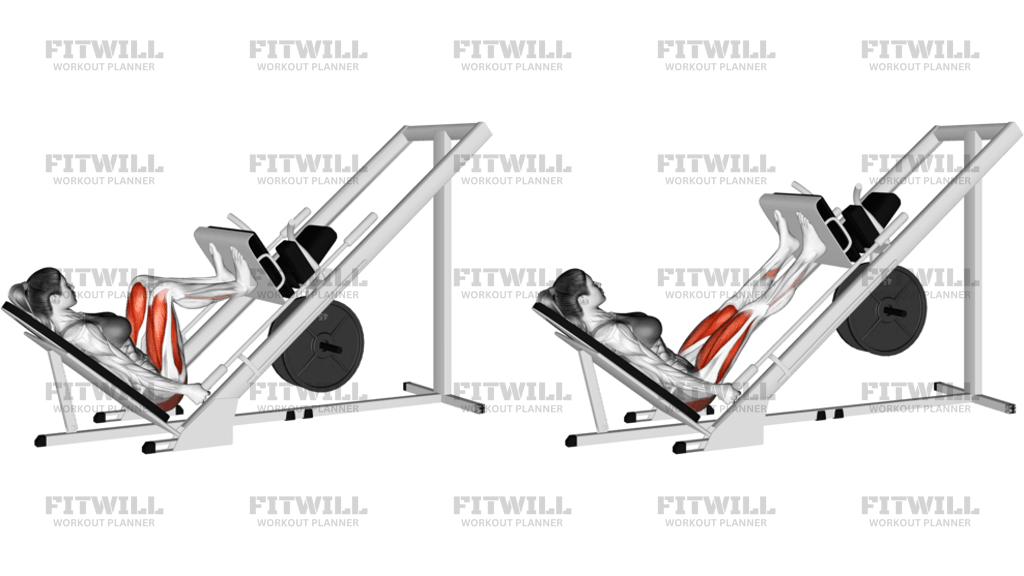
The Sled 45 Degrees Leg Press is a guided lower-body pressing exercise done on a machine that moves along a fixed 45-degree track. Your back, hips, and head stay supported on the pad while your feet press the sled away from you, making it a controlled way to load the thighs without asking you to balance the weight the way you would in a free squat.
This exercise is most often used to build the quads, with help from the glutes, hamstrings, and inner thighs as the sled lowers and rises. Because the machine fixes the path, your setup matters a lot: foot placement, depth, and pelvis position all change where the tension goes. A lower foot position and a more moderate stance usually bias the quads more, while a higher stance shifts more work toward the hips and posterior chain.
Start by sitting deep into the pad with your lower back flat against the backrest and your feet planted shoulder-width or slightly wider on the platform. Unrack the sled only when you are fully braced and ready to control the first descent. On the way down, let the knees bend and travel in line with the toes while keeping the hips heavy on the seat. On the way up, drive through the whole foot and press the sled to near full extension without snapping the knees shut.
The best reps feel smooth and repeatable, not rushed. Keep the range of motion as deep as your pelvis can stay anchored and your knees can track cleanly, then reverse the sled without bouncing out of the bottom. A short pause near the bottom can help you stay honest if the load starts to drift into momentum or hip tuck.
Use this movement as a primary or accessory leg exercise when you want hard quad work with back support and stable mechanics. It is useful for beginners who need a machine-based option, as well as experienced lifters who want to push the legs hard with less balance demand. Keep the sled and safety stops under control, choose a load you can lower deliberately, and stop the set if your lower back starts to round or your hips lift off the pad.
[ Workout Log & Planner ]
Put your next workout in Fitwill
Keep your plan and training log ready when you are.


Instructions
- Sit with your back, hips, and head against the pad and place both feet shoulder-width or slightly wider on the footplate.
- Set your feet high enough that your heels stay down, then unlock the sled using the machine's safety handles or levers.
- Brace your torso and keep your lower back gently pressed into the pad before the sled moves.
- Lower the sled by bending both knees and hips until your thighs approach your torso without your pelvis rolling up.
- Keep your knees tracking in line with your toes as the sled travels down the rails.
- Press through the whole foot to drive the sled back up, aiming for near-full knee extension without locking hard.
- Exhale as you press and inhale as you lower on each repetition.
- Re-rack or re-engage the safeties after the final repetition before getting out of the machine.
Tips & Tricks
- A lower foot placement on the platform usually increases knee travel and keeps more tension on the quads.
- If your hips tuck under at the bottom, shorten the range slightly and keep the pelvis pinned to the back pad.
- Do not let the knees cave inward as the sled rises; press them out in line with the second toe.
- Use a controlled descent rather than dropping into the bottom and bouncing the sled off the stops.
- Keep pressure through the midfoot and heel so the feet do not drift onto the toes under load.
- Do not lock the knees aggressively at the top; finish the rep with a strong but soft extension.
- Choose a load that lets you reverse the sled smoothly without losing back contact or shifting your hips.
- If the machine feels too compressed, move your feet slightly higher or reduce depth until the lumbar spine stays neutral.
Frequently Asked Questions
What does the 45-degree sled leg press train most?
It mainly trains the quadriceps, with the glutes, hamstrings, and adductors helping as the sled moves.
Where should my feet go on the footplate?
A shoulder-width stance with the feet high enough to keep the heels planted is a solid starting point, and a lower foot position usually makes the quads work harder.
How deep should I lower the sled?
Lower it only as far as you can keep your lower back and hips against the pad. If your pelvis starts to curl up, the depth is too deep for that set.
Should I lock out my knees at the top?
Finish the rep with strong knee extension, but do not snap the knees into a hard lockout. A soft top position keeps tension on the legs and is usually easier on the joints.
Is this safer than a free squat?
It removes the balance demand and gives the back more support, which can make loading the legs simpler. It still needs controlled setup, depth, and bracing to stay safe.
What is the most common mistake on this machine?
Letting the hips lift or the lower back round at the bottom is the biggest issue. That usually means the load is too heavy or the range is too deep.
Can beginners use the sled leg press?
Yes. It is beginner-friendly when the sled is light, the safeties are set correctly, and the user learns to control the depth before adding weight.
What foot position shifts more work away from the quads?
Placing the feet a bit higher and slightly wider on the platform usually moves more emphasis toward the glutes and hamstrings.