Smith Close-Grip Bench Press
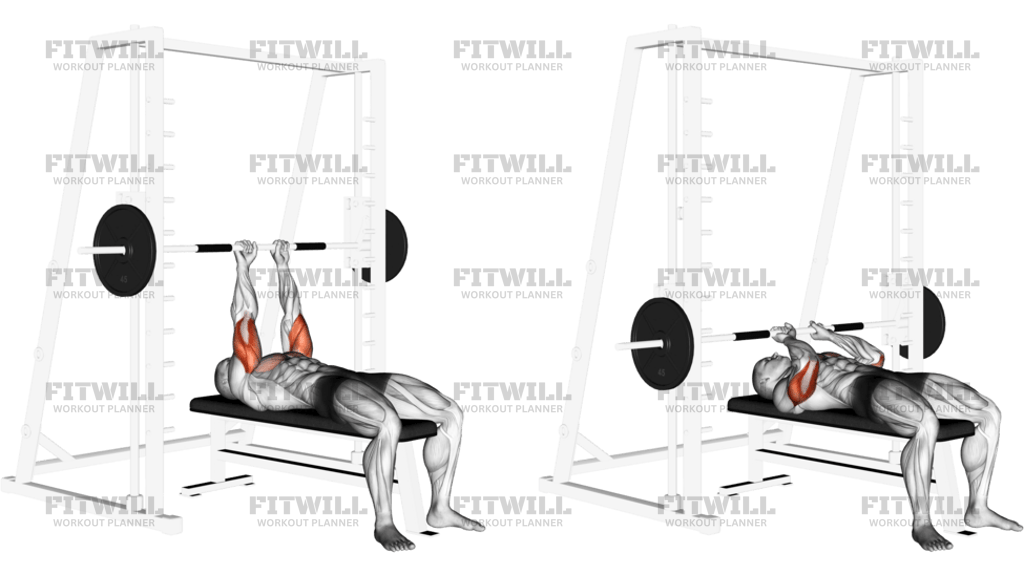
Smith Close-Grip Bench Press is a guided pressing exercise built around a narrow hand position on the Smith machine. The close grip shifts more of the work to the triceps while still training the chest and front shoulders, and the fixed bar path makes the setup and bar position especially important. When the bench, hand placement, and unrack position are lined up correctly, the movement feels smooth and predictable rather than awkward or shoulder-dominant.
This exercise is useful when you want a pressing pattern that lets you focus on lockout strength, triceps development, and controlled repetition quality. Compared with a wider bench press, the closer grip usually reduces the chest stretch and increases elbow extension demand. That makes Smith Close-Grip Bench Press a practical accessory lift for pressing programs, upper-body strength blocks, or triceps-focused work after your main compound bench variation.
The fixed track of the Smith machine changes the feel of the press, so setup matters more than people expect. Lie flat on the bench with your eyes under the bar, squeeze your shoulder blades together, and keep your feet rooted so your torso stays stable when you unrack. A grip just inside shoulder width is usually the right starting point for this variation; too narrow can irritate the wrists and elbows, while too wide turns it into a different press.
Lower the bar under control to the lower chest or sternum area, then press it back up along the same guided path without bouncing or drifting. The elbows should stay tucked enough to protect the shoulders, but not so tight that the movement turns into a cramped triceps extension. Control the descent, keep the wrists stacked over the forearms, and let the bar stop cleanly before you change direction.
Because the machine guides the bar, the set should look smooth from rep to rep, not forced or jerky. Use the safeties or stops if the rack provides them, and choose a load you can unrack, lower, and re-rack without losing shoulder position. If the shoulders pinch, the wrists bend back, or the bar touches too high on the chest, shorten the range slightly and reset your grip before continuing.
[ Workout Log & Planner ]
Put your next workout in Fitwill
Keep your plan and training log ready when you are.


Instructions
- Set the bench in the Smith machine so the bar comes down over the lower chest when you are lying flat, then lie back with your eyes under the bar.
- Plant both feet on the floor, squeeze your shoulder blades together, and keep a small natural arch in your upper back with your glutes still on the bench.
- Grip the bar just inside shoulder width with your wrists stacked over your forearms and your knuckles facing the ceiling.
- Unrack the bar by rotating it free, then hold it directly above the lower chest with the elbows almost straight.
- Inhale, brace your torso, and lower the bar in a controlled line until it touches or nearly touches the lower chest or sternum area.
- Keep your elbows tucked as you press the bar back up, driving through the palms until the arms are fully extended without locking out hard.
- Match each rep to the same bar path, stopping the descent if the shoulders roll forward or the wrists start to bend back.
- Re-rack the bar by pressing it to the hooks and rotating it into the locked position only after the last rep is finished.
Tips & Tricks
- A grip that is just inside shoulder width is usually the sweet spot; if your hands are too close together, the wrists and elbows take over.
- Keep the bar low on the hand with the wrist stacked, not bent back, so the close grip does not become a wrist-extension drill.
- Think about tucking the elbows about 30 to 45 degrees from the torso on the way down to keep the shoulders happier.
- Touch the lower chest or sternum area lightly instead of forcing the bar higher on the chest, which shortens the triceps line of drive.
- Press the bar up on the same fixed track every rep; drifting the bar forward or backward usually means the bench is not lined up well.
- Use a load that lets you keep the shoulder blades pinned to the bench from the first rep to the last.
- If the bar feels unstable on the unrack, lower the load and practice the start position before chasing heavier sets.
- Stop the set when your elbows flare hard or the bar starts bouncing off the chest, because that usually means the triceps are no longer controlling the rep.
Frequently Asked Questions
What muscles does Smith Close-Grip Bench Press work?
It mainly trains the triceps, with the chest and front shoulders helping through the press. The Smith machine keeps the bar path fixed, so the triceps usually get a strong lockout emphasis.
Is Smith Close-Grip Bench Press good for beginners?
Yes, if the load is light and the bench is lined up correctly. Beginners should learn the unrack, grip width, and elbow path before adding serious weight.
How narrow should my grip be on the Smith machine?
Start just inside shoulder width and adjust from there based on wrist comfort and elbow tracking. If the hands are too narrow, the press often becomes cramped and less efficient.
Where should the bar touch during Smith Close-Grip Bench Press?
Aim for the lower chest or sternum area, not the upper chest. That keeps the press aligned with the triceps-focused path of the movement.
Why use a Smith machine for a close-grip bench press?
The guided bar path can make the press easier to repeat consistently and can help lifters focus on triceps drive. It is especially useful when you want controlled accessory work after heavier free-weight pressing.
What is the most common mistake in Smith Close-Grip Bench Press?
Letting the elbows flare and the wrists bend back usually turns the lift into a shoulder- and wrist-dominant press. Keep the forearms stacked and the elbows slightly tucked.
Can I use Smith Close-Grip Bench Press instead of a barbell close-grip bench?
Yes, but it will feel more fixed because the bar travels on rails. That makes setup more important and slightly reduces the need to stabilize the bar side to side.
How do I know if the weight is too heavy for this exercise?
If you lose shoulder blade position, bounce the bar, or have to twist the wrists to finish the rep, the load is too high. Drop the weight until every rep lowers and presses on the same path.