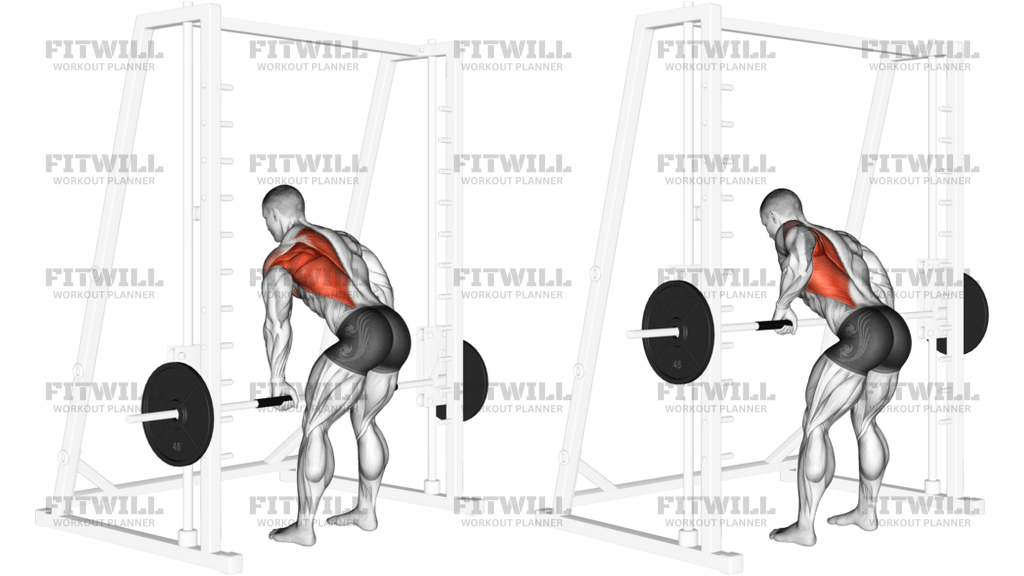
Smith Bent-Over Narrow Pronated Grip Row
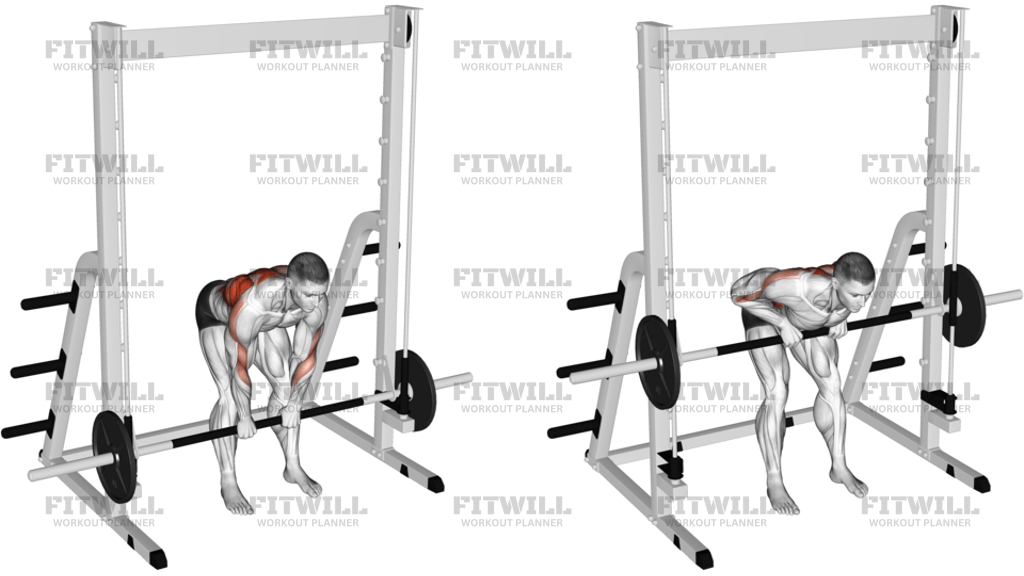
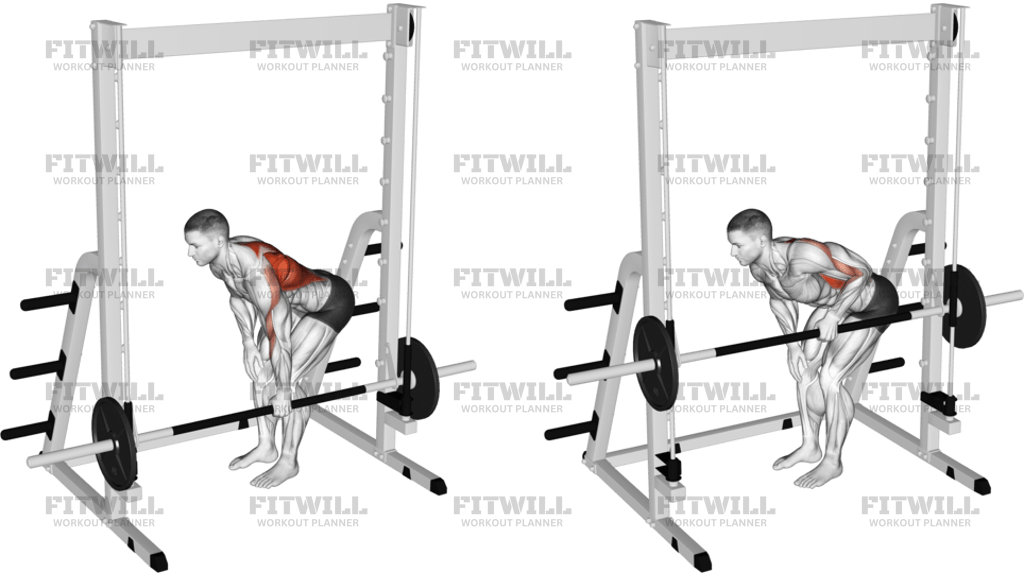
Smith Bent-Over Narrow Pronated Grip Row is a guided horizontal pulling exercise performed on a Smith machine with an overhand grip and a forward hip hinge. It is built to train the upper back, lats, rear shoulders, and arm flexors while teaching you how to hold a stable torso as the elbows drive back. Because the bar path is fixed, the setup matters a lot: your hinge angle, foot position, and grip width determine whether the row feels clean and centered or turns into a shrugging, lower-back-driven lift.
The movement is especially useful when you want a row that lets you keep tension on the back without balancing a free bar. The narrow pronated grip usually keeps the elbows closer to the torso, which shifts the emphasis toward the lats and the muscles that retract the shoulder blades. You should still expect the mid back, rear delts, and biceps to work hard, but the goal is not to yank the bar with the arms. The rep should start from a braced hinge, not from a standing upright stance that has to be turned into a row mid-rep.
Set your feet about hip-width apart, hinge until your torso is angled forward, and keep a long neutral spine from head to tailbone. The knees should be soft, not locked, and the bar should start close to the shins or just below the knees depending on your body proportions and the machine height. Grip the bar just inside shoulder width with palms facing down, then let the shoulders settle before you pull so the first inch of the rep comes from the back rather than a shrug.
On each repetition, pull the Smith bar toward the lower ribs or upper abdomen while keeping the elbows tucked and the chest anchored in position. Squeeze the shoulder blades back without overextending the lower back, then lower the bar under control until the arms are long again and the shoulders are not rounded forward. The fixed track of the Smith bar should help you keep the path consistent, but you still need to control the tempo and stop the set if your torso starts rising or twisting to finish the rep.
This is a strong accessory choice for back-focused training, bodybuilding work, or any program that needs a strict row with predictable mechanics. It rewards deliberate execution more than heavy cheating, so use a load that lets you keep the hinge, grip width, and bar path unchanged from the first rep to the last. If your lower back becomes the limiting factor, shorten the set, reduce the load, or choose a chest-supported row variation instead of forcing extra reps.
[ Workout Log & Planner ]
Put your next workout in Fitwill
Keep your plan and training log ready when you are.


Instructions
- Set the Smith bar around mid-shin to just below knee height, then stand with your feet about hip-width apart and the bar over your midfoot.
- Hinge at the hips until your torso is angled forward and keep a neutral spine with a soft bend in the knees.
- Take a narrow overhand grip just inside shoulder width, with your arms hanging straight down and the bar close to your shins.
- Brace your midsection, keep your chest long, and let your shoulders settle before the first pull.
- Drive your elbows back toward your hips and pull the bar toward your lower ribs or upper abdomen.
- Squeeze your shoulder blades back at the top without standing up or jerking the weight.
- Lower the bar along the same Smith track until your arms are fully extended and your shoulders stay organized.
- Keep breathing steady through each rep, then guide the bar back to the hooks or safe bottom position when the set is finished.
Tips & Tricks
- If your torso keeps rising, lower the load and keep the chest fixed at the same hinge angle for every rep.
- Let the elbows skim past your ribs instead of flaring wide; that keeps the row narrow and shifts tension toward the lats.
- Stop the pull when the bar reaches the lower ribs or upper stomach, not when your shoulders start shrugging forward.
- Use a lighter load if the Smith bar bangs into your thighs or you have to shorten the bottom position to stay balanced.
- Keep your neck in line with your spine and look a few feet ahead on the floor instead of cranking your head up.
- Think about pulling the bar with your elbows, not curling it with your hands.
- A brief squeeze at the top helps keep the shoulder blades from drifting forward between reps.
- If your lower back feels like the limiter, reduce the set length or switch to a chest-supported row.
Frequently Asked Questions
What muscles does Smith Bent-Over Narrow Pronated Grip Row work?
It mainly trains the upper back and lats, with the rear shoulders, biceps, and mid-back muscles helping throughout the pull.
How far should I hinge over on Smith Bent-Over Narrow Pronated Grip Row?
Hinge until your torso is forward enough that the bar can travel to your lower ribs without you standing up during the rep. Most lifters land somewhere around a 30 to 45 degree torso angle.
Where should the bar touch on Smith Bent-Over Narrow Pronated Grip Row?
Aim to pull the bar to the lower ribs or upper abdomen. If it ends up much higher, the shoulders usually shrug; if it ends up much lower, the pull often turns into a hip swing.
Is Smith Bent-Over Narrow Pronated Grip Row good for beginners?
Yes, if you start light and keep the hinge fixed. The Smith machine reduces balance demands, but beginners still need to control the torso and avoid rounding the lower back.
How wide should my grip be on Smith Bent-Over Narrow Pronated Grip Row?
Use a narrow overhand grip just inside shoulder width. That keeps the elbows closer to the body and makes the row feel cleaner through the back.
What is the biggest mistake on Smith Bent-Over Narrow Pronated Grip Row?
The most common mistake is turning the row into a standing heave by letting the torso rise on the way up. Keep the hinge fixed and let the elbows move instead.
Can I use Smith Bent-Over Narrow Pronated Grip Row instead of a barbell row?
Yes. It is a useful substitute when you want a more guided path and less balance demand, though it can feel less natural because the bar path is fixed.
Should my lower back work hard on Smith Bent-Over Narrow Pronated Grip Row?
Your lower back should hold the hinge, but it should not be the main limiter. If it tires before your back muscles do, the load is probably too heavy or the hinge is too upright.